Best Alberta OHV Trails for Beginners
A first Alberta OHV ride can feel less like a day outdoors and more like a test of maps, mud, machine size, and rules you did not know to check. Choosing a beginner-friendly route helps you build confidence without getting in over your head. This guide explains which Alberta riding areas may suit new riders and how to plan a safer first outing.
What makes an Alberta OHV trail beginner-friendly
Look for predictable terrain and clear route information
A beginner-friendly ride is not necessarily flat or completely smooth. It is a route where you can see what is coming, ride at a comfortable pace, and turn around without feeling committed to a difficult section. Wide rail trails and clearly designated routes are often easier to manage than narrow cutlines, steep hills, or trails with deep ruts and frequent obstacles.
The surface matters as much as the map’s difficulty label. Gravel can feel straightforward when it is dry, but loose rock, washboard, standing water, or fresh mud can make the same route more demanding. A trail that seems simple on a calm morning may become tiring after rain or heavy use. For your first ride, aim for a shorter route with several convenient places to stop rather than a long loop with no easy exit.
Also think about the whole day, not only the trail itself. A straightforward route can still be a poor first choice if reaching it requires a long drive on rough roads, if the staging area is crowded, or if you have to navigate unfamiliar junctions under pressure. Choose somewhere where you can unload, check your machine, and get oriented before setting off.
Match the route to the rider and the machine
A novice on a small ATV may find a narrow, rocky trail difficult even when an experienced rider considers it easy. A side-by-side may offer a different riding experience, but its size can make narrow routes, tight turns, and limited-width trails unsuitable. Before you go, check that the route is open to your machine type and that any posted restrictions match your vehicle.
Consider the least experienced person in your group when setting the pace and distance. If one rider is new, the group should choose a route they can enjoy without pressure to keep up. Frequent breaks are normal, and turning back early is a smart decision—not a failed outing. A route that leaves everyone with energy for the drive home is usually a better first ride than one that pushes the group to its limit.
For a broader look at route options, [Best Alberta OHV Trails for Beginners] can help you compare the kinds of riding experiences available. For practical planning, a map app such as onX Offroad can be useful for reviewing routes and orientation, but treat app information as a planning aid rather than proof that a trail is open or suitable today. Check current land and trail information before you travel.
Alberta riding areas to consider for a first trip
Alberta’s Iron Horse Trail
The Iron Horse Trail is a rail-trail route in northeastern Alberta, with riding opportunities associated with communities including Smoky Lake and Cold Lake. A rail trail’s broad, established corridor can feel less intimidating than a tight forest trail, particularly for riders who want to focus on controlling their machine and learning group communication rather than picking through technical obstacles.
That does not mean every section will feel the same or that the whole trail is automatically right for every beginner. Route length, surface conditions, access points, and local rules all matter. Instead of treating the trail as a single all-day commitment, choose a manageable section, identify where you can safely stop, and plan a return point before setting out. If the group is comfortable and conditions are good, you can always plan a longer outing another time.
Check the details for the portion you intend to ride, including permitted vehicle types and access arrangements. The article [Alberta's Iron Horse Trail From Smoky Lake] is a useful related read when considering that area, while [Smoky Lake to Cold Lake] can help you think about the trail’s wider route. Do not assume that a route’s reputation or a previous visitor’s description reflects its condition on your riding day.
McLean Creek and other Eastern Slopes areas
McLean Creek, west of Calgary, is a well-known OHV area. Its popularity does not make every trail a beginner route: terrain and difficulty can vary, and conditions can change. A new rider may be more comfortable choosing a clearly identified, less demanding route and staying within their limits than following a group onto an unfamiliar climb or muddy track.
Before riding, learn where the staging areas are, check the route information, and be realistic about your experience. If you are unsure whether a particular trail is appropriate, ask an experienced local rider or a knowledgeable trail contact instead of guessing at a junction. An onX Offroad map may help you understand your options and keep track of your position, but confirm access and closures using relevant official information. A GPS line on a screen does not by itself establish permission to ride.
Other parts of the Eastern Slopes offer different combinations of terrain, access, and services. The best choice is not necessarily the area with the most dramatic scenery; it is the one where the group can find a suitable route and get help or return to staging without taking unnecessary risks. For regional context, see [Alberta Eastern Slopes Riding Areas] and [McLean Creek: Alberta's Best Known OHV Area]. If your group is comparing several destinations, [Alberta Riding Areas Reachable in a Day] may also help narrow the search.
| Riding option | Why a beginner may consider it | What to check before going |
|---|---|---|
| A section of the Iron Horse Trail | Broad rail-trail corridors may feel more predictable than tight, technical routes | Surface, access points, permitted machine types, route length, and current conditions |
| A selected route at McLean Creek | Offers access to a well-known OHV area with varied riding options | Trail difficulty, closures, staging details, weather, and whether the route suits your machine |
| Another Eastern Slopes riding area | Lets you choose a destination closer to your group or preferred terrain | Current land-use rules, designated routes, local restrictions, and services nearby |
For any destination, bring a current map and a backup way to navigate. onX Offroad can help you prepare a route and orient yourself, but do not rely on one phone screen as your only source of direction. Download or otherwise prepare the information you need before leaving areas with reliable cell service, and tell someone where you plan to ride.
Plan a beginner ride around safety and access
Check rules, equipment, and route status
Alberta OHV rules depend on where you ride. Registration, insurance, helmet, equipment, and access requirements can apply on public land, and local restrictions may affect particular routes. Start with the riding area’s current information and confirm the rules that apply to your machine and route. Related guides include [Alberta Registration Before Riding Crown Land], [Alberta Requires Insurance on Public Land], and [Alberta Helmet Law on Public Land].
Do not assume that a road, ditch, cutline, or trail is open to OHVs just because it appears on a map or has tire tracks. Access can be limited by land-use rules, local bylaws, closures, or other restrictions. If you are uncertain about a route, verify it before riding rather than relying on an old GPS track or a friend’s recollection. [What Makes an Area a Designated OHV Zone] offers more context on why checking the land designation matters.
Give the machine a basic pre-ride check. Confirm that the tires, brakes, lights, and controls are working properly, and make sure you have the required safety equipment for the type of riding you plan to do. Pack water, food, weather-appropriate layers, a first-aid kit, and a way to communicate. If the route is remote, think through what you would do if a machine becomes stuck or someone gets hurt. A short ride still deserves a plan.
Keep the first outing short and flexible
A useful first-ride plan has a clear start point, a realistic turnaround time, and a backup option. Share the route with someone who is not riding with you, especially if you expect to be outside cell coverage. Use a map to understand junctions before reaching them, and pause at a safe place if the group becomes separated or uncertain about the way ahead.
Ride at a pace that allows everyone to respond to changing terrain. Leave space between machines so a rider has room to slow down without being crowded by the person behind. Take breaks before people are exhausted, and avoid pressuring a beginner to follow a more experienced rider through a difficult section. If the route becomes rougher than expected, turning back is often the safest and most enjoyable choice.
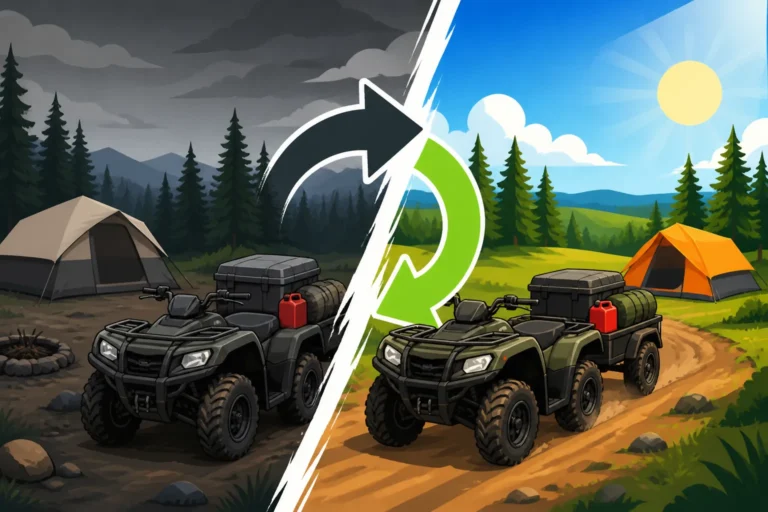
Weather and trail conditions can change the plan quickly. Rain may turn dirt into slick mud; a dry route may be dusty or loose; and a cold morning can feel very different from a sunny afternoon. Check conditions before loading up, and be prepared to switch destinations or postpone the ride. [Alberta Trail Closures After a Storm] and [Alberta Riding After Heavy Rain] are useful reminders that yesterday’s route report may not describe today’s ride.
Build confidence without making the day harder than it needs to be
Choose a group that supports new riders
A beginner-friendly group is patient, communicates clearly, and agrees on the route before leaving staging. Talk through hand signals, stopping points, and what to do if someone needs to turn around. Decide in advance who will lead and who will ride at the back, so a new rider is not left wondering whether the group has moved on.
If the group includes different machine types or experience levels, make sure the route works for everyone. A narrow path may be uncomfortable for a larger side-by-side, while a more technical section may be too much for a first-time ATV rider. It is better to split into suitable groups or choose an easier shared route than to ask someone to push past their comfort level.
For a first outing, consider whether a guided ride or a local club event would help the group feel more prepared. An experienced guide or local rider can provide context about the area and help newcomers understand how to approach the terrain. If you want to compare options, [Alberta OHV Clubs Worth Joining] and [Alberta Group Ride Planning] are relevant starting points.
Make the next ride a little more ambitious
After a comfortable first trip, note what worked and what you would change. Maybe the route was the right difficulty but too long, or the group needed an earlier start to avoid a busy staging area. Write down the access point, the conditions, and any sections that felt demanding. That gives you a more useful basis for planning the next ride than a vague memory of “easy” or “hard.”
Build skill gradually. Try a slightly longer route or a different surface before adding several new challenges at once. If you are learning on a quad, for example, avoid combining unfamiliar terrain, poor weather, a large group, and a long route on the same day. Confidence grows when riders have time to make decisions and practice machine control without feeling rushed.
Keep using maps as tools, not guarantees. onX Offroad can help with route planning and orientation, while local and official information should guide decisions about access, closures, and current conditions. A beginner-friendly ride is one where the group can enjoy the day, respect the land, and return safely—not one that checks off the most kilometres.
Disclaimer
This article is for general informational purposes only and does not constitute professional advice. Laws, prices and regulations vary by location and change over time. Consult a qualified professional for guidance on your specific situation.