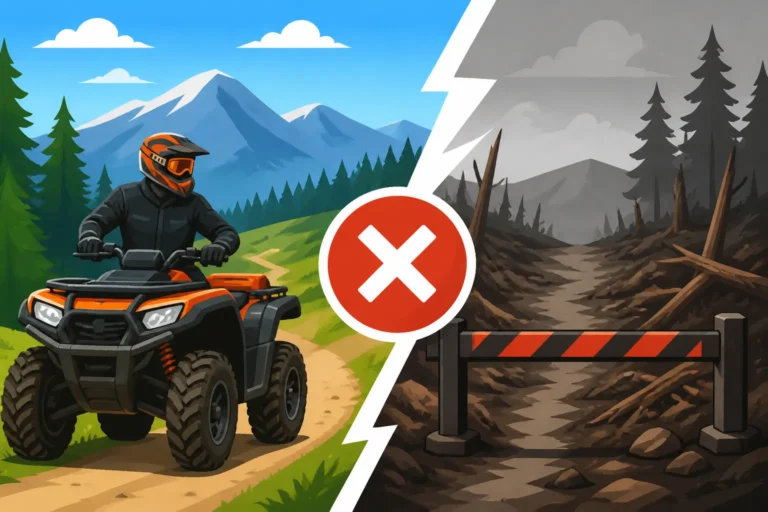
Arriving Early When the Staging Lot Fills Up
A full staging lot can turn a planned Alberta ATV or UTV ride into a stressful parking puzzle, especially when trailers are lined up and the trailhead has little room to maneuver. Arriving early helps, but it is only one part of the plan. This guide explains how to prepare, what to do when the lot is full, and how to keep your group and machine safe.
Why Alberta staging lots fill up
Popular trailheads have limited room
A staging area may look spacious on a map but have fewer usable parking spots than you expect. Trailer combinations take up more room than cars, and the lot may also need space for turning around, unloading, emergency access, or other visitors. At a busy area such as McLean Creek, arriving on a sunny weekend or during a holiday period can mean sharing the same limited space with many other riders.
The busiest period is not always obvious. A warm, dry weekend after weeks of poor weather can draw a crowd, as can a seasonal opening or a long weekend. Groups may arrive in several trucks and trailers, so a lot that seemed adequate for individual vehicles can fill quickly.
Check the location before you leave, rather than assuming every area has a formal overflow lot. [Alberta OHV Camping and Staging Areas] can help you think about the facilities and parking considerations to check. For a specific area, confirm any local notices or posted directions before relying on a particular access point.
Early arrival is useful, but not a guarantee
Getting there early gives you a better chance of finding a suitable place to park, organizing your gear without pressure, and starting your ride before the day gets busy. It also gives you time to adjust if a trailer needs to be repositioned or a member of your group has forgotten something.
Still, “early” is relative. A staging lot may already be crowded when you arrive, or a popular location may fill before your group gets there. Treat an early start as one layer of preparation—not a promise that a spot will be waiting.
Build extra time into the morning for loading, driving, and unloading. If your group is meeting at the trailhead, agree on a backup meeting place before anyone sets out. That way, one vehicle arriving to a full lot does not leave the rest of the group circling or waiting without a plan.
Prepare before you leave home
Check access, parking, and riding conditions
Before loading your machine, confirm that the staging area is accessible and that the route you intend to ride is open. Weather, fire restrictions, trail closures, active work, or local access directions can affect the plan. A trailhead that was usable on a previous visit may not be the right choice today.
Use an official or locally maintained source for closures and access information where available, and read signs when you arrive. A navigation app such as onX Offroad can be useful for reviewing your planned route and identifying nearby roads or trail connections, but it should not replace current closure information or posted instructions. Download or save the information you need before leaving service, since mobile coverage can be limited in some riding areas. [Alberta Trail Map Downloads] and [Checking a Zone Before You Go] are useful topics to review as part of that preparation.
Also check whether your selected area has designated staging locations, restrictions on vehicle size, or rules about where machines may be ridden. A map line does not automatically mean a route is open to your vehicle or suitable for your group. If the route or parking arrangement is unclear, choose another confirmed option rather than trying to improvise after arrival.
Make the parking plan as carefully as the trail plan
Discuss how many trucks and trailers are coming, who is driving each one, and whether vehicles can be combined to reduce the number of parking spaces needed. If you are meeting friends, decide whether everyone should travel together or whether some vehicles can be left at a lawful, agreed location away from the staging area. Do not assume that a roadside pullout, private driveway, or nearby access road is available for parking.
Give every driver the same directions and a clear backup plan. If one vehicle reaches the lot first, the driver should know whether to wait, move to an approved alternative, or contact the group. Keep a phone number for the other drivers, but do not rely on calls or messaging as your only communication method in a dead zone.
onX Offroad or another offline mapping tool can help your group understand where a proposed backup location sits in relation to the ride area. Before using one, verify that the location is actually an appropriate place to park; a map can show roads and terrain, but it cannot confirm that a specific shoulder or parcel is available for public parking. [Alberta Staging Areas With Trailer Parking] is a helpful starting point when you are comparing places to unload.
What to do when the staging lot is full
Pause before trying to squeeze in
If you arrive and the lot looks full, do not force a truck-and-trailer combination into a space that blocks the entrance, another vehicle, or room for turning around. A rushed attempt to back into a tight spot can put people, machines, and property at risk. Stop somewhere safe and legal before deciding what to do next.
Look for posted instructions. Some sites may identify an overflow area or direct visitors to another access point; others may not allow overflow parking at all. Follow signs and instructions from the responsible site authority. If there is no clear direction, do not treat the road edge, a gate entrance, a trail, or unmarked vegetation as an acceptable place to leave a vehicle.
| What you find | Safer response |
|---|---|
| An identified overflow area | Follow the posted directions and check that your vehicle combination fits without blocking access. |
| A busy lot with a few tight spaces | Wait only where it is safe and permitted, then park only if you can enter and exit without blocking others. |
| No open space and no posted overflow | Use your preselected, verified alternative or leave the area and regroup elsewhere. |
| A blocked entrance or turnaround | Do not stop there; keep the access route clear and move to a safe, lawful location. |
| Unclear signs or uncertain access | Ask the responsible authority or choose a different confirmed staging area. |
Avoid unloading a machine just because you have found a place to stop. The place where a truck can pull over is not necessarily a legal or safe launch point, and unloading beside a road can expose riders to passing traffic. If you cannot confirm that parking and unloading are allowed, keep the machine secured and move on.
Use a backup location without changing the rules
A backup staging area is useful only if it is suitable for the machine, trailer, and ride you have planned. Check the route from the backup location to the intended trails, whether that route is open to your vehicle, and whether it adds enough distance to change the day’s plan. If your group has different machine types, confirm that the alternative area accommodates them rather than assuming every trailhead does.
Nearby does not always mean interchangeable. A second access point may lead into a different zone, have different restrictions, or connect to trails that are not appropriate for your group. Use onX Offroad or a similar map to orient yourself, then compare your plan against current land-use information and signs. Keep a printed or downloaded backup map for when phones lose signal or batteries run down.
If the original lot is full, it can be tempting to park wherever other vehicles have stopped. Resist that pressure. Unofficial shoulder parking can obstruct emergency access, damage soft ground, or create a hazard for traffic and pedestrians. If there is no suitable alternative, changing the ride plan or turning back is frustrating—but safer than leaving a truck and trailer in a place that creates a problem for everyone else.
Make arrival and departure smoother for the whole group
Set up the truck, trailer, and gear for an efficient unload
Before reaching the trailhead, make sure the machine is secured and the gear you need is easy to reach. A rider who begins searching through several bags in a crowded lot can unintentionally hold up other vehicles or leave equipment scattered in the driving area. Keep helmets, protective gear, keys, and required documents together so the group can get organized without blocking traffic.
When you park, leave room for other visitors to open doors, unload machines, and maneuver trailers. Do not assume that an empty-looking patch beside the lot is part of the parking area. Stay on durable, clearly permitted surfaces, and avoid blocking gates, signs, access roads, or emergency routes.
Before riding, do a quick group check: confirm that everyone has the right gear, that the machines are ready, and that each rider knows the planned route and regrouping point. Make sure you have the documents and equipment required for the area. [What to Show an Officer on Alberta Public Land] is worth reviewing before a public-land ride, and [Alberta Trail Etiquette Locals Expect] offers useful context for sharing busy trailheads respectfully.
Leave the lot organized when you return
The end of the day can be just as crowded as the morning. If several groups return at once, avoid stopping in the entrance or turnaround while you unload, adjust tie-downs, or compare photos. Move fully into a permitted parking space first, then secure your machine and gear without blocking another vehicle.
Check the ground around your truck before leaving. Pick up food wrappers, tie-down packaging, and other rubbish, and make sure no equipment has fallen near the parking area. If the lot is busy, load in an orderly way and avoid extending the process into the travel lane.
Be patient if another driver needs extra room to back a trailer. A little courtesy can prevent a stressful end to an otherwise good ride. The same applies if a site has become muddy, rutted, or congested: follow signs, avoid driving across vegetation to get around a queue, and report a significant access or safety issue through the appropriate local channel rather than making an unauthorized route of your own.
Know when to change the plan
Sometimes the best decision is not to ride from the original staging area. If parking is unavailable, conditions have changed, or your group cannot reach a confirmed alternative safely, postpone the ride or choose a different destination. That can feel disappointing after packing the trailer and making the drive, but forcing a plan can create problems that last longer than a missed day on the trail.
Make that call as a group. Agree in advance that the driver will not be pressured to park illegally, unload in an unsafe place, or continue into a closed area just because everyone has already arrived. Keep your backup location and return route in mind, and be willing to shorten the ride if the delay has changed daylight or weather conditions.
For the next outing, note what you learned: when traffic began building, how long loading took, whether the trailer fit comfortably, and which backup option worked. That practical record is more useful than simply deciding to “leave earlier” next time. Combine it with current access checks and a clear parking plan, and you will arrive better prepared even when the staging lot fills up.
Disclaimer
This article is for general informational purposes only and does not constitute professional advice. Laws, prices and regulations vary by location and change over time. Consult a qualified professional for guidance on your specific situation.