Alberta Towns That Cap Passengers
It can be incredibly frustrating to try and understand the intricate web of rules and regulations that govern off-highway vehicle (OHV) use in Alberta. Just when you think you've got the provincial laws down, you discover that individual towns and counties often have their own specific bylaws, especially when it comes to something as seemingly straightforward as how many people can ride on your machine. This guide aims to unravel the complexities surrounding passenger caps in Alberta towns, helping you navigate the local nuances and ride confidently, safely, and legally.
The Patchwork of Local Bylaws: Why It's So Confusing
You've done your homework, you know the basics of OHV registration, insurance, and the provincial helmet law. You've even checked your machine's manual for its passenger capacity. Then you hear whispers of a friend getting a ticket for having an extra person on their side-by-side in a small town just trying to get to the staging area. It leaves you scratching your head, wondering, "How can it be this complicated?" The truth is, while the province sets a broad framework, local municipalities have significant power to add their own rules, creating a genuine patchwork of regulations that can feel overwhelming for riders.
The Province Sets the Baseline, Towns Add the Details
Think of it like this: the provincial government, primarily through the Traffic Safety Act and the Off-Highway Vehicle Regulation, lays down the foundational rules for OHV operation. This includes things like mandatory registration for public land use, the [Alberta Helmet Law on Public Land], and general safety requirements. However, Alberta operates under a system where local governments, like towns, villages, and counties, have the authority to create bylaws that regulate activities within their specific geographic boundaries. This means that while the province might state general guidelines for passenger numbers, a local bylaw can introduce stricter limits, especially if OHVs are allowed on municipal roads or trails.
This dual layer of governance is where the confusion often begins. You might be perfectly legal according to provincial standards, but unknowingly step over a municipal line and find yourself in violation of a bylaw you didn't even know existed. It's not about making things difficult for riders; often, these bylaws are enacted with local concerns in mind, such as managing traffic, ensuring pedestrian safety, or addressing specific community needs or complaints. Unfortunately, the onus is always on the rider to know and follow all applicable rules, both provincial and local. This is why you can't just assume what's okay in one county will fly in the next town over.
Beyond Manufacturer Limits: When Local Rules Go Further
Your side-by-side might be a four-seater, proudly displaying seating for four adults. Or maybe you've got a UTV with a custom rear seat kit from a company like SuperATV, expanding your capacity to six. It seems logical that if the manufacturer designs it for a certain number of passengers, that's the legal limit, right? Not necessarily. While manufacturer recommendations are crucial for safe operation and often inform provincial guidelines, a municipal bylaw can absolutely override these limits for roads and designated trails within their jurisdiction.
Imagine a scenario where a town, perhaps due to narrow roads, limited visibility at intersections, or concerns about vehicle stability in a high-traffic urban setting, decides that only two passengers are permitted on any OHV operating on their municipal roads, even if the machine itself has seating for more. This kind of restriction aims to reduce the overall footprint and potential impact of OHVs in specific areas. So, while your machine from SuperATV might be perfectly capable of carrying six people safely on a wide open trail in a Public Land Use Zone, that same configuration could land you a ticket if you're trying to traverse a small town street where a stricter bylaw is in effect. It's a key distinction to understand: what your machine can do safely, and what the local law permits it to do in a specific area.
Understanding "Passenger Cap" in the Context of OHVs
When we talk about "passenger caps," it's more than just counting heads. It dives into the fundamental safety principles of OHV operation and how local authorities interpret those principles for their specific environments. This isn't just about limiting fun; it's about mitigating risk in situations where OHVs might interact with other traffic, pedestrians, or different terrain than they were originally designed for.
The Safety Logic Behind Passenger Restrictions
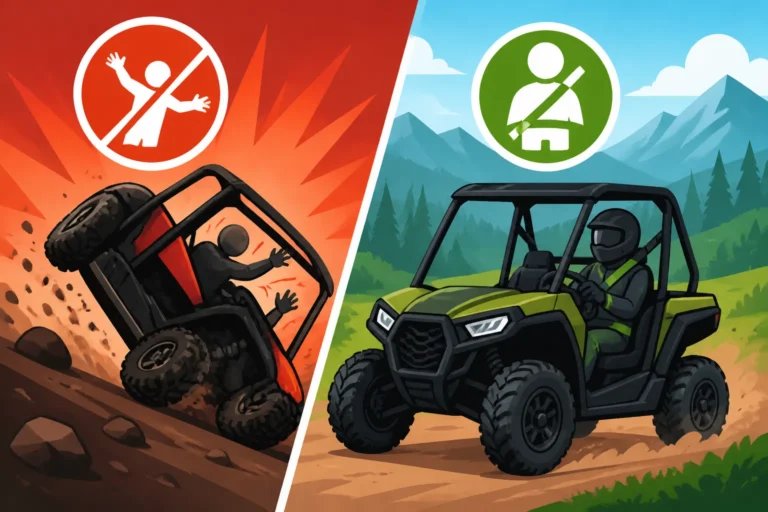
At its core, a passenger cap exists for safety reasons. Overloading any vehicle, and especially an OHV, can severely compromise its handling, braking, and stability. Picture a quad designed for one rider suddenly carrying two or even three. The weight distribution is thrown off, the suspension is overtaxed, and the brakes have to work much harder. This significantly increases the risk of a rollover or loss of control, particularly on uneven terrain, during turns, or when braking suddenly. [Alberta Rules for a Child Passenger] outlines specific concerns for younger riders, but the principle applies to all.
For side-by-sides, while they offer a more car-like experience with seatbelts and roll cages, adding too many passengers beyond the manufacturer's specified limit or the local bylaw's cap can still create hazards. Extra weight impacts performance and safety. Furthermore, passengers must have proper seating, handholds, and footrests. If someone is crammed in without these essentials, they risk falling out or being injured during unexpected jolts. Towns imposing caps often consider these factors, especially when OHVs are permitted to share space with cars or bicycles. Their goal is to prevent accidents, reduce emergency service calls, and maintain public order. It's a proactive measure to keep everyone safe, even if it feels restrictive to the rider.
Seating Design vs. Legal Capacity
This is where many riders get tripped up. An OHV might be designed with what appears to be ample space for multiple passengers. Some side-by-sides come standard with four seats, while aftermarket accessories, like those offered by SuperATV, allow for even more. You might see a bench seat that looks like it could comfortably fit three smaller adults or even more children. However, there's a critical difference between a machine's physical seating design and its legal passenger capacity as defined by either the manufacturer or, more restrictively, a local bylaw.
The manufacturer's stated capacity is usually based on rigorous testing for stability, braking, and structural integrity. This is your first and most important guide. But then, a local bylaw can step in and say, "For our roads and trails, regardless of what your machine can technically hold, you are limited to X number of passengers." For example, a bylaw might state that all OHVs, regardless of type, are limited to two occupants total (driver plus one passenger) when operating on municipal property. This means your four-seater side-by-side or extended UTV from SuperATV would still only be permitted to carry two people in that specific area. It's a blanket rule applied across the board to simplify enforcement and address local safety concerns. Always check the specific wording of any relevant bylaw to ensure you're compliant with both the letter and the spirit of the law.
Common Scenarios Where Passenger Caps Apply
The varying application of passenger caps can make it feel like you need a legal degree just to go for a ride. But understanding where these rules most commonly pop up can help you anticipate and plan your routes, ensuring you're always on the right side of the law. It's less about trying to catch riders out and more about regulating activities in specific community contexts.
Riding on Designated Municipal Roads or Trails
Perhaps the most common scenario for passenger caps comes when a municipality has gone through the effort of opening specific roads or trails for OHV use. In Alberta, many municipalities have taken steps to create bylaws that allow OHVs to operate on certain roads, often to provide access to trails or services. [Alberta Municipalities That Opened Roads] details some of these situations. However, this permission rarely comes without strings attached, and passenger limits are often one of the first conditions imposed.
Consider a small town nestled near a popular trail system. The town council, recognizing the economic benefit of riders passing through, might enact a bylaw allowing OHVs on certain collector roads or main streets. To ensure safety and minimize disruption to other traffic or residents, they might stipulate that while on these municipal roads, a quad can only carry the operator, and a side-by-side (even a four-seater) can only carry the driver and one passenger. This simplifies enforcement for their local peace officers and aligns with a conservative approach to safety in shared spaces. So, even if you’re just trying to get from your hotel to the trailhead, you need to abide by these localized caps. It's a privilege, not an automatic right, to ride on these roads, and respecting the conditions is crucial for maintaining that access.
Crossing Highways or Within Town Limits
Even for what seems like the most fleeting of moments – a quick highway crossing to access land on the other side, or a short jaunt within minimal designated areas inside town limits – passenger caps can apply. The temptation to just squeeze an extra child onto a quad or have an extra person standing in the back of a side-by-side for "just a minute" is strong, especially if the destination is only a stone's throw away. However, these brief moments are exactly where accidents can happen due to impaired visibility, sudden traffic, or unexpected maneuvers.
The definition of "highway" in Alberta's Traffic Safety Act is very broad and includes much more than just provincial thoroughfares; it can encompass local roads, streets, alleys, and even ditches. So, when [Alberta Rules for Riding a Ditch] states certain conditions, those conditions often extend to passenger limits. If a town allows OHV use on its streets only for the purpose of crossing, it will almost certainly enforce any existing passenger caps, as these are high-risk interactions with other vehicles. A sudden stop or turn with an improperly seated passenger, especially a child, can lead to serious injury. Enforcement officers are trained to look for these infractions because they represent clear safety hazards, regardless of how short the trip might be. Your best bet is always to ensure every passenger is properly seated and belted (if applicable) and that you are within both provincial and municipal passenger limits, even for the shortest of movements.
How to Research Local OHV Passenger Bylaws
Feeling overwhelmed? Don't be! While the local variations can be a headache, finding the information isn't impossible. It just requires a bit of proactive research before you head out on your adventure. Thinking ahead can save you a significant amount of stress, not to mention avoiding potential fines and ensuring everyone's safety.
Checking with the Municipal Office or Website
The most reliable place to find out about specific OHV passenger caps in a particular town or county is directly from the source: the municipal office or their official website. Many municipalities are getting better at putting their bylaws online for public access.
Here's a step-by-step approach:
- Identify the Municipality: Before you even load your machine, figure out which town, village, or county you'll be riding in or through. If you're planning a trip to a general area, research all the potential municipal jurisdictions you might encounter.
- Visit Their Official Website: Most municipalities have a section dedicated to bylaws or public safety. Look for terms like "Off-Highway Vehicle Bylaw," "Traffic Bylaw," or general "Bylaws."
- Use Search Functions: If the website has a search bar, try keywords like "OHV," "ATV," "UTV," "quad," "side-by-side," "passenger," or "occupant."
- Read the Bylaw Carefully: Once you find a relevant bylaw, read it thoroughly. Pay close attention to sections detailing permitted areas of operation (e.g., [Alberta Rules for Riding a County Road]), equipment requirements, and, crucially, passenger limitations. Sometimes these are explicitly stated, for example, "No more than one passenger per OHV on municipal roads." Other times, it might refer to manufacturer specifications but then add caveats for certain conditions.
- Contact the Municipal Office: If you can't find the information online or if the wording of a bylaw is unclear, don't hesitate to call the municipal office during business hours. Ask to speak with someone in the bylaw enforcement department or the administration office. Clearly state your question: "I'm planning to ride my side-by-side through your town to access the trails, and I need to know your specific passenger limits on municipal roads." They are usually happy to help clarify. This simple phone call can prevent a world of trouble.
Looking for Posted Signs or Local Resources
Beyond official websites and phone calls, there are other valuable resources you can tap into. While not as legally definitive as a bylaw document, they can offer practical guidance, especially in popular riding areas.
- Posted Signage: In designated OHV areas, particularly where trails meet roads or at staging areas, you might find physical signs outlining local rules. These signs often summarize key regulations, including operating hours, helmet requirements, and sometimes, passenger limits. Always keep an eye out for these, as they provide real-time reminders of local conditions.
- Local OHV Clubs and Associations: These groups are often deeply involved in advocating for and maintaining local riding areas. They are usually well-versed in the local bylaws and can be an invaluable source of information. Many clubs have websites or social media groups where members share updates on rules and regulations. A quick search for "Alberta OHV clubs" or a specific regional club can connect you with experienced riders who know the local terrain and rules inside out.
- Tourism Information Centres: In towns that cater to outdoor enthusiasts, the local tourism information centre might have pamphlets or staff who are familiar with OHV rules in the area. While they might not be able to cite specific bylaw numbers, they can often point you in the right direction or tell you common practices.
- Online Forums and Social Media Groups: While these can be a good starting point for general advice, always cross-reference any information found online with official municipal sources. Unofficial advice, while well-intentioned, can sometimes be outdated or inaccurate. Use these as pointers for where to look, not as definitive legal sources.
Enforcement, Fines, and Consequences
Ignoring passenger caps or other local OHV bylaws can lead to more than just a stern talking-to. Enforcement officers, whether RCMP or local peace officers, take these rules seriously because they are directly tied to safety. The consequences can range from financial penalties to more severe outcomes, impacting your riding privileges and even your ability to claim insurance.
The Cost of Overloading: Tickets and Safety Risks
Let's not sugarcoat it: riding with more passengers than legally permitted, whether by manufacturer specifications or local bylaw, can result in a ticket. The specific fine amount will vary by municipality and the nature of the infraction, but it's safe to say it's an expense you'd rather avoid. [Alberta Ticket Costs for a Riding Violation] can give you an idea of the general range of fines for OHV infractions. Beyond the immediate financial sting, however, are the far more serious safety risks.
When you overload your OHV, you're not just breaking a rule; you're fundamentally altering the vehicle's dynamics. Imagine trying to make an emergency stop with an extra 200 pounds of unbelted weight on board. The braking distance will increase significantly, and the machine's stability will be compromised, increasing the likelihood of a rollover or collision. If that extra passenger is a child who isn't properly seated or secured, the risks are even greater. Accidents involving overloaded OHVs can lead to severe injuries or even fatalities, not just for the extra passenger but for all occupants and potentially others nearby. It's a calculated risk that is simply not worth taking. The fines are a deterrent, but the potential for physical harm is the real cost.
Insurance Implications and Liability
This is a critical, often overlooked consequence of violating passenger caps. Your OHV insurance policy is designed to protect you in case of an accident, covering damages, medical expenses, and liability. However, insurance policies almost universally contain clauses that allow the insurer to deny or reduce coverage if the vehicle was being operated illegally or outside of its intended use. Operating an OHV with more passengers than legally permitted could fall squarely into this category.
Consider this scenario: you're riding with an extra passenger beyond the town's cap, and you have an accident. Even if the accident wasn't directly caused by the overloading, your insurance company might argue that you were operating the vehicle in an illegal manner. This could lead to them refusing to pay for repairs to your machine, medical bills for injured passengers (including yourself), or, most critically, liability claims if another person or property was involved. Imagine facing hundreds of thousands of dollars in medical bills or legal fees out of pocket because your insurance was voided due to an extra passenger. Furthermore, if you're found to be operating unsafely, you could face charges beyond the simple bylaw ticket, such as dangerous operation. [Alberta Vehicle Seizure for No Insurance] is a real risk if your policy is deemed invalid. Always remember that when you operate an OHV, you take on significant responsibility, and part of that responsibility is ensuring you're fully covered and compliant with all laws, including passenger limits.
Best Practices for Riding with Passengers
Navigating the rules and ensuring safety can feel like a tall order, but it doesn't have to detract from the enjoyment of your ride. By adopting a few best practices, you can confidently take passengers along for the adventure, knowing you're doing so legally and responsibly. It all boils down to preparedness and adherence to both common sense and the law.
Always Prioritize Safety: One Butt, One Seat
This is the golden rule, the absolute bedrock of OHV safety: one butt, one seat. Every single passenger on your OHV, regardless of their age or the type of machine, must have their own designated, secure seating position. This means a properly designed seat, handholds they can reach and grip firmly, and footrests for stability. There should be no "cramming in," no sharing of seats meant for one, and definitely no standing or riding on racks unless the machine is specifically designed and legally permitted for such (which is exceedingly rare for passengers).
Consider the design of your machine. A utility quad is almost universally designed for a single operator. Adding a passenger, even a small child, to the rack or behind the operator is incredibly dangerous as it compromises balance, blocks the operator's view, and can lead to severe injury if the passenger falls off. Side-by-sides, while more accommodating, still have specific seating capacities. If your machine is designed for two, don't try to fit three. If it's a four-seater, stick to four. Beyond the legal limits, it’s about providing each person with the maximum protection and stability the machine offers. This rule, more than any other, will significantly reduce the risk of injury for everyone onboard.
Equip Your Machine (and Passengers) Appropriately
Ensuring your machine and all passengers are properly equipped is non-negotiable for safe and legal OHV operation. Start with the basics:
- Helmets: In Alberta, helmets are mandatory on public land for all OHV operators and passengers. [Alberta Helmet Law on Public Land] clearly outlines this. Make sure every helmet is properly fitted, securely fastened, and meets recognized safety standards (e.g., CSA, Snell, ECE).
- Eye Protection: Goggles or a helmet visor are essential to protect against dust, debris, branches, and insects.
- Sturdy Footwear: Closed-toe boots that cover the ankle are ideal, protecting feet from impacts and providing grip.
- Gloves: Protect hands from scrapes and improve grip on controls.
- Long Clothing: Long pants and long-sleeved shirts can help protect against scrapes, sun exposure, and bug bites.
- Seatbelts: If you're operating a side-by-side, ensure all passengers are wearing their seatbelts at all times. Check that the seatbelts are in good condition and functioning properly.
- Machine Accessories: While staying within legal limits, consider accessories that enhance safety and comfort. For instance, a quality roof can offer protection from sun and light rain. Additional grab handles or netting from brands like SuperATV can provide extra security for passengers, but always ensure these modifications don't compromise the machine's safety or exceed legal dimensions. Regular maintenance, including checking tire pressure, brakes, and lights ([Alberta Requires Working Head and Tail Lights]), is also paramount.
Know Your Machine's Limits and the Law
Finally, empower yourself with knowledge. Before every ride, especially when passengers are involved or when exploring a new area, take a moment to confirm you're within all relevant guidelines.
- Consult Your Owner's Manual: This is your primary source for understanding your specific machine's capabilities and limitations, including its manufacturer-specified passenger capacity, weight limits, and recommended operating conditions. It will also provide guidance on [Manufacturer Passenger Limits on a Side-by-Side] or quads.
- Review Provincial Regulations: Have a basic understanding of the [Alberta Traffic Safety Act Requires of Alberta OHVs] and the Off-Highway Vehicle Regulation. While you don't need to memorize every line, knowing the general framework will help.
- Check Local Bylaws: As discussed, this is the crucial step for passenger caps. Make it a routine practice to check the municipal bylaws for any town or county you plan to ride in or through. Even if you're just using a road to get to Crown land, you might be subject to municipal rules.
- Carry Your Documents: Always carry your OHV registration, proof of insurance ([Alberta Proof of Insurance on Demand]), and your driver's license. [What an Alberta Officer Can Ask to See] includes these vital documents. While a paper copy of a bylaw might be overkill, having easy access to digital copies on your phone can be helpful in a pinch.
By adhering to these best practices, you're not just avoiding fines; you're cultivating a culture of safety and responsibility that benefits everyone who enjoys the incredible OHV opportunities Alberta has to offer.
| OHV Type | Typical Manufacturer Seating Capacity | Example Municipal Cap Scenario (Illustrative) | Key Considerations |
|---|---|---|---|
| Utility Quad | 1 (Operator Only) | 1 (Operator Only) on all municipal roads | Very few designed for passengers; extreme risk when overloaded. |
| Sport Quad | 1 (Operator Only) | 1 (Operator Only) on all municipal roads | Designed for aggressive riding; highly unstable with passengers. |
| 2-Seat Side-by-Side | 2 (Driver + 1 Passenger) | 2 (Driver + 1 Passenger) on designated routes | Ensure seatbelts are worn and secure. |
| 4-Seat Side-by-Side | 4 (Driver + 3 Passengers) | 2 (Driver + 1 Passenger) on designated routes | Manufacturer limit often higher than municipal cap. |
| 6-Seat Side-by-Side | 6 (Driver + 5 Passengers) | 2 (Driver + 1 Passenger) on designated routes | Extended chassis, but local bylaws can still restrict. |
Disclaimer
This article is for general informational purposes only and does not constitute professional advice. Laws, prices and regulations vary by location and change over time. Consult a qualified professional for guidance on your specific situation.