Finding a County Map of Roads Open to OHVs
Many of us who love hitting the trails on our ATVs and side-by-sides in Alberta often face a peculiar challenge: you know there are incredible places to ride, but figuring out which specific county roads are legally open to off-highway vehicles (OHVs) can feel like navigating a maze without a map. It's a common frustration, especially when you're just trying to plan a legal, fun, and responsible outing. This guide will help you cut through the confusion and pinpoint exactly how to find those crucial county maps and bylaws that clarify where your OHV adventures can take you.
The Challenge of Discovering OHV-Permitted Roads
Let's be honest, trying to figure out where you can legally ride your off-highway vehicle on municipal roads in Alberta is often more complicated than it needs to be. You're passionate about riding, you want to follow the rules, but the rules themselves seem to be hiding in plain sight, or sometimes, not in plain sight at all. This isn't just a minor inconvenience; it's a genuine headache for riders who want to avoid accidental infractions and enjoy their machines responsibly.
Why Local Rules are So Confusing for Riders
The biggest reason for this confusion lies in how OHV access is governed in Alberta. While the province sets overarching legislation like the Traffic Safety Act and the Off-Highway Vehicle Regulation, the actual control over local roads and public lands often falls to individual municipalities – the counties, municipal districts, and specialized municipalities. This means that rules can, and often do, change dramatically from one county line to the next. What's perfectly fine in Brazeau County might get you a ticket just across the border in Yellowhead County.
This piecemeal approach leads to a real patchwork of regulations. One county might have a well-defined system of designated OHV routes, complete with clear signage and online maps, while its neighbour might have a blanket ban on OHVs on most roads, or simply no clear policy at all. Riders are left to guess, which is never a good recipe for responsible recreation. You just want to know where you can go, not spend hours deciphering legal jargon or risking a fine because you unknowingly crossed into a restricted area. It's a fundamental disconnect between the desire to explore and the information needed to do so legally.
The Myth of Universal Access and the Reality
There's a persistent myth that all rural roads, especially gravel ones, are fair game for ATVs and side-by-sides. If it's not paved, it must be open, right? Unfortunately, that's almost never the case. The reality is far more restrictive, and operating an OHV on a road where it's not explicitly permitted can lead to serious consequences. Imagine you've spent good money on your machine, maybe even kitted it out with accessories from a brand like SuperATV for better handling or durability, only to have it impounded because you were riding on an unauthorized road.
Riding where you shouldn't can result in hefty fines, and in some cases, your vehicle could even be seized. [Alberta Penalties for Riding Unregistered] are just one piece of the puzzle; riding on restricted roads adds another layer of risk. This is why thorough research before you load up your quad and head out is not just a suggestion, it's an absolute necessity. It ensures you're riding safely, legally, and without the looming worry of an unexpected encounter with enforcement. Taking the time to understand the local regulations protects your wallet, your machine, and your peace of mind.
How Alberta's Municipalities Define OHV Access
Understanding the municipal landscape is key to unlocking legal riding opportunities. It's not about what the province says about OHVs in general, but what each specific county or municipal district has decided for its own roads and lands. This local control is both the source of the confusion and the key to finding your answers.
Understanding County Bylaws for OHVs
At the heart of any legal OHV access on county roads are the municipal bylaws. These are the specific local laws passed by a county council that dictate where and when off-highway vehicles are allowed to operate within their jurisdiction. Think of them as the rulebook for that particular county.
A well-crafted OHV bylaw will typically contain very specific information. It might list particular roads by name or number that are open to OHVs, specify hours of operation, define what types of OHVs are permitted (e.g., quads, side-by-sides, dirt bikes), and even outline conditions like speed limits or noise restrictions beyond what the provincial Traffic Safety Act already mandates. Some bylaws also distinguish between farm use, recreational use, or simply connecting between properties. These bylaws are created and updated through a democratic process involving public input and council decisions, reflecting the needs and concerns of the local community. For example, some counties, like the [County of Wetaskiwin's OHV Bylaws in Alberta] or [Wood Buffalo's OHV Rules in Alberta], have detailed regulations available to the public. These documents are your primary source of truth, often outlining not just where you can ride, but also any special conditions that apply. Always remember that what's legally binding is the bylaw itself, not just a map.
The Role of Municipal District and County Offices
When you're trying to find specific information about OHV access, the municipal district or county office is your primary point of contact. These are the government bodies responsible for maintaining the bylaws and, ideally, providing clear guidance to residents and visitors. They house the planning, community services, or public works departments that deal with road usage and recreation.
Often, you'll find that these offices have a designated individual or department that can assist with inquiries about OHV bylaws. However, don't be surprised if you need to be persistent. Due to the varied nature of OHV regulations and the many other responsibilities these offices handle, even staff might not always be fully up-to-date on every nuance. You might need to ask to speak with someone in the planning department, the bylaw enforcement officer, or even the chief administrative officer if your initial inquiries hit a dead end. Be prepared to clearly state your question: "I'm looking for information on where I can legally ride my ATV on public roads within your county. Do you have a specific bylaw or map for this?" Remember, you're looking for "designated routes" – specific roads or areas explicitly opened to OHVs – rather than general assumptions.
Your Step-by-Step Guide to Finding OHV Maps and Bylaws
Now that we understand why it's so complex, let's get down to the practical steps you can take to find the information you need. It might take a bit of detective work, but knowing where to look and who to ask will save you a lot of grief in the long run.
Starting Your Search Online: County Websites
Your first and often most effective step in finding OHV-permitted roads is to scour the official website of the specific county or municipal district you plan to ride in. Most modern municipalities maintain comprehensive websites, and this is where you'll typically find their bylaws, maps, and other important documents.
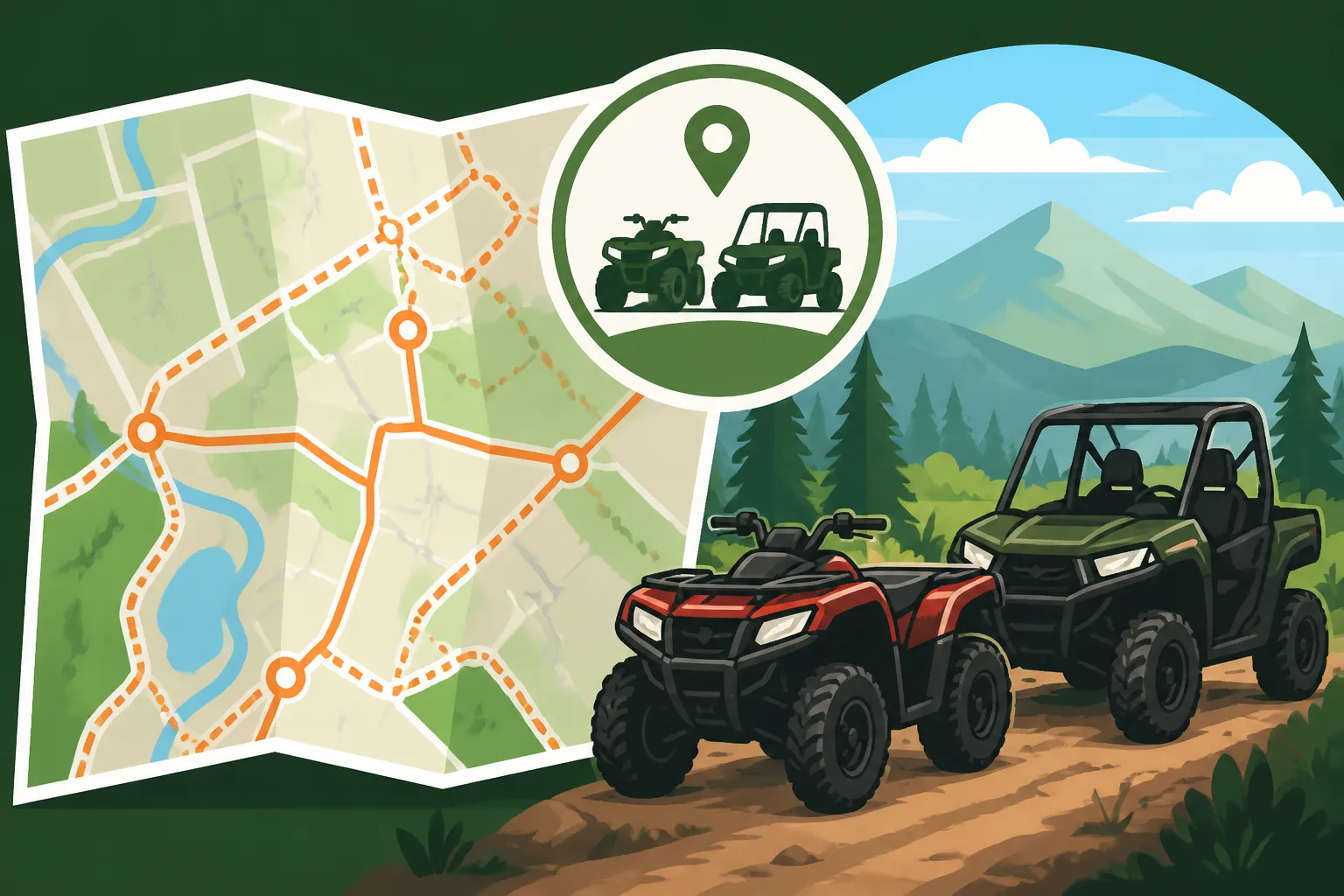
Start with a targeted search. Don't just browse aimlessly. Use specific keywords in the website's search bar or a general search engine like Google, combined with the county's name. Try phrases like "OHV bylaw [county name]," "off-highway vehicle map [county name]," "recreation access [county name]," or "ATV rules [county name]." Look for sections on their website related to "Bylaws," "Public Works," "Community Services," "Recreation," or "Planning and Development." Many counties will publish their bylaws in PDF format, and some even offer interactive GIS (Geographic Information System) maps where permitted OHV routes are clearly marked. These digital resources are invaluable for planning your trip, allowing you to zoom in, identify specific road names, and even cross-reference with your GPS. If you're struggling to find it, sometimes there's a specific page like [Finding a County Map of Roads Open to OHVs] on our site that provides general guidance, but you'll need to apply that to the specific county you're interested in.
Making Direct Contact: The Power of a Phone Call or Visit
Sometimes, even the most thorough online search can come up short. The information might be outdated, hidden deep within a non-user-friendly website, or simply non-existent online. This is when picking up the phone or even making a visit to the municipal office becomes indispensable.
When you call, ask to speak with someone in the main administration office, or specifically request the planning or recreation department. Clearly state your intent: "I'm planning an OHV trip in your county and I'm trying to find information on which roads are open to ATVs and side-by-sides. Do you have a bylaw or a map that outlines designated routes?" Don't be afraid to ask to be transferred if the first person can't help. Remember that you're seeking official permission for [Alberta Rules for Riding a County Road], and this is the best way to get it directly from the source. In some cases, a local RCMP detachment might be able to confirm enforcement aspects, but they won't typically set policy. Persistence is key here. It's also a good idea to confirm if there are any specific requirements for your machine on these roads, like lighting or mirrors, which could influence your accessory choices from a company like SuperATV, ensuring your machine is not just trail-ready, but also compliant for designated road sections.
Leveraging Local OHV Clubs and Rider Forums
While official sources are paramount for legal certainty, don't underestimate the power of the local OHV community. Local clubs and online rider forums are often treasure troves of practical, real-world information. These groups are usually made up of dedicated riders who live in the area, actively advocate for access, and have their fingers on the pulse of local regulations.
Local OHV clubs often have direct lines of communication with county officials, participate in public consultations, and might even have informal maps or knowledge of bylaw changes that haven't yet made it to official online publications. They can tell you about popular routes, staging areas, and specific nuances of local rules. Many clubs, like those you'd find listed in [Alberta OHV Clubs Worth Joining], maintain websites or social media groups where members share their experiences and knowledge. While their information should always be cross-referenced with official bylaws if possible, they can provide invaluable starting points and insights that you won't find anywhere else. The camaraderie of the OHV community isn't just for sharing stories; it's a powerful resource for navigating the complex world of local access.
Interpreting OHV Maps and Ensuring a Responsible Ride
Once you've managed to track down an OHV map and its corresponding bylaw, your work isn't quite done. You need to know how to read and interpret these documents correctly to ensure you're riding legally and safely.
Key Elements to Look for on an OHV Map
A good OHV map, whether it's a physical paper map or a digital file, will have several key features that demand your attention. Don't just glance at it; study it carefully.
First and foremost, look for clearly marked lines or shaded areas indicating "OHV Permitted," "Designated Route," or similar phrasing. These are your green lights. Pay close attention to the map's legend, which will explain the various symbols, colours, and lines used. These legends are critical for understanding different road classifications, boundaries of designated areas, and any potential restrictions. Be hyper-aware of boundaries. Maps will often show where the county's jurisdiction ends, or where private land begins. Riding on private land without explicit permission is a form of trespass, and [Alberta Trespass Law for Riders] can lead to serious legal issues. Additionally, some maps might indicate seasonal restrictions, meaning a road open in summer might be closed in winter for snowmobiles only, or during spring thaw to prevent damage. When riding on these designated county roads, having the right gear, like robust lighting kits or durable tires from SuperATV, can make a huge difference, especially if the routes are less maintained than typical paved roads.
Confirming Bylaw Details and Respecting Restrictions
A map is a visual guide, but the bylaw is the actual law. You must always cross-reference what you see on the map with the specific legal text in the bylaw document. The bylaw contains the precise wording, conditions, and, crucially, any penalties for non-compliance.
Pay close attention to details like specific speed limits that might be lower than the general road speed, or restrictions on hours of operation. Some bylaws might prohibit OHV use after dark or before a certain hour in the morning, which means even if you have bright LED lights from SuperATV on your machine, you could still be in violation. Similarly, check for noise limits; [Alberta Bans Modified Exhausts] on public lands and roads, so ensure your machine's exhaust system is compliant with local noise ordinances, even if it's an aftermarket part. Age restrictions for operators and passengers are also common; ensure everyone on your ride complies with [Alberta ATV Age Requirements] and any local passenger limits. Understanding the "letter of the law" in the bylaw is vital. Riding responsibly and adhering to these specific details helps maintain positive relationships with local communities and ensures continued access for all riders.
Here's a quick comparison of the common ways to find OHV access information:
| Method | Pros | Cons | Best Use Case |
|---|---|---|---|
| County Website | Official source, often comprehensive bylaws and maps, 24/7 access | Can be hard to navigate, outdated information, or some counties lack detailed online resources | Initial research, downloading official documents |
| Phone/Email | Direct answers to specific questions, clarifies ambiguities, human touch | May require persistence, varying levels of staff knowledge, response times can vary | Specific questions, confirming current rules, clarifying online information |
| OHV Clubs/Forums | Real-world experience, local insights, community support, up-to-date informal knowledge | Information can be informal and may need official verification, might not cover all specific legal details | Discovering less-known access, local nuances, community events |
Planning Your Route with Confidence and Backup
Once you've done your homework, confirmed your routes, and understood the local bylaws, it's time to plan your ride. Don't just rely on your memory; download or print copies of the relevant maps and bylaws. Cell service can be spotty in many rural areas of Alberta, so having physical copies or offline digital versions is critical.
Communicate your planned route to someone who isn't riding with you, and give them an estimated return time. Pack emergency supplies, including a first-aid kit, tools, water, and extra fuel. Even on designated county roads, conditions can vary greatly – from smooth gravel to muddy ruts or washouts. Being prepared for varying road conditions means your machine should be too. Consider skid plates or a winch from SuperATV for peace of mind, knowing you're ready for whatever the designated path throws at you. The goal is to ride with confidence, knowing you've done your due diligence and are prepared for a safe, legal, and enjoyable Alberta OHV adventure.
Disclaimer
This article is for general informational purposes only and does not constitute professional advice. Laws, prices and regulations vary by location and change over time. Consult a qualified professional for guidance on your specific situation.