Alberta Supervision Rules for Young Riders
Alberta’s supervision rule can leave parents wondering whether a child may ride, who has to accompany them, and how close the adult needs to stay. The key distinction is where the machine is being operated: the rules for young riders on public land are not a blanket permission to ride anywhere. This guide explains the practical limits and how to plan a safer ride.
The basic supervision rule for young riders
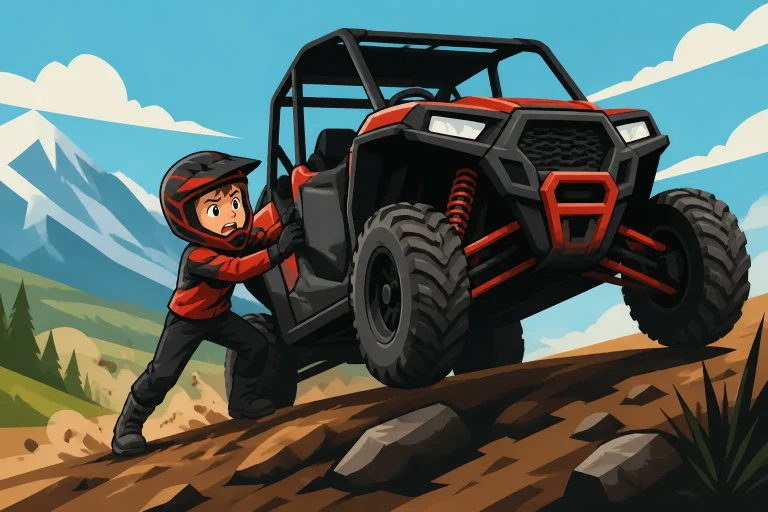
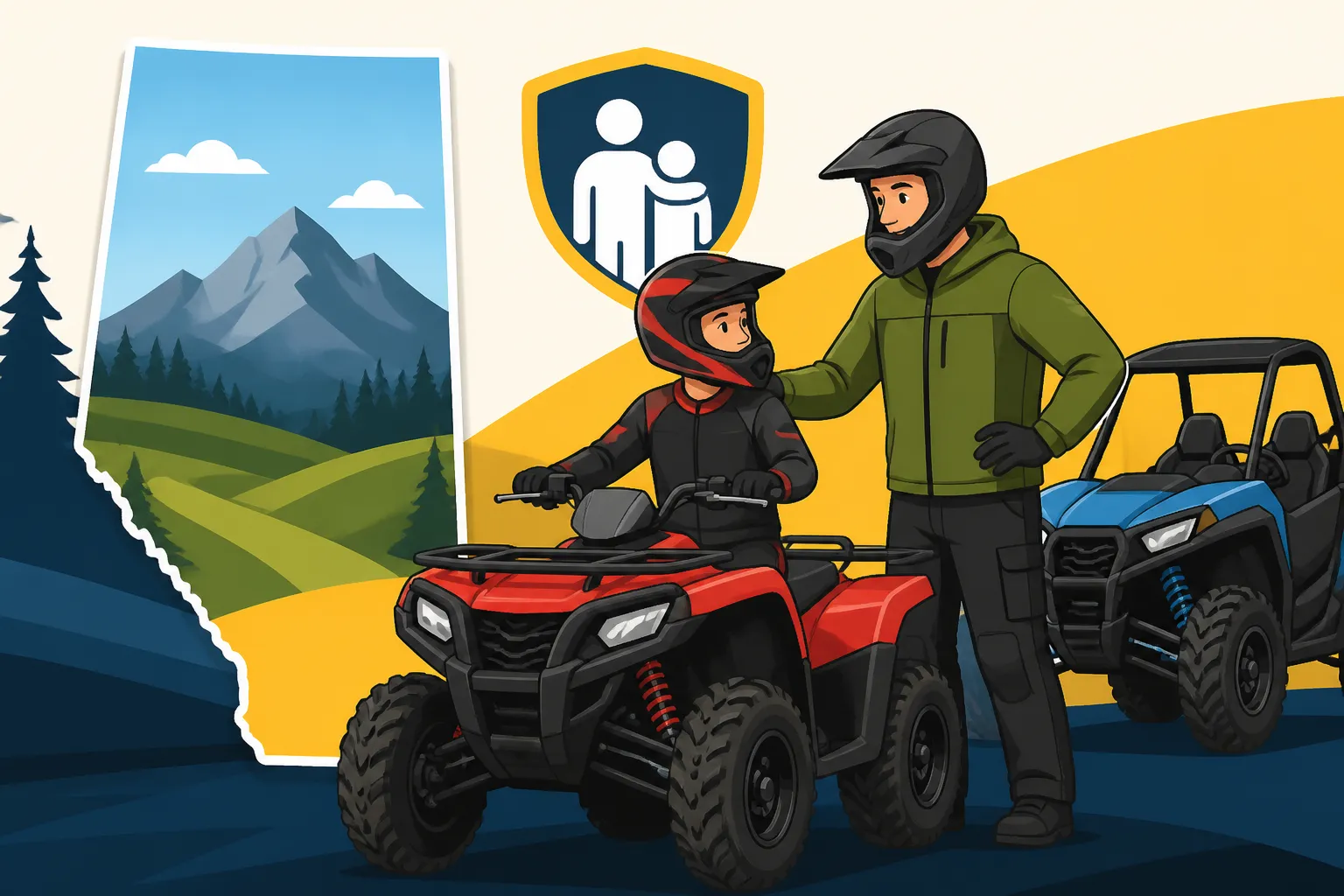
In Alberta, a person under 14 operating an off-highway vehicle on public land must be accompanied by an adult who is at least 18 years old and close enough to supervise. That is the central rule to keep in mind when planning a ride with a child.
The rule applies to off-highway vehicles such as quads, dirt bikes, snowmobiles and side-by-sides. It is not enough for an adult to be somewhere in the general area, back at camp, or reachable by phone. The adult needs to be present and able to watch the young rider and respond if something goes wrong.
“Accompanied” and “close supervision” are important practical ideas, but they should not be treated as permission to rely on a fixed distance unless you have confirmed what the current law or an applicable authority requires. A sensible riding plan keeps the adult close enough to see what the child is doing, communicate clearly and intervene promptly. Terrain, visibility, speed and the child’s skill all affect what “close enough” means in practice.
The law’s age threshold is 14. A rider who is under 14 needs the required adult supervision when operating on public land. Once a rider is 14, this particular under-14 supervision rule no longer applies, but that does not make every ride automatically lawful or safe. Other requirements still matter, including machine rules, helmet requirements, passenger limits, land access restrictions and local bylaws.
For a focused overview of the age threshold, see Alberta’s Minimum Age of 14 on Public Land. If you are sorting out a child’s exact age category, Alberta Rules for a 12-Year-Old Rider and Alberta Rules for a 14-Year-Old Rider cover those situations in more detail.
| Situation | What to plan for |
|---|---|
| Rider is under 14 on public land | An adult aged 18 or older must accompany and closely supervise the rider |
| Rider is 14 or older | The under-14 supervision requirement does not apply, but other laws and site rules still do |
| Ride is on private land | Get the owner’s permission and check what rules apply to the property and activity |
| Adult is at camp or far behind | Do not assume that counts as close supervision |
| Adult is supervising several children | Keep the group small enough that every child can be observed and helped |
| Ride involves public roads, ditches or trails | Check whether the route is legally open and what rules apply there |
The supervision rule is a minimum legal safeguard, not a guarantee that a child is ready for a particular machine. Parents and guardians still need to judge the rider’s size, strength, maturity, experience and ability to handle the terrain.
Where the rule applies and why location matters
“Public land” can mean more than a marked trail in a recreation area. Depending on the place, public land can include provincial public land, a designated riding area, a right-of-way, or other land where the public may have access. A road or ditch can also be legally treated as a highway, even when it looks like an informal route beside a road. That is one reason a family should confirm the status of the route rather than infer it from how other riders use it.
Public access does not mean unrestricted access. A route may be closed to OHVs, open only to certain machine types, subject to seasonal restrictions, or governed by a local bylaw. An area that appears to be a trail on a map may cross land with different rules or may not be open to motorized use at all. Check the specific area before riding, and do not assume the under-14 rule is the only requirement.
For example, a child and adult may leave a staging area on an open trail and later reach a road, a closed route, private property or an area with different operating restrictions. The child’s age and the adult’s supervision do not override those restrictions. Alberta Bylaw Lookups Before You Ride can help you think through local restrictions, while Alberta Rules for Riding Private Land explains why private property raises a different set of questions.
Public land is not the same as every place outdoors
Families sometimes use “outdoors,” “off-road” and “public land” as though they mean the same thing. They do not. A machine can be off-road but still be on private property. A route can be beside a road but legally part of a highway. A trail can look public but be closed to motorized use.
Before the ride, identify:
- The land manager or owner, if known
- Whether the route is open to the type of OHV you plan to use
- Whether a local bylaw limits or prohibits riding
- Whether seasonal closures, fire restrictions or other notices apply
- Whether the route crosses private land or a grazing lease
- Whether the ride will use a road, ditch, alley or other highway right-of-way
If you cannot establish that a route is open, choose another route rather than asking a child to ride through uncertainty. Permission to enter land and permission to operate an OHV are not always the same thing.
Private property still requires judgment
The public-land supervision rule should not be casually applied as though it were a universal rule for every private yard, farm or acreage. At the same time, a private-property setting is not a reason to ignore safety, permission, equipment, manufacturer guidance or any rules that may apply to the specific activity.
A landowner can set conditions for use of their property. A parent or guardian can also decide that a child is not ready, even if the owner has allowed riding. If a property includes public roads, public land, leased land or routes open to the public, the legal situation may change as the child moves through the area.
For farm or ranch use, be especially careful about assuming that an occupational or property-related exception covers every recreational ride. An exemption intended for a particular kind of work does not automatically turn a recreational outing into exempt work. Confirm the rules that apply to the actual location and purpose of the ride.
Who can supervise and what close supervision looks like
The supervising adult must be at least 18. That age requirement is separate from whether the adult is a parent, guardian, relative or family friend. The practical question is whether the person is legally old enough and can actually supervise the young rider throughout the relevant part of the ride.
The safest choice is an adult who knows the child’s ability, understands the machine and is prepared to make decisions for the group. A person who is technically present but distracted, unfamiliar with the route or unable to keep up may not provide meaningful supervision.
For the legal role and practical expectations, see Alberta Rules for a Supervising Adult. The article Close Supervision of a Young Rider also addresses the difference between being nearby and being in a position to supervise.
Close enough to see, communicate and act
There is no useful one-size-fits-all distance for every trail. An adult may be able to supervise effectively at a short distance on a wide, level, open route, but that same spacing could be inappropriate on a steep, winding or brush-covered trail. A child who is new to riding may need the adult much closer than an experienced young rider.
As a practical standard, position the adult so they can:
- Keep the child in sight for the relevant parts of the route
- Communicate without relying on a mobile phone
- Notice hesitation, loss of control or a change in the child’s behaviour
- Reach the child promptly if the machine stops or tips
- Direct the child away from hazards before they enter them
- Stop the ride if the child or machine is becoming difficult to manage
That standard is prudent riding practice, not a substitute for checking current legal wording. If an authority gives a specific instruction for a particular area, follow it. If you are unsure whether your planned arrangement counts as close supervision, arrange the ride more conservatively or ask the relevant land manager or enforcement authority before going.
Riding nearby is not always enough
An adult on another machine can often keep a young rider in view, but the arrangement has to work in real conditions. If the adult rides far ahead, disappears around bends, or cannot hear or see the child, the child may be left without effective supervision even though both riders started together.
An adult following behind can also lose the ability to intervene if the child takes an unexpected turn or approaches a hazard. In a group, do not let the young rider become separated between faster riders. Choose a position that provides supervision rather than simply assuming that someone else in the group is watching.
A side-by-side can make it easier for an adult and child to travel together, but it does not remove the need to confirm that the child is using the vehicle appropriately. The adult still needs to pay attention to speed, seating, restraints, visibility and the route. If the child is a passenger rather than the operator, passenger rules and the manufacturer’s seating limits matter too. See Alberta Passenger Rules on an OHV before adding a child to a machine.
One adult supervising several children
One adult may be responsible for more than one young rider, but the important issue is whether they can supervise each child effectively. A long line of riders on a narrow trail can make that difficult. The first child may be out of sight while the adult is helping someone at the back. A mechanical problem or a fall can divide the group quickly.
Keep the group small and use a plan that accounts for the slowest rider. Have an adult positioned to monitor the front and rear where possible, and stop at agreed locations so no child has to guess where the group went. If the terrain makes it impossible for one adult to keep the children in view or respond promptly, add another qualified adult or choose a simpler route.
A young rider should not be made responsible for supervising another child merely because they are older or more experienced. The legal requirement calls for an adult who meets the age threshold, and responsible supervision also requires attention and judgment.
What changes at age 14 and what does not
Turning 14 changes the application of the under-14 supervision rule on public land. It does not create a general permit to ride any machine, on any route, under any conditions. The same basic checks still apply to the route, the machine and the rider.
A 14-year-old may no longer need an adult to accompany them under this specific rule, but a parent can still require supervision. That may be a sensible choice for a first ride, unfamiliar terrain, poor weather, a remote route or a machine the rider has not handled before.
Age is not the same as readiness
Two young people of the same age can have very different levels of coordination, judgment and experience. Consider whether the rider can:
- Reach and operate the controls without stretching
- Start, stop and turn smoothly
- Maintain a safe speed without constant prompting
- Recognize when to yield or stop
- Follow directions and stay on the agreed route
- Respond calmly if the machine stalls or another rider falls
- Understand basic trail etiquette and hazard signals
If a young rider cannot reliably do those things in a controlled area, a busy public trail is not the right place to learn. Begin with basic practice in a suitable permitted area and increase difficulty gradually.
The machine matters as much as the birthday
A machine that is too heavy, powerful or physically large can overwhelm a young rider. A child who cannot comfortably reach the controls, turn the handlebars or stop the machine may not be able to respond quickly enough when conditions change. The manufacturer’s age guidance and operating instructions are useful inputs, but they do not replace an adult’s assessment of the rider.
Do not assume that a child is ready for a larger machine because they have ridden a smaller one. Acceleration, braking, steering effort, weight and passenger configuration can differ substantially. A child should understand the controls on the exact machine they will ride, not just a similar-looking one.
For a new rider, consider a gradual progression:
- Explain the controls and the machine’s limits while it is off.
- Practice mounting, dismounting, starting and stopping in a controlled setting.
- Practice turning and braking at low speed.
- Confirm the child can follow simple instructions while moving.
- Introduce an easy, low-risk route with an adult close by.
- Stop when fatigue, frustration or declining attention appears.
No supervision rule makes an unsafe passenger arrangement safe
Parents sometimes focus on whether the child can ride and overlook whether the machine is designed for the child’s role. A child riding as an operator is different from a child riding as a passenger. Do not carry a passenger on a machine that is not designed for passengers, or exceed the manufacturer’s seating limit.
In a side-by-side, check that the child can use the seat belt or restraint correctly and that the seat is suitable for their size. On a quad, do not assume that an extra seat, rack or footrest makes a passenger arrangement safe or lawful. The machine’s instructions and passenger rules are central to the decision.
A child who cannot keep their feet in the intended position or use the restraint properly is not ready to ride as a passenger in that configuration. The adult’s presence does not compensate for an unsuitable seat or an overloaded machine.
Planning a supervised ride that works in real conditions
Good supervision starts before the engine is running. A short conversation at the staging area can prevent confusion later, especially when the group includes adults and children with different riding experience.
Choose an appropriate route
Pick a route that matches the youngest rider’s ability and the least capable machine in the group. A trail that is comfortable for experienced adults may be too difficult for a child, even if the child is legally allowed to ride under supervision.
Check current route information before setting out. Look for closures, seasonal limits, machine restrictions, difficult sections and access issues. Download or carry a map that works without cellular service if the ride is remote. Do not treat a line on a map or an old social-media post as proof that a trail is open today.
If the area is unfamiliar, arrange a conservative first loop. Avoid making the child ride through a difficult section merely because turning around seems inconvenient. The adult should be willing to change the plan.
Agree on simple communication signals
Engine noise, helmets, distance and wind can make normal conversation difficult. Before riding, agree on a few clear signals that every person understands. For example, the group can agree that a raised hand means stop, and that no one proceeds until the rider behind is accounted for.
Do not rely on a young rider to remember a complicated set of signals under pressure. Practice them before leaving. If you use radios, make sure the child knows how to use the device and that the group does not treat it as a substitute for staying close enough to supervise.
Set expectations such as:
- Stay behind the designated adult
- Do not pass without permission
- Stop at the agreed meeting points
- Keep a visible gap, but do not fall out of sight
- Tell the adult immediately if the machine sounds or feels different
- Never follow an unfamiliar track or turn off the route alone
Plan for fatigue and changing conditions
Children can tire sooner than adults, and a tired rider may make poor decisions before admitting they are tired. Heat, cold, dust, rough terrain and long periods of concentration all add to fatigue. Schedule breaks before the child is worn out, not only after they ask to stop.
Weather can change the character of a trail. Rain may make a route slippery; dry conditions can increase dust; snow or low light can reduce visibility. A route that was manageable in the morning may become harder later. Keep the ride flexible and be willing to turn back.
A child who is cold, frightened, upset or distracted is not in a good position to keep operating a machine. Stop somewhere safe, address the problem and decide whether to continue. Completing the planned loop is never more important than keeping the group together and in control.
Prepare for separation or a breakdown
In a remote area, a small problem can become serious if the group splits up. Before leaving, make sure everyone knows what to do if a machine stops, someone falls behind or the group becomes separated.
A simple plan might include:
- Stop at a safe location rather than continuing alone.
- Keep the child with the adult supervising them.
- Do not send a child back to find help alone.
- Use the group’s agreed signal or communication device.
- Carry basic first-aid supplies and enough water for the outing.
- Know the route back to the staging area and the nearest exit.
- Tell someone who is not riding where you are going and when you expect to return.
If the trail network is unfamiliar or cell coverage is unreliable, plan for the possibility that help will not be immediate. The level of preparation should match the remoteness and length of the ride.
Helmets, equipment and choosing a suitable setup
Supervision does not replace protective equipment. Riders on public land must follow Alberta’s helmet requirements, subject to the rules and any applicable exemptions. A parent should not assume that a helmet supplied by a friend or pulled from a storage bin fits a child correctly.
For the broader requirements, see Alberta Helmet Law on Public Land. Check the helmet’s certification label, condition and fit. A helmet that is damaged, poorly fitted or not appropriate for the activity may not protect the rider as intended.
Fit matters more than appearance
A helmet should sit level, feel secure and stay in place when the rider moves their head. The chin strap should be adjusted according to the manufacturer’s instructions. A child should be able to wear it comfortably for the length of the planned ride, but comfort does not mean loose.
When buying online, including through Amazon, verify the exact model, size chart, certification and return conditions before ordering. Product photos and general descriptions are not enough to establish that a particular helmet is suitable. Have the child try it on and check the fit before the trip rather than discovering at the staging area that it moves around or causes pressure points.
If the child’s helmet has been dropped hard, involved in a crash or otherwise damaged, do not assume it remains safe because there is no obvious crack. Follow the manufacturer’s guidance about inspection and replacement. Keep the helmet away from conditions that can damage its shell or liner.
Match equipment to the route
Depending on the machine and conditions, riders may also need eye protection, gloves, sturdy footwear and weather-appropriate clothing. A child who is cold or has poor hand control may struggle to operate the machine. Loose clothing can snag, and inadequate footwear can make it harder to use the foot controls or maintain a stable position.
Do not let gear become a distraction from the basic safety check. Before starting, confirm that the child can see clearly, reach the controls, wear the required protective equipment and understand how to stop. Check the machine’s lights and other required equipment where applicable. Alberta Equipment Required on Public Land is a useful companion for checking equipment requirements beyond supervision.
If you use Amazon to order gloves, goggles or other riding gear, compare the product’s intended use and sizing rather than choosing based on appearance alone. For a young rider, adjustable fit and secure retention are especially important. Test the gear before the ride so the child can confirm it does not interfere with vision, hearing or control operation.
Keep the child involved in the check
Children are more likely to notice a problem if they are part of the preparation. Ask them to show you where the controls are, how they will signal a stop and what they will do if they lose sight of the group. That also gives you a practical way to judge whether they understood the briefing.
A pre-ride check can include:
- Helmet fit and strap
- Eye protection and clothing
- Tire condition and visible damage
- Fuel and expected range
- Controls and brakes
- Lights and other required equipment
- Passenger seating and restraints, if applicable
- Communication device or agreed hand signals
- Route, meeting points and turnaround plan
Do not frame the check as a formality. If something is wrong, fix it or change the plan before riding.
Common situations and mistakes to avoid
“The adult is riding in the same group”
That may be part of a workable plan, but group membership alone does not demonstrate close supervision. If the adult cannot see the child, communicate with them or reach them promptly, the arrangement needs to change. Put the adult in a position where they can actively supervise.
“The child has ridden here before”
Familiarity helps, but trails change. A route can be blocked, washed out, muddy, busy or subject to a new closure. The child’s ability can also vary from one day to the next. Reassess the machine, rider and conditions each time.
“The child is nearly 14”
The legal threshold is based on age, not how close the rider is to their birthday. A rider who has not yet turned 14 remains under the threshold for this rule. Do not rely on an estimate or assume that a school year or riding season changes the age category.
“We are only going a short distance”
A short trip can still involve a collision, rollover, route conflict or mechanical problem. Distance is not a substitute for meeting the supervision requirement or choosing suitable terrain. Keep the same basic precautions even on a quick ride from camp.
“The adult is supervising from another machine”
An adult on a separate machine may be able to supervise, but only if the actual riding arrangement supports it. If dust, vegetation, bends, elevation changes or speed separate the adult from the child, the adult may not be close enough in practice. Stay together and use a route that preserves visibility.
“The child can ride as a passenger, so they can operate the machine”
Passenger readiness and operator readiness are different. A child may be comfortable riding in a properly equipped side-by-side but not have the judgment or control needed to operate an ATV. Decide separately whether the child is ready for each role.
“We have permission, so the rule does not apply”
Landowner permission is important, but it does not settle every legal question. The land may include public routes, a highway right-of-way or areas governed by other restrictions. Clarify where you will ride and what rules apply before treating the trip as a private-property ride.
“The adult is 18, so any adult can supervise”
Meeting the age threshold is only one part of the job. A responsible supervisor needs to pay attention, understand the ride and be able to act. An adult who is operating a machine beyond their own ability, distracted by other tasks or unable to keep the young rider in view may not provide effective supervision.
A practical pre-ride checklist
Before a young rider operates an OHV, work through these questions:
- How old is the rider? If the rider is under 14 and will operate on public land, arrange an accompanying adult who is at least 18.
- Where will the ride take place? Confirm whether the land and route are open to the machine and activity.
- Who is supervising? Choose an adult who can pay attention, keep the rider in view and respond promptly.
- Is the machine suitable? Check size, controls, power, weight, passenger design and the manufacturer’s guidance.
- Can the rider operate it confidently? Practice basic controls in an appropriate setting before attempting a trail.
- Does the rider have the required gear? Confirm helmet fit and other protective equipment.
- Does everyone know the plan? Set a route, turnaround point, stop signal and procedure if the group separates.
- Are conditions appropriate? Consider weather, visibility, trail difficulty, traffic, fatigue and the rider’s mood.
- Have you checked current restrictions? Review applicable closures, bylaws and land-use rules.
- Are you prepared to stop? End or change the ride if the child becomes tired, frightened or unable to follow directions.
The central idea is straightforward: a rider under 14 on Alberta public land needs an adult aged 18 or older who is genuinely close enough to supervise. The harder part is making that rule work on a real trail. Keep the adult close, choose a route that matches the child’s ability, check the location and equipment, and treat supervision as active attention rather than simply being present.
Disclaimer
This article is for general informational purposes only and does not constitute professional advice. Laws, prices and regulations vary by location and change over time. Consult a qualified professional for guidance on your specific situation.