Frozen Rivers and Alberta Riders
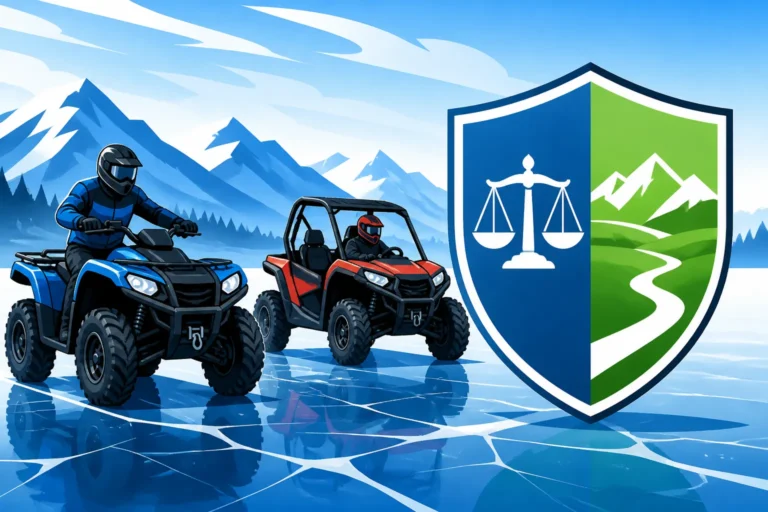
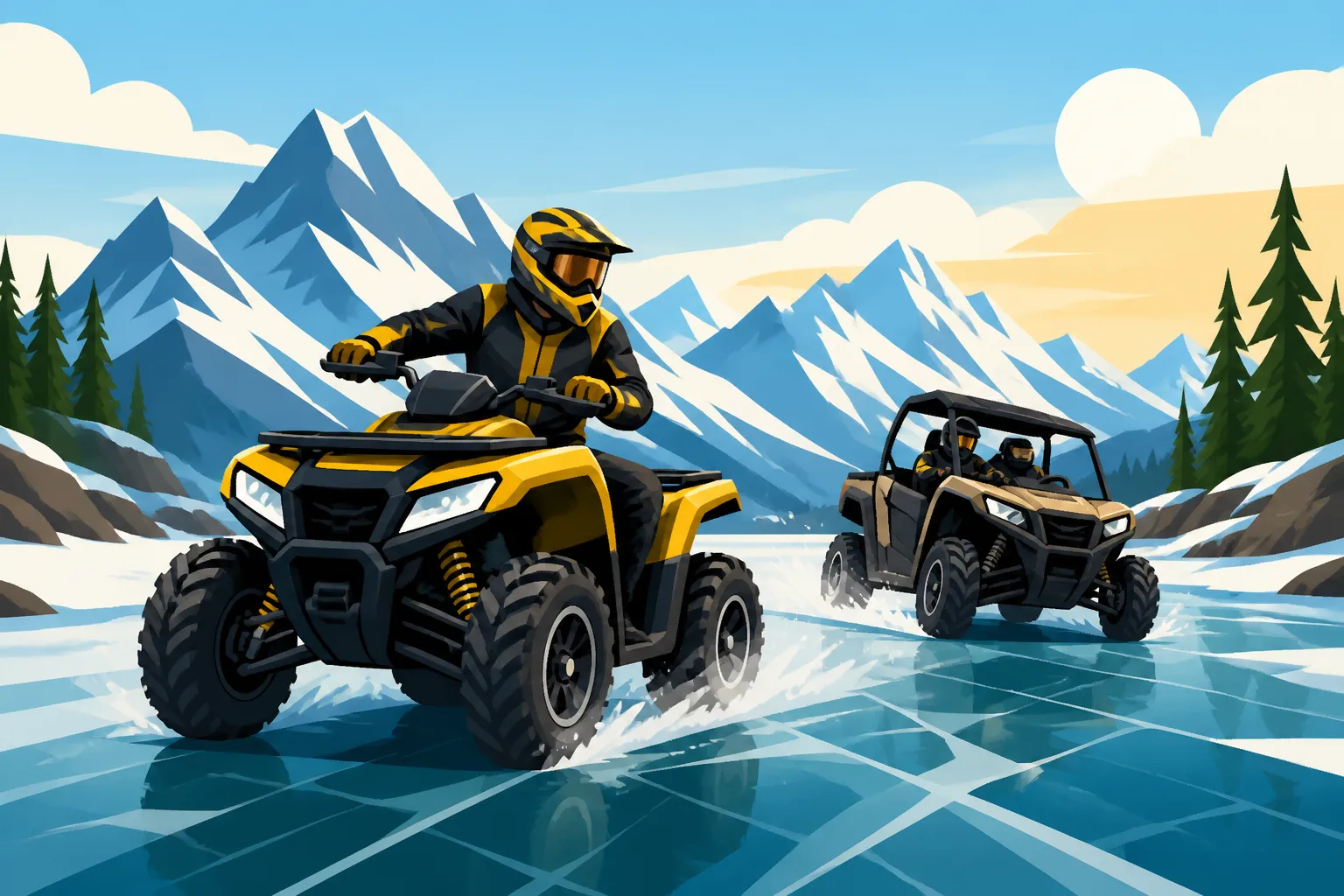
The allure of a vast, frozen river stretching out before you, seemingly a wide-open highway for your ATV or UTV, is undeniably powerful for many Alberta riders. It looks like an opportunity for unparalleled freedom and exploration, a chance to break free from the confines of narrow trails or public land use zones. However, this enticing landscape hides immense dangers and a legal labyrinth that can quickly turn a thrilling ride into a life-threatening ordeal or a costly legal battle. This guide is here to unravel the complexities surrounding off-highway vehicle (OHV) use on Alberta's frozen rivers, giving you the unvarnished truth about the risks, the law, and how to stay safe (or better yet, avoid the peril altogether).
The Allure and the Legal Landscape of Frozen Rivers
There's a certain wild beauty to Alberta's rivers in the depths of winter, transformed into expansive sheets of ice and snow. It’s easy to see why they might call to the adventurous spirit, promising wide-open spaces devoid of trees, rocks, or steep climbs. Yet, beneath that inviting surface lies a world of unpredictable dangers and a legal framework that often leaves riders scratching their heads.
Why Frozen Rivers Seem Appealing
Imagine breaking free from the often-congested, winding trails of a Public Land Use Zone. On a frozen river, you envision miles of flat, uninterrupted terrain, perfect for opening up your machine or exploring new areas. For some, it’s about the sheer thrill of speed, the feeling of gliding over an immense, natural canvas. For others, it might seem like a shortcut to a remote cabin or a novel way to access fishing spots. The mental image is often one of serene solitude and boundless adventure, a stark contrast to the often-regulated and sometimes crowded designated trail systems. It’s easy to get caught up in this vision, overlooking the inherent fragility and unpredictability of ice.
The Murky Legal Waters
Here's where things get complicated. Alberta's OHV regulations, primarily outlined in the Traffic Safety Act and the Off-Highway Vehicle Regulation, don't often have a specific line that screams, "Thou shalt not ride on frozen rivers!" This silence can be misleading, creating a false sense of permission. However, just because something isn't explicitly forbidden doesn't mean it's allowed or safe.
The key lies in how the law defines "public land" and "highway." Many rivers and riverbeds in Alberta are considered public land, and their frozen surfaces could, in certain contexts, be interpreted under the broad definition of a "highway" in the Traffic Safety Act, which includes "any thoroughfare, street, road, trail, avenue, parkway, driveway, viaduct, lane, alley, square, bridge, causeway, trestleway or other place that the public is ordinarily entitled or permitted to use for the passage or parking of vehicles." If a frozen river is considered a "highway," then all the rules of the road—registration, insurance, helmet laws, and more—suddenly apply, which can be an unexpected trap. You'd need to ensure your machine is properly registered, likely with a current [Alberta Issues a Plate, Not a Sticker], and that you have [Alberta Requires Insurance on Public Land]. Beyond this, there are environmental regulations under the Public Lands Act and Water Act that prohibit activities damaging to riverbeds, banks, or aquatic environments, even when frozen. Breaking through the ice, for instance, could result in fuel or oil contamination, leading to significant fines and environmental damage charges. An officer checking on you would certainly be interested in seeing [What an Alberta Officer Can Ask to See] and verifying your compliance with all relevant laws.
The Risks of the Unknown
Even if you manage to navigate the legal ambiguities, the physical risks are profound. When you ride on a frozen river, you're venturing onto a surface whose integrity is completely unknown and constantly changing. You can't see the currents swirling beneath, the warm springs bubbling up, or the subtle changes in depth that create weak spots. Snowfall can mask thin ice, open leads (cracks or areas of open water), or dangerous pressure ridges where ice sheets have buckled. The ice that was solid yesterday might be dangerously fragile today due to a change in temperature, exposure to sunlight, or fluctuations in water levels. This inherent unpredictability is the most significant risk factor; you are quite literally riding into the unknown, betting your life on a surface that gives no guarantees. Even if you've kitted out your machine with robust aftermarket parts from a brand like SuperATV, designed for extreme off-road conditions, no amount of heavy-duty suspension or reinforced chassis can protect you from falling through thin ice.
Navigating the Very Real Dangers of Ice Riding
Let's be brutally honest: riding on frozen rivers is exceptionally dangerous. It's not just about the cold; it's about the multitude of unseen hazards that can turn a beautiful winter day into a fight for survival.
Variable Ice Thickness and Strength
The biggest illusion of a frozen river is its perceived uniformity. In reality, ice thickness varies dramatically, sometimes within just a few feet. Factors influencing this include:
- Currents: Areas with strong currents, like bends or narrow sections, will have thinner ice, as the moving water erodes it from below.
- Depth: Deeper sections of a river take longer to freeze solidly.
- Snow Cover: A blanket of snow acts as insulation, preventing thick ice from forming, even in frigid temperatures. It also hides weak spots.
- Warm Springs/Inflows: Subterranean springs or warm water discharge from industrial sites can create hidden pockets of dangerously thin ice.
- Man-Made Structures: Bridge pilings, dams, and culverts can create turbulence and thermal variances that lead to thin ice around them.
- Temperature Fluctuations: A few days of warm weather, even after a prolonged cold snap, can significantly weaken ice without it being visibly apparent. The structure of the ice changes, making it brittle.
You might ride over a foot of solid ice for a kilometre, only to break through a few inches of slushy ice moments later. This variability is impossible to gauge from the surface, especially when covered by snow, and is precisely why these environments are so treacherous for OHVs. Even a relatively light ATV can exert significant pressure on thin ice, and the momentum of a moving machine makes it almost impossible to stop once you hit a weak spot.
Hypothermia and Cold Water Shock
Falling through the ice isn't just a dunking; it's an immediate, life-threatening emergency. The human body's response to sudden immersion in icy water is called cold water shock. This causes an involuntary gasp, hyperventilation, and a rapid increase in heart rate and blood pressure, which can lead to cardiac arrest, even in healthy individuals. The intense shock makes it incredibly difficult to control your breathing or coordinate movements for self-rescue.
If you survive the initial shock, hypothermia sets in rapidly. Your body loses heat far faster in water than in cold air. Within minutes, you'll lose dexterity and strength, making it nearly impossible to pull yourself out, especially if wearing heavy winter clothing that quickly becomes waterlogged. Recovery requires immediate, sustained warmth, which is often hours away in remote river locations. The chances of a successful self-rescue, particularly for someone alone or unprepared, are terrifyingly low.
Environmental Impact and Penalties
Beyond the personal danger, operating OHVs on river ice carries significant environmental risks and potential legal repercussions. Even if you don't break through, the weight of machines can damage fragile riparian habitats along the banks, compact snow, and disturb wildlife that relies on the river ecosystem for survival. If you do break through, the consequences are far graver.
- Fuel and Oil Contamination: A submerged ATV or UTV will almost certainly leak fuel, oil, and other fluids into the river. This pollutes the water, harming fish and other aquatic life, and can have long-lasting environmental effects.
- Damage to Riverbed: The impact of a machine breaking through the ice can scour the riverbed, destroying fish spawning grounds and benthic organisms.
- Recovery Operations: Retrieving a submerged OHV is complex, expensive, and often requires heavy equipment that can cause further environmental disruption.
Alberta's environmental legislation is stringent. Violating provisions of the Environmental Protection and Enhancement Act or the Water Act can result in substantial fines, potentially thousands or even tens of thousands of dollars, along with orders to pay for environmental remediation. This is in addition to any charges you might face for operating an unregistered or uninsured vehicle on what an officer considers a "highway" or public land, which could include [Alberta Penalties for Riding Unregistered].
Other Hazards
If the ice thickness and cold water aren't enough, frozen rivers present a host of other lurking dangers:
- Open Leads (Cracks): These are areas of open water where the ice has cracked and separated. They can be hidden by snow and are impossible to cross.
- Pressure Ridges: Where two sheets of ice collide, they buckle upwards, creating jagged, unstable mounds of ice. These can easily damage your machine or cause you to lose control.
- Hidden Obstacles: Rocks, logs, submerged vehicles, or other debris can be frozen into the ice or hidden just beneath the surface, posing a severe impact hazard. Even a top-tier skid plate from SuperATV won't save you from every impact, and the sudden jolt can throw you from your machine.
- Lack of Landmark Navigation: On a vast, snow-covered river, landmarks can disappear, making it easy to get disoriented, especially in whiteout conditions or fog. Getting lost in winter wilderness, even on a river, compounds the danger.
Essential Safety Measures and Best Practices (If You Must)
Given the extreme dangers, the most important "best practice" is simple: do not ride your OHV on frozen rivers. There are designated [Alberta OHV Trails: Riding Public Land] and vast areas where [Winter Riding Rules in Alberta] are specifically designed for safe and enjoyable winter OHV use. However, if you or someone you know insists on taking this immense risk, then a bare minimum of precautions must be followed, understanding that even these cannot guarantee safety.
Preparation is Paramount
If you absolutely must venture onto ice, preparation is not just important; it's the difference between life and death.
- Never Ride Alone: This is non-negotiable. If you go through, you need someone there to help, summon help, or at least retrieve your body.
- Inform Someone: Tell a trusted person exactly where you are going, your planned route, and when you expect to return. Stick to the plan.
- Check Conditions Rigorously: Do not rely on casual observation. Check local ice reports, which are often provided by fishing groups or local authorities, but remember these are still general guidelines. Look for signs of open water or recent melting.
- Personal Safety Gear:
- Ice Picks: Wear a set of ice picks around your neck. These are crucial for pulling yourself out if you go through.
- Flotation Suit: An insulated flotation suit provides warmth and buoyancy, significantly increasing your survival time and ability to self-rescue.
- Helmet: Always wear a CSA-approved helmet. Not just for impacts, but for head protection if you hit your head going through the ice. This is standard for [Alberta Helmet Law on Public Land].
- Whistle: For signaling for help.
- Survival Kit: A waterproof bag with fire-starting materials, a knife, extra warm clothing, a first-aid kit, and high-energy snacks.
- Machine Preparation:
- Tethered Rope: Keep a long, strong rope easily accessible on your machine for potential rescue.
- Spud Bar: A long, heavy metal bar to test ice thickness ahead of you. Tap it firmly on the ice; if it breaks through in one or two hits, the ice is likely too thin for an OHV.
- Avoid Overloading: The lighter your machine, the less pressure it puts on the ice.
- GPS/Satellite Messenger: Cell service is unreliable in many remote areas. A GPS device with pre-loaded maps and a satellite messenger (like a SPOT device or inReach) for emergency communication are critical.
- Understand Minimum Thickness Guidelines: While no ice is truly "safe," general guidelines suggest at least 8 inches (20 cm) of clear, hard ice for ATVs and 12 inches (30 cm) for larger UTVs. These are absolute minimums and do not account for hidden dangers or variable conditions. Never trust less than these figures, and even then, assume risks.
What to Do in an Emergency
If you or a companion breaks through the ice, every second counts.
- Stay Calm: The initial cold water shock is intense, but fighting it wastes precious energy. Try to control your breathing.
- Self-Rescue:
- Turn back the way you came, as that's where the ice was solid.
- Use your ice picks to get a grip on the unbroken ice edge.
- Kick your feet to create momentum and pull yourself onto the ice, using a swimming motion.
- Once on the ice, roll away from the hole to distribute your weight, rather than standing up immediately.
- Assisting Others:
- Do not run to the hole. Stay low, spread your weight, and crawl.
- Extend, don't enter. Use a long branch, rope, or even your belt to extend to the person. Lie flat on your stomach as you pull them out.
- Call for help immediately. Use your satellite messenger or a phone if you have service.
- Post-Rescue: Get the victim to warmth immediately. Remove wet clothing, replace it with dry layers, and provide warm, sugary drinks (if conscious and able to swallow). Seek medical attention as soon as possible, even if they seem fine, as secondary hypothermia or other complications can arise.
Alternatives for Winter Riding
Instead of risking life and limb on unpredictable frozen rivers, embrace the incredible, safe winter riding opportunities Alberta offers. The province boasts a fantastic network of trails and designated OHV areas that are maintained and monitored for safe use. Places like [McLean Creek: Alberta's Best Known OHV Area] or other [Alberta Eastern Slopes Riding Areas] provide legal, designated trails perfect for a winter adventure. Many areas have [Alberta OHV Camping and Staging Areas] to make your trip comfortable. These areas often have established [Alberta Rules for Riding Crown Land], ensuring you stay on the right side of the law while enjoying the thrill of winter riding. Look for opportunities to join organized rides or events through [Alberta OHV Clubs Worth Joining], where you can learn safe riding practices and connect with experienced riders. This is where your SuperATV accessories, like plows or tracks, can genuinely shine, making your winter adventures more enjoyable and secure on solid ground.
The Bottom Line: Prioritizing Safe Winter Adventures
Riding an ATV or UTV on a frozen river in Alberta is a gamble, and the stakes are simply too high. While the thought of boundless, open ice might be tempting, the reality is a minefield of unpredictable ice conditions, lethal cold water, and severe legal and environmental consequences. The law might not explicitly forbid it in every instance, but the overarching regulations regarding public land use, safety, and environmental protection make it a high-risk activity with little reward compared to the potential for disaster.
There are so many fantastic, safe, and legal ways to enjoy your OHV in Alberta during the winter months. Take the time to explore designated trails, understand [Alberta Rules for Riding Crown Land], and ensure you're compliant with all [Alberta Equipment Required on Public Land]. Prioritize your safety and the safety of your companions above all else. A thrilling day in the winter wilderness should be one you remember fondly, not one that ends in tragedy.
Here's a comparison to help put things into perspective:
| Feature/Risk | Riding on Frozen Rivers | Riding on Designated OHV Trails |
|---|---|---|
| Ice Stability | Highly variable, unpredictable; hidden thin spots/open leads | N/A (Solid ground) |
| Cold Water Shock | Extreme risk if breaking through | Minimal risk |
| Hypothermia | High risk post-immersion | Risk primarily from prolonged exposure to cold air if stranded |
| Visibility | Can be excellent, but whiteout conditions mask dangers | Variable depending on terrain, well-marked trails |
| Navigation | Easy to get disoriented on vast, featureless landscapes | Clearly marked trails, often mapped via GPS |
| Legal Status | Ambiguous, potentially subject to multiple acts; risk of fines | Clear, designated legal areas with specific rules |
| Environmental Impact | High risk of pollution, habitat damage if breaking through | Managed impact within designated zones |
| Rescue Access | Extremely difficult, remote; specialized teams needed | Often easier access for emergency services |
| Equipment Damage | Risk from impacts, breaking through, or jagged ice | Risk from terrain, obstacles, but generally predictable |
| SuperATV Product Use | Limited effectiveness against primary risks | Ideal for enhancing performance, protection, and utility |
Disclaimer
This article is for general informational purposes only and does not constitute professional advice. Laws, prices and regulations vary by location and change over time. Consult a qualified professional for guidance on your specific situation.