Wood Buffalo’s OHV Rules in Alberta
Navigating the world of off-highway vehicles (OHVs) can feel like deciphering a secret code, especially when you're looking at a specific region like the Regional Municipality of Wood Buffalo in Alberta. Many riders, myself included, have felt that frustration of not knowing if that tempting trail or short road stretch is actually legal to ride. This guide is here to cut through the confusion and help you understand the specific OHV rules and bylaws that apply in Wood Buffalo, so you can ride safely and legally.
Understanding the Wood Buffalo Context for OHVs
Riding an OHV in Alberta is never as simple as just firing up the engine and hitting the nearest trail. Each municipality, while bound by provincial law, often adds its own layer of regulations. In a vast and unique area like Wood Buffalo, understanding this interplay is crucial for a smooth and legal ride.
The Vastness of the Regional Municipality of Wood Buffalo
The Regional Municipality of Wood Buffalo (RMWB) is truly immense, larger than some European countries. This sheer scale, stretching from Fort McMurray north to the borders of Saskatchewan and the Northwest Territories, presents a unique challenge for OHV riders. You're dealing with a complex patchwork of urban areas, rural settlements, industrial sites, and vast tracts of Crown land. What might be perfectly acceptable in a remote, undeveloped area could lead to a hefty fine just a short distance away, particularly as you approach or enter populated zones like Fort McMurray.
This geographical diversity means that OHV use isn't a one-size-fits-all scenario. The type of land you're on, its proximity to infrastructure, and local environmental sensitivities all play a role in determining where and how you can ride. This makes it particularly challenging for riders who might be used to more consistent rules in smaller, more homogenous regions. Always remember that the rules can shift dramatically as you traverse different areas within the RMWB.
Provincial Laws vs. Local Bylaws
At the core of all OHV operation in Alberta are the provincial regulations, primarily the Traffic Safety Act and the Off-Highway Vehicle Regulation. These acts establish the foundational requirements for registration, insurance, equipment, and general conduct on public land and highways across the province. Think of these as the absolute minimum standards everyone must meet. For instance, [What the Traffic Safety Act Requires of Alberta OHVs] clearly outlines these baseline expectations.
However, municipalities like Wood Buffalo have the authority to enact their own bylaws. These local rules can, and often do, add further restrictions or specific permissions within their jurisdiction. What they generally cannot do is loosen provincial requirements; rather, they tend to tighten them, especially concerning public roads and sensitive areas. This means that while your OHV might meet all provincial standards, you still need to be aware of any additional Wood Buffalo bylaws that could prohibit riding on certain roads, trails, or within specific areas that would otherwise be permissible under provincial guidelines alone. It’s this potential for additional local rules that often catches riders off guard, leading to confusion and unintended violations.
Riding OHVs on Roads and Highways in Wood Buffalo
One of the most persistent misconceptions among OHV riders is the idea of "street legal" status. In Alberta, this concept is highly limited for OHVs, and Wood Buffalo is no exception. It’s critical to understand the general prohibitions and the very narrow circumstances under which an OHV might legally touch pavement.
The General Prohibition and Exceptions
Let's be absolutely clear: generally speaking, OHVs are not street legal on public roads and highways in Alberta, and that includes within the Regional Municipality of Wood Buffalo. This means you cannot simply ride your quad or side-by-side down the street to the corner store, or even along the shoulder of a major road for extended distances. The default rule is that OHVs are designed for off-highway use only, and the province takes this seriously to maintain safety on its road networks. If you're wondering [Can You Ride an ATV on the Road in Alberta?], the answer is almost always "no" unless a very specific exception applies.
There are, however, extremely limited exceptions, often related to crossing a highway or accessing private land from an approved staging area. These exceptions are typically governed by strict conditions: you might need to cross at a 90-degree angle, yield to all traffic, and do so only when safe. Some areas might have specific bylaws allowing OHVs on certain short segments of road to connect trails or access fuel, but these are rare and always explicitly designated. Without such a specific designation, assuming you can ride on any public road is a fast track to a ticket and potential vehicle seizure. Always look for official signage or check with the RMWB directly for any such permissive bylaws.
Specific Bylaws for Road Access in Fort McMurray
While the RMWB covers a massive area, Fort McMurray is its primary urban hub, and this is where OHV road access becomes even more restricted. As a general rule, OHVs are strictly prohibited from operating on Fort McMurray's streets, sidewalks, and designated public roadways. The regional municipality’s bylaws are designed to keep OHVs off urban infrastructure for safety and noise reduction reasons, protecting both riders and other road users. This strict stance is a crucial point for anyone living in or visiting the community.
It’s easy to misunderstand what constitutes a "highway" in legal terms; many riders mistakenly believe that only paved, high-speed roads fall under this definition. However, in Alberta, the term "highway" is incredibly broad, encompassing not only main roads but also alleys, ditches, and even undeveloped road allowances. This means that even riding in a ditch alongside a road within Wood Buffalo could be considered illegal road use if there isn't a specific bylaw permitting it. As a rider, you need to understand [Why the Legal Definition of Highway Includes the Ditch] is so expansive. If you absolutely must transport your OHV across a road or short distances, trailering it or using an approved road-legal utility vehicle (which is a different class of vehicle entirely) are your safest bets. For those rare, specific scenarios where a bylaw might allow minimal road use (e.g., to cross a utility right-of-way), ensuring your machine is equipped with all necessary safety features like proper lighting, mirrors, and even turn signals—items that can be added with aftermarket kits from companies like SuperATV—becomes paramount to meeting even the most basic safety expectations.
Public Land Use and Designated OHV Areas in Wood Buffalo
Beyond the contentious issue of road riding, the Regional Municipality of Wood Buffalo offers vast opportunities for OHV use on public lands. However, even here, "anything goes" is not the motto. Understanding where you can ride and the nuances of those rules is essential.
Exploring Crown Land and PLUZ (Public Land Use Zones)
A significant portion of the Regional Municipality of Wood Buffalo consists of Crown Land, which is land owned by the provincial government. Generally, OHV use is permitted on Crown Land in Alberta, provided you are following responsible riding practices and any specific land-use designations. This is where much of the recreational OHV activity in the region takes place. Riders need to be familiar with [Alberta Rules for Riding Crown Land], which emphasize staying on existing trails, avoiding sensitive ecological areas, and respecting wildlife. The vastness of Wood Buffalo means there's a lot of open space, but this doesn't imply a free-for-all.
Unlike some other parts of Alberta, the RMWB doesn't have large, formally designated Public Land Use Zones (PLUZ) specifically managed for intensive OHV recreation in the same way you might find in the foothills (e.g., McLean Creek). Instead, OHV users in Wood Buffalo are often riding on general Crown Land. This means there might be fewer formally maintained trails or dedicated staging areas. Riders are expected to practice "random riding" responsibly, which means minimizing environmental impact, not creating new trails, and avoiding sensitive riparian areas. Always carry a map and be aware of your location to ensure you're not inadvertently entering a restricted zone.
Restrictions Around Communities and Protected Areas
While much of Wood Buffalo is open Crown Land, there are significant restrictions and no-go zones that OHV riders must respect. Primarily, OHV operation is often restricted or outright prohibited near populated communities, provincial parks, protected natural areas, and industrial sites. For example, within the boundaries of Wood Buffalo National Park or other protected areas, OHV use is typically highly regulated or banned entirely to protect sensitive ecosystems and wildlife. These areas will usually be clearly signed, but it's always the rider's responsibility to know before they go.
Furthermore, even on general Crown Land, specific zones might be subject to seasonal closures to protect migrating wildlife, during periods of high fire risk, or due to industrial activity. Always check for current fire bans and land-use advisories before heading out. Respecting these restrictions isn't just about avoiding a fine; it's about being a responsible outdoor enthusiast and preserving the natural beauty and ecological health of the region for everyone. Local land managers and Indigenous communities often have specific concerns about OHV impacts, and respecting these perspectives is crucial for sustainable recreation.
Essential Equipment and Rider Requirements in Wood Buffalo
Beyond where you can ride, it's equally important to know what you need to ride legally and safely in Wood Buffalo. Alberta's provincial regulations are quite clear on equipment and rider prerequisites, and these apply uniformly across the RMWB.
Mandatory Safety Gear for Riders
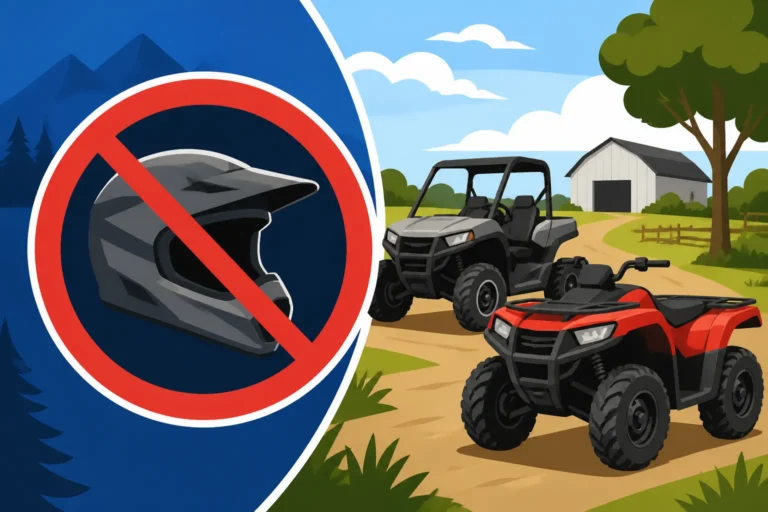
When it comes to personal safety, helmets are non-negotiable. Alberta law mandates that all OHV riders and passengers on public land, regardless of age, must wear a CSA-approved helmet. This isn't just a suggestion; it's a legal requirement designed to protect you in case of an accident. Ignoring this rule can result in significant fines and, more importantly, puts your life at serious risk. Many riders are surprised by the strictness, but the safety benefits are undeniable. For a full breakdown, you can review [Alberta ATV Helmet Law Explained].
Beyond the helmet, it’s highly recommended, though not always legally mandated, to wear additional protective gear. This includes eye protection (goggles or a visor), sturdy over-the-ankle boots, gloves, and appropriate riding apparel that covers your arms and legs. While you might see riders in shorts and t-shirts, proper gear can significantly reduce injuries from branches, flying debris, or a fall. It's about proactive safety; investing in good gear is just as important as maintaining your machine.
Machine Requirements and Maintenance
Your OHV itself must meet several provincial standards to be legally ridden on public land in Wood Buffalo. First and foremost, every OHV needs to be registered with the Province of Alberta, and you must display a valid license plate. For details on this, check out [Do You Need to Register an ATV in Alberta?]. This plate must be mounted securely and be clearly visible. Alongside registration, carrying valid insurance is a must. If you're pulled over by an officer, you will be expected to produce proof of insurance on demand. Knowing that [Alberta Requires Insurance on Public Land] and being prepared with your documents is critical.
Beyond paperwork, your machine needs specific safety equipment. A working spark arrestor in the exhaust system is mandatory to prevent wildfires, particularly vital in the forested areas of Wood Buffalo. If your machine is older or has a modified exhaust, ensure it meets this requirement; [Alberta Requires a Spark Arrestor] highlights this. Your exhaust system must also meet noise regulations; excessively loud or modified exhausts are illegal. Furthermore, your OHV must have working head and tail lights, even if you're riding during the day. This is a common requirement that many riders overlook, but [Alberta Requires Working Head and Tail Lights] is a provincial law for a reason – visibility is key. For riders who might want to add turn signals, mirrors, or other road-friendly accessories to their OHV for use in very specific, bylaw-approved crossing scenarios (where legal and safe), products from companies like SuperATV can provide robust, high-quality solutions to meet these equipment needs.
Penalties, Enforcement, and Responsible Riding in Wood Buffalo
Understanding the rules is only half the battle; knowing the consequences of breaking them and adopting a mindset of responsible riding completes the picture. In Wood Buffalo, enforcement is taken seriously, especially given the environmental sensitivities and the mix of industrial and recreational land use.
Consequences of Non-Compliance
Riding an OHV illegally in Wood Buffalo can lead to a range of penalties, none of which are pleasant. One of the most common infractions is riding an unregistered machine, which can result in a significant fine. You can find more information on this under [Alberta Penalties for Riding Unregistered]. Furthermore, operating an OHV without mandatory insurance on public land is a very serious offense. In such cases, law enforcement has the authority to seize your vehicle on the spot, in addition to issuing substantial fines. The rules around [Alberta Vehicle Seizure for No Insurance] are there for a reason – to protect everyone on public land.
Beyond fines and seizures, repeated violations can impact your driving record, potentially affecting your ability to renew your driver's license or even your insurance rates for other vehicles. It's not just about the immediate financial hit; it's about the long-term repercussions and the stain on your record. Officers conducting patrols in Wood Buffalo are trained to look for these common infractions, and they have the authority to pull you over and verify compliance.
Best Practices for OHV Riders in Wood Buffalo
To ensure a positive and legal OHV experience in Wood Buffalo, adopting a proactive and responsible approach is your best defense. The absolute golden rule is "know before you go." This means checking local RMWB bylaws, provincial land-use regulations, and current fire bans before you even load your machine. Online resources, municipal offices, and local OHV clubs are excellent places to gather up-to-date information.
| OHV Activity/Area | Generally Permitted | Conditions/Restrictions | Generally Prohibited | Why It Matters |
|---|---|---|---|---|
| Crown Land (General) | Yes | Stay on existing trails, respect wildlife, check for fire bans, avoid sensitive areas. | Creating new trails, entering protected parks, riding where signed as closed. | Environmental protection, preventing wildfires, maintaining access. |
| Fort McMurray Roads | No (with rare exceptions) | Extremely limited crossings (90 degrees, yield), specific bylaw designations only. | Riding on streets, sidewalks, alleys, ditches. | Safety of public, noise reduction, provincial Traffic Safety Act. |
| Designated PLUZ Areas | Check specific PLUZ rules | Adhere to marked trails, seasonal closures, specific vehicle types. | Off-trail riding, entering closed areas. | Maintaining trail systems, protecting sensitive zones. |
| Private Land | Yes | Only with express permission from landowner. | Trespassing without permission. | Legal access, respecting property rights. |
| Ditches/Road Allowances | No (unless bylaw specified) | Limited to specific bylaw-approved areas, usually short crossings. | Most often considered part of the "highway" under provincial law. | Traffic Safety Act definition of highway, public safety. |
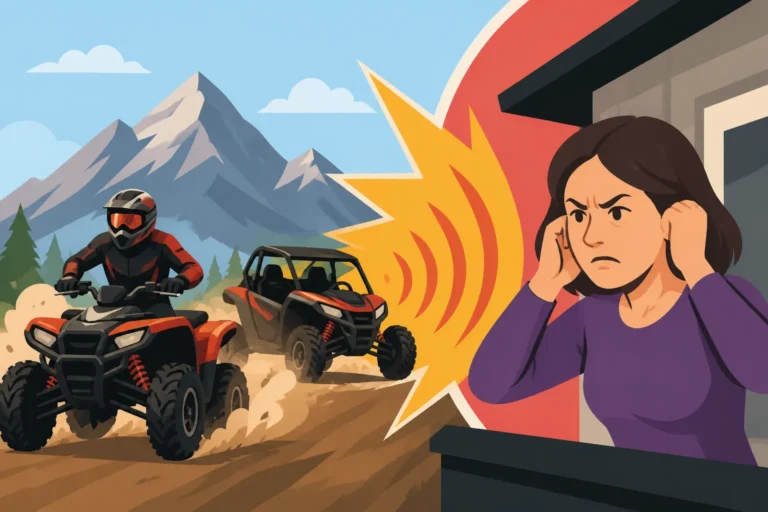
| Near Communities | Often restricted | Check local bylaws; usually restricted to designated access points or excluded entirely. | Unrestricted riding near residential areas, parks, or schools. | Noise complaints, safety of residents, local bylaws. [Alberta Noise Complaints About Quads] |
Always ride courteously, keeping noise levels down, especially when near residential areas. Remember that even if you're out in the bush, your actions impact the environment and other users. Pack out everything you pack in, and leave no trace. Be respectful of private property boundaries and industrial sites, and never trespass. Lastly, always carry your registration, insurance, and identification, as law enforcement officers can request these documents at any time. Being prepared to produce [Producing Insurance on Demand] shows you're a responsible rider and helps keep interactions smooth. Your behaviour on the trail and in the staging areas helps shape the public perception of OHV riders, so let's make it a good one!
Disclaimer
This article is for general informational purposes only and does not constitute professional advice. Laws, prices and regulations vary by location and change over time. Consult a qualified professional for guidance on your specific situation.