Alberta Rules for Passengers on a Quad
One of the most common questions I hear from fellow riders in Alberta, especially those new to the off-highway vehicle (OHV) scene, revolves around carrying passengers on their quads. It’s easy to assume if there's space, you can bring a friend along, but that assumption can lead to serious safety risks and hefty fines. This guide is here to walk you through Alberta's specific rules and crucial safety considerations for having passengers on your quad, ensuring your adventures are both legal and enjoyable.
The Core Rule: Manufacturer's Intent and Designated Seating
Let's get right to the heart of the matter. In Alberta, the fundamental rule regarding passengers on a quad is rooted in the manufacturer's design and intent. It’s not about how much room you think you have; it’s about how the machine was built. Many single-rider ATVs, for instance, are simply not designed to safely carry a second person, regardless of how small or light that person might be. Trying to squeeze two people onto a machine designed for one throws off its balance, compromises handling, and puts both riders at significant risk.
Understanding Manufacturer Specifications
Every quad or side-by-side comes with specifications from its manufacturer that clearly state the intended number of occupants. This isn't just a suggestion; it's a critical safety guideline backed by extensive engineering and testing. These specs dictate everything from the machine's centre of gravity, suspension tuning, braking capacity, and even the positioning of footrests and grab handles. Ignoring these guidelines means you’re operating the machine outside its intended parameters, making it inherently more dangerous.
Think about it: when you hit a bump, take a corner, or need to brake suddenly, that extra weight in an undesignated spot can drastically alter how the machine responds. What might be a minor jolt for a single rider could become a critical loss of control with an improperly seated passenger. This is why manufacturers provide clear guidance, often indicated right on the machine itself with labels or in the owner's manual. Before you even think about inviting someone to ride along, pull out that manual and double-check what your specific quad is designed for. This is especially true for those powerful utility quads that sometimes look like they could handle two, but are in fact, single-rider machines.
What "Designated Seating" Really Means
When the Alberta Off-Highway Vehicle Regulation 319/2002 refers to carrying a passenger, it emphasizes "designated seating." This means there must be a seat, footrests, and often handholds specifically designed and positioned by the manufacturer for a passenger. These aren't improvised add-ons or just a spot on the cargo rack. Designated seating is engineered for safety and comfort, allowing the passenger to maintain balance, absorb impacts, and stay securely on the machine without interfering with the operator's ability to steer, brake, or shift their weight.
Many modern side-by-sides, or UTVs, come explicitly designed for multiple passengers, featuring bucket seats, seatbelts, and roll-over protection systems. These are built from the ground up to be multi-passenger vehicles. On the other hand, traditional ATVs are often designed for a single rider. While some ATV models are purpose-built "two-up" or "touring" models with extended seats and passenger footrests, these are distinct from standard single-rider quads. If your quad isn't a factory-designed two-up model, adding an aftermarket seat kit, even a high-quality one like those you might find from a company such as SuperATV, still doesn't change the machine's original single-rider designation in the eyes of the law and, more importantly, in terms of its safe operational limits. You still need to ensure that any modification doesn't compromise the machine's intended use or safety characteristics.
The Risks of Carrying More Than Intended
The risks associated with carrying more passengers than a quad is designed for are severe and multi-faceted. Beyond the legal penalties, which can include fines, they primarily revolve around safety. When a quad is overloaded or improperly balanced, its handling characteristics change dramatically. Steering becomes heavier, braking distances increase, and the machine can become unstable, especially on uneven terrain, during turns, or while climbing or descending hills.
Consider a scenario on a technical trail near McLean Creek: you're navigating a steep incline with loose gravel. If your quad is a single-rider machine and you have a passenger perched precariously on the back, the weight distribution shifts significantly. The front wheels might lift unexpectedly, or the machine could easily tip backward, causing a rollover. Your ability to shift your own weight and body position to counteract these forces is severely hampered by an extra person. In a crash, a passenger without proper seating and restraints is far more likely to be ejected, leading to severe injuries. These aren't just theoretical dangers; they are real, documented risks that Alberta authorities take very seriously when enforcing [Alberta Passenger Rules on an OHV]. Safety should always be your top priority, far above convenience or the desire to share a ride with someone when your machine isn't designed for it.
Age and Supervision for Young Passengers
Children often love the idea of riding on a quad, and it's a fantastic way to introduce them to the outdoors. However, Alberta has specific rules regarding the age of operators, which indirectly impacts who can be a passenger and under what conditions. The law is designed to protect young riders, recognizing that they need more supervision and specific types of machines to ride safely. Understanding these age requirements is crucial whether your child is operating their own machine or riding as a passenger.
Alberta's Minimum Age for Operators and What It Means for Passengers
In Alberta, a person must be at least 14 years old to operate an OHV on public land without direct adult supervision. However, children under 14 can operate an OHV on public land if they are "under the close supervision of an adult who is 18 years of age or older." This distinction is critical. While it primarily applies to operators, it sets a precedent for how the province views youth and OHV safety. For passengers, while there isn't a hard minimum age written into the passenger rules themselves, the spirit of the law and manufacturer guidelines strongly discourage very young children as passengers, even on designated multi-rider machines.
The general consensus, and what reputable rental operators and safety organizations will tell you, is that passengers should be old enough to understand instructions, hold on securely, and keep their feet on the footrests. A child too small to properly reach the footrests or hold onto the handholds on a machine with designated passenger seating is a significant safety risk. Their body weight might be insufficient to trigger the necessary safety mechanisms, or they might simply lack the physical strength and coordination to ride as a passenger safely. [Alberta's Minimum Age of 14 on Public Land] is a good reference point for the province's general approach to youth and OHVs.
Supervision Requirements for Youth Riders
When a young person is riding as a passenger, especially on a side-by-side or a two-up ATV, the adult operator inherently provides the supervision. For younger children who might ride as passengers, their ability to follow directions, remain seated, and hold on becomes paramount. An adult operating the machine with a child passenger has a heightened responsibility to ensure the child is properly secured, wearing appropriate gear, and understands how to ride safely as a passenger. This means talking to them about keeping their hands and feet inside, not distracting the driver, and communicating if they need a break.
For kids who are old enough to operate their own youth-sized quads, the [Alberta Rules for a 12-Year-Old Rider] or [Alberta Rules for a 14-Year-Old Rider] come into play, emphasizing that until they are 14, they need an adult's close supervision. This typically means the adult must be able to see and respond to the youth, often riding on their own machine nearby. It's not just about being in the same general area; it's about being actively engaged in their safety and riding experience.
Choosing the Right Machine for Young Passengers
When considering carrying a child as a passenger, the choice of machine is paramount. A side-by-side (UTV) with a roll cage, seatbelts, and individual bucket seats offers a significantly higher level of protection for child passengers compared to even a designated two-up ATV. On a UTV, a child can be secured with a seatbelt, and their position within the vehicle provides a more contained environment. Companies like SuperATV offer a range of accessories for UTVs that can enhance passenger safety and comfort, such as youth seats or harnesses designed for smaller occupants, which could be useful for family-oriented riding.
However, even with these enhancements, it's crucial to ensure that the child meets the manufacturer's height and weight recommendations for the seating and restraints. Never use a car seat or booster seat that isn't specifically designed and tested for OHV use, as they may not perform safely in the dynamic and often jarring environment of off-road riding. The safest bet for younger kids is usually a UTV where they can be properly belted into a dedicated seat. For quads, if your machine is not specifically a "two-up" model, then carrying any passenger, especially a child, is not recommended and is likely illegal.
Here’s a quick overview of passenger considerations by OHV type:
| OHV Type | Manufacturer Designation | Passenger Capacity (Typical) | Key Safety Features | Legal Implications in Alberta |
|---|---|---|---|---|
| Single-Rider ATV | Single operator only | 0 | No dedicated passenger seat/footrests | Illegal to carry passengers on public land. |
| Two-Up ATV | Operator + one passenger | 1 (passenger) | Extended seat, passenger footrests, handholds | Legal for one passenger, provided designated seating is used. |
| Side-by-Side (UTV) | Operator + 1-5 passengers | 1-5 (passengers) | Bucket seats, seatbelts, roll cage, grab handles | Legal for multiple passengers, provided designated seating and seatbelts are used. |
| Youth ATV | Single youth operator | 0 | No dedicated passenger seat | Illegal to carry passengers. Requires adult supervision for operators under 14. |
| Dirt Bike | Single operator only | 0 | No dedicated passenger seat | Illegal to carry passengers. |
| Snowmobile | Operator + 1 passenger (some models) | 0-1 (passenger) | Extended seat, passenger footrests/handholds (on some) | Legal for one passenger on models with designated seating. |
Essential Safety Considerations Beyond the Law
While adhering to Alberta's laws and manufacturer guidelines is non-negotiable, safety on the trails extends far beyond just what's written in the regulations. When you have a passenger, you're not just responsible for your own well-being, but for theirs too. This calls for extra vigilance, the right gear, and clear communication to ensure everyone has a safe and enjoyable experience.
Gear Up: Helmets, Goggles, and More for Passengers
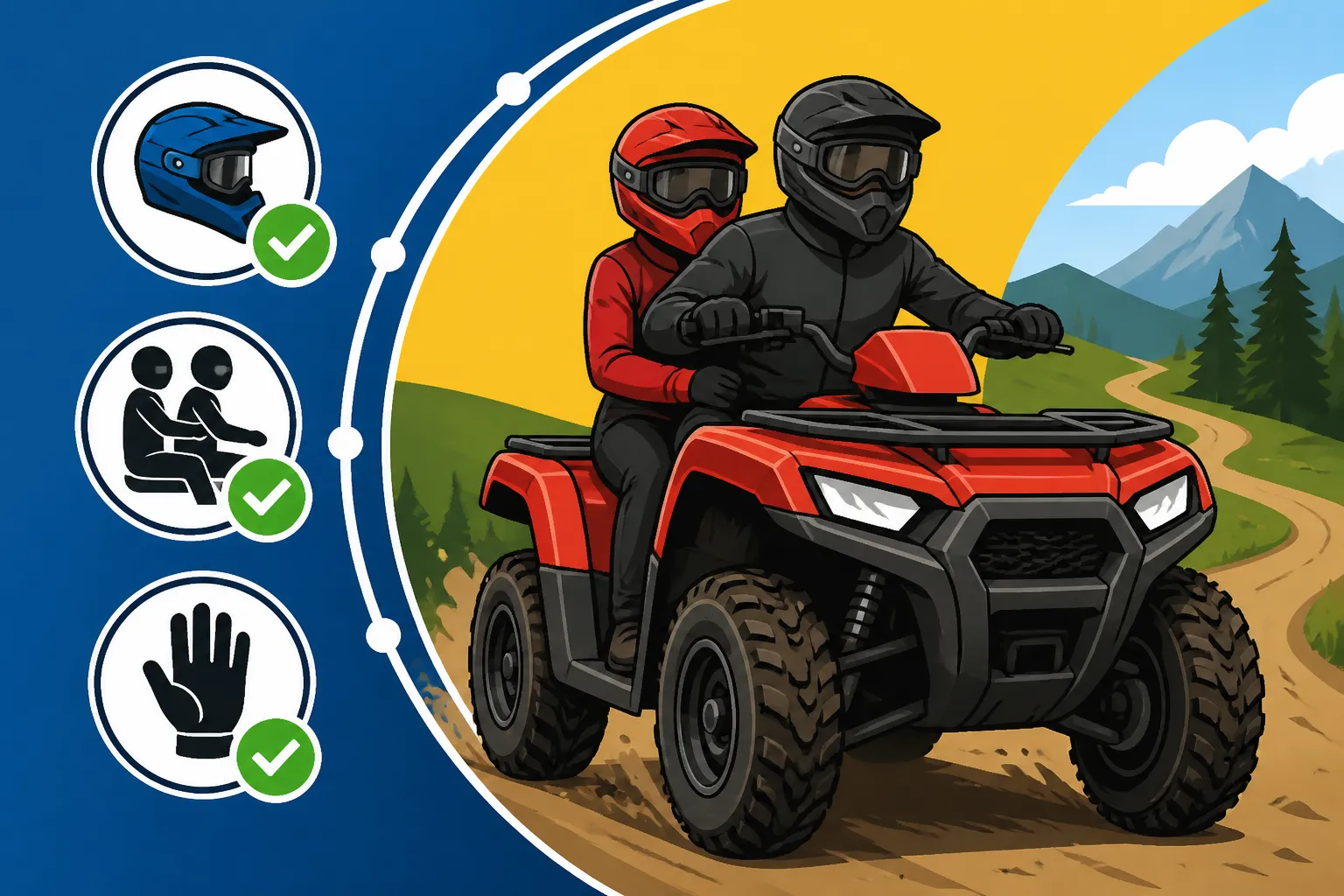
Just like the operator, any passenger on an OHV on public land in Alberta must wear a CSA-approved helmet. This isn't optional; it's the law, enforced since May 2017. [Alberta Helmet Law on Public Land] is clear on this point. And it’s not just any helmet – it must be properly fitted and secured. A helmet that's too loose or improperly fastened won't offer the protection it's designed for. Beyond the helmet, goggles or protective eyewear are crucial to shield eyes from dust, debris, branches, and insects. You don't want a stray twig causing a momentary distraction or injury, especially in a fast-moving situation.
But don't stop there! Long-sleeved shirts, long pants, sturdy over-the-ankle boots, and gloves are equally important. These provide protection from scrapes, bruises, and abrasions in case of a fall, and also guard against sun exposure, branches, and insect bites. Proper attire also helps to regulate body temperature, making the ride more comfortable. Remember, a comfortable passenger is less likely to fidget or become a distraction. If you're riding through mud or water, consider waterproof gear. Preparing your passenger with the right gear is an act of care and responsibility.
Communication and Comfort for Your Passenger
Riding with a passenger means you have to adapt your riding style and constantly communicate. Before you even start the machine, talk to your passenger about how to ride along: where to hold on, how to lean with the machine, and what signals they can use if they need you to slow down or stop. Establishing a clear understanding beforehand can prevent miscommunications on the trail. It's a good idea to remind them to keep their feet firmly on the footrests and not to move around unnecessarily.
During the ride, periodically check in with your passenger, especially if you're navigating rougher terrain or have been riding for a while. Are they comfortable? Are they getting cold, hot, or tired? Do they need a break? Sometimes, new passengers might feel nervous but won't speak up unless prompted. A simple thumbs-up or agreed-upon hand signal can work wonders if engine noise makes verbal communication difficult. Think about what will make the ride enjoyable for them, too – nobody wants to be jostled around uncomfortably for hours. Some riders use helmet communication systems, allowing for clear two-way communication, which is especially useful on longer rides or with new passengers. This kind of communication can greatly enhance safety, allowing the driver to anticipate and adjust to the passenger's needs.
Maintaining Control with Extra Weight
Adding a passenger, even on a designated two-up machine, changes the dynamics of the OHV. The extra weight raises the centre of gravity and increases the momentum, affecting acceleration, braking, and steering. You'll need to adjust your riding style accordingly. This means taking corners slower, braking earlier, and being more deliberate with your steering inputs. Steep climbs and descents, in particular, require extra caution. The machine will feel less nimble and more prone to tipping if you're not careful.
If you've recently added an aftermarket accessory, like a winch or a cargo box, from a brand like SuperATV, remember that these additions also contribute to the overall weight and weight distribution, further changing the machine's handling. Always consider the combined weight of the operator, passenger, gear, and any accessories, and ensure it remains within the manufacturer's Gross Vehicle Weight Rating (GVWR). Practice riding with a passenger in a safe, open area before tackling challenging trails. Get a feel for how the machine responds with the added weight and how your passenger's movements affect stability. Your experience as an operator, combined with a properly equipped machine and a prepared passenger, will ensure everyone enjoys the beautiful Alberta trails safely.
Disclaimer
This article is for general informational purposes only and does not constitute professional advice. Laws, prices and regulations vary by location and change over time. Consult a qualified professional for guidance on your specific situation.