Alberta Municipalities That Opened Roads
One of the biggest head-scratchers for Alberta ATV and UTV riders is figuring out where you can actually legally ride your machine, especially when it comes to roads. It feels like a confusing maze of rules, with some areas welcoming off-highway vehicles (OHVs) and others slamming the door shut. This comprehensive guide is here to untangle that mess, helping you understand how road access works in Alberta and highlighting municipalities that have taken steps to open up routes for our beloved quads and side-by-sides.
The Frustrating Patchwork of Alberta OHV Road Access
If you've ever felt utterly bewildered trying to figure out where you can and can't ride your ATV or UTV on roads in Alberta, you are absolutely not alone. It's a common frustration, and honestly, it’s a valid one. The rules aren't always clear, they differ from one jurisdiction to the next, and it often feels like you need a law degree and a crystal ball just to plan a simple ride. This isn't just about obscure back roads; it's about the very concept of connecting trails, accessing staging areas, or even just getting from your property to a nearby riding spot.
Why Alberta's Laws Feel So Confusing
The core of the confusion stems from how jurisdiction is split between the provincial and municipal governments in Alberta. On a provincial level, the Traffic Safety Act generally prohibits OHVs from operating on what it defines as a "highway" – and we'll get into that definition in a moment, because it's broader than most people realize. This means that, by default, riding your quad or side-by-side on most public roads is a no-go. It’s important to understand this baseline rule: you are generally not allowed on public roads unless there's a specific exemption or, more commonly, a local bylaw that says otherwise.
But here’s where the "patchwork" comes in. While the province sets the overarching framework, individual municipalities – counties, municipal districts, towns, and villages – have the power to create their own bylaws that can override or create exceptions to the provincial rule within their specific boundaries. This means that one county might be completely open to OHVs on certain roads, while its neighbour might have a strict ban, and a town within that open county might still prohibit OHVs on its streets. It’s like a game of legal hopscotch, and if you step on the wrong square, you could be looking at a hefty ticket. Riders often lament this inconsistency, wishing for a more unified approach, but for now, navigating these local variations is the reality of OHV riding in Alberta.
The "Highway" Definition That Catches Everyone Off Guard
When most of us hear the word "highway," we picture multi-lane freeways or major provincial routes. But in the context of Alberta's Traffic Safety Act, the definition of a "highway" is far, far broader, and it consistently catches unsuspecting OHV riders off guard. It's one of the biggest reasons people accidentally find themselves on the wrong side of the law. Essentially, [What the Traffic Safety Act Calls a Highway] encompasses almost any road, street, avenue, lane, alley, parkway, driveway, bridge, viaduct, or other place that the public is ordinarily entitled or permitted to use for the passage of vehicles.
This expansive definition includes places you might assume are perfectly fine for an OHV. For example, [Why the Legal Definition of Highway Includes the Ditch] means that even the grassy shoulder or ditch alongside a paved or gravel road is considered part of the "highway" system. Many riders believe that if they're not on the main paved surface, they're not on a highway, but that's simply not true under Alberta law. Furthermore, [Riding an Alley Is Still Riding a Highway]. Those seemingly innocuous back alleys behind businesses or residential homes? Yep, they fall under the "highway" definition too, meaning you typically can't just cruise down them on your quad. Understanding this incredibly broad definition is the first, crucial step to avoiding accidental infractions, because it means that even riding across the road to your friend's driveway is, technically, operating on a highway.
The Constant Battle Between Riders and Residents
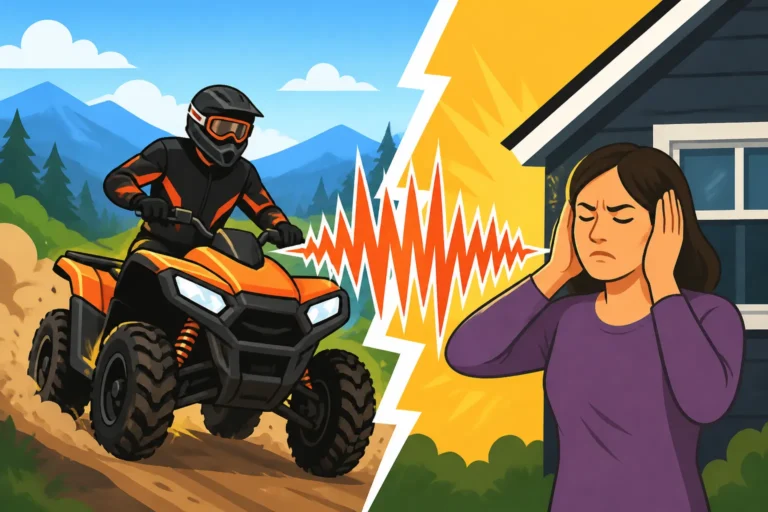
Let's be real: the debate over OHV road access isn't just about legal definitions; it's deeply rooted in community dynamics and competing interests. While riders are often eager for more places to legally operate their machines, many residents, especially in rural-residential areas or within town limits, have legitimate concerns that contribute to municipal hesitation or outright bans. The most common complaints revolve around noise. A stock ATV or UTV can be loud, and modified exhausts (which, by the way, are generally illegal on public land and roads in Alberta, and for good reason) only amplify this issue. When multiple machines are passing by, the cumulative effect can be highly disruptive to the peace and quiet of a neighbourhood.
Beyond noise, dust is another significant problem, particularly on unpaved roads. OHVs can kick up considerable dust, impacting air quality, visibility, and coating homes, vehicles, and gardens. Safety is also a major concern for municipalities; mixing OHVs, which often have different handling characteristics and speeds than conventional vehicles, with cars and trucks on public roads can increase the risk of accidents. Finally, there are environmental considerations, particularly when OHVs are used improperly or stray from designated routes, leading to concerns about habitat destruction, soil erosion, and impacts on local wildlife. Municipalities are constantly trying to balance the recreational and utility needs of OHV users with the quality of life and safety of their broader citizenry, and it’s a challenge that often results in restrictive bylaws.
How Municipalities Actually Open Roads to OHVs
Given the general provincial prohibition, any legal road access for OHVs in Alberta has to come from the local level. This isn't just a casual decision; it's a formal process involving bylaws, public consultation, and careful designation. It’s important to understand this mechanism because it explains why some areas have access and others don't, and why the rules can be so incredibly specific within any given municipality. This isn't about arbitrary choices; it's about legislative power being exercised at the local level.
The Power of a Local Bylaw
The legal backbone for municipalities to allow OHV access on their roads lies in the Municipal Government Act. This provincial legislation grants local councils the authority to pass bylaws concerning a wide array of local matters, including the regulation of traffic and public places within their jurisdiction. When a municipality decides to open roads to OHVs, they don't simply put up a sign; they must draft, debate, and formally pass a bylaw that specifically permits this use. This is a public process, often involving opportunities for residents to provide input, which means that community support (or opposition) can play a significant role in whether such a bylaw ever gets approved.
The bylaw itself will be a legal document, meticulously worded to define where, when, and under what conditions OHVs are permitted. It’s not a blanket approval but a carefully considered set of rules tailored to that specific community’s needs and concerns. This is why [Alberta ATV Road Rules: Bylaws Decide] is such a crucial concept for riders to grasp. You can’t assume anything; you must consult the specific bylaws of the municipality you intend to ride in. These bylaws often specify speed limits, times of day when riding is allowed, types of roads (e.g., gravel roads only, no paved highways), and sometimes even equipment requirements that might go beyond provincial minimums.
Types of Bylaws That Permit OHV Use
Not all OHV bylaws are created equal, and understanding the different types can help you anticipate what kind of access might be available in a given area. Generally, you’ll see bylaws fall into a few broad categories, each with a slightly different intent and scope. One common type is the recreational access bylaw, such as [A Recreation Bylaw From 2012], which is designed specifically to allow OHV users to access trails, staging areas, or connect between different recreational zones. These bylaws often focus on specific routes or corridors that are less disruptive to residential areas, or on routes that lead directly to popular riding destinations. They might have seasonal restrictions or specific hours of operation to minimize impact.
Another significant category is the farm use bylaw, sometimes seen as [A Farm Bylaw From 2010], which acknowledges the practical necessity for farmers and ranchers to use their OHVs for agricultural purposes on local roads. These bylaws might permit OHVs to be used for farming operations on undeveloped road allowances or within specific agricultural zones, often with stipulations that the machine is being used for legitimate farm work and not purely recreational riding. Finally, some municipalities have highly specific bylaws that designate certain roads or road segments purely for connecting purposes, allowing riders to get from point A to point B without having to trailer their machines over short distances. These are usually highly controlled and well-signed to ensure clarity and safety for all road users.
Understanding Road Designations: Open vs. Closed
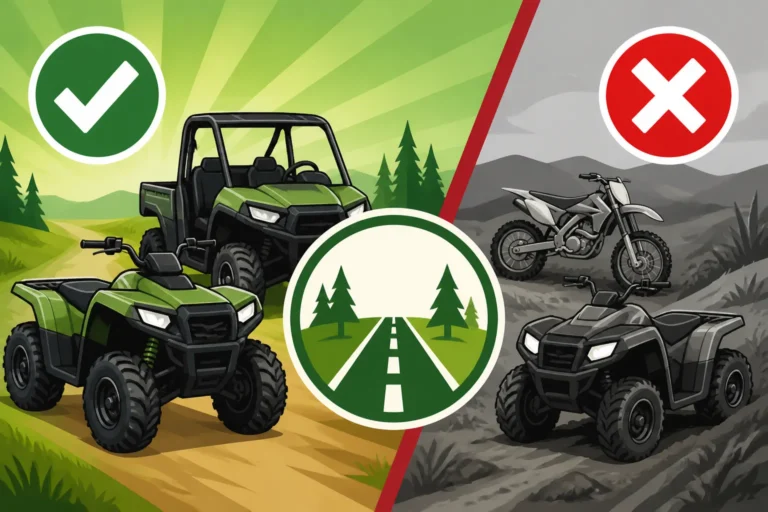
When a municipality decides to open roads to OHVs, it's rarely an "anything goes" situation. Instead, they typically employ a system of specific road designations, clearly marking which roads are open and which remain closed. This approach is designed to balance rider access with community safety and amenity. It's not enough to simply know that a county has an OHV bylaw; you need to know exactly which roads the bylaw applies to. Many municipalities will publish maps, either online or at their administrative offices, that clearly outline the designated OHV routes. These maps are invaluable resources for planning your ride and staying within legal boundaries.
These designations often differentiate between paved and unpaved roads, with gravel or secondary roads being more commonly opened to OHVs than high-traffic paved arteries. Sometimes, access might be limited to certain times of the year, perhaps excluding peak summer months when residential traffic is higher, or during periods of heavy snow. The critical takeaway here is the importance of "knowing before you go." Relying on general knowledge or assumptions can lead to tickets and fines. If a road isn't explicitly marked or listed as open for OHV use, you should always assume it's closed, even if you see other riders using it. Checking municipal websites for updated maps and bylaws is the most reliable way to ensure you're riding legally and responsibly, and many riders will download these maps to their phones or print them out before heading to a new area.
Alberta Municipalities That Have Embraced OHV Access
While the general rule is that OHVs aren't allowed on Alberta's public roads, several forward-thinking municipalities have recognized the value and necessity of OHV use for their residents and visitors. They've put in the work to create bylaws that allow for regulated access, often balancing the needs of riders with the concerns of other community members. It's a testament to local governance and community engagement that these areas have found workable solutions, providing valuable riding opportunities.
Rural Municipalities and Counties Leading the Way
Many of the pioneering efforts to open roads for OHVs have come from rural municipalities and counties, where OHVs are often an integral part of daily life for farmers, ranchers, and outdoor enthusiasts. Communities like the County of Wetaskiwin, Brazeau County, and the Municipal District of Lesser Slave River are often cited as examples where local bylaws have created specific pathways for OHV use. In these areas, the rationale often extends beyond pure recreation; OHVs are essential tools for agricultural operations, accessing remote properties, or facilitating work in the resource sector.
Typically, these bylaws will allow OHVs on undeveloped road allowances, gravel roads, and secondary roads, particularly those connecting agricultural land or leading to designated provincial OHV trails or Public Land Use Zones (PLUZ). For example, a farmer in Brazeau County might be legally permitted to use their side-by-side on a specific gravel road to get from one section of their farm to another, or to access a nearby field. These bylaws don't usually open up primary highways or densely populated town streets but focus on the less-trafficked rural routes. Beyond utility, these municipalities also recognize the economic benefit that OHV tourism can bring, drawing riders who spend money at local gas stations, restaurants, and accommodations. This helps stimulate the local economy and provides a tangible incentive for councils to consider regulated access.
Smaller Towns and Villages Opening Specific Routes
While the large rural counties often lead the charge, some smaller towns and villages have also implemented bylaws to accommodate OHV riders, usually with very specific and limited access points. The goal in these cases is often to create designated routes that allow riders to safely and legally get through the community to access trails on the other side, or to reach local services like fuel and food. For instance, towns like Swan Hills or Drayton Valley have recognized the importance of OHV access for their local economy and for connecting residents to the extensive trail networks in the surrounding areas.
These town bylaws are typically much more restrictive than county bylaws. They might designate only a few specific streets or a particular route through town, often with strict speed limits and time restrictions. You might be allowed to travel from the edge of town to a gas station and back, or from a campsite to a trail system, but not just freely cruise all over town. The intent is usually to provide a necessary connection rather than broad recreational access within the town itself. Riders need to be incredibly diligent in these areas, sticking precisely to the designated routes and observing all local rules, because disrespecting these limited access points could quickly lead to their revocation. Many of these communities rely on responsible riding to maintain their bylaws, so riders are urged to be especially courteous and mindful of residents.
Examples of Bylaws and Their Specifics
To give you a clearer picture, let's look at the kinds of specific details you might find in a municipal bylaw that opens roads to OHVs. While I can't provide current bylaw numbers or guarantee their up-to-the-minute details, the types of regulations are fairly consistent across municipalities. For instance, a bylaw might state that OHVs are only permitted on gravel roads or undeveloped road allowances between sunrise and sunset. It might specify a maximum speed limit of 20 km/h, regardless of the posted road limit, to enhance safety and minimize dust and noise. Crucially, these bylaws will always defer to the provincial Traffic Safety Act for safety equipment requirements, meaning [Alberta Requires Working Head and Tail Lights] and ensuring your machine isn't too loud.
A municipality's bylaw will almost certainly include requirements about how your machine is equipped. This means having proper mirrors, a horn, and often a spark arrestor that's in good working order. [Alberta Bans Modified Exhausts] on public lands and roads, and any bylaw allowing road access will reiterate this. Riding with an overly loud, modified exhaust is one of the quickest ways to draw negative attention from residents and law enforcement, jeopardizing future access for everyone. Some forward-thinking riders even equip their machines with aftermarket turn signals or more robust windshields – parts that SuperATV might offer – to make their vehicles more visible and safer for road use, even if these aren't explicitly mandated by every bylaw. The key takeaway is to read the specific bylaw for the area you're interested in, as the devil is always in the details, and what's allowed in one county might be strictly prohibited just a few kilometres away.
Key Considerations for Riding OHVs on Open Roads
So, you've found a municipality that has opened its roads to OHVs – fantastic! But finding an open road is only half the battle. To ensure a safe, legal, and enjoyable experience, and to help maintain these precious access points, it’s absolutely essential to be prepared and understand the specific requirements that come with riding your machine on public thoroughfares. This isn't just about avoiding a ticket; it's about respecting the rules that allow this access in the first place.
Essential Equipment and Safety Gear
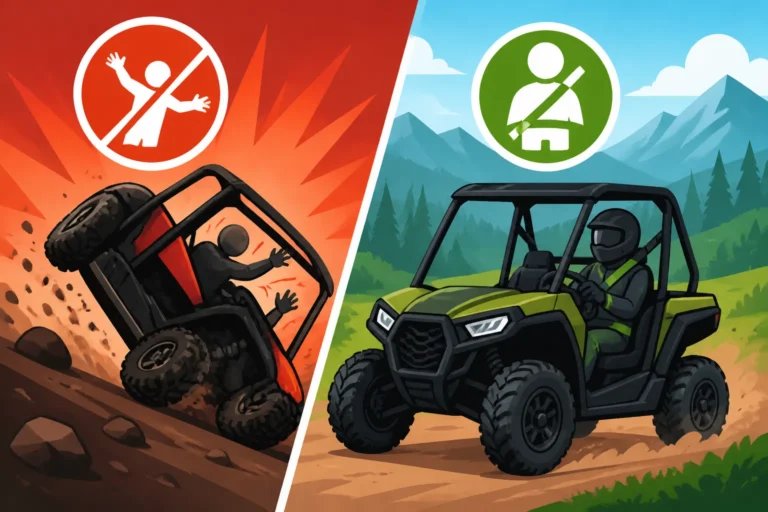
Riding an OHV on any public road, even those designated as open, comes with a non-negotiable set of equipment and safety gear requirements. First and foremost, a CSA-approved helmet is mandatory on public land in Alberta, and this extends to any public roads where OHVs are permitted. [Alberta Helmet Law on Public Land] is clear: protect your head. Beyond that, your machine must be properly registered and display a valid license plate. While the plate itself now lacks a sticker, the fact that you have a current registration is paramount. Furthermore, [Alberta Requires Insurance on Public Land], and this absolutely applies to any public road. You must carry proof of valid liability insurance, so be sure to have your documents handy.
Beyond these fundamental requirements, your OHV needs to be equipped for road use. This means having working headlights and tail lights that meet provincial standards, ensuring you're visible to other traffic. [Alberta Requires a Spark Arrestor] on your exhaust system, which is a critical fire prevention measure, especially in dry conditions. As mentioned before, modified exhausts that are louder than stock are a definite no-no and can lead to fines. While not always legally mandated by every bylaw, consider adding accessories like turn signals, a horn, and mirrors. Companies like SuperATV offer a wide range of accessories that can enhance safety and visibility, making your machine more "road-friendly" and signaling to authorities that you're a responsible rider. These additions can go a long way in ensuring you're not just compliant, but also genuinely safe when sharing the road with other vehicles.
Age, Supervision, and Licensing Requirements
Who can ride an OHV on Alberta's open roads also comes with specific rules, particularly concerning age and supervision. In Alberta, the general rule is that you must be at least 14 years old to operate an OHV on public land without direct adult supervision. [Alberta ATV Age Requirements] dictate that anyone under 14 needs to be supervised by an adult (18 years or older) who is riding with them. This means if you're riding with younger family members on an open road, the adult must be actively monitoring and guiding the youth rider, not just riding far ahead. [Alberta Riders Under 14 Need Supervision] is not a suggestion; it's a legal requirement designed for safety.
It's important to note that while there isn't a specific "OHV driver's license" in Alberta, the ability to operate an OHV on a road where a conventional driver's license is required for other vehicles can get tricky. Most bylaws that open roads will state that any operator must hold a valid driver's license. Always check the specific municipal bylaw to clarify this point. This distinction is crucial because if you're on a road where a driver's license is required, a 14-year-old, even if technically allowed to ride an OHV, would likely not be permitted to operate it if they don't possess a valid driver's license. Always err on the side of caution and ensure all riders meet both the OHV-specific age requirements and any driver's license stipulations for the particular road they're on.
Speed Limits, Time Restrictions, and Posted Signage
When riding your OHV on an open road, you're not just riding in the wilderness; you're sharing space with cars, trucks, and often, local residents. This means adhering to specific operational rules designed to ensure everyone's safety and minimize disruption. Speed limits are often significantly reduced for OHVs on municipal roads, even if the posted limit for cars is higher. A common OHV speed limit in bylaws is 20 km/h or 30 km/h, regardless of whether the general speed limit for the road is 50 km/h or 80 km/h. It’s crucial to observe these lower limits. Driving an OHV at high speeds on shared roads is not only dangerous but also generates more noise and dust, which can quickly erode community goodwill.
Time restrictions are another common feature of bylaws that permit OHV access. Many municipalities will only allow OHVs on designated roads between sunrise and sunset, or during specific daylight hours (e.g., 7 AM to 10 PM). Riding late at night can be particularly disruptive to residents and raises safety concerns. Always check the bylaw for the exact hours of operation. Finally, posted signage is your best friend. Respecting all signs, whether they denote speed limits, trail closures, or restricted areas, is non-negotiable. These signs are there for a reason, whether it’s for safety, environmental protection, or to manage local traffic. Ignorance of the rules is not an excuse, and violations can result in significant fines. Being a responsible rider means being aware of your surroundings, following all rules, and demonstrating that OHV enthusiasts can be respectful members of the community.
Navigating the Information Landscape
So, you're keen to explore these open roads, but how do you actually find the most current and accurate information? It's easy to get lost in a sea of outdated forum posts, hearsay, and old maps. The key to successful, legal, and responsible OHV riding on municipal roads in Alberta is knowing where to look for definitive answers. Relying on unofficial sources can lead to fines, confrontation, and even the loss of riding privileges for everyone.
Finding Current Bylaws and Maps
This is perhaps the most critical step for any OHV rider looking to use municipal roads: going directly to the source for information. The absolute best place to find current bylaws and any accompanying maps for OHV use is the official website of the specific county, municipal district, town, or village you plan to visit. Most municipalities will have a section dedicated to bylaws, and a quick search for "off-highway vehicle bylaw" or "OHV bylaw" should lead you to the relevant document. These online versions are usually the most up-to-date. Don't be shy about [Asking a County Office What Applies] directly if you can't find what you're looking for online, or if the wording is unclear. A quick phone call to their administration office can save you a lot of trouble.
In addition to bylaws, many proactive municipalities will also provide maps that clearly illustrate the specific roads or road allowances open to OHVs. These maps are incredibly useful, as they translate the legal text into a visual guide you can follow on the ground. [Finding a County Map of Roads Open to OHVs] might be on the municipal website's recreation section, or possibly linked directly from the bylaw itself. Print these maps out or download them to your smartphone before you lose cell service. Local tourism offices, particularly in areas known for outdoor recreation, can also sometimes provide guidance or printed materials, though it's always best to cross-reference with official municipal sources.
The Role of OHV Clubs in Advocacy and Education
While individual research is paramount, don't underestimate the power and knowledge held within local OHV clubs. These organizations are often at the forefront of advocacy efforts, working directly with municipalities to develop and refine bylaws that benefit riders. They understand the intricacies of local politics and regulations, and they frequently have the most up-to-date information on where and how to ride legally. Many clubs maintain websites or social media groups where they share information about local bylaws, trail conditions, and designated OHV routes.
Beyond advocacy, OHV clubs play a vital role in educating their members and the broader riding community about responsible riding practices. They often organize events, volunteer days for trail maintenance, and promote safe and ethical riding. By joining a local club, you gain access to a wealth of knowledge and a community of like-minded riders. Furthermore, supporting these clubs through membership helps them continue their important work of preserving and expanding OHV access, demonstrating to municipalities that riders are organized, responsible, and committed to working constructively.
Why You Can't Rely on Anecdotal Evidence
In the world of OHV riding, few things are as prevalent and as potentially dangerous as anecdotal evidence. We've all heard it: "My buddy said you can ride anywhere in X County," or "I saw someone else doing it, so it must be okay." This kind of information, while often well-intentioned, is incredibly unreliable and can quickly lead you into trouble. Bylaws change, designated routes are modified, and what was allowed last year might be prohibited today. Relying on "my buddy said" is a recipe for a ticket, confrontation with landowners or residents, or even environmental damage if you stray onto closed areas.
The liability risks of riding where you're not permitted are significant. Not only could you face fines, but if you're involved in an accident on a prohibited road, your insurance could be voided, leaving you personally responsible for damages. This is a serious concern. Always, always, always prioritize official, verifiable information from municipal sources. Take the extra time to research the specific bylaws and maps for your intended riding area. It's the only way to ensure you're riding legally, safely, and responsibly, and to protect the hard-won access that responsible riders have worked so hard to secure.
The Future of OHV Road Access in Alberta
The landscape of OHV road access in Alberta is constantly evolving. While some municipalities have opened their doors, the conversation is ongoing, marked by both challenges and opportunities. Understanding these dynamics is crucial for riders, as our collective actions today will undoubtedly shape the accessibility of tomorrow. The push for more access is strong, but it's met with equally strong voices of caution, making for a complex path forward.
Ongoing Debates and Challenges
The debate around OHV road access is far from settled and is often a microcosm of broader discussions around land use, recreation, and rural development in Alberta. On one side, riders and the OHV industry advocate for expanded access, citing economic benefits from tourism, the practical necessity of OHVs for rural livelihoods, and the right to recreational enjoyment. They often point to well-managed examples in other jurisdictions or even within Alberta as proof that responsible access is achievable.
However, these calls for expanded access frequently encounter resistance from various groups. Environmental organizations voice concerns about habitat fragmentation, noise pollution impacting wildlife, and the potential for erosion and ecological damage if OHV use isn't strictly managed and confined to durable surfaces. Local residents, particularly those in rural-residential areas, often express legitimate concerns about noise, dust, safety on shared roads, and a perceived decrease in their quality of life. Municipalities are caught in the middle, trying to balance these competing interests while considering their limited resources for enforcement and infrastructure. This push and pull means that while progress is being made in some areas, the road to broader, consistent access is often slow and fraught with challenges.
Potential for More Municipalities to Open Up
Despite the challenges, there is a distinct potential for more municipalities across Alberta to consider and even adopt bylaws that permit some form of OHV road access. The economic benefits are a powerful driver: when OHV riders visit an area, they spend money on fuel, food, accommodations, and other supplies, providing a boost to local businesses. Municipalities in recreational hotspots or along key trail corridors are increasingly recognizing this economic impact and are more inclined to explore regulated access. Furthermore, as the OHV community continues to organize and advocate for responsible riding, they build trust with local councils, demonstrating that riders are willing to adhere to rules and contribute positively to the community.
The key to unlocking this potential lies in presenting clear, well-thought-out proposals that address common municipal concerns. This includes advocating for specific, well-defined routes, promoting the use of quieter, properly equipped machines (and perhaps encouraging riders to check for compliance-focused parts from a reputable brand like SuperATV), and emphasizing rider education. As more successful examples emerge, other municipalities may find it easier to justify taking similar steps. The conversation is slowly shifting from an outright ban to a discussion about how to best manage and regulate OHV use for the benefit of all.
Rider Responsibility as the Foundation of Future Access
Ultimately, the future of OHV road access in Alberta rests squarely on the shoulders of the riders themselves. Every time an OHV operator rides responsibly, adheres to bylaws, respects private property, and minimizes their impact, they are building a case for continued and expanded access. Conversely, every instance of irresponsible riding – speeding, riding off-route, excessive noise, or trespassing – jeopardizes the access for everyone and reinforces the arguments of those who wish to see OHVs banned from public roads.
This means a commitment to ethical riding must be at the forefront. Always stay on marked and designated routes, even if a tempting side trail appears. Respect private property, and never enter land without explicit permission from the landowner. Keep your machine properly maintained, ensuring a quiet exhaust system and effective spark arrestor. Be mindful of your speed and the dust you create, especially near residences or other road users. And always carry your registration and proof of insurance, as [Alberta Penalties for Riding Unregistered] can be severe. By being exemplary ambassadors for the sport, riders can foster goodwill, build trust with communities, and ensure that the opportunities to explore Alberta's beautiful landscapes on two or four wheels continue to grow for generations to come.
| Municipality Type | Typical Approach to OHV Road Access | Common Restrictions | Why They Open Roads |
|---|---|---|---|
| Rural County/MD | More likely to open gravel roads, road allowances, and secondary routes. | Often restricted to daylight hours, lower speed limits, specific road types. | Farm/resource access, connecting to trails, economic benefits of tourism. |
| Smaller Town/Village | Very limited, specific routes through town, often connecting to exterior trails. | Strict speed limits (e.g., 20-30 km/h), specific designated streets, strict hours. | Connecting residents/visitors to outside trails, access to local services (fuel, food). |
| Larger City | Highly unlikely to open any roads. | General prohibition on all public roads and alleys. | Densely populated, high traffic, significant safety and noise concerns. |
Disclaimer
This article is for general informational purposes only and does not constitute professional advice. Laws, prices and regulations vary by location and change over time. Consult a qualified professional for guidance on your specific situation.