What a Right-of-Way Bylaw Actually Lets You Ride
One of the most persistent frustrations for off-highway vehicle (OHV) riders in Alberta is the sheer confusion around where you can actually legally ride your quad or side-by-side. It often feels like a minefield of conflicting rules, especially when it comes to riding on or alongside roads. Many of us know the provincial rules say OHVs aren't generally allowed on "highways" – but what exactly does "highway" mean in Alberta? And what about those whispers you hear about a local bylaw letting you use a road as a right-of-way to get somewhere? This guide is here to untangle that knot, explaining precisely what a right-of-way bylaw in Alberta might let you ride, and how to navigate the local rules to stay legal and avoid unnecessary fines.
The Core Confusion: What "Right-of-Way" Means for Alberta OHV Riders
For many years, off-highway vehicle riders across Alberta have wrestled with the provincial regulations concerning where they can and cannot operate their machines. The term "right-of-way" often comes up in conversation, leading to misunderstandings about what's permissible. It's not uncommon for riders to assume a gravel road, a field access trail, or even a wide ditch is fair game, only to find out they've inadvertently broken a rule. The root of this confusion often lies in the broad legal definitions established at the provincial level, which then become subject to the more granular control of local municipalities.
Deciphering the Legal Definition of a Highway
In Alberta, the term "highway" isn't just about multi-lane freeways or paved rural roads; it's a much more encompassing legal definition found within the Traffic Safety Act. This Act broadly defines a highway to include virtually any road, street, avenue, parkway, driveway, square, place, bridge, viaduct, or trestle. Crucially for OHV riders, it also includes the adjacent ditches, shoulders, and even alleys. This means that, by default, unless a specific exception is made, your ATV, UTV, dirt bike, or snowmobile is generally prohibited from operating on these areas. It's a surprising reality for many, who might think a dirt access road or a quiet country lane wouldn't fall under such a strict definition. This expansive definition is precisely why you'll often hear about riders being ticketed for simply trying to get from one section of private land to another by briefly crossing or riding down what they perceived as a harmless gravel road. It's a hard lesson to learn, but the law considers these spaces part of the "highway" system, and therefore off-limits to OHVs without special permission. You can learn more about these overarching requirements in [What the Traffic Safety Act Requires of Alberta OHVs].
When Local Bylaws Step In to Change the Rules
Given the provincial Traffic Safety Act's broad definition of a highway, any legal riding of OHVs on these public rights-of-way must come from an exception to the general rule. This is where municipal bylaws become incredibly important for Alberta riders. While the province sets the baseline, it grants municipalities—like counties, municipal districts, towns, and villages—the power to create their own local legislation, including bylaws that specifically permit OHV use on certain public lands or rights-of-way within their jurisdiction. These bylaws are not universal; they vary wildly from one municipality to the next, reflecting local priorities, population density, and the availability of dedicated OHV trails.
A right-of-way bylaw, in essence, is the local government's way of saying, "Okay, the province says no, but we say yes, under these very specific conditions." Without such a bylaw, the provincial prohibition stands firm. It's why riders can legally use certain roads or road allowances in one county, but be immediately in violation if they cross into a neighbouring county that hasn't enacted a similar bylaw. This patchwork of rules makes it essential for riders to do their homework every single time they plan to ride in a new area. Trying to guess or assume based on what's allowed elsewhere is a recipe for trouble. For a broader overview of how local rules affect your ride, check out [Alberta ATV Road Rules: Bylaws Decide].
Unpacking the "Right-of-Way" Bylaw: What to Look For
So, you've heard that a particular municipality has a bylaw that allows OHVs on certain roads. That's great news, but the work doesn't stop there. Simply knowing a bylaw exists isn't enough; you need to understand its specific provisions. These bylaws are rarely a blanket "go ride anywhere" permission slip. Instead, they are usually highly detailed, outlining exactly where, when, and how you can operate your off-highway vehicle on municipal rights-of-way. The devil, as they say, is truly in the details when it comes to these local regulations.
Identifying Permitted Roads and Access Points
The first and most critical piece of information you need from any right-of-way bylaw is a clear list or map of the specific roads, road allowances, or segments of public right-of-way where OHV use is permitted. This is rarely a vague "all gravel roads" statement. Instead, bylaws often designate specific ranges of road numbers, named roads, or even particular sections of a road, perhaps between two landmarks or intersections. For instance, a bylaw might state that "OHVs are permitted on Range Road 123 from Highway 1 to Township Road 456, and on Township Road 456 for a distance of 2 kilometres west."
It's common for these permitted routes to serve as connectors, allowing riders to move between private property, designated OHV trail systems, or access points to Crown land. They are typically not intended for joyriding on the roads themselves. Many bylaws will explicitly state that OHV use on these designated roads is for the purpose of "direct access" or "connection," meaning you can't just cruise up and down for recreation. You're expected to use them as a means to an end, transitioning quickly and safely. This level of specificity means you absolutely need to consult the official bylaw document or an accompanying map provided by the municipality. [Bylaws That List Exactly Which Roads You May Ride] offers more insight into these specific listings.
Restrictions, Conditions, and Equipment Requirements
Beyond where you can ride, these bylaws also lay out crucial restrictions, conditions, and sometimes even additional equipment requirements that go beyond provincial standards. It's not enough to simply be on the right road; you have to be operating your machine in the right way and with the correct setup. For example, many bylaws impose specific speed limits for OHVs operating on designated rights-of-way, often significantly lower than the posted speed limit for cars and trucks. This is usually for safety, as OHVs handle differently on paved or gravel surfaces and are sharing the space with other traffic.
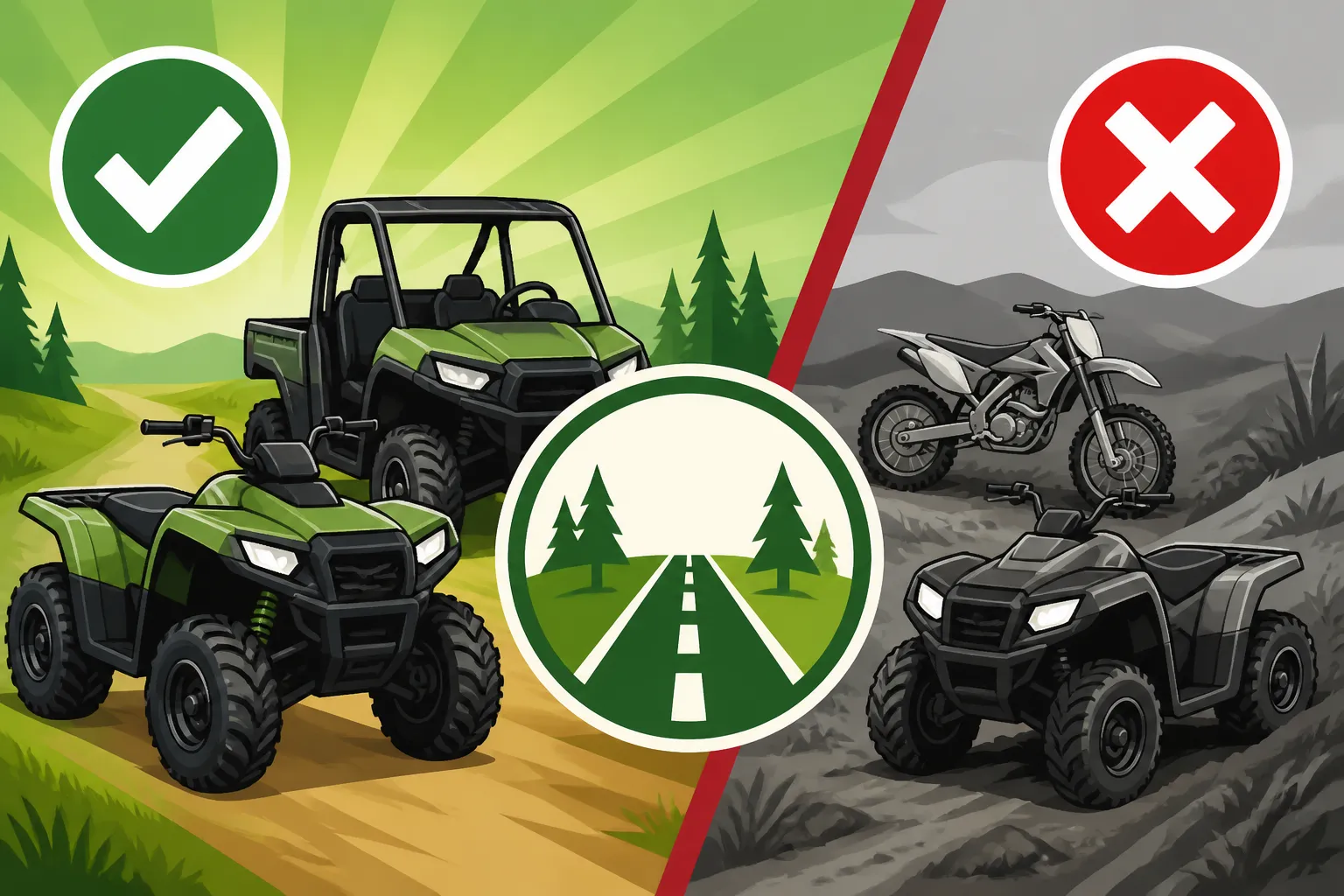
You might also find stipulations about the type of machine allowed (e.g., no dirt bikes, or only ATVs and side-by-sides), or specific equipment such as working headlights and taillights, even during daylight hours. Some bylaws might even require turn signals, mirrors, or a horn for machines using these access points, features that are not always standard on OHVs but are common on aftermarket street legal kits. Companies like SuperATV offer a range of accessories, including mirrors, turn signal kits, and horns, that riders might consider installing if they plan to frequently use bylaw-designated routes that require such features for compliance. These additions can transform a purely off-road machine into one better suited for sharing designated right-of-way segments, enhancing visibility and communication with other road users. Always check the bylaw for these specifics, as failing to comply can result in fines, even if you're on a permitted road. Detailed information on general equipment rules can be found in [Alberta Equipment Required on Public Land]. Remember, provincial helmet laws, as discussed in [Alberta Helmet Law on Public Land], also remain in effect on these public rights-of-way.
Time of Day, Seasonal Limitations, and Purpose of Travel
Bylaws often add further layers of complexity by limiting when you can ride and why. For instance, many municipalities restrict OHV access on rights-of-way to specific hours, often daylight hours, to mitigate noise complaints from residents and enhance safety in low-light conditions. It's rare to find a bylaw that permits night riding on municipal roads. Furthermore, seasonal limitations are quite common. Some bylaws might prohibit OHV use during spring thaw periods to prevent damage to unpaved roads and shoulders, or during extremely dry conditions when fire risk is high. These seasonal rules are crucial for environmental protection and maintaining local infrastructure.
The purpose of travel is another frequent restriction. Many bylaws explicitly state that OHV use on designated rights-of-way is permitted only for specific purposes, such as accessing agricultural land, travelling to and from a primary residence, or connecting to an approved off-highway trail system or Crown land. Recreational cruising on the road itself is almost universally prohibited. For example, a farmer might have specific allowances for using their ATV on certain roads to tend to their fields, which would not apply to a recreational rider. Understanding these distinctions is paramount to avoiding violations. This includes unique allowances for farm use, which can be explored further in [Alberta Bylaws for Farm Use].
Navigating the Bylaw Maze: Practical Steps for Alberta Riders
The complex and varied nature of Alberta's OHV bylaws means that successful, legal riding on public rights-of-way hinges entirely on preparation and awareness. It's a continuous responsibility for the rider to ensure they are compliant with all provincial and local regulations. Getting caught unaware is not only frustrating but can also be costly, leading to significant fines or even the temporary loss of your machine.
Your Homework: Researching Local Bylaws Before You Ride
This cannot be stressed enough: do your homework before you ride. Never assume that because OHVs are allowed on a road in one county, they're allowed on a similar road in the next. The most reliable way to understand the rules for any given area is to consult the specific municipality's official website. Look for sections on bylaws, public safety, or transportation. Many municipalities will have dedicated sections or PDF documents outlining their Off-Highway Vehicle Bylaw. If you can't find it online, don't hesitate to call the county or municipal district office directly and speak with someone in their bylaw enforcement or public works department. They are the best source of current and accurate information. Asking specific questions about the roads you intend to use and the conditions that apply will save you a lot of grief. Remember, ignorance of the law is never an acceptable excuse for a violation, and enforcement officers will expect you to be familiar with the local rules. Check out [Alberta Bylaw Lookups Before You Ride] for more advice on this critical step.
The Importance of a Current Map and Designated Trails
Once you've identified the relevant bylaw, look for any accompanying maps. Many forward-thinking municipalities will publish maps that clearly delineate which roads or road segments are designated for OHV use. These maps are invaluable resources for planning your ride and ensuring you stay on the legal path. It's a good idea to download or print these maps and carry them with you, especially in areas with limited cell service. Even if no official map is provided, take the time to mark the permitted routes on your own map or GPS device.
It's also crucial to understand that these permitted rights-of-way are often designed to connect to existing OHV trail systems or access points for Crown land. They are links, not destinations in themselves. Stick to the designated routes, and do not deviate onto adjacent private land or non-permitted roads, even if it looks like a shortcut. The consequences for trespass or riding on prohibited roads can be severe, including fines and vehicle seizure. A quality map, especially one that delineates public and private land, is as essential as your helmet and gear. For tips on where to find these crucial resources, see [Finding a County Map of Roads Open to OHVs].
Consequences of Non-Compliance and Enforcement
Riding an OHV on a right-of-way that is not designated for such use, or failing to adhere to the conditions of a bylaw that does permit it, can lead to significant penalties. Fines for OHV violations vary by municipality and the specific infraction, but they can quickly add up. Beyond monetary penalties, repeat offenses or serious violations can sometimes lead to your machine being impounded or seized, leaving you with the headache and expense of retrieving it.
It's also vital to remember that even when a local bylaw allows OHV use on certain roads, all provincial laws regarding OHV operation still apply. This includes requirements for proper registration, plating, and insurance. An officer checking your documents at a staging area or on a roadside stop will expect you to have everything in order. For instance, even if a local bylaw permits your side-by-side on a road, you still need to ensure it's registered with the province. Without proper registration, as detailed in [Alberta Penalties for Riding Unregistered], you're still liable for a ticket. Similarly, operating without valid insurance, especially on public land or a public right-of-way, can lead to severe consequences, including vehicle seizure, as explained in [Alberta Vehicle Seizure for No Insurance]. Riders might enhance their machine with SuperATV components for safety or performance, but these additions don't negate the need for foundational legal compliance like registration and insurance.
Staying informed, checking local regulations, and always riding responsibly are your best defenses against unwelcome encounters with bylaw enforcement.
Understanding Common Right-of-Way Bylaw Provisions
To help illustrate the kind of detail you might find in a municipal right-of-way bylaw, here's a table outlining common allowances and prohibitions. This is a general guide, and specific bylaws will always have their own unique wording and rules.
| Feature/Condition | Common Allowance in Bylaws | Common Prohibition/Restriction in Bylaws |
|---|---|---|
| Road Type | Designated gravel roads, unimproved road allowances, specific alleys | Paved roads, primary provincial highways, sidewalks, boulevards |
| Purpose of Travel | Direct access to private land, trails, Crown land, or agricultural use | Recreational cruising, joyriding, racing, or non-essential travel |
| Hours of Operation | Daylight hours (e.g., sunrise to sunset) | Nighttime operation, early morning, or late evening hours |
| Equipment | Working headlights/taillights, functional brakes, spark arrestor | Modified exhausts, excessively loud mufflers, lack of required safety gear |
| Speed Limit | Often significantly lower than posted vehicle speed limits | Exceeding bylaw-specified OHV speed limits |
| Safety Gear | CSA-approved helmet (provincial law), protective eyewear | Riding without a helmet, open-toed shoes, no eye protection |
| Passenger Limits | Adherence to manufacturer's specifications for passenger capacity | Exceeding manufacturer's passenger limits, unsafe passenger carrying |
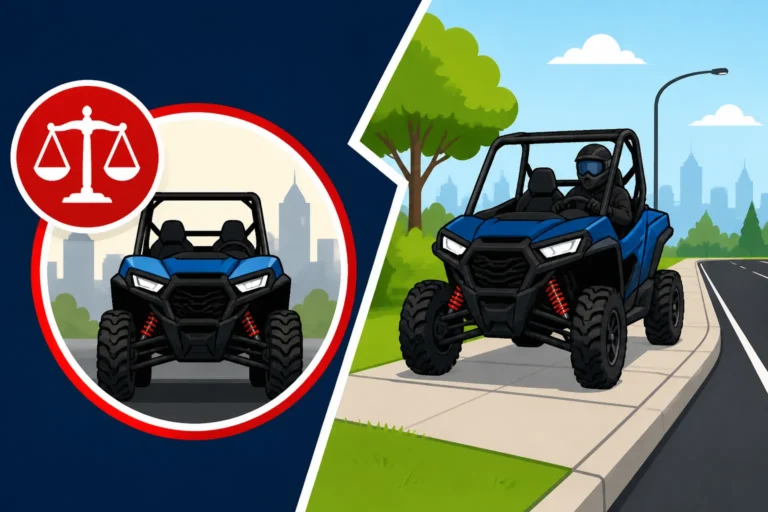
| Area of Operation | On the road surface itself (where designated) or extreme right shoulder | Ditches (unless specifically designated), private property without permission |
Disclaimer
This article is for general informational purposes only and does not constitute professional advice. Laws, prices and regulations vary by location and change over time. Consult a qualified professional for guidance on your specific situation.