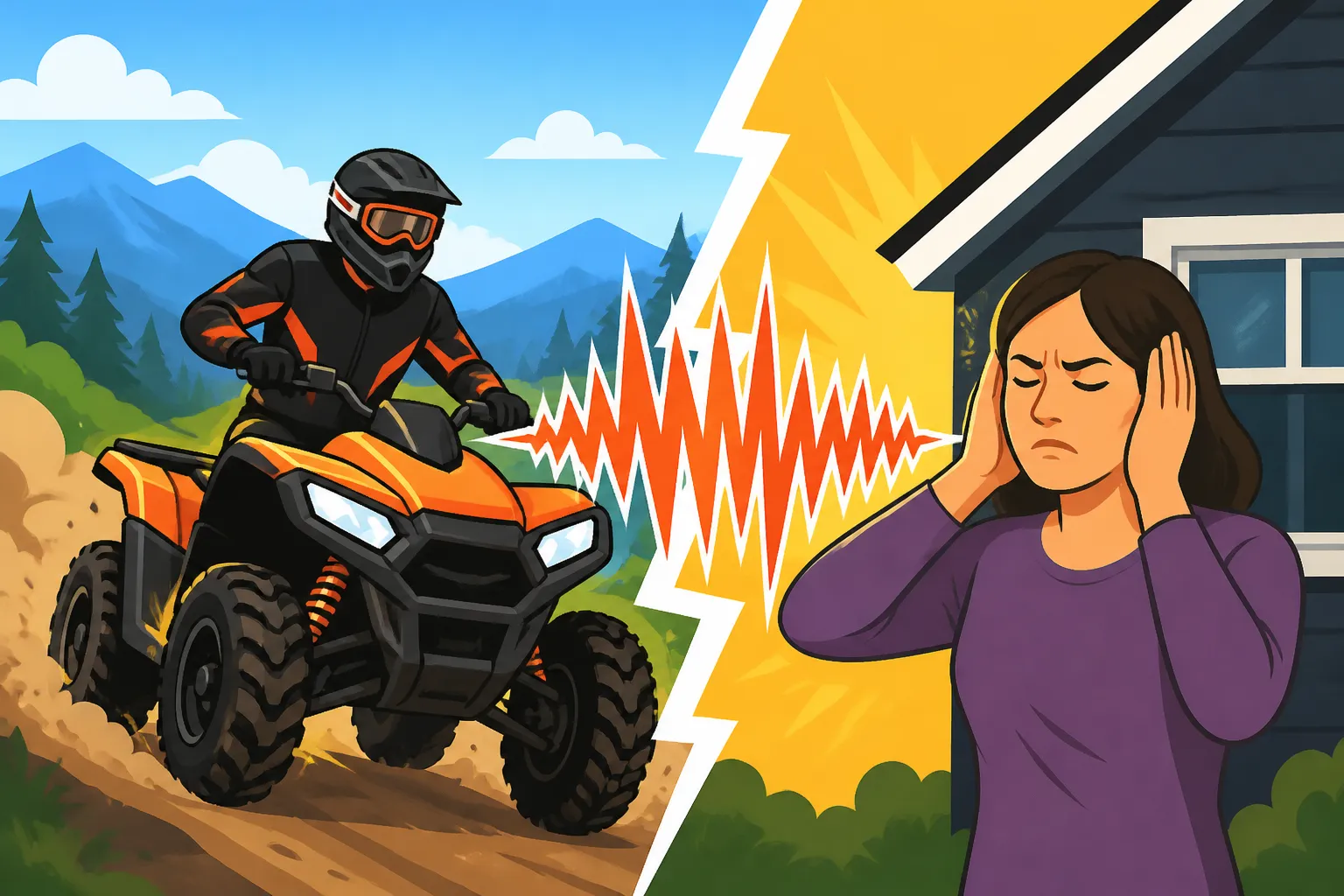
Alberta Noise Complaints About Quads
There’s nothing quite like the roar of an ATV or UTV engine as you hit the trail, but that same exhilarating sound can quickly become a source of frustration for others, leading to those unwelcome noise complaints. It's a tricky balance between enjoying your machine and being a good neighbour, especially when you're just trying to have some fun. This guide will help you understand the rules around off-highway vehicle noise in Alberta, why complaints happen, and how you can ride responsibly to keep everyone happy and avoid potential fines.
Understanding Alberta's Off-Highway Vehicle Noise Regulations
The world of off-highway vehicle (OHV) noise regulations in Alberta can feel like a bit of a maze, full of unspoken rules and local nuances. It's not always as straightforward as you'd hope, and many riders find themselves scratching their heads, wondering exactly what constitutes "too loud." The core idea, though, is about minimizing disturbance, especially in areas where people live, work, or are trying to enjoy a quiet day.
Provincial Standards and Local Bylaws
While Alberta has overarching provincial legislation, like the Traffic Safety Act and the Off-Highway Vehicle Regulation, that governs many aspects of OHV use, specific noise levels are often addressed at the municipal level. This means that what's acceptable in one county or town might be different in another. Provincially, the focus tends to be on equipment requirements, such as requiring a muffler and a spark arrestor that are in good working order. There are general provisions against "unnecessary noise" or operating a vehicle in a manner that disturbs the peace, but these are broad terms that can be open to interpretation by an officer or bylaw enforcement.
When you're riding through a specific community, whether it's a small town or a rural county, you really need to be aware of their specific bylaws. Some municipalities have clear decibel limits for OHVs, often measured at a certain distance from the machine, while others might rely on more subjective "nuisance" clauses. For example, a rural municipality might have a bylaw stating that operating an OHV in a manner that creates "excessive noise" within a certain proximity to a residence is prohibited. This can be incredibly frustrating for riders who feel they aren't doing anything out of the ordinary, but find themselves subject to a complaint simply because of where they are riding. It often boils down to common sense and respect, but knowing the actual written rules can save you a lot of headaches.
What Constitutes "Excessive Noise" for an OHV?
Defining "excessive noise" can be incredibly subjective, and that's where a lot of the friction between riders and residents often arises. What sounds like a normal engine note to an OHV enthusiast might sound like a disruptive roar to someone trying to enjoy their backyard or property. Generally, excessive noise goes beyond the typical operating sounds of a well-maintained machine. It often comes into play when an OHV has a modified exhaust system, a missing muffler, or an engine that isn't running optimally. [Alberta Bans Modified Exhausts] on public land for this very reason.
Imagine this scenario: you're out for a weekend ride with your side-by-side, enjoying the freedom of the trails near a residential area. To you, the machine sounds robust and powerful. But for the homeowner nearby, trying to have a quiet BBQ, the continuous rumble and occasional bursts of acceleration feel like an invasion of their peace. They might perceive that sound as excessive, even if your machine isn't technically breaking a decibel limit. Factors like the time of day, the duration of the noise, and the proximity to homes all play a role in how a sound is perceived and whether it leads to a complaint. It's not just about how loud it is, but also when and where that noise occurs.
Common Causes of ATV/UTV Noise Complaints
Noise complaints don't just spring up out of nowhere; there's usually a reason behind them, even if you, as the rider, don't intend to cause a disturbance. Understanding these common triggers can help you proactively avoid being the subject of someone else's frustration.
Modified Exhaust Systems and Aftermarket Parts
This is perhaps the biggest culprit when it comes to noise complaints. Many riders love to customize their machines, and upgrading to an aftermarket exhaust system is a popular way to boost performance or simply get a "meaner" sound. The problem is, many of these systems are designed for closed-course racing or private land use and do not meet the legal noise limits for public land in Alberta. [Why a Modified Muffler Can Cost You a Ticket] is a real concern for many riders.
Even if you've invested in quality aftermarket parts, say from a reputable manufacturer that also offers compliant options, it's critical to ensure they meet the provincial and local standards for sound. Companies like SuperATV offer a huge range of aftermarket accessories, including exhaust systems, and while they cater to many performance needs, riders must still verify that any modifications they choose comply with local noise regulations if they plan to ride on public land. A muffler designed to deliver more horsepower might also deliver more decibels, which can quickly lead to an officer pulling you over or a neighbour calling in a complaint. It's not enough to simply have a muffler; it has to be a compliant muffler.
Riding in Residential or Sensitive Areas
The location of your ride makes a world of difference. Blasting down a remote logging road in a Public Land Use Zone (PLUZ) is very different from riding through a rural residential subdivision or even a quiet country road that borders acreages. People living in these areas expect a certain level of peace and quiet, and the sudden, loud presence of an OHV can quickly shatter that expectation.
Think about someone who lives just outside a designated OHV area. They might be used to some distant engine noise, but if riders start using unmarked trails closer to their property, or repeatedly pass by their home at high speeds, the cumulative effect can be incredibly irritating. This is particularly true if the noise occurs early in the morning, late at night, or continuously throughout the day. Even if you're technically on a public road or legal access point, repeated passes, prolonged idling, or aggressive riding behaviour that creates excessive noise can still lead to complaints. Many times, residents aren't necessarily anti-OHV; they're just anti-disruption to their home life. [Alberta Rules for Riding Private Land] often involve respecting the neighbours of that private land.
Rider Behaviour and Perceived Disrespect
Sometimes, it's not just the machine, but how it's being ridden. Aggressive riding, excessive acceleration, wheelies, or intentionally making loud noises can be seen as disrespectful and provocative by residents. Even if your machine is bone stock and perfectly compliant, if you're constantly revving the engine, doing donuts near homes, or riding in a way that kicks up a lot of dust and noise, you're inviting complaints.
This ties back to the subjective nature of "excessive noise." A person might not be able to tell if your exhaust is modified, but they can certainly perceive your riding behaviour as a nuisance. It often fosters a negative perception of all OHV riders, which is something none of us want. It’s about being a good ambassador for the sport. If you're riding with a group, the collective noise can be even more impactful. What might seem like harmless fun with your buddies can easily be interpreted as a disruptive invasion by those trying to enjoy a peaceful afternoon.
How to Avoid and Address Noise Complaints
Nobody wants to be the target of a noise complaint, let alone face potential fines or even have their fun cut short by a bylaw officer. Proactive steps and a bit of rider etiquette can go a long way in ensuring your rides remain enjoyable and complaint-free.
Performing Regular Maintenance and Equipment Checks
A well-maintained machine is often a quieter machine. Regularly checking your exhaust system for leaks, loose baffles, or damaged packing material can prevent unnecessary noise. A small crack in a muffler can lead to a surprisingly loud rumble, which is not only annoying but also inefficient for your engine. Make sure all your exhaust components are securely fastened and free of damage. This includes the spark arrestor; if it's clogged or damaged, it can affect exhaust flow and potentially increase noise. [Alberta Requires a Spark Arrestor] for a reason, and a working one helps manage sound.
Beyond the exhaust, a properly tuned engine runs more smoothly and quietly. If your machine is backfiring or sputtering, it’s not only a sign it needs attention but also a source of intermittent loud noises that can be particularly jarring to those nearby. Think of it like this: a rumbling, loose exhaust on your pickup truck would get you strange looks, and the same applies to your OHV. Taking a few minutes before each ride to give your machine a once-over can prevent an unpleasant surprise (and a complaint!) later on.
Riding with Respect and Awareness
This is perhaps the most critical advice. Always ride with an awareness of your surroundings, especially when you're near homes, cabins, or other occupied properties. If you find yourself in a sensitive area, slow down, reduce your throttle, and keep your engine RPMs low. A steady, lower-pitched engine hum is far less intrusive than sudden bursts of acceleration or prolonged high-revving.
Consider the time of day, too. Riding early in the morning or late in the evening near residential areas is almost guaranteed to draw complaints. Most people are enjoying quiet time during these hours, and the sound of an OHV can carry a long distance. Choose your routes wisely. Stick to designated trails and approved riding areas. If you're on a multi-use trail, remember that you're sharing it with hikers, cyclists, and equestrians, all of whom appreciate a respectful, quieter presence. [Alberta Rules for Riding Crown Land] and public land often emphasize shared responsibility and respect for other users and nearby residents.
Sound Reduction Strategies for Your OHV
If you're concerned about your machine's noise levels, there are several things you can do to reduce its sound output without necessarily sacrificing all performance.
- Check and Replace Exhaust Packing: Many mufflers, especially on sportier machines, use fiberglass packing that wears out over time. Replacing this packing can significantly reduce noise levels.
- Install a Quiet Core or Spark Arrestor: Some aftermarket exhaust systems offer "quiet core" inserts that can be added to reduce decibel output while still maintaining good flow. Ensure your spark arrestor is always in place and in good condition.
- Consider OEM Exhaust Systems: While aftermarket exhausts are popular, often the factory (OEM) exhaust system is designed to meet stringent noise regulations. If you've had an aftermarket exhaust that's too loud, going back to an OEM setup can be a reliable solution.
- Add Sound Dampening Materials: For UTVs, you can explore adding sound-dampening materials to the engine compartment, floorboards, or interior panels to reduce noise that travels into the cab and out to the surroundings. Brands like SuperATV also offer accessories like full doors or windshields that, while not directly sound-reducing, can alter how engine noise is perceived by containing it more effectively. While SuperATV itself is known for performance parts, many of their utility-focused accessories are designed to enhance the overall riding experience, which can include considerations for comfort and reducing perceived external noise.
- Proper Tire Pressure: Believe it or not, overly inflated tires can sometimes contribute to more road noise and vibration, especially on harder surfaces. Ensuring your tires are at the recommended pressure can help.
Here's a quick comparison of common noise reduction methods:
| Method | Effectiveness | Cost | Effort | Notes |
|---|---|---|---|---|
| Exhaust Packing Replacement | Medium-High | Low-Medium | Medium | Essential for many aftermarket exhausts; wear item. |
| Quiet Core/Insert | Medium | Low-Medium | Low-Medium | Specific to certain aftermarket exhausts. |
| OEM Exhaust | High | Medium-High | Medium | Designed for compliance, may affect performance slightly. |
| Sound Dampening (UTV) | Low-Medium | Medium-High | High | Reduces cab noise, less impact on external sound. |
| Regular Maintenance | High | Low | Low | Prevents escalating noise from minor issues. |
What Happens When a Noise Complaint is Filed
If you've received a noise complaint, either directly from a resident or via a bylaw officer, it can be a really frustrating and often confusing experience. It's easy to feel targeted or unfairly singled out, but understanding the process can help you navigate it more effectively.
Initial Response and Investigation
Typically, a noise complaint starts with a call from a resident to their local municipal bylaw office or, in some cases, the RCMP. These complaints are often triggered by repeat offenders, prolonged noise, or particularly egregious incidents. Once a complaint is received, a bylaw officer or peace officer will usually investigate. This might involve them observing the area, listening for OHV noise, or even attempting to locate the source of the noise.
In some situations, if the officer witnesses the alleged violation, they may approach you directly while you're riding. They might simply issue a warning, especially for a first offense or minor infraction. However, if the noise is clearly excessive, the area is sensitive, or there's a history of complaints, they could issue a ticket right then and there. This is why being aware of [Sound That Draws Complaints] is so important; prevention is always better than reaction.
Potential Fines and Penalties
The penalties for OHV noise violations in Alberta can vary significantly depending on the municipality's specific bylaws and the nature of the offense. For instance, a bylaw infraction might carry a fine in the range of a few hundred dollars. In more severe cases, or if you're found to be in violation of provincial regulations (e.g., operating without a working muffler), the fines could be higher. [Alberta Ticket Costs for a Riding Violation] can add up quickly, especially if court costs are involved.
Repeated offenses can lead to escalating penalties, which might include higher fines, impoundment of your machine, or even court appearances. It's not just about the money; having a citation on your record can be a hassle, and the time spent dealing with it could be better spent riding. Remember, the goal of these regulations and enforcement actions isn't necessarily to stop you from riding, but to ensure that everyone can enjoy their property and public spaces peacefully. It's about finding that balance.
Building Positive Rider-Community Relations
Ultimately, avoiding noise complaints and dealing with them effectively comes down to fostering positive relationships between OHV riders and the communities they ride near. This often means actively engaging with locals, respecting their concerns, and showing that you're a responsible user of the land.
Consider joining a local OHV club; many clubs work directly with municipalities and landowners to establish riding guidelines, maintain trails, and address community concerns. These clubs are often at the forefront of advocating for responsible riding and can provide valuable insights into local expectations and regulations. By showing that riders are part of the community and are willing to be respectful, you help break down negative stereotypes. Simple gestures, like slowing down when passing homes, waving to residents, and acknowledging concerns, can go a long way in turning potential complaints into understanding and even acceptance.
Disclaimer
This article is for general informational purposes only and does not constitute professional advice. Laws, prices and regulations vary by location and change over time. Consult a qualified professional for guidance on your specific situation.