Where to Take a Rider Course Near Calgary
Finding an ATV or UTV rider course near Calgary can take more effort than choosing a date: providers, locations and machine access may vary. A course can help you build practical skills, but it is generally voluntary in Alberta and does not replace the rules for riding public land. Here’s how to find a suitable option and check what you’re actually signing up for.
What to expect from a rider course near Calgary
“Near Calgary” can mean a class within the city, a training site outside it, or a course that requires a longer drive into the surrounding area. Don’t assume a provider has a permanent Calgary classroom or regular public course dates. Training may be scheduled for particular dates, offered to groups, or held at a site you need to travel to. Confirm the location and schedule directly before you make plans.
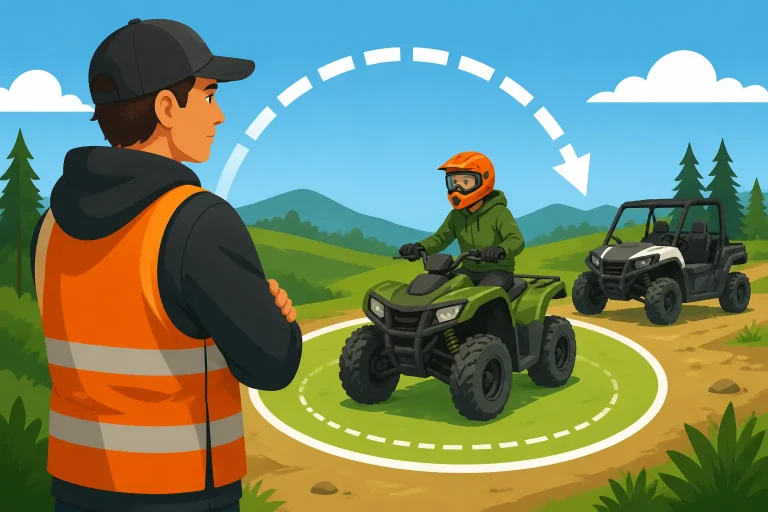
Courses also differ in how much time they spend on classroom learning and hands-on riding. Depending on the provider, instruction may cover basic controls, starting and stopping, balance, turns, braking, hills, obstacles, and safe riding habits. Ask what the course includes rather than relying on the word “certified” in a listing; it does not, by itself, tell you which skills are taught or whether you get supervised practice.
A course may be intended for new riders, youth, adults, or a particular experience level. Some are designed around an ATV, while others may cover a UTV or have separate practice arrangements. Before booking, tell the provider what you plan to ride and ask whether the course is appropriate for that machine and rider.
Rider training is generally voluntary in Alberta, not a substitute for a required licence or permit. Alberta has no mandatory safety course for ordinary OHV riding, but an instructor-led class can still be useful for learning skills before heading onto a trail. For an overview of what training options may look like, see Alberta Safety Course Options and Alberta Voluntary Rider Courses. If you’re weighing the cost against the benefit, Is a Voluntary Rider Course Worth the Money? covers the practical trade-offs.
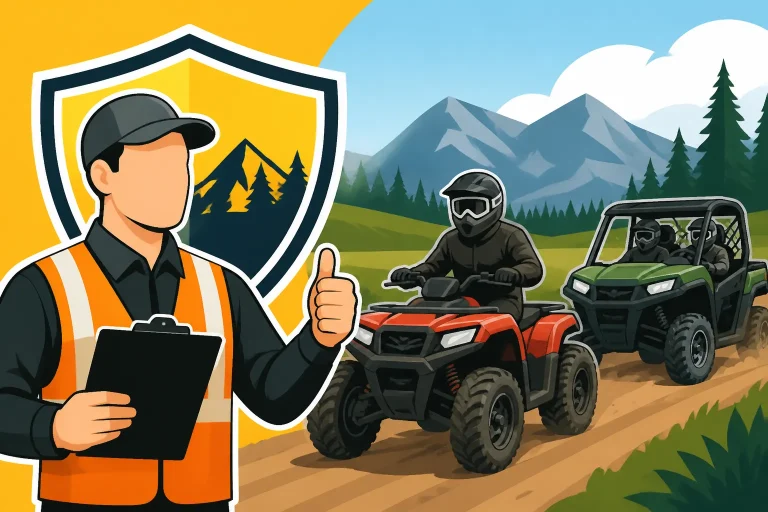
A course completion document may be useful for your own records, but don’t assume it satisfies a rental company, insurer, employer or event organizer. Ask the organization that wants proof exactly what it accepts. For more detail on common class content, see What a Rider Course Covers and Taking the Canada Safety Council’s Rider Course.
How to find and verify a current Calgary-area option
Start by searching for ATV or OHV training that explicitly serves Calgary or southern Alberta. Search results can include old event listings, private group training, courses for a different vehicle type, or classes in a location farther away than the listing headline suggests. Treat an online listing as a lead, not confirmation that a course is currently available.
You can also contact safety councils, training organizations and local powersports or riding groups to ask whether they offer courses or can direct you to an instructor. A referral is a starting point: confirm the instructor, course content, location and registration details yourself. If a provider’s website doesn’t show current dates, ask whether it runs scheduled public classes, takes private-group bookings, or expects riders to join a waitlist.
Use a short checklist when you contact a provider:
- Confirm the date and exact location. Ask for the site address, arrival time, expected finish time and whether the class is in Calgary or requires a drive outside the city.
- Check the vehicle covered. Tell the provider whether you want ATV or UTV instruction and ask what machine the practical training uses.
- Ask who supplies the machine. If you are expected to bring your own, confirm transport, fuel, condition and any equipment requirements.
- Ask about experience and age limits. Make sure the course is suited to the rider, especially for a youth or a complete beginner.
- Clarify what is included. Ask how much is classroom instruction versus supervised riding, what protective gear is required, and whether any completion record is provided.
- Check the cancellation and weather plan. Outdoor training can be affected by conditions. Find out how a reschedule or cancellation is handled before paying.
- Ask what proof, if any, is recognized. If you need a course for a rental, workplace, insurance application or organized ride, confirm acceptance with that organization as well.
| What to verify | Why it matters |
|---|---|
| Course date and exact site | A Calgary-area listing may refer to a site outside the city or to a past event. |
| ATV or UTV focus | Skills and practice arrangements may differ by machine type. |
| Machine provided or bring-your-own | This affects transport, preparation and whether you can participate. |
| Rider age and experience | Providers may set their own suitability requirements. |
| Hands-on practice time | A course with limited riding may not match your learning goals. |
| Gear and clothing requirements | Arriving without required equipment can prevent participation. |
| Completion record and recognition | A certificate or record may not meet another organization’s requirements. |
| Weather and cancellation policy | Outdoor instruction may need to be rescheduled. |
If you don’t find an open class, ask providers whether they announce dates through mailing lists or social channels, or whether a private group can arrange training. Be cautious about paying a deposit based only on a vague listing. Get the date, location, cancellation terms and course scope in writing before making travel arrangements.
Choosing a course that fits your rider and machine
The best course is not necessarily the one with the most impressive-sounding label. Look for an instructor who explains what the training covers, answers questions plainly and provides a clear plan for supervised practice. A short introductory session may be appropriate for someone who wants to understand basic controls; a newer rider who plans regular trail riding may benefit from more time practicing braking, turns and uneven terrain.
Ask how the class handles riders with different levels of experience. A confident adult and a youth who has never operated an ATV may not have the same needs. If several family members are enrolling, check whether they will be taught together and whether instruction can be adjusted to each rider. Youth courses may have their own age guidance and supervision arrangements; see Alberta Youth Rider Courses for related considerations.
Machine fit matters. If the training uses a vehicle supplied by the instructor, ask whether it is an ATV or UTV and whether you can select or specify the type. If you bring your own, ask whether it must be in a particular condition, whether there are size or model restrictions, and what happens if the machine is unsuitable on the day. A rider who expects to use a side-by-side should not assume that ATV practice will cover all of the decisions involved in operating a UTV.
A reputable provider should be able to explain, without pressure, what the course does and does not do. For example, training can help build control and judgment, but it cannot guarantee that a rider is prepared for every trail condition. Nor does a completion record automatically provide legal permission to ride an area or exempt anyone from equipment and access rules.
Compare providers on practical details as well as teaching style:
- Travel time: A course farther from Calgary might offer more practical space, but it adds transport and scheduling time.
- Practice conditions: Ask what kind of area is used and whether the exercises match the rider’s goals. Avoid assuming that a beginner course includes advanced terrain.
- Class size: Ask how many riders share an instructor or machine. More individual practice can matter for a new rider.
- Required gear: Confirm helmet and clothing expectations, and whether the provider supplies any equipment.
- Accessibility: Explain any mobility, language or learning needs before booking and ask what accommodation is possible.
- Proof of completion: Find out what document is issued and whether it records attendance, skills covered or another form of completion.
If a course is being considered because a rental operator requires training, ask the rental operator before enrolling. Rental policies can differ, and the operator may have a specific standard or orientation of its own. The same applies if a workplace or organized event asks for training records. A course provider cannot decide what another organization will accept.
Getting ready and using the training responsibly
Once you have a confirmed booking, follow the provider’s equipment list rather than relying on a generic checklist. Ask whether you need to bring a helmet, eye protection, gloves, boots or weather layers, and whether the course has any machine-specific requirements. If you are bringing your own ATV or UTV, confirm how it must arrive and whether you need to bring fuel or other supplies.
Plan for outdoor conditions. Calgary-area weather can change, and a training site may be colder, wetter or windier than the city. Wear clothing that allows movement and protects you from the conditions; bring water and any personal items the provider permits. Arrive with enough time for paperwork and a safety briefing. Do not operate a machine before the instructor gives directions, even if you have ridden before.
During practical instruction, ask questions about situations you expect to encounter: descending a slope, choosing a line around an obstacle, managing speed on loose ground, or deciding when to turn back. Share your experience honestly. An instructor can make better use of the session when they know whether you are completely new, returning after a break, or familiar with one type of machine but not another.
After the course, keep any completion document with your riding records, but continue to check the rules for the specific place you plan to ride. Training does not replace registration, insurance, equipment requirements, land access permission or local restrictions. Alberta’s requirements depend on where and how you ride. For example, the obligations that apply on public land are different from those that may apply on private land, and young riders have separate supervision rules. Read Alberta Supervision Rules Under 14 if a child will be riding, and review the relevant rules for your destination before setting out.
A practical pre-ride check is still important after training. Make sure the machine is in safe working order, the rider has suitable protective equipment, and everyone understands the route and turnaround plan. Carry required documents and let someone know where you expect to ride. If the course gave you a checklist or recommended further practice, use it; completing a class is a starting point, not a reason to push beyond your ability.
For a first course near Calgary, the most useful next step is to contact providers directly and verify the exact date, site, vehicle type, hands-on practice, age suitability and gear requirements. Those details tell you whether a class is genuinely a good fit, rather than simply nearby.
Disclaimer
This article is for general informational purposes only and does not constitute professional advice. Laws, prices and regulations vary by location and change over time. Consult a qualified professional for guidance on your specific situation.