Alberta Visitors From Montana
A Montana plate does not automatically answer every question about riding an ATV or UTV in Alberta. Visitors need to know whether their home-state paperwork is accepted, when Alberta registration may be required, and what else must be carried on public land. The practical approach is to confirm reciprocity before crossing the border, then check the rules for the specific place you plan to ride.
What Montana visitors should know about registration
Alberta has arrangements that can allow a visitor to ride a machine registered or authorized in another jurisdiction without immediately obtaining Alberta registration. That is temporary recognition, not a blanket exemption from Alberta rules. Your machine still needs valid home-jurisdiction documents, and the visit must fit the conditions that apply to out-of-province machines.
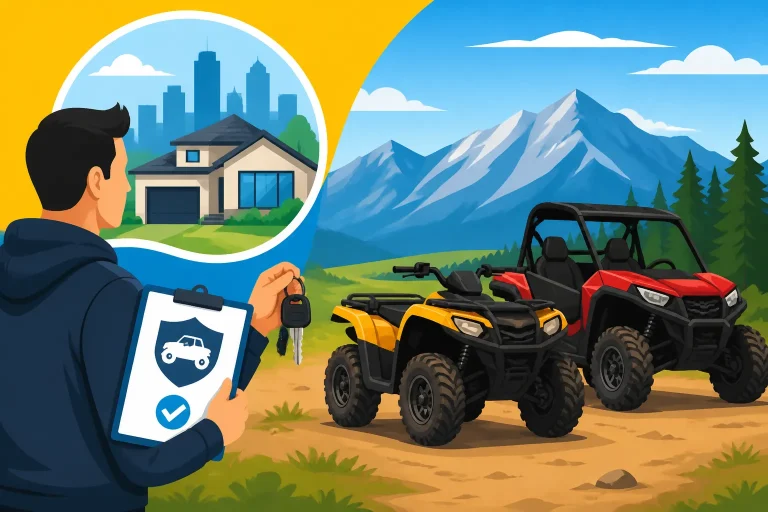
For a short visit, start by gathering the paperwork that shows the machine is properly registered or otherwise authorized for use in Montana. Bring the registration document itself, not just a photograph of a plate or a purchase receipt. If the registration is in someone else’s name, take documentation showing that you have permission to use the machine. A bill of sale can help explain ownership, but it may not substitute for current registration.
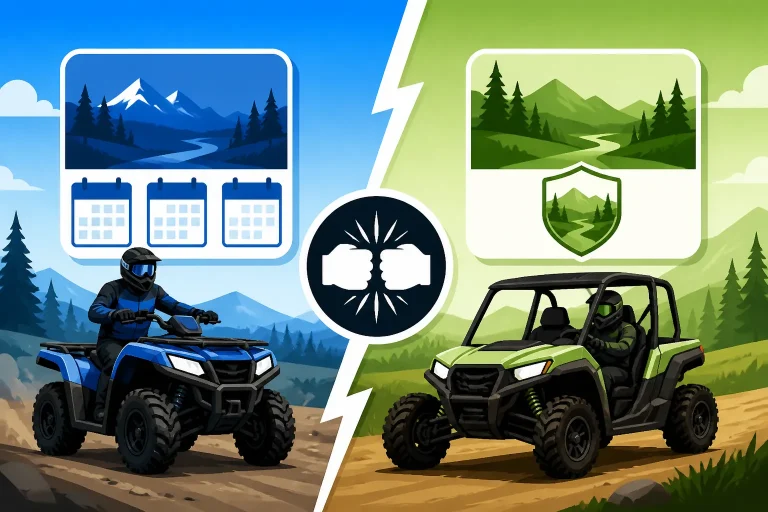
Alberta’s out-of-province rules include a time limit commonly described as 30 consecutive days. The details matter: eligibility can depend on your residency, how long the machine has been in Alberta, and whether you have established Alberta residency. If your stay could extend beyond that period, do not assume the temporary allowance continues automatically. Check the current requirements before the deadline and arrange Alberta registration if required.
The relevant distinction is usually between a visitor temporarily bringing a machine into Alberta and someone who has moved to Alberta or is keeping the machine there for an extended period. A seasonal work assignment, a long stay at a cabin, or repeated trips may make the timing less obvious. Ask an Alberta registry agent or the appropriate provincial information service how the clock applies to your circumstances. The overview in Alberta’s 30-Day Rule for Out-of-Province Machines and Alberta Registration for Visiting Riders can help you identify the questions to ask.
| Before you ride | What to have or confirm |
|---|---|
| Montana paperwork | Current registration or other proof of authorization that applies to the machine |
| Permission to use it | Owner’s written permission if the machine is not registered to you |
| Alberta stay | Whether the visit remains within the temporary out-of-province allowance |
| Insurance | Written proof of coverage and confirmation that it applies in Alberta and on the kind of land you will ride |
| Riding location | Permission, closures, and local rules for the route or riding area |
| Required equipment | Helmet and machine equipment that meet Alberta rules for your riding situation |
Do not confuse a machine’s title with its current operating authorization. A title generally helps establish ownership; registration or another required authorization is what may show it can be operated. Montana paperwork can vary by machine and use, so confirm that the document you plan to carry is the one Alberta will recognize for temporary operation. If you are unsure, send the details of the machine and its documents to an Alberta registry agent before travelling.
For a machine bought shortly before the trip, bring all the transfer documents you have, including the seller’s bill of sale and any registration papers. A newly purchased machine may not yet be registered in your name, and a temporary permit issued in one jurisdiction may not necessarily cover operation in another. Ask before you rely on a temporary document. The paperwork issues described in Alberta Registration for a Machine From Montana are especially relevant when you are bringing a recently purchased ATV or UTV.
Sort out insurance and border paperwork before departure
Registration and insurance answer different questions. Registration or another authorization relates to the machine’s legal status; insurance concerns financial protection and may also be required for riding on public land. A Montana policy should not be assumed to meet Alberta’s requirements simply because the machine is insured at home.
Before you leave, contact your insurer and ask for confirmation in writing that the policy covers the machine while it is operated in Alberta. Ask specifically whether coverage applies off-road and on public land, and whether any limits or exclusions apply to recreational use, passengers, or particular machine types. Keep the insurer’s proof of coverage with you, in a form you can show if asked. Alberta’s public-land requirement is explained in Alberta Insurance Requirements on Public Land, and Alberta Proof of Insurance on Demand covers why having the document available matters.
Do not rely on an insurance card that shows only a vehicle you tow the ATV with. The off-highway machine may need its own coverage. Similarly, an insurance policy for a road vehicle does not necessarily extend to a quad or side-by-side. If you are crossing with a rental, borrowed machine, or machine owned by a business, ask who is responsible for insuring it and what proof the operator will provide.
Border requirements are separate from Alberta riding requirements. If you are bringing a machine from the United States, check the current Canadian border and customs requirements for the vehicle, ownership documents, and any temporary import conditions. Keep your purchase and ownership records accessible, particularly if the machine is new, financed, borrowed, or being brought into Canada for a longer stay. Do not assume that having the right paperwork for Alberta registration also completes the border process.
A useful pre-trip file includes:
- The machine’s current Montana registration or operating authorization.
- Proof of ownership, or written permission from the owner.
- Proof of insurance that applies in Alberta and to off-highway use.
- Any border or temporary-import records relevant to the machine.
- A note of the Alberta riding area, access requirements, closures, and local contacts.
Keep digital copies as backups, but carry documents in a format that remains accessible if your phone battery dies or you lose service. A waterproof document pouch, including one sourced through Amazon, can help keep papers dry when the machine is exposed to rain, mud, or snow. Digital copies should supplement—not replace—any original or printed documents that an authority or insurer requires.
Alberta riding rules still apply to visiting riders
Reciprocity does not mean Montana visitors can use Montana’s riding rules in Alberta. Once you ride in Alberta, follow the requirements that apply to the location and activity. Those may include registration, insurance, helmets, passenger limits, equipment standards, and local access restrictions. A visitor should plan for Alberta’s rules even when the machine is fully authorized at home.
Where you ride matters. Public land, private property, a municipal road, a highway ditch, and a designated trail can all have different access rules. Alberta registration does not grant permission to ride wherever a track appears on a map. Check whether the route is open to your machine, whether a local bylaw permits OHV travel, and whether there are seasonal closures or land-use restrictions. For public land, use the relevant area information and Alberta Registration Before Riding Crown Land as a starting point.
Helmet requirements also apply according to Alberta law and the riding situation. Do not assume that a helmet that was acceptable for a particular ride in Montana meets Alberta’s standard. Check the helmet’s certification label and the current requirements for the place where you will ride. The practical overview in Alberta Helmet Law on Public Land can help you prepare, but local exemptions and circumstances should be checked rather than assumed.
The same caution applies to children and passengers. Age, supervision, seating, and manufacturer limits can affect whether a young person may operate a machine or ride as a passenger. A side-by-side with several seats does not automatically make every passenger arrangement legal or safe. Follow the machine manufacturer’s passenger limits and Alberta’s applicable requirements. If a child is riding, check the rules for that child’s age and the adult supervision required before leaving the staging area.
Equipment rules are another potential difference. Public-land riding may require working lights or a spark arrestor, and equipment that is acceptable for private property may not be suitable for a public trail. Keep the machine in legal operating condition and check for restrictions on exhaust modifications. Where conditions call for it, bring the appropriate helmet, eye protection, and other protective gear rather than relying on the minimum equipment rule alone.
If you are riding in a group, make sure every operator understands the route and the documents each person must carry. One person’s registration or insurance does not necessarily cover everyone else’s machine. A visitor carrying proof for a UTV does not resolve the paperwork for a second ATV travelling with the group. Before unloading, match each machine to its own documents and confirm that every operator is allowed to use it.
Plan for your stay, riding area, and return trip
The length and purpose of your visit can change what you need to do. For a brief holiday, temporary recognition may be available if your machine and visit meet the conditions. For a longer stay, a move to Alberta, or a machine kept in the province, ask whether Alberta registration is required and when to complete it. Do not wait until the final day of a trip to discover that the machine has been in the province longer than the temporary allowance permits.
Keep a simple record of when the machine entered Alberta and where it is being stored. This is useful if your plans change, especially if you extend a vacation, leave the machine at a cabin, or return to Montana and bring it back later. Ask how a departure and return affect the applicable time period; do not assume that a short trip across the border resets the clock.
If your plans include camping, separate camping permissions from machine registration. A public-land camping pass, where required for the area and type of camping, is not an ATV registration or a general trail pass. Conversely, having registration and insurance does not authorize camping or guarantee that a trail is open. Review Alberta Public Lands Camping Pass and the rules for the specific land you intend to use.
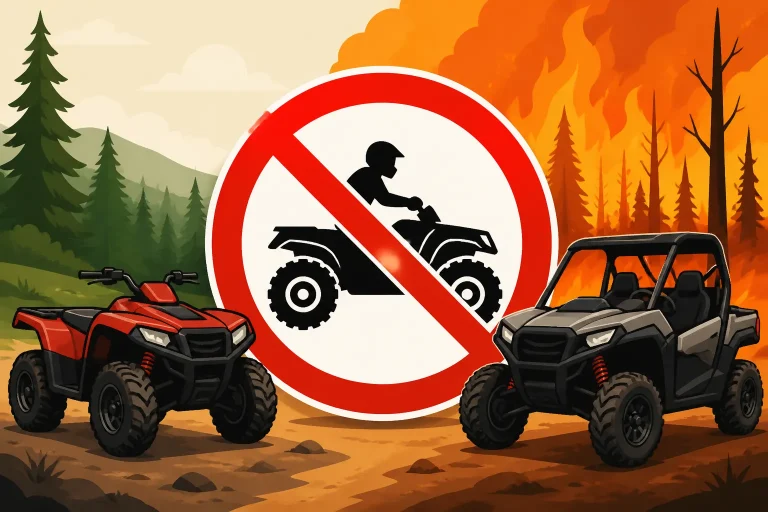
Before heading out, check the status of the riding area. Routes can be affected by seasonal closures, weather, fire restrictions, wildlife concerns, active work, or local access decisions. A trail shown on an older map may not be open for your machine today. Use current area information and obey signs and gates. If you cannot confirm that a route is open, choose a route with clear authorization rather than treating uncertainty as permission.
A practical sequence for Montana visitors is:
- Confirm your status. Decide whether you are a temporary visitor or may be treated as an Alberta resident for registration purposes.
- Check your documents. Confirm that the Montana registration or authorization is current and applies to the machine.
- Ask about the time limit. If the trip may approach 30 consecutive days, verify the deadline and what happens if your stay changes.
- Verify insurance. Get written confirmation for Alberta off-highway use and carry proof.
- Check border requirements. Confirm what is needed to bring the machine into Canada and return it to the United States.
- Choose a legal riding area. Check access, closures, local restrictions, and any separate camping requirements.
- Carry each machine’s paperwork. Keep documents available for the machine being operated, not just for the group’s tow vehicle.
If a registry agent, insurer, or land manager gives you guidance, keep a note of the date, the question you asked, and the answer. For an unusual situation—such as an unregistered machine, a long stay, a business-owned fleet, a temporary permit, or a machine recently purchased in Montana—describe the exact circumstances. General information about visitors may not settle how an unusual document or ownership arrangement is treated.
The safest assumption is that Montana credentials may help establish temporary eligibility, but they do not waive Alberta’s other rules. Confirm the machine’s paperwork and time limit, make sure insurance covers Alberta riding, and verify access before unloading. That preparation is simpler than sorting out a registration, insurance, or land-access problem at the trailhead.
Disclaimer
This article is for general informational purposes only and does not constitute professional advice. Laws, prices and regulations vary by location and change over time. Consult a qualified professional for guidance on your specific situation.