Alberta Three-Day Pass vs Annual Pass
An Alberta ride can involve two separate questions: whether your machine may use the area and whether your camping plans require a public lands camping pass. The three-day and annual passes are camping options, not OHV trail permits. Here’s how their validity, coverage and cost trade-offs affect which one makes sense for your trip.
What the Three-Day and Annual Passes Cover
Alberta’s Public Lands Camping Pass applies to camping in covered public-land areas. It is not a general fee for operating an ATV or side-by-side, and buying one does not grant permission to ride wherever you choose. Before travelling, check that the land you plan to camp on is within the pass program and that your camping location is allowed.
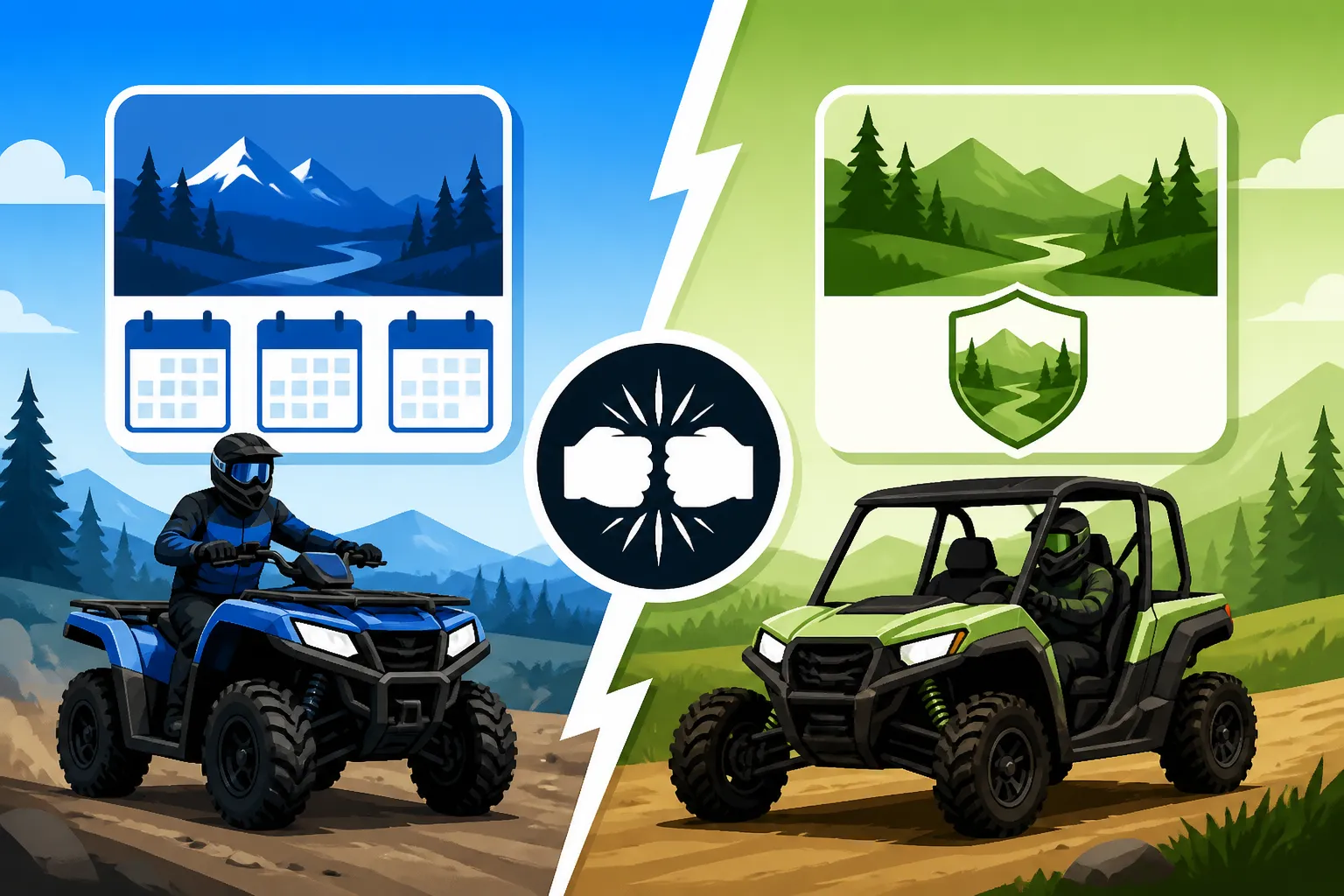
The two pass choices differ mainly in how long they cover you:
- The three-day pass is intended for a short stay. Its validity is a set consecutive period, not a collection of separate days to use whenever you like. Check the start and expiry time shown when you buy it; the pass clock may not line up with midnight or with the moment you arrive at camp.
- The annual pass covers a longer period and can suit people who expect to camp in covered areas more than once. Confirm its exact start and end dates when purchasing rather than assuming it follows the calendar year.
The pass is about camping, not the number of machines in your group. It does not replace registration, insurance, land-use rules, trail closures or permission requirements. Alberta does not have a general OHV trail pass, as explained in Alberta Has No OHV Trail Pass. You may still need a camping pass even if your ATV is properly registered, and a camping pass will not make an unregistered machine legal to ride.
Pass requirements can depend on where you camp and who is in the party. Generally, adults camping in a covered area need to meet the pass requirements, while exemptions may apply in particular circumstances. Check the current rules for children and group arrangements in Do Alberta Kids Need a Camping Pass? and Alberta Camping Pass for a Group.
Three-Day Pass vs Annual Pass
| Consideration | Three-day pass | Annual pass |
|---|---|---|
| Best fit | A short camping trip in a covered area | Multiple trips or a longer camping season |
| Validity | A set consecutive period; check the displayed start and expiry | A longer period; confirm the dates provided at purchase |
| Cost pattern | Lower upfront commitment, but may be less economical for repeat trips | Higher upfront commitment, which may pay off if you use it often |
| Flexibility | Useful when your trip dates are known and fit inside the validity window | More flexibility for separate trips during its validity |
| What it does not provide | OHV registration, insurance, trail access or permission to camp anywhere | The same exclusions: it is not a riding permit or blanket land-use permission |
The three-day option is often the straightforward choice for a single weekend or brief outing. The main planning detail is the pass’s exact validity window. If you arrive before it begins, stay beyond its expiry, or change your plans, the pass may not cover every part of your stay. Read the purchase details carefully and allow for the time you expect to arrive and leave.
The annual option is worth comparing if you expect to return to covered public-land camping areas. It may cost less overall than buying multiple short passes, but that depends on current prices and how often you actually go. Compare the current total cost of the passes you would otherwise buy with the annual pass cost. Don’t decide from the labels alone: the annual pass is not automatically the better deal for every rider.
Neither option is a reservation or a guarantee that a suitable campsite will be available. You still need to follow the rules for where camping is permitted, how long you can stay and how far you must camp from certain facilities. Review [Alberta Camping Distance From Facilities] and [Alberta Camping Near a Recreation Area] if your planned site is near a recreation area or facility.
How to Choose for Your Trip
Start with the camping plan rather than the machine. If you are riding for the day and not camping in an area covered by the pass, you may not need a camping pass for that outing. If you are staying overnight on covered public land, check the pass requirement even if you are only camping for one night.
Then work through these questions:
- Are you camping in an area covered by the pass? Confirm the land designation and local rules. A public-land pass does not apply identically to every campground, private property or public land area.
- How long will you stay? Match your arrival and departure times to the validity period displayed for the three-day option. If your trip could run long, consider whether the annual pass or another valid arrangement better covers the dates.
- Will you make another trip during the annual pass period? If you are unsure, compare the current costs rather than assuming you will use the pass enough to justify it.
- Who is camping? Check whether each adult in your party needs their own pass and whether any exemptions apply. Do not assume one pass automatically covers the whole group.
- What else must be in order for the ride? Check registration, insurance, permitted routes, closures and equipment requirements separately. A camping pass addresses only the camping requirement.
This distinction matters for riders using a staging area. A day ride from a staging area is not the same as camping there overnight. Likewise, sleeping in a trailer or vehicle does not necessarily change whether your activity counts as camping under the applicable rules. If your plans combine riding and camping, verify both sets of requirements before leaving home.
A three-day pass is usually easier to justify when the trip is short, the dates are firm and you do not expect another covered camping trip during the annual pass period. An annual pass can be more convenient if you make several trips, but convenience is not a substitute for checking the area’s rules. The pass does not open closed trails or authorize camping in a location where camping is prohibited.
Buying, Timing and Avoiding Common Mistakes
Buy the pass through an authorized sales channel and keep the confirmation or other required proof available during your trip. The purchasing system should show the applicable dates and terms. For the current buying process, see How to Buy an Alberta Camping Pass and Buying a Public Lands Pass Through the Licence System.
A common mistake is treating “three-day” as three nights, or assuming the pass begins at the moment it is purchased. The validity window can use a specific start time, so check the details on the pass before setting your travel schedule. The annual option also has its own validity dates; do not assume it expires at the end of the calendar year. For more on timing, see [Alberta Camping Pass Expiry].
Another mistake is buying a pass and treating it as permission to camp anywhere. You must still use locations where camping is allowed and follow applicable limits and restrictions. Check the current area information before setting up camp, especially if you are travelling during a closure, fire restriction or other temporary change.
Keep the camping pass separate from the documents and checks for your machine. Before riding, confirm that registration and insurance requirements are met for the land you plan to use. The pass does not replace either one. Also check whether a local closure or land-use rule affects the route between your camp and the riding area.
If your schedule is uncertain, look at the pass terms before purchasing. A delayed arrival, weather change or trip extension can make a short pass less suitable than it first appeared. If you are choosing the annual option for several trips, remember that it only helps with covered camping during its valid period; it does not cover unrelated fees, private campground charges or riding permissions.
The practical choice is simple: use the three-day pass when one short, planned stay fits its validity window; consider the annual pass when repeat camping makes its higher upfront cost worthwhile. In both cases, confirm coverage, dates and group requirements through the current official sales information before you travel.
Disclaimer
This article is for general informational purposes only and does not constitute professional advice. Laws, prices and regulations vary by location and change over time. Consult a qualified professional for guidance on your specific situation.