Is a Stock Pickup an Off-Highway Vehicle?
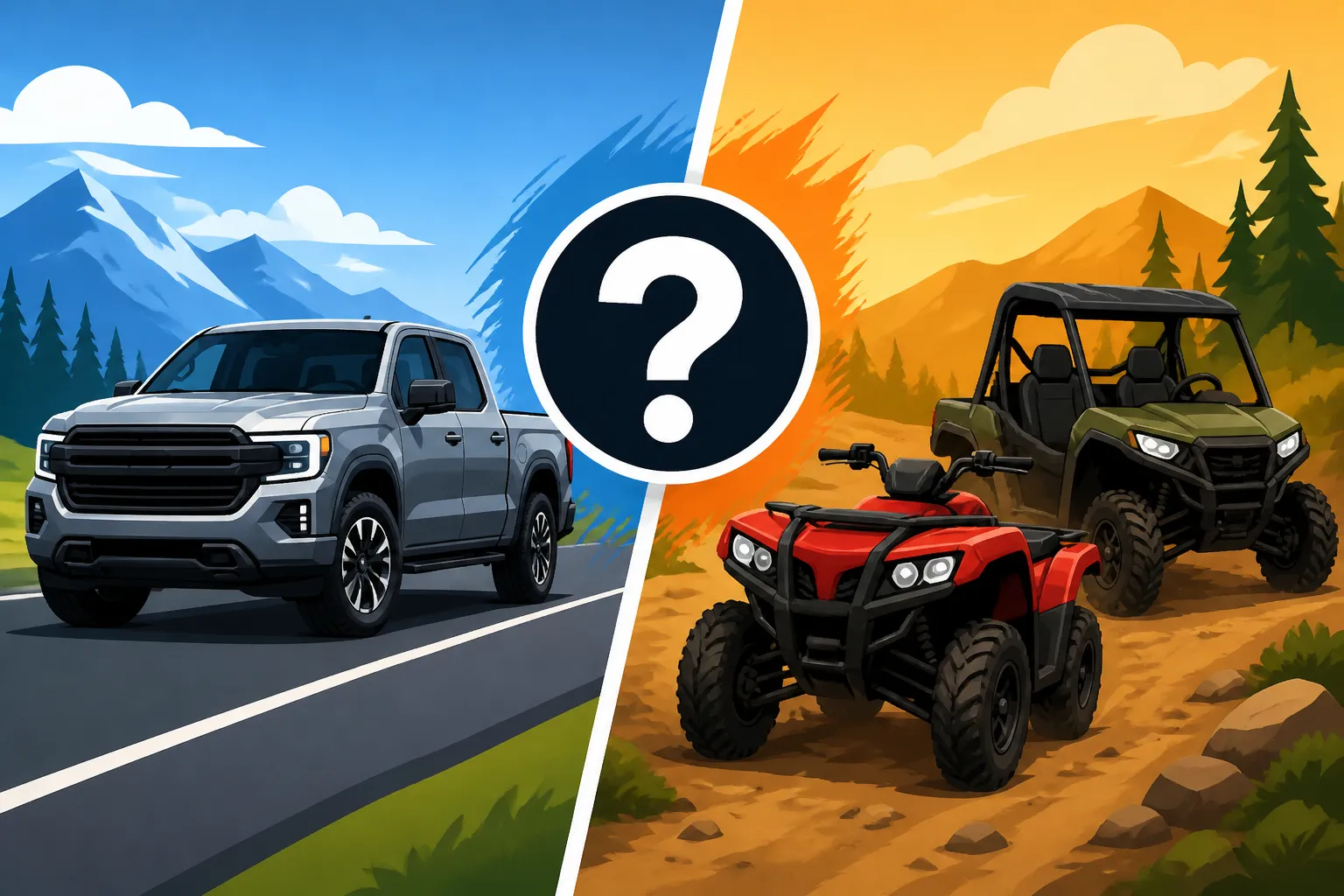
It's a common scene here in Alberta: you're out in the backcountry, enjoying some incredible scenery, and you spot a big, burly 4×4 pickup truck navigating a gnarly trail. Immediately, a question pops into your head: Is that considered an Off-Highway Vehicle (OHV) just like an ATV or a side-by-side? It's a fantastic question, and one that causes a fair bit of confusion among folks who love to get their wheels dirty. This guide is going to clear up that very real misconception, explaining why your trusty stock pickup, despite its off-road prowess, doesn't legally fall into the same category as a quad or dirt bike here in Wild Rose Country.
Understanding Alberta's Definition of an Off-Highway Vehicle
Let's dive right into the heart of the matter and talk about how Alberta actually defines an Off-Highway Vehicle. It's not just about whether it can handle a bumpy path; it's about its design, intent, and legal classification. This distinction is crucial for everyone who enjoys our incredible outdoor spaces.
What the Law Says About OHVs
When we talk about what legally constitutes an OHV in Alberta, we turn to the big books: the Traffic Safety Act and the Off-Highway Vehicle Regulation (specifically, [Off-Highway Vehicle Regulation 319/2002]). These documents lay out very specific criteria. Essentially, an OHV is defined as a vehicle designed to be driven exclusively or primarily off highways. This includes things like all-terrain vehicles (ATVs), snowmobiles, dirt bikes, and utility terrain vehicles (UTVs), or side-by-sides. The key here is "designed to be driven exclusively or primarily off highways." A pickup truck, even one with massive tires and a lifted suspension, doesn't fit this primary design intent.
The law sees these machines as distinct for a reason. They're built for different purposes, operate under different rules, and have different safety considerations. Imagine trying to apply highway vehicle safety standards to a lightweight dirt bike, or expecting a massive highway truck to navigate the narrow, winding trails meant for a quad. It just doesn't compute. This distinction helps keep everyone safer and ensures our diverse landscapes are managed appropriately for different types of recreational use. Understanding [What the Traffic Safety Act Requires of Alberta OHVs] is your first step to legal riding.
The Core Characteristics of an OHV
So, what makes an OHV an OHV? Think about the machines you commonly see out on the trails. They're typically open-air, often have specialized, aggressive tires designed purely for traction on soft or uneven terrain, and their suspension systems are built to absorb huge impacts and articulate over severe obstacles. They frequently lack features you'd expect in a road-legal vehicle, such as full-enclosed cabins, advanced crumple zones, or comprehensive airbag systems, because their operating environment is fundamentally different. Their purpose is specific: to conquer trails, mud, snow, and rough terrain.
Contrast that with your average pickup truck. While many pickups come with 4×4 capabilities and can absolutely handle some impressive off-road conditions, their primary design is for on-road transportation. They're built to carry passengers and cargo safely down the highway at speed, tow trailers, and handle daily commutes. Their off-road capability is usually a secondary feature, an added bonus, rather than their sole reason for existence. They have a full vehicle identification number (VIN) that designates them as road vehicles, and they must meet specific road safety standards to even be sold.
Why Your Pickup Truck Isn't an OHV (Legally Speaking)
It's easy to blur the lines when your truck is covered in mud and you've just crawled over some serious rocks. But from a legal perspective in Alberta, that pickup truck remains a pickup truck, not an OHV. This isn't just semantics; it has real implications for how you operate it and where you can take it.
Designed for the Highway First
Your pickup truck, no matter how rugged its appearance or how many aftermarket parts you’ve added, is manufactured and certified as a highway vehicle. It receives a conventional vehicle identification number (VIN) and is designed to meet stringent safety and emissions standards for use on public roads. That's why you can drive it from Calgary to Fort McMurray, or park it at your local grocery store without a second thought. Its entire engineering philosophy, from the frame to the glass, is centered around safe and efficient highway travel, with off-road capability as an enhancement, not the core mission.
This primary design intent dictates everything. Your truck requires standard vehicle registration, just like any car or minivan. You need a valid driver's license (typically a Class 5 or higher) to operate it, and it's covered by conventional auto insurance policies. These are all hallmarks of a highway vehicle. While some companies, like SuperATV, make fantastic aftermarket parts that can seriously boost a pickup's off-road performance—things like heavy-duty suspension components or specialized winches—these modifications don't magically transform its legal classification. A modified truck is still a truck; it doesn't become an OHV just because it’s more capable off the pavement.
Registration, Licensing, and Insurance Differences
The operational requirements for a pickup versus an OHV highlight their fundamental differences. For your pickup, you're looking at annual registration with the provincial government, a standard vehicle plate, and a driver's license. Your insurance policy is a typical automotive one, covering you for liability and damage in most on-road scenarios, and often for light off-road use where permitted.
Now, let's look at an actual OHV. These machines have their own unique registration process, which can involve registering at an Alberta registry agent. You'll need a specific OHV plate, and the associated costs are different from regular vehicle registration. For instance, you can learn more about [Alberta OHV Registration Cost]. Furthermore, while you don't need a driver's license to operate an OHV (though age restrictions apply), you absolutely need specialized OHV insurance, especially if you plan on riding on public lands. [Alberta Requires Insurance on Public Land] is a non-negotiable for riding most Crown land. Trying to use your truck's regular auto insurance to cover an incident on a dedicated OHV trail could lead to some very unpleasant surprises if you make a claim, as the insurer might argue you were operating the vehicle outside its intended use or in an unauthorized area for a conventional truck.
| Feature | Stock Pickup Truck | Off-Highway Vehicle (ATV/Side-by-Side) |
|---|---|---|
| Primary Design | Highway travel, hauling, light off-road | Dedicated off-road recreation/work |
| Registration | Standard vehicle registration | [Alberta OHV Registration Cost] |
| Plate | Standard passenger vehicle plate | Specific OHV plate |
| Insurance | Conventional auto insurance | Specialized OHV insurance |
| Driver's Cert. | Class 5 or higher driver's license | No driver's license required (age rules apply) |
| Helmet Law | Not applicable in cab | [Alberta Helmet Law on Public Land] |
| Road Use | Primary purpose, regulated | Generally restricted, often illegal on highways |
| Environmental Impact | Higher footprint on soft terrain | Lower, designed for specific trail use |
When a Pickup Truck Can Get You Into Trouble Off-Road
Just because your truck can go off-road doesn't mean it should go everywhere. There are specific places and situations where taking a full-size pickup can lead to fines, damage, and environmental problems, precisely because it's not an OHV.
Public Land Use Zone Rules and Restrictions
Alberta's Public Land Use Zones (PLUZ) are incredible resources for outdoor enthusiasts, but they come with specific rules designed to protect the environment and ensure compatible use. Many of these zones, like the popular McLean Creek, have designated trails that are specifically engineered and maintained for OHVs like ATVs, side-by-sides, and dirt bikes. These trails often have width restrictions, weight limits, and terrain suitable only for lighter, more agile machines. You can explore [Alberta's Public Land Use Zones Explained] to see the variety of regulations.
Attempting to navigate these narrow, purpose-built OHV trails with a full-size pickup truck can lead to significant problems. You might find yourself unable to fit, causing damage to the trail edges or vegetation. More seriously, you could face fines for operating a vehicle in an unauthorized area. The regulations are in place to prevent overcrowding, minimize environmental impact, and maintain the integrity of these valuable recreation areas. When considering [Alberta Rules for Riding Crown Land], remember that applies to OHVs on OHV trails, not necessarily your truck.
Environmental Impact and Damage
This is a big one. While a well-driven ATV or side-by-side can navigate trails with minimal impact, a heavy, wide pickup truck can leave a much larger footprint, especially on sensitive terrain. The sheer weight of a truck can lead to significant soil compaction, which is detrimental to plant growth and water absorption. Its wider tires can create deep, impassable ruts that erode trails and contribute to sedimentation in nearby streams and rivers. This kind of damage can take years to recover from, if it recovers at all.
Operating a truck off-trail, or on trails not designated for vehicles of its size and weight, is a surefire way to harm the delicate ecosystems we all cherish. Our beautiful Alberta wilderness relies on responsible use to thrive. The intent of [Alberta Registration Before Riding Crown Land] isn't just about paperwork; it's about ensuring machines used on public land are appropriate for it. Whether you're considering [Alberta Spark Arrestor Rules] or [Alberta Lighting Rules on Public Land], these specific regulations often apply to OHVs, not conventional trucks, because the impacts and risks are different.
The Legal Ramifications of Misclassification
Beyond the environmental concerns, there are serious legal consequences for misusing your pickup in areas designated for OHVs. If you're caught operating your truck in an unauthorized zone, you could be facing fines under the Traffic Safety Act or specific Public Lands Act regulations. These aren't just slaps on the wrist; [Alberta Penalties for Riding Unregistered] OHVs can be steep, and while your truck is registered, it's the type of vehicle in the wrong place that causes the problem.
Furthermore, as mentioned earlier, your standard auto insurance policy might not cover incidents that occur when you're operating your truck in a manner or location it wasn't intended for. Imagine getting stuck, breaking an axle, or worse, causing an accident on an OHV-only trail. Your insurer could deny your claim, leaving you personally responsible for substantial repair costs, recovery fees, or even damages to others. It’s always best to be crystal clear on the rules, whether you're riding an OHV or driving your truck. For instance, [Alberta Rules for Riding Private Land] also involves explicit permission and understanding what type of vehicle is welcome.
Responsible Off-Roading with Your Pickup
So, your pickup isn't an OHV, but that doesn't mean you can't have incredible off-road adventures with it! It just means you need to approach it with the right mindset and in the right places. There are plenty of fantastic opportunities for truck-based off-roading in Alberta, as long as you know where to look and how to prepare.
Finding Appropriate Off-Road Areas for Trucks
The key to responsible truck-based off-roading is knowing where your vehicle is welcome and permitted. Instead of looking for narrow OHV trails, seek out areas specifically designated for 4×4 trucks, or explore the vast network of forestry roads and access routes that crisscross much of Alberta's public land. These roads are typically wider, built to accommodate larger vehicles, and are often less environmentally sensitive than single-track OHV trails.
Local 4×4 clubs are an invaluable resource here. They often have extensive knowledge of legal and appropriate truck trails, hold organized events, and promote responsible land use. They can guide you to areas where your truck can shine without violating regulations or causing undue environmental impact. Always remember to check local bylaws and land-use maps before heading out. Sometimes a road might look open, but it's only for certain types of vehicles.
Preparing Your Pickup for Off-Road Adventures
Even though your pickup isn't an OHV, proper preparation is still paramount for any off-road excursion. Equipping your truck with the right gear ensures both safety and enjoyment. This includes investing in appropriate all-terrain or mud-terrain tires, which provide far better traction and durability off-pavement than standard highway tires. A reliable winch and recovery straps are essential for getting unstuck (and for helping others!). Carrying a high-quality air compressor and tire deflator allows you to air down your tires for better grip and a smoother ride on rough terrain, then air them back up for the highway home.
Beyond physical modifications, a huge part of preparation is knowing your truck's limits and your own capabilities. Understand its ground clearance, approach and departure angles, and what kind of abuse it can reasonably handle. Even with robust aftermarket parts from a company like SuperATV that manufactures heavy-duty components, your truck still has its inherent design limitations. Remember to pack essential safety gear: a first-aid kit, emergency food and water, communication devices (especially if you'll be out of cell service), and even bear spray if you're in prime bear country. Responsible off-roading means being prepared for anything and leaving the land exactly as you found it – or better.
Disclaimer
This article is for general informational purposes only and does not constitute professional advice. Laws, prices and regulations vary by location and change over time. Consult a qualified professional for guidance on your specific situation.