Alberta Penalties for Riding Unregistered
Picture this: you've loaded up your quad or side-by-side, driven out to your favourite spot, and are just about to hit the trails when an officer approaches. The last thing you want to hear is that your machine isn't properly registered, leading to a ticket, or worse, having your pride and joy loaded onto a tow truck. It's a frustrating situation that many riders face, often without realizing the full scope of the penalties. This guide is here to walk you through exactly what can happen if you're caught riding an unregistered off-highway vehicle (OHV) in Alberta, and how to easily avoid those headaches.
Why Registration Matters in Alberta
It might seem like just another piece of paperwork, but registering your ATV or UTV in Alberta is a fundamental requirement, especially if you plan to enjoy the vast network of public lands this province offers. Many riders mistakenly believe that because they're not on a paved road, the rules don't apply. That couldn't be further from the truth.
The Legal Requirement for Public Land
The Province of Alberta takes the registration of off-highway vehicles seriously. Under the Traffic Safety Act, any OHV being operated on public land, designated OHV trails, or even along highway ditches, must be registered. This isn't just a suggestion; it's a clear legal mandate. Think of it like registering your car – you wouldn't drive it on public roads without a plate, would you? The same principle applies to your quad or side-by-side when you're out exploring our beautiful backcountry. Ignoring this requirement isn't just a minor oversight; it's a direct violation that carries real consequences, regardless of whether you're a seasoned rider or just out for a casual spin.
The intent behind these regulations is primarily public safety and accountability. If there's an accident or an incident, knowing who owns and operates the machine is crucial for emergency services and law enforcement. It helps ensure that everyone is playing by the same rules, contributing to a safer environment for all users of Alberta's public spaces. Even if you're the most careful rider out there, the law still requires that your machine is properly identified. You can read more about what the Traffic Safety Act expects of you in our guide, [What the Traffic Safety Act Requires of Alberta OHVs].
How Registration Protects You
Beyond just avoiding a ticket, registering your OHV offers a layer of protection that many riders overlook. First and foremost, a registered machine has a clear paper trail, making it much harder for thieves to resell it. If your ATV or UTV is stolen, having it registered with a unique plate makes it significantly easier for law enforcement to track it down and return it to you. Imagine the relief of getting your machine back after it's been taken, all thanks to that simple piece of plastic and the associated paperwork.
Secondly, registration often goes hand-in-hand with insurance. While registration itself doesn't provide insurance, many insurance providers will require proof of registration before they'll cover your OHV. Having proper insurance is an absolute must, not just to protect your investment from damage or theft, but also to cover potential liability if you're involved in an accident that causes injury or damage to someone else's property. Getting caught without insurance can lead to even more severe penalties than riding unregistered, which we'll touch on later. Essentially, registration is the gateway to proper legal and financial protection for your off-highway adventures. You can learn more about this by checking out [Alberta Requires Insurance on Public Land].
Common Penalties for Riding Unregistered
Nobody wants to face penalties, especially when you're just trying to enjoy a day out on the trails. Unfortunately, riding an unregistered OHV in Alberta can lead to several unpleasant consequences, ranging from financial hits to the temporary or even permanent loss of your machine. It's not just a slap on the wrist; these penalties are designed to deter non-compliance and can seriously dampen your riding experience.
Fines and Tickets
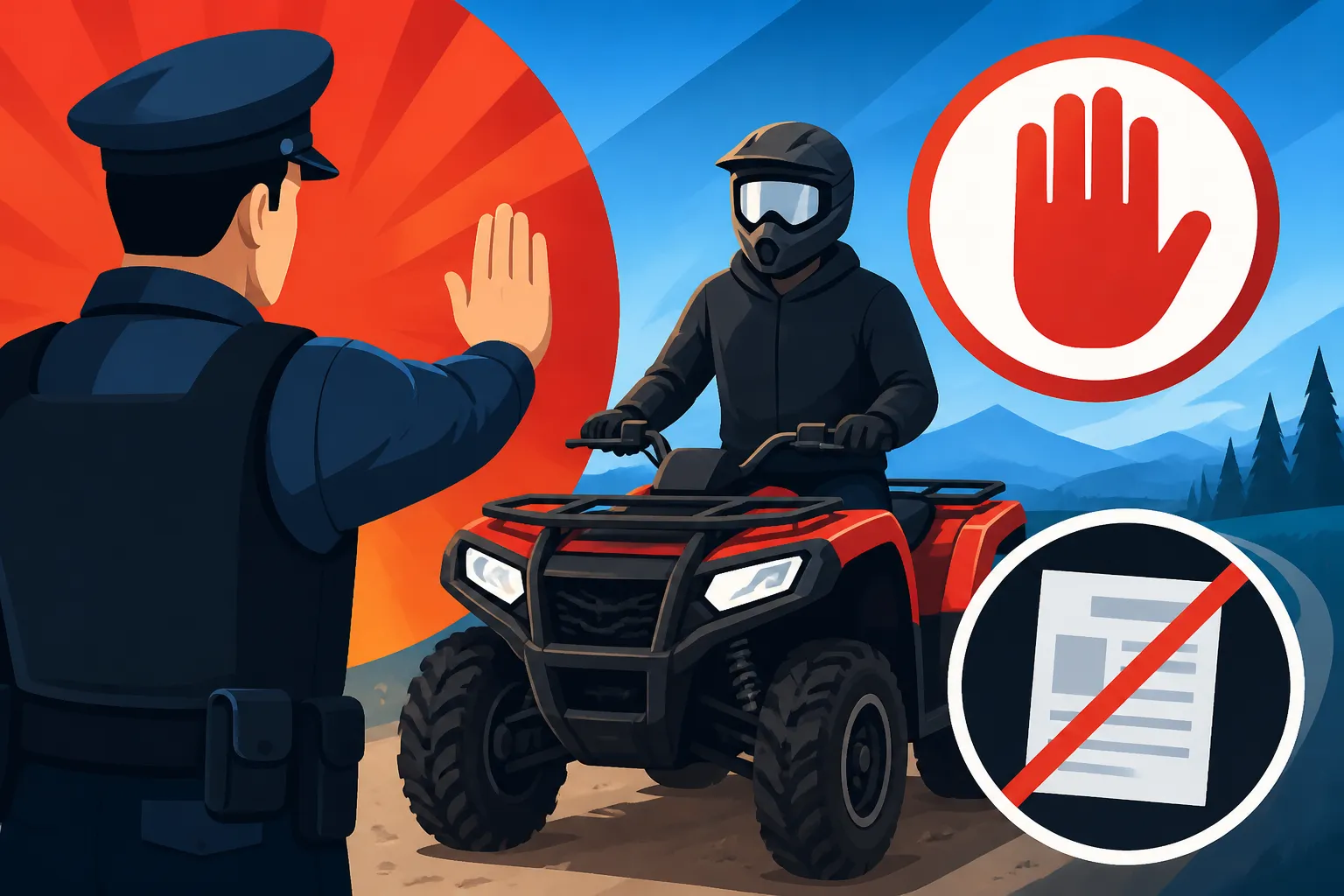
The most immediate and common penalty for riding an unregistered OHV is a significant fine. When an enforcement officer, whether it's a RCMP officer, a Fish and Wildlife officer, or a park ranger, stops you and finds your machine isn't registered, they will issue a ticket. This isn't just a small, easily forgotten amount; these fines can be substantial. They're designed to be a deterrent, making it far more expensive to skip registration than to simply do it in the first place. You'll likely also incur additional administrative fees, and dealing with the process can eat up valuable time and energy.
Consider a scenario: you're out riding near McLean Creek, enjoying the fresh air and scenery, and you come across a routine check. An officer asks for your registration, and you can't produce it. Suddenly, your fun day turns into a costly lesson. You'll be handed a ticket on the spot, and while the exact amount can vary, it's safe to say it'll be far more than the cost of registering your machine. It’s a bitter pill to swallow when you realize that a small upfront investment in proper registration could have saved you a lot of grief and money.
Vehicle Seizure
This is where things get really serious and often comes as a shock to riders. Beyond a fine, an enforcement officer has the authority to seize your unregistered OHV. Yes, that means your quad or side-by-side can be loaded onto a tow truck and impounded. Imagine the feeling: your machine, which you've invested your hard-earned money and time into, is suddenly out of your control, sitting in an impound lot. This penalty is particularly impactful because it immediately removes your ability to continue riding and adds a whole new layer of expense and inconvenience.
When your vehicle is seized, you're not just looking at the initial fine anymore. You'll be on the hook for towing fees, impoundment fees for every day your machine sits in the lot, and potentially storage fees. These costs can quickly add up, often far exceeding the original ticket amount and dwarfing the minimal cost of registration. Retrieving your machine from impound can be a bureaucratic nightmare, requiring proof of ownership, valid registration, and sometimes even proof of insurance, all before they'll even consider releasing it. It’s a scenario no rider ever wants to experience, and it's a very real possibility if you choose to ride unregistered on public land. Our article, [Alberta Vehicle Seizure for No Insurance], explains a related, serious penalty that you should also be aware of.
Other Potential Consequences
The penalties don't always stop at fines and seizure. Depending on the circumstances, riding an unregistered OHV can lead to other complications. If you choose to dispute the ticket, you might find yourself in court, incurring court costs, legal fees, and the significant inconvenience of multiple appearances. This transforms a simple oversight into a time-consuming and stressful legal battle.
Furthermore, a history of non-compliance could lead to more scrutiny in the future. While not directly a penalty of unregistered riding, consistent disregard for OHV regulations could impact your interactions with law enforcement down the road. It's about demonstrating responsible ownership and respecting the rules that allow us all to enjoy Alberta's incredible natural landscapes. The goal is always to keep you, and everyone else, safe while preserving access to our cherished riding areas.
Scenarios Where People Get Caught Unregistered
It's easy to think "it won't happen to me," but the reality is that enforcement officers are out there, ensuring compliance. Many riders get caught in situations they least expect, turning a fun outing into a costly mistake. Understanding these common scenarios can help you be more vigilant and ensure you're always riding legally.
Riding on Public Land, Crown Land, PLUZ, and Ditches
This is, by far, the most frequent scenario where riders are caught without registration. Alberta's vast public lands, including designated Public Land Use Zones (PLUZ) like McLean Creek or the Ghost PLUZ, are patrolled by various enforcement agencies. Officers regularly conduct checks in these popular riding areas, knowing that many riders, especially those new to the sport or visiting from out of province, might not be fully aware of the registration requirements. If you're riding an OHV on any of these lands, it needs to be registered.
Even seemingly innocuous areas like highway ditches or undeveloped municipal land often fall under the "public land" definition where registration is mandatory. It's a common misconception that if you're not in a formal park or designated trail system, the rules don't apply. This simply isn't true in Alberta. Many rural areas consider the highway right-of-way, including the ditch, as part of the "highway" under the Traffic Safety Act, making your OHV subject to registration requirements if you're operating it there. Imagine getting a ticket while just trying to get from your house to a private field using a ditch as a shortcut – it happens more often than you think. Our article on [Crown Land as the Registration Trigger] offers more details on this.
Traffic Stops and Checkpoints
While OHVs aren't meant for paved roads, there are specific circumstances where they might be crossing a road, or you might be transporting your machine. Officers sometimes set up checkpoints at the entrances or exits of popular riding areas, or they might pull you over if you're briefly operating your OHV on a road where a municipal bylaw permits it, or if you're simply crossing a road. Even if you're just hauling your OHV on a trailer, an officer might ask to see the registration for the OHV itself, especially if they suspect it's being used illegally nearby.
In these situations, it's not always about catching someone actively riding unregistered, but rather verifying compliance as part of broader enforcement efforts. You might be pulled over for a completely unrelated reason, and the lack of OHV registration is then discovered. These checkpoints and traffic stops serve as reminders that enforcement isn't just confined to the trails; it can happen anywhere an OHV is present and potentially in violation of the law.
Accidents and Incidents
This is perhaps the most serious scenario, as an accident involving an unregistered OHV can compound an already stressful situation. If you're involved in a collision with another rider, a pedestrian, or even property damage, and your OHV isn't registered, you're looking at a host of additional problems. Beyond the immediate consequences of the accident itself, you'll be facing penalties for the lack of registration, and potentially a lack of insurance too.
The legal and financial ramifications can quickly escalate. Without registration, your ability to make an insurance claim might be compromised, leaving you personally liable for damages. Law enforcement investigating the incident will undoubtedly check for proper registration and insurance, adding charges if either is missing. What could have been a difficult but manageable situation becomes far more complex and costly. This is where the protection that registration and insurance offer truly becomes invaluable, safeguarding you from potentially devastating financial and legal burdens.
How to Avoid Penalties
The good news is that avoiding penalties for riding an unregistered OHV in Alberta is incredibly straightforward. It simply involves understanding the requirements and taking proactive steps to ensure you're always compliant. A little preparation goes a long way in ensuring your riding adventures are hassle-free and enjoyable.
Register Your OHV Properly
The most effective way to avoid penalties is, unsurprisingly, to register your OHV correctly and keep that registration current. This typically involves visiting an Alberta Registry Agent with the necessary paperwork. You'll need proof of ownership, which could be a bill of sale or a Manufacturer's Statement of Origin, and valid identification. Many people find preparing these documents ahead of time using resources like those from LawDepot can streamline the process, ensuring all the necessary details are covered. Make sure the VIN (Vehicle Identification Number) on your machine matches your paperwork exactly to avoid any delays or issues.
Once registered, you'll receive a plate that needs to be securely mounted on your OHV and a registration certificate. It's crucial to carry a copy of this certificate with you whenever you ride on public land, either a physical printout or an accessible digital version on your phone. Officers will ask for it, and having it readily available demonstrates your compliance. Remember, [Alberta Issues a Plate, Not a Sticker], so you'll just have the plate to worry about. You can even choose to register for one or two years at a time, depending on your preference, as detailed in [Alberta Registration Terms of One or Two Years].
Understanding Exemptions
While registration is broadly mandatory, there are specific, limited exemptions in Alberta that some riders might qualify for. For instance, if you strictly ride on your own private property and never take your OHV onto public land, you generally wouldn't need to register it. Similarly, certain farm-owned machines used exclusively for agricultural purposes on private land may also be exempt.
However, these exemptions are very specific and often come with strict conditions. It's easy to misinterpret them, so if you think you might be exempt, it's always best to verify with an official source, such as an Alberta Registry Agent, rather than making assumptions. What constitutes "private land" or "agricultural use" can be narrower than you might imagine. For example, using your "farm quad" to get to town, even via a dirt road or ditch, would likely void any farm exemption. A good resource to check is [Alberta Farmer-Owned Machines on Private Land]. Don't guess; confirm!
Staying Informed About Bylaws
Beyond provincial regulations, municipalities and counties across Alberta can have their own bylaws regarding OHV use within their specific boundaries. What's permissible in one county might be strictly prohibited in another. These bylaws can sometimes affect where you can operate an OHV, including whether certain local roads or trails are open or closed, and may even touch upon aspects like noise or operating hours.
Always do your homework before heading out to a new riding area. A quick call to the local municipal office or a check of their website can provide invaluable information. Knowing the local rules, in addition to provincial ones, ensures you avoid unintentional violations and contributes to a respectful relationship with the communities you ride through. Ignorance of the law, whether provincial or municipal, is not a valid defense. Always be prepared, and you'll keep your riding experiences positive and free of legal headaches.
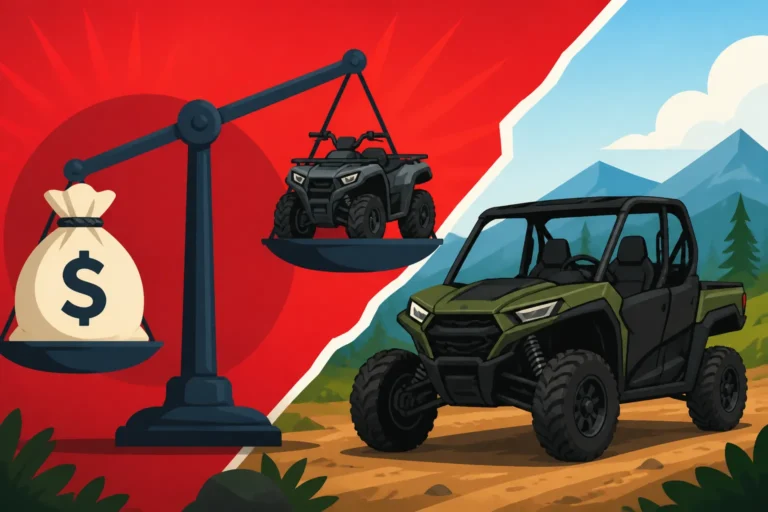
Here's a quick comparison of what you stand to lose and gain:
| Aspect | Riding Unregistered | Riding Registered (and Insured) |
|---|---|---|
| Financial Cost | High fines, towing fees, impound fees, potential court costs, personal liability. | Low, predictable registration fee; insurance premiums (protects investment). |
| Legal Status | Illegal on public land; potential for charges under the Traffic Safety Act. | Fully compliant and legal on public land. |
| Vehicle Security | Harder to track if stolen; less likely to be recovered. | Plate and VIN link to owner; easier for law enforcement to recover if stolen. |
| Accident Consequences | Significantly worse; personal liability for damages, additional legal issues. | Insurance covers damages/liability; legal process is more structured. |
| Riding Freedom | Constantly at risk of being stopped, ticketed, or having machine seized. | Peace of mind to explore Alberta's vast public lands legally. |
| Paperwork Hassle | Dealing with tickets, impound lots, court dates. | One-time registration process, annual/biennial renewal. |
Ensuring your OHV is registered properly is a simple step that provides immense peace of mind and protection, allowing you to fully enjoy the trails without worry. It’s an investment in your safety, your machine, and your freedom to ride responsibly across Alberta. Don't let a small oversight lead to a huge headache!
Disclaimer
This article is for general informational purposes only and does not constitute professional advice. Laws, prices and regulations vary by location and change over time. Consult a qualified professional for guidance on your specific situation.