Alberta Passes Sold Where Licences Are Sold
When planning an ATV or UTV trip in Alberta, it can be easy to confuse a camping pass with permission to ride. The pass sold through Alberta’s licence-selling channels is for a specific camping purpose in areas where it applies. Here’s how to find and buy the right pass, check where it is valid, and avoid arriving at camp with the wrong paperwork.
What “passes sold where licences are sold” means
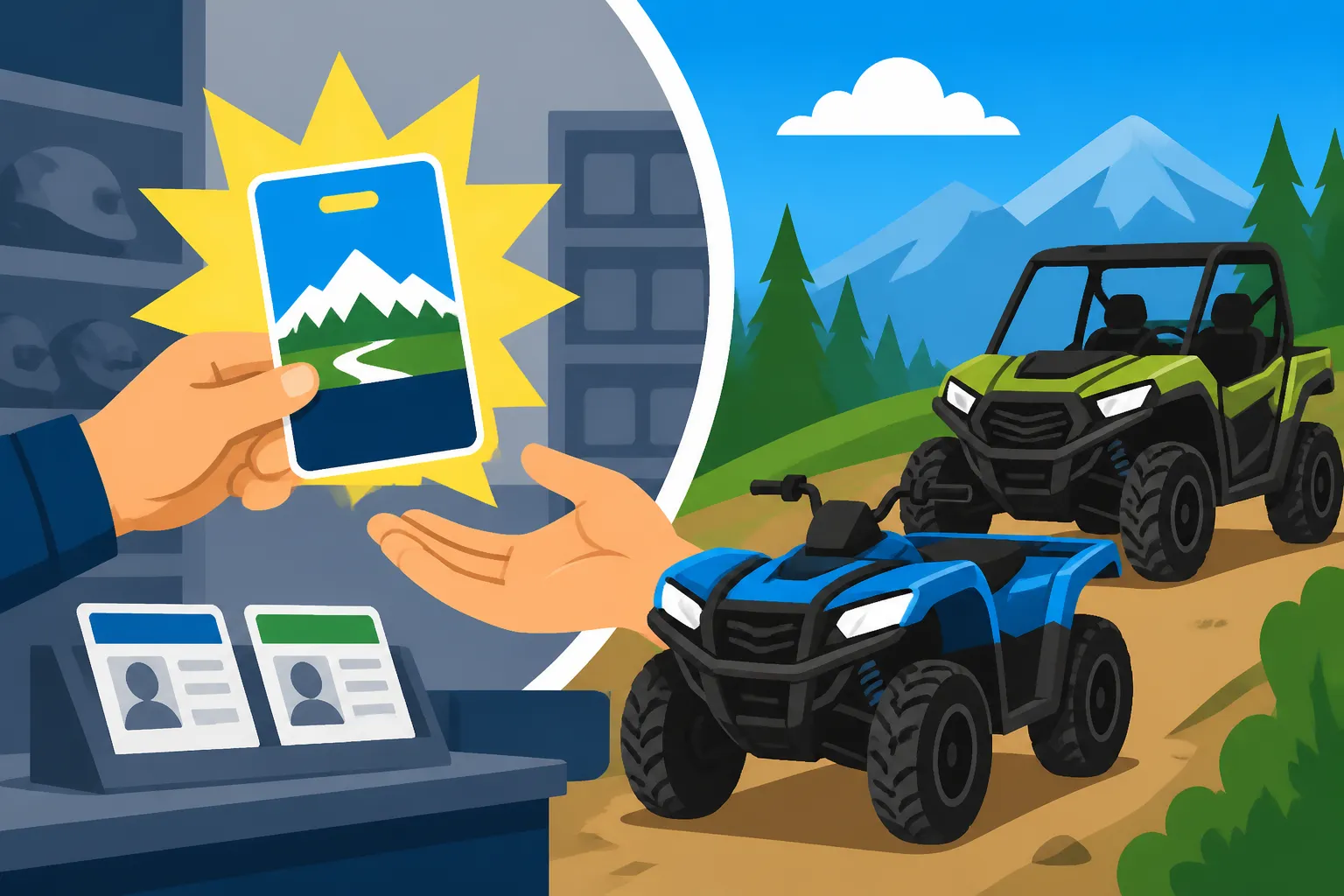
Alberta’s Public Lands Camping Pass is available through channels that also sell recreational licences, including the province’s online licensing system and participating licence issuers. That makes it convenient to buy while arranging other trip paperwork, but the shared sales channel does not mean every licence or pass has the same purpose.
The Public Lands Camping Pass is a camping requirement for certain public-land areas. It is not a general permit to ride an ATV or UTV, a vehicle registration, insurance, or permission to access any road or trail. A pass does not make a closed route legal or allow camping in a place where camping is prohibited.
Before paying, identify what you need:
- Camping pass: May be required for eligible public-land camping in the areas where the requirement applies.
- Vehicle registration and insurance: Separate requirements that can apply when riding an OHV on public land.
- Access permission: Depends on land status, closures, local rules and, in some situations, permission from the landholder or leaseholder.
- Other area-specific requirements: A recreation area, park or municipality may have its own rules or fees.
A helpful starting point is How to Buy an Alberta Camping Pass. For the broader distinction between the camping pass and vehicle requirements, see Alberta Has No OHV Trail Pass and Alberta Registration Before Riding Crown Land.
Who should look for a pass
The pass is intended for people camping on public land in locations where Alberta requires it. The requirement does not automatically apply to every campground, every public-land parcel or every overnight stop in the province. The location and type of camping matter.
Alberta’s camping-pass requirement is associated with designated public-land areas, including parts of the Eastern Slopes. Use the current official map and instructions to check the exact boundary before you travel. A nearby town, staging area or trail name is not enough to confirm that your intended campsite is inside or outside the pass area.
The requirement can also depend on who is camping. Adults may need individual passes rather than relying on one pass for a whole group. Check the current eligibility rules for everyone in your party, including passengers who plan to camp with you. Do not assume that a family, group or vehicle purchase covers all adults.
How to buy a pass where licences are sold
The basic process is straightforward, but it helps to have your trip details ready. Buying through the same system used for licences can make the pass easier to locate; it does not remove the need to choose the correct pass type and verify its coverage.
- Check whether your campsite is in a pass area. Use Alberta’s current public-land camping information and map. Confirm the location itself, not only the general riding destination.
- Work out who needs a pass. Check the current rules for adults and other members of your camping group. Do not rely on one person’s pass to cover everyone unless the official terms say that it does.
- Choose the correct pass option. The system may offer different durations or products. Match the option to your dates and intended use, then review the terms before checkout.
- Buy through the province’s licensing system or a participating licence issuer. Follow the prompts for the camping pass rather than selecting a fishing or hunting licence by mistake.
- Save proof of purchase. Keep the confirmation or pass information accessible, and check whether you need to display or produce it in a particular format.
- Recheck the rules before leaving. Pass validity does not guarantee that a site or route is open. Review current closures, fire restrictions and access notices for the area.
The online system may ask for an account or identification information. If you do not have a Wildlife Identification Number, check whether one is required for the purchase and how to obtain it before you reach the trailhead. Alberta WIN Card Explained covers what the number is, and Why You Need a Wildlife Identification Number First explains why it can be useful to sort that out ahead of time.
If you prefer to buy in person, ask a participating licence issuer whether it sells the Public Lands Camping Pass and what information you need to provide. Not every retailer necessarily offers every product or service. It is sensible to confirm before making a special trip, particularly if your departure is close.
Choosing online or in person
Buying online can be convenient when you know the area and pass type. You can review the purchase information at your own pace and keep a digital record. The drawback is that a quick purchase on a phone can make it easier to overlook a boundary, validity period or separate requirement.
Buying from a licence issuer gives you a chance to ask about the transaction, but the seller cannot necessarily determine whether your specific campsite is legal or your chosen route is open. Bring the name or location of the area and ask what the pass product covers. Then verify the land-use rules independently.
| Purchase route | Useful when | What to check |
|---|---|---|
| Online licensing system | You have trip dates, account details and a clear idea of the pass you need | Correct product, validity, confirmation and access to proof |
| Participating licence issuer | You want help completing the purchase or prefer an in-person transaction | Whether that issuer sells the pass and what details are needed |
| At or near the trailhead | You have reliable service and the system supports a purchase there | Signal, payment access, pass start time and whether you can save proof |
Do not plan around buying at the last possible moment. A weak signal, an account issue or a closed retailer can turn a simple purchase into a delay. If you need a pass, arrange it before the ride and keep the confirmation available offline where possible. For more on digital proof, see Showing Your Camping Pass on a Phone App.
Pick a pass that matches your dates and plans
A pass is useful only if its terms match your trip. Before you buy, check the permitted duration, when validity starts, who must hold a pass, and whether it covers the camping activity you intend. Those details matter more than the fact that the product is sold beside other recreational licences.
Some visitors need a short-term option; others may camp more than once during a longer period. Compare the available choices against your actual plans rather than buying based on the name alone. The pass’s purchase page is the place to confirm current options and conditions. For a closer comparison of the available duration choices, see Alberta Three-Day Pass vs Annual Pass and Alberta Camping Pass Cost.
A few practical checks help prevent a mismatch:
- Match the validity to the trip. Confirm the exact dates or period covered. Do not assume the pass begins at the moment you reach the campsite or lasts through a calendar year.
- Check the start time. If validity is tied to a set time or purchase rule, account for it when planning an overnight stay.
- Confirm who is covered. If adults in your group need separate passes, buying one for the trip organizer will not necessarily meet the requirement for the others.
- Review the location coverage. A camping pass is not automatically valid for every public land location or private campground.
- Keep purchase records. Save the receipt or confirmation as well as the pass itself, especially if the system provides more than one document.
- Check for changes before returning. A pass that suited one trip does not prove that the same rules or access conditions apply to a later trip.
The purchase and validity terms can change. If a trip depends on a particular start time, length or eligibility rule, read the official instructions at checkout rather than relying on an old receipt, a friend’s experience or a summary from a previous season.
Pass purchase is not campsite reservation
Buying a Public Lands Camping Pass does not reserve a campsite. It does not guarantee that a particular location is available, suitable or open. On public land, camping may be allowed only in certain places or subject to restrictions. Sensitive ground, closures, fire rules, nearby facilities and local land-use requirements can all affect where you may set up.
That distinction matters for OHV trips. A staging area is not automatically a legal overnight site, and an open trail does not mean camping is permitted beside it. Check the relevant public-land information for both the camping location and the route you intend to ride.
A pass also does not replace a fee or reservation for a managed campground that operates under a separate system. If you plan to stay in a developed campground, check its booking and payment rules directly. If you plan to random camp, confirm that random camping is allowed at the chosen location and that you are meeting any distance, duration or site-use rules.
For more on the limits of a particular product, read What the Three-Day Camping Pass Does Not Cover. The important point is simple: the pass addresses one part of the trip. It does not settle every question about access, camping or riding.
Keep the camping pass separate from riding requirements
ATV and UTV riders often have several kinds of paperwork to sort out. A camping pass can be one item on the list, but it does not replace the documents and equipment requirements that apply to the machine and the ride.
Before riding, check the rules for your machine and route. Registration and insurance requirements depend on the circumstances, and rules can differ for residents and visitors. A machine that is properly registered still needs to follow local access rules. Conversely, having a camping pass does not make an unregistered or uninsured machine compliant.
A useful pre-trip checklist includes:
- Registration: Confirm that the machine’s registration is current and appropriate for the riding situation.
- Insurance: Check that the required coverage is in place and that you can produce proof if asked.
- Route access: Verify whether the trail, road, ditch, staging area or public-land route is open to your type of machine.
- Camping location: Confirm that camping is allowed there and whether the pass applies.
- Closures and restrictions: Look for seasonal restrictions, fire-related closures, temporary work and other notices.
- Required equipment: Check applicable rules for lights, noise control, spark arrestors and other equipment.
- Proof on hand: Make sure the required documents and confirmations are accessible, including when phone coverage is unavailable.
For a specific camping-pass requirement, use Alberta Public Lands Camping Pass as a starting point. For machine paperwork, Alberta Registration Paperwork Checklist and Alberta Proof of Insurance on Demand address separate obligations.
Visitors and mixed groups
Visitors should not assume that the camping pass handles reciprocity for their machine. A camping pass concerns camping where the requirement applies; registration and insurance for an out-of-province machine are different questions. If you are bringing a machine from another province or the United States, check the relevant visitor rules separately and confirm how long the machine may be operated under its home registration.
A group can also have different paperwork needs. One rider may be camping on public land while another is staying at a private campground. One machine may be locally registered and another may be visiting from elsewhere. Keep each person’s camping-pass status separate from each machine’s registration and insurance records.
If you are travelling from outside Alberta, Alberta Reciprocity for Visiting Riders is a useful place to start. Visitors planning a longer stay can also review Alberta Visitors Staying Over 30 Days. Confirm current rules with the official source before relying on a time limit or exemption.
Avoid common buying and planning mistakes
Many problems happen because riders treat the pass as a general access card. A few checks before purchase can prevent that misunderstanding and reduce last-minute confusion.
Buying the wrong product. A licence-selling system may list several products. Read the full product description and choose the Public Lands Camping Pass if that is what your trip requires. A fishing licence, hunting licence or vehicle registration is not a substitute.
Assuming the pass covers every public land area. The pass has defined coverage. Check the official map for your exact camping location rather than inferring coverage from a broad regional name.
Assuming one pass covers a group. Verify whether each adult needs an individual pass. The buyer, driver or trip leader may not be the only person subject to the requirement.
Confusing access with camping. A route may be open for riding while overnight camping is restricted, or camping may be permitted while a nearby trail is closed to your machine. Check both activities.
Relying on a screenshot without checking its details. A screenshot can be helpful for offline access, but make sure it shows the relevant proof and is readable. If the official instructions require a particular form of proof, follow those instructions.
Waiting until mobile service disappears. Backcountry and staging areas may have unreliable reception. Purchase the pass, save the confirmation and download relevant maps before leaving coverage.
Treating a past purchase as proof for a new trip. A previous pass may have expired or may not cover the current location. Recheck the purchase terms and dates each time.
Expecting a retailer to confirm land access. A licence issuer can help with a sale, but current closures and campsite rules are separate. Use official land information for the final check.
A simple two-part check is effective: first confirm whether your camping location requires a pass; then confirm that the place is open and camping is allowed. After that, review the machine’s registration, insurance and route access. This separates the camping question from the riding question and makes it less likely that an important requirement will be missed.
Frequently Asked Questions
Can I buy an Alberta Public Lands Camping Pass where I buy a fishing licence?
The pass is sold through Alberta’s recreational-licence sales channels, including the online licensing system and participating licence issuers. Confirm that the particular seller offers it and select the camping-pass product rather than a fishing licence.
Does the camping pass let me ride my ATV or UTV?
No. It is a camping pass for locations where the requirement applies. It does not replace registration, insurance, route permission or any other riding requirement.
Does buying a pass reserve a camping spot?
No. It does not reserve a site or guarantee that camping is allowed in a particular location. Check the current land-use information and any separate campground booking rules.
Does every Alberta public-land campsite require a pass?
No. The requirement is location-specific. Check the official map and rules for your intended campsite, and do not assume that a pass applies everywhere or nowhere.
What should I do if I cannot find the pass online?
Check the province’s current instructions, confirm that you are using the correct product category, and ask a participating licence issuer whether it can sell the pass. If your trip is soon, resolve the issue before travelling to an area with limited phone service.
Disclaimer
This article is for general informational purposes only and does not constitute professional advice. Laws, prices and regulations vary by location and change over time. Consult a qualified professional for guidance on your specific situation.