Alberta Issues a Plate, Not a Sticker
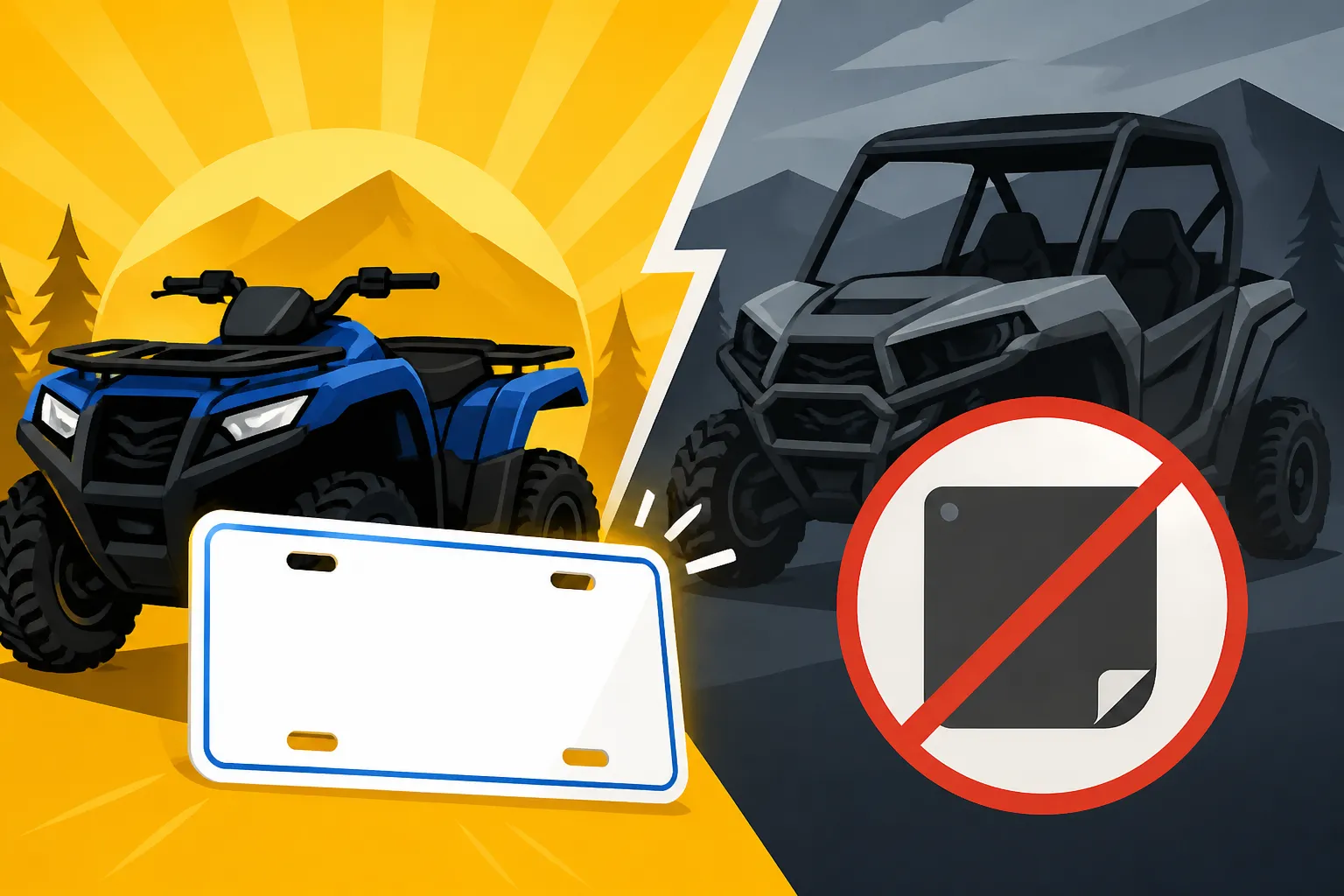
It can be incredibly frustrating to navigate the rules for off-highway vehicles in Alberta, especially when you're expecting one thing and get another. Many riders from other provinces, or those who remember the "good old days," often look for a registration sticker for their ATV or side-by-side, only to realize Alberta has moved in a different direction. This guide will clarify Alberta's current approach, explaining why you'll receive a plate, not a sticker, and what that means for legally riding your OHV.
The Evolution of OHV Identification in Alberta
For years, many jurisdictions across North America relied on stickers, decals, or tabs applied directly to the off-highway vehicle (OHV) as proof of registration. These small identifiers would change colour or design annually, signaling to enforcement officers that the machine was legally registered for the current period. It was a familiar system, often simple enough to understand: new year, new sticker. However, Alberta has steadily moved away from this model, transitioning to a plate-based system that aligns more closely with how other vehicles are identified in the province.
From Stickers to Plates: A Historical Look
If you've been riding in Alberta for a while, you might recall a time when your off-highway vehicle did indeed get a sticker. This was usually a small, colourful decal that you'd affix to a visible part of your quad or dirt bike. Each year, as you renewed your registration, a new sticker would arrive, often requiring you to scrape off the old one before applying the new. It felt a bit like a badge of honour, a clear visual sign that you were current. But over time, the province began to reconsider this method, looking for more durable and standardized forms of identification. The shift wasn't sudden but rather a gradual move towards the system we have today, where a physical plate serves as the primary identifier. [Alberta Dropped Plate Stickers in 2021] marked a significant step in this transition, solidifying the plate as the sole physical identifier.
Why the Change? Streamlining and Modernization
You might wonder why such a change was necessary. From a logistical standpoint, managing and distributing unique stickers annually for thousands of OHVs presented its own challenges. Stickers could fade, peel, get damaged, or be difficult to apply properly, leading to confusion or even fines. The decision to move to a plate system was largely driven by a desire for greater consistency, durability, and ease of enforcement. By adopting a plate, Alberta brought OHV identification more in line with passenger vehicles, allowing for easier tracking and a more permanent form of identification. It streamlines the process for both riders and enforcement, reducing ambiguity and wear-and-tear issues that often plagued the old sticker system. For the province, it simplified inventory and distribution, moving towards a more modern, digital-first approach for registration certificates, even if the plate itself remains a physical item. [Why the Sticker Went Away] helps explain some of the practical reasons behind this decision.
What Alberta's Current Plate System Means for You
So, what does this plate-only system mean for you as an OHV owner in Alberta? First and foremost, it means you'll receive a physical metal plate when you first register your machine, which will remain yours (or with the machine, depending on transfer rules) for its lifespan or until you replace it. When you renew your registration, you won't get a new sticker to apply to the plate. Instead, your registration certificate, which can often be a digital document, is your proof that the plate and machine are currently registered. This requires a shift in mindset for some riders: instead of looking for a current sticker on the plate, enforcement will be looking for a properly displayed plate and will request your current registration certificate. It also means less fuss with yearly application of fiddly decals, which is a small win for many of us!
Understanding Alberta's OHV Plate
Your OHV plate isn't just a random piece of metal; it's a critical component of your machine's legal identity in Alberta. Understanding its features, what it signifies, and how it differs from other plates will help you stay compliant and avoid unnecessary headaches while out on the trails or during routine checks. It's the primary visual cue that your machine is part of the system.
Distinguishing Your OHV Plate from Other Vehicle Plates
If you've ever registered a car or truck in Alberta, you'll notice some similarities, but also key differences, with your OHV plate. Typically, Alberta OHV plates are smaller than standard passenger vehicle plates, designed to fit more appropriately on the often-limited mounting space of a quad or side-by-side. While they share the general provincial branding and colour scheme, the specific letter and number combinations, often starting with certain prefixes, are unique to off-highway vehicles. This distinct format helps both the public and law enforcement quickly identify the type of vehicle registered. It's a purposeful design that ensures your quad isn't mistaken for a motorcycle or a passenger car, each of which falls under different regulatory frameworks.
Key Information Found on Your OHV Plate
Just like a car plate, your OHV plate carries a unique alphanumeric sequence that links back to your registration record. This number is your machine's public identifier. It doesn't typically display an expiry date directly on the plate itself, as was common with old sticker systems. Instead, the plate number is your unique identifier that, when queried by an officer, will reveal the current status of your registration. This means the plate itself acts as a static identifier, while the dynamism of your registration status is held within the provincial database, accessible via your registration certificate. This distinction is crucial: the plate is permanent, the registration behind it is what needs annual (or bi-annual) renewal. [Alberta Registration Terms of One or Two Years] offers more details on renewal options.
The Importance of a Visible Plate
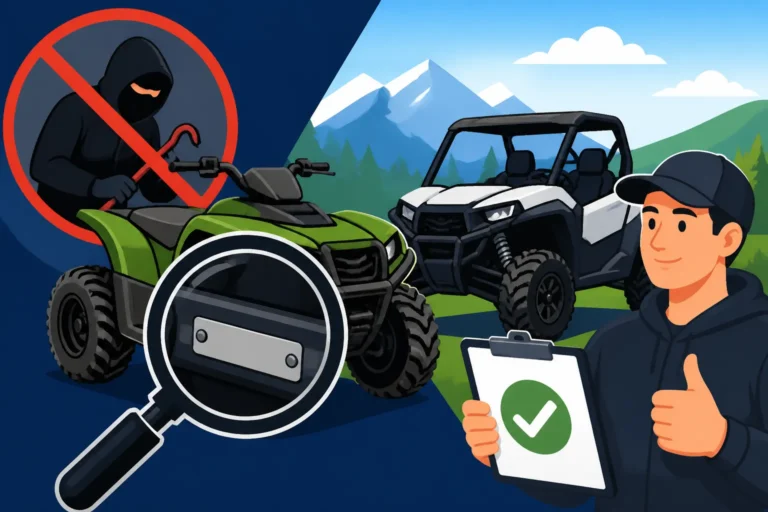
Having a plate is one thing; having it properly displayed and visible is another entirely. The primary purpose of the plate is identification, and if it's obscured by mud, snow, accessories, or simply mounted in an unreadable location, it defeats its purpose. Enforcement officers need to be able to clearly see and read your plate number at a glance. This isn't just about making their job easier; it's about public safety and accountability. A visible plate helps deter theft, aids in accident reporting, and ensures that all riders are identifiable and accountable for their actions on public lands. Neglecting this crucial detail can lead to fines, even if your registration is otherwise perfectly in order. [Alberta Plate Placement on a Machine] delves into the specifics of proper display.
The Registration Process and Your New Plate
Navigating the registration process for an off-highway vehicle in Alberta is fairly straightforward, but understanding each step, especially concerning your new plate, is key. Whether you're a first-time owner or simply renewing, knowing what to expect can save you time and prevent any last-minute surprises before you hit the trails.
Registering a New OHV: What to Expect
When you purchase a new off-highway vehicle in Alberta, whether from a dealership or a private seller, registering it is one of your first legal obligations before you can ride it on public land. You'll need to visit an authorized Alberta Registry Agent. They will require specific documentation, which typically includes proof of ownership (like a New Vehicle Information Statement or a bill of sale), personal identification, and proof of Alberta residency. During this initial registration, you will be issued your physical OHV plate along with your first registration certificate. This plate is typically a one-time issue unless it's lost, stolen, or damaged. Remember, the plate is the identifier, and the certificate is the proof of current validity. For private sales, having a well-documented bill of sale is crucial. Resources like LawDepot can provide templates that ensure all the necessary details are captured, making your registration process smoother. [What Alberta OHV Registration Costs] will give you an idea of the fees involved.
Renewing Your OHV Registration: No Sticker Needed
This is where the distinction from the old system truly shines. When it's time to renew your OHV registration – which you can often do online or through a registry agent – you will not receive a new sticker for your plate. Your existing plate remains on your machine. What you will receive is an updated registration certificate, which indicates the new expiry date. This certificate is your official proof of current registration. It’s absolutely vital to carry a printed copy of this certificate with you whenever you ride on public land. Relying solely on your digital copy on a phone can be problematic if you lose signal or your battery dies. [Registering an ATV in Alberta Online] covers the convenient digital renewal options.
Transferring Ownership: What Happens to the Plate
When you sell your off-highway vehicle in Alberta, the OHV plate is typically associated with the owner, not the machine itself. This means that as the seller, you usually retain your plate. You can then transfer that plate to another OHV you own or plan to register in the future, or you can surrender it to a registry agent if you no longer need it. The new owner of the machine will then be responsible for obtaining their own registration and plate for the newly acquired OHV. This often means they will either get a brand new plate issued in their name or use an existing unassigned plate they already possess. It’s important for both buyer and seller to understand this, as it differs from the transfer of a physical sticker directly attached to the machine. Ensure all paperwork, like the bill of sale (again, LawDepot can be a useful resource here for drafting these documents), clearly indicates the transfer of the machine and not the plate.
Plate Placement and Visibility Requirements
Getting your OHV plate is just the first step; properly displaying it is equally important. Unlike some other jurisdictions with more relaxed rules, Alberta has specific expectations for where and how your OHV plate must be mounted. Ignoring these requirements can lead to unwanted interactions with law enforcement and potentially fines, even if your registration is otherwise current.
Where Your OHV Plate Must Be Mounted
The Traffic Safety Act and its associated Off-Highway Vehicle Regulation are clear: your OHV plate must be affixed to the rear of your machine and must be clearly visible. For quads, this usually means on the rear rack or frame, in a position where it's not obscured by cargo, bags, or even a rider's body. For side-by-sides, it's typically mounted on the rear frame or bumper. The key is "rear" and "visible." This is not an invitation to get creative and tuck it under a fender or in a toolbox. An officer needs to be able to see it without having to get off their vehicle or approach your machine too closely. Think about what an officer driving behind you would see – that's the standard. [Mounting an OHV Plate So It Stays Readable] provides practical tips for achieving this.
Ensuring Your Plate Remains Readable
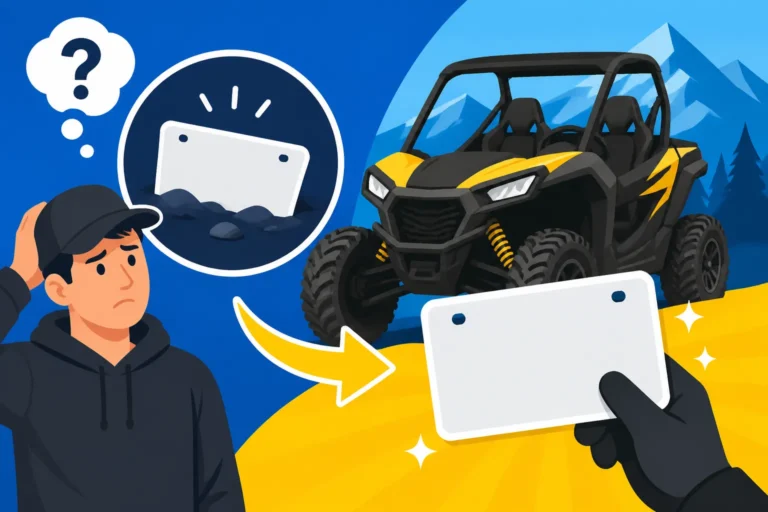
Beyond just placement, the readability of your plate is paramount. This means ensuring it's kept clean and free from obstructions. After a muddy ride through the foothills or a snowy trek in the northern forests, it's easy for your plate to become completely caked in grime. While it might seem like a minor detail, a dirty or obscured plate is functionally the same as an improperly displayed one from an enforcement perspective. It's your responsibility as the operator to ensure your plate is legible at all times when riding on public land. Taking a moment at the start of your ride, and periodically throughout if conditions are messy, to wipe down your plate can save you a lot of hassle.
Consequences of Improper Plate Display
Failing to properly display your OHV plate, or having it obscured, can result in tickets under the Traffic Safety Act. This isn't a slap on the wrist; these fines can add up, and it's an easy preventable mistake. The intent of the law is clear: all off-highway vehicles on public land must be identifiable. If your plate is missing, improperly mounted, or unreadable, you're not meeting this fundamental requirement. Think of it as a basic rule of the road, or in this case, the trail. Compliance here is simple and directly contributes to a safer, more accountable riding environment for everyone. [Alberta Penalties for Riding Unregistered] highlights the seriousness of such violations, though an obscured plate might be a lesser charge than outright no registration.
Common Misconceptions and Troubleshooting
Despite the provincial changes, old habits and information die hard. Many riders still have questions or misunderstandings about Alberta's plate-only system. Let's tackle some of the most common issues and provide clear guidance on how to resolve them.
"But My Neighbour Has a Sticker!" Addressing Outdated Information
It's entirely possible that your neighbour, or someone you see on the trail, might still have a sticker on their OHV plate. This could be for a few reasons. They might be visiting from another province that still uses a sticker system, and their home province's registration would be valid for a certain period in Alberta. Or, they might have an older plate that happened to have a sticker on it from before the provincial change, and they simply haven't removed it. However, for current Alberta-registered OHVs, there are no new stickers being issued. If you're an Alberta resident with an Alberta-registered machine, you should not be looking for a new sticker upon renewal. Your valid proof of registration is your certificate, carried with you.
Lost, Stolen, or Damaged Plates: What to Do
Life on the trails can be tough on equipment, and sometimes plates get lost, stolen, or damaged beyond recognition. If this happens to your OHV plate, you need to address it promptly. First, if your plate is stolen, report it to the police. Then, you'll need to visit an Alberta Registry Agent to apply for a replacement plate. You'll typically need to provide your identification, the OHV's registration details, and possibly a police report number if it was stolen. There will be a fee for the replacement plate. Riding without a plate, even if it's been lost or stolen, can lead to the same penalties as riding with an improperly displayed plate, so it's best to get it sorted as quickly as possible.
Dealing with Enforcement: Showing Your Papers
When an enforcement officer stops you on public land, they will primarily be looking for two things: a properly displayed plate and your current registration certificate. Unlike the old system where the sticker might have been enough visual proof, now the plate is just the identifier that connects to the official record. It's crucial that you have a physical copy of your current registration certificate. While you might have a digital version on your phone, a dead battery or lack of signal can render it useless. Always print a paper copy and keep it in a waterproof bag on your person or securely on your machine. The officer needs to be able to verify your current registration validity by looking at that document. [Printing a Certificate Before You Ride] cannot be stressed enough as a critical step. You'll also need to be ready to show proof of insurance, as [Alberta Requires Insurance on Public Land] for most public land use.
Beyond the Plate: Other OHV Requirements in Alberta
While the plate is a crucial identifier, it's just one piece of the puzzle when it comes to legally and safely operating an off-highway vehicle in Alberta. There are several other requirements and considerations that every rider needs to be aware of to ensure a trouble-free experience on the trails.
Proof of Registration and Insurance
As we've touched upon, your physical OHV plate identifies your machine, but your registration certificate proves its current legal status. This certificate needs to be carried with you whenever you're riding on public land. In addition to registration, Alberta also mandates that OHVs operating on public land must carry valid insurance, typically third-party liability coverage. This protects you and others in case of an accident. Proof of this insurance must also be carried with you and presented to an officer upon demand. Failing to produce either document can lead to significant fines and even potential seizure of your machine in serious cases. Always double-check your documents before heading out for a ride.
Essential Equipment for Public Land Riding
Beyond registration and insurance, there are specific equipment requirements for OHVs operating on public land in Alberta. These are designed for safety and environmental protection. For instance, your machine must have working headlights and taillights, especially if you plan to ride at dawn, dusk, or in low visibility. A functional spark arrestor in your exhaust system is mandatory to prevent wildfires. And while not equipment on your machine, a CSA-approved helmet is legally required for all riders and passengers on public land. These aren't just suggestions; they are legal requirements enforced by officers. Ensuring your machine is in good working order and properly equipped is part of being a responsible rider.
Understanding Local Bylaws and Designated Zones
Alberta's vast landscape offers incredible riding opportunities, but not all land is open to OHV use. It's critical to understand the difference between public lands where OHVs are permitted, designated OHV trails, and areas where they are restricted or prohibited. Furthermore, many municipalities, counties, and special land-use zones have their own specific bylaws that govern OHV use, including things like noise restrictions, hours of operation, and even age limits for certain roads or trails. What's legal in one area might be illegal just a few kilometers away. Always do your homework before you go. Utilize online maps, check with local authorities, or consult resources from the Alberta Off-Highway Vehicle Association (AOHVA) to ensure you're riding legally and responsibly.
Resources and Support for Alberta OHV Riders
Navigating the various rules and regulations can sometimes feel overwhelming, but thankfully, there are numerous resources available to help Alberta OHV riders stay informed and compliant. Knowing where to turn for help or information can make all the difference in your riding experience.
Alberta Registry Agents: Your Go-To for Paperwork
For almost all your OHV registration and titling needs, an Alberta Registry Agent is your primary point of contact. These independent businesses are licensed by the provincial government to provide vehicle registration services. They are the ones who will issue your plate, process your initial registration, assist with renewals, and handle any transfers of ownership. Their staff are trained to guide you through the necessary paperwork and answer your questions about provincial requirements. When you need to get something official done, heading to your local registry is the most reliable path. [Alberta Registry Agents and OHV Paperwork] provides a deeper look into their role.
Online Resources and Forms
In today's digital age, much of the information you need, and even some transactions, can be handled online. The provincial government websites offer detailed information on OHV regulations, designated riding areas, and often provide downloadable forms. Many registry agents also offer online services, particularly for registration renewals. These online portals are convenient and can save you a trip to a physical office. Just remember, while online resources are fantastic for information and renewals, some tasks, like initial plate issuance or complex transfers, may still require an in-person visit. Always print digital registration certificates, as [Alberta Digital Certificates Must Be Printed] for trail use.
Connecting with the OHV Community
Beyond official channels, the Alberta OHV community itself is a treasure trove of knowledge and support. Local riding clubs, online forums, and social media groups are excellent places to ask questions, share experiences, and learn about specific trails or local bylaws. Experienced riders often have invaluable insights into common pitfalls, best practices, and where to find accurate local information. Connecting with these groups can enhance your riding experience, help you discover new areas, and ensure you're always staying on the right side of the rules. Just remember to cross-reference any advice with official sources to ensure accuracy, especially concerning legal requirements.
Alberta OHV Plate vs. Sticker: A Quick Comparison
To help clarify the differences between the old sticker system and Alberta's current plate-based approach, here's a quick comparison. This table summarizes the key aspects that impact you as an OHV owner and rider.
| Feature | Old Sticker System (Pre-2021) | Current Plate System (Alberta) |
|---|---|---|
| Physical Identifier | Small, adhesive sticker/decal applied to plate or machine | Physical metal plate with alphanumeric code |
| Annual Renewal | New sticker issued annually to be applied | No new sticker issued; only an updated registration certificate |
| Placement | Sticker typically applied to plate or visible machine part | Plate affixed to the rear, clearly visible |
| Proof of Validity | Sticker (with current year/colour) + paper certificate | Registration Certificate (digital or printed) |
| Durability | Prone to fading, peeling, damage | More durable, permanent identifier |
| Enforcement | Visual check for current sticker; request certificate | Visual check for plate; request current certificate |
| Associated With | Sticker often associated with the machine for the year | Plate associated with the owner, can be transferred to another machine upon sale of the original OHV |
Disclaimer
This article is for general informational purposes only and does not constitute professional advice. Laws, prices and regulations vary by location and change over time. Consult a qualified professional for guidance on your specific situation.