Alberta Plate Replacement If Lost
There's nothing quite like pulling into a staging area, or worse, getting pulled over by an officer, only to realize your ATV or UTV plate has gone missing. It's a sinking feeling that can instantly derail your ride plans and spark a scramble to figure out what to do next. This guide will walk you through the exact steps you need to take in Alberta to replace a lost, stolen, or damaged off-highway vehicle (OHV) plate, ensuring you get back on the trail legally and with minimal fuss. We'll cover everything from the initial shock to securely mounting your new plate.
The Initial Panic and What Not to Do
That moment when you discover your OHV plate is gone can be genuinely unsettling. You might retrace your steps in your mind, wondering where it could have fallen off or if someone might have taken it. It’s natural to feel a bit frustrated, especially if you had plans to hit the trails immediately. The most important thing is to take a breath and understand that this is a fixable problem, but one that requires prompt action to avoid further issues.
The biggest mistake you can make after realizing your plate is missing is to just shrug it off and continue riding. Operating your ATV or UTV on public land without a visible, valid registration plate is a violation of Alberta's Traffic Safety Act and can lead to fines and other penalties. It’s not worth the risk. Even if you have your digital certificate in hand, an officer will expect to see the physical plate mounted on your machine.
Why Your Plate Might Go Missing
OHV plates lead a tough life. They're constantly exposed to vibrations, mud, water, branches, and sudden impacts. It's no wonder they sometimes decide to part ways with your machine. Here are some common reasons:
- Vibrations: The constant shaking of an ATV or UTV can loosen bolts over time, especially if they weren't properly tightened or if lock washers weren't used during initial installation. This is a silent culprit that often goes unnoticed until it's too late.
- Impacts: A low-hanging branch, a fender bender with a tree, or even a tumble in a tricky spot can easily snag or dislodge a plate. Sometimes, the plate itself might bend and simply fall off.
- Improper Mounting: If your plate isn't secured with adequate fasteners or if it's mounted in a location that's too exposed, it's more vulnerable to coming loose. We've all seen plates precariously attached with zip ties that eventually give up the ghost. For tips on secure mounting, check out [Alberta Plate Mounting on a Quad].
- Theft: While less common for OHV plates than for standard vehicle plates, it does happen. If you suspect your plate was stolen, it's a more serious matter that warrants a different initial response, as we'll discuss.
- Damage: Sometimes the plate isn't lost, but it's so bent, scratched, or corroded that it's no longer readable. A damaged plate that cannot be clearly read by an officer is as good as no plate at all when it comes to compliance.
The Immediate Consequences of Riding Without a Plate
Riding without a valid, properly displayed registration plate in Alberta carries direct and immediate risks. It's not just a minor oversight; it's a legal requirement for riding on most public lands, including designated OHV trails, ditches alongside highways, and Crown land.
First and foremost, you could face a significant fine. Alberta takes OHV registration seriously, and enforcement officers are diligent in checking compliance. Beyond the monetary penalty, the hassle of dealing with a ticket, potentially appearing in court, and the associated stress simply isn't worth it.
Furthermore, if an officer stops you and finds your machine unregistered or without a plate, they might prevent you from continuing your ride. This could mean you're stranded far from your truck and trailer, needing to arrange for someone to pick up your machine. In some more serious instances, especially if there are other violations, your machine could even be seized. Nobody wants their weekend adventure to end with their quad on the back of a tow truck. Always carry your [Alberta Digital Certificates Must Be Printed] and ensure your plate is visible.
Your First Steps to Replacement: Gathering Your Details
Once you've accepted that your plate is truly gone, the next step is to prepare for getting a new one. This isn't a complex process, but having your information ready will make the visit to the registry agent much smoother and quicker. Think of it as putting together your "lost plate recovery kit" before you even leave the house.
The most crucial piece of advice here is to act promptly. The longer you wait, the longer you're unable to legally ride your OHV, and the greater the risk if you decide to take a chance. Registry agents are there to help you navigate these situations, so don't hesitate to reach out to them for specific advice. You can find more information about their services in [Alberta Registry Agents and OHV Paperwork].
Essential Information You'll Need
Before you head to a local Alberta registry agent, gather these key pieces of information and documents. Having them readily accessible will streamline your replacement process.
- Proof of Ownership: This is paramount. You'll need documents that clearly establish you as the registered owner of the OHV. Typically, this would be your current or most recent [Alberta Registration Paperwork Checklist]. If you've just bought the machine, a bill of sale or Manufacturer's Statement of Origin (MSO) might also be useful, but for a lost plate, your existing registration is usually sufficient.
- Your Driver's License or ID: As the registered owner, you'll need to verify your identity. A valid Alberta driver's license or other government-issued photo identification is required.
- The Plate Number (if you remember it): If you happen to remember the specific number of your lost plate, it can sometimes speed things up, though the registry will be able to look it up using your OHV's VIN and your ownership details.
- The Vehicle Identification Number (VIN): This 17-character alpha-numeric code is unique to your OHV and is essential for all registration-related matters. It's usually stamped on the frame of your machine, often near the steering head or on one of the main frame rails. Make sure you have the correct VIN written down.
- Details of the Loss (Optional but helpful): While not always strictly required for a simple plate replacement, if your plate was stolen, you should have filed a police report. Bringing the police report number will be beneficial and sometimes necessary, especially if you're pursuing an insurance claim for other damage related to the theft. Even if just lost, knowing the approximate date and location of loss can be helpful for your own records and if the registry agent has any specific questions.
The Role of a Registry Agent
Alberta's registry agents are your go-to resource for all vehicle and OHV registration services. They are private businesses authorized by the provincial government to provide these services, making the process much more accessible than if you had to visit a government office directly.
When you arrive at a registry agent's office, you'll be greeted by staff who are trained to handle various situations, including lost OHV plates. They will:
- Verify Your Identity and Ownership: Using your ID and the ownership documents you provide, they'll confirm that you are indeed the rightful owner of the OHV in question.
- Access Your OHV Registration Record: They'll look up your OHV's existing registration details in the provincial system. This is where they confirm the VIN and the plate number that was previously issued to your machine.
- Process the Replacement Application: The agent will guide you through the necessary paperwork for a plate replacement. It’s typically a straightforward form requesting details about the loss and your confirmation of ownership.
- Issue a New Plate and Certificate: Once the application is processed and the associated fees are paid, they will issue you a brand-new physical plate with a new number and an updated registration certificate. This certificate will reflect the new plate number.
- Answer Your Questions: Don't hesitate to ask any questions you have about the process, what to do if you find your old plate, or requirements for [Producing Insurance on Demand]. They are a valuable resource for navigating provincial regulations.
The Replacement Process: What to Expect
Replacing your OHV plate in Alberta is a relatively straightforward process once you have your documents in order and visit a registry agent. It's designed to get you back on the trails with minimal delay, but it's important to understand each step. Don't expect to walk out with a plate instantly if you've brought incorrect information or incomplete documentation. The key is preparation.
While the process is generally uniform across Alberta, specific registry agents might have slightly different internal procedures or preferred methods for handling certain situations. A quick call ahead can sometimes save you a trip.
Filling Out the Paperwork
When you go to the registry agent, you'll be given a specific form to complete for a lost, stolen, or damaged plate. This isn't usually a lengthy or complicated document, but accuracy is important.
The form will ask for basic information such as:
- Your name and contact details.
- Your driver's license number.
- The VIN of your OHV.
- The previous plate number (if known).
- A declaration stating that the plate was lost, stolen, or damaged.
In some cases, especially if your plate was stolen and you've filed a police report, the registry agent might ask for a copy of that report or the file number. This helps create a complete record and can be important if the stolen plate is ever misused. While the registry agent will provide the specific form for a lost plate, sometimes the circumstances of a lost or stolen plate might require you to create other legal documentation, especially if you're dealing with a police report or insurance claim. Services like LawDepot can be incredibly helpful for generating various legal documents, should you need to formalize the declaration of your plate's disappearance for broader peace of mind or official records beyond just the plate replacement itself. Using a resource like LawDepot can help you craft a clear and legally sound document, ensuring all bases are covered.
Receiving Your New Plate and Certificate
Once your application is processed and the fees are paid, the registry agent will issue you a brand-new physical OHV plate. This plate will have a new, unique number assigned to your machine. It's important to understand that you won't get the same plate number back; all replacement plates are new issues.
Along with the physical plate, you will also receive an updated registration certificate. This certificate is crucial as it links your OHV's VIN to its new plate number and confirms its active registration status. This is the document you should always carry with you when riding. Remember, even though Alberta dropped plate stickers in 2021, the physical plate and paper certificate are still mandatory.
What if you find your old plate after getting a new one? It's tempting to think you could keep it as a spare, but you absolutely should not. The old plate is now invalid in the provincial system. It's vital to destroy the old plate (cut it up, bend it) or return it to a registry agent for proper disposal. Using an invalid plate, even if it originally belonged to your machine, could lead to issues.
Costs Involved and How to Pay
Replacing an OHV plate in Alberta isn't free, but the cost is generally quite reasonable. You will typically encounter two main types of fees:
- The Plate Replacement Fee: This is the provincial fee for issuing a new physical plate.
- Registry Agent Service Fee: As private businesses, registry agents charge a service fee for processing your transaction. This fee is in addition to the provincial fee.
Because specific fees can change, and registry agents may have slightly different service charges, it's always best to check with your chosen registry agent for the most current figures. They can provide an exact total for your specific situation. Many registry agents accept various payment methods, including cash, debit, and credit cards. You can learn more about general fees associated with OHV registration in [What Alberta OHV Registration Costs].
Mounting Your New Plate and Avoiding Future Loss
You've gone through the process, paid your fees, and now you have a shiny new OHV plate in hand. Fantastic! But the job isn't quite done. The last, and arguably most important, step is to securely mount that plate on your machine. Doing this right will help prevent you from having to repeat this process down the line. It's about being proactive and learning from the past.
Remember, the goal is not just to attach the plate, but to attach it in a way that is compliant with Alberta's regulations and resilient to the rigors of off-highway riding. A plate that falls off again due to poor mounting is just as problematic as one that was stolen. For more on proper placement, refer to [Where Your OHV Plate Must Sit to Be Seen].
Secure Plate Placement Strategies
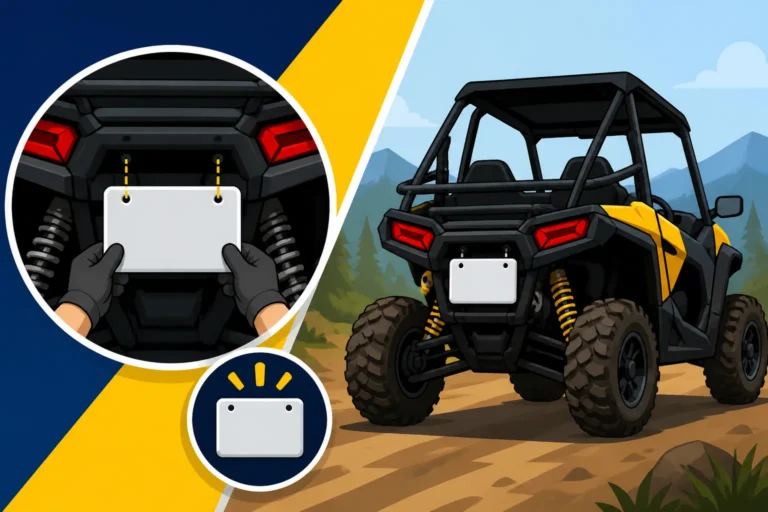
Alberta law requires that your OHV plate be securely attached to the rear of your machine and clearly visible. This means it shouldn't be obscured by mud flaps, luggage, or anything else. Here are some strategies to ensure your new plate stays put:
- Proper Fasteners: Ditch the flimsy screws. Invest in good quality, corrosion-resistant bolts, nuts, and washers. Lock washers or Nyloc nuts are highly recommended as they resist loosening from vibrations. Many riders opt for stainless steel hardware for durability.
- Reinforce the Plate: The thin aluminum of a license plate can easily bend and tear where the bolts go through. Consider using a metal or plastic plate backing (like a license plate frame, but a solid one that goes behind the plate) to distribute the stress across a wider area. This makes the mounting points much stronger.
- Strategic Location: While the law states "rear of the machine," choose a spot that is least exposed to direct impacts from branches or debris. On some ATVs, this might mean slightly tucked under the rack, but still fully visible. Avoid mounting it where it will constantly scrape against the ground when going over bumps or crossing obstacles.
- Drill New Holes (if necessary): Don't be afraid to drill new holes in your machine's fender or rack if the existing mounting points aren't ideal or are damaged. Just be mindful of any wiring or fuel lines underneath before drilling.
- Consider a Plate Relocation Kit: For some OHV models, aftermarket plate relocation kits are available. These kits are often designed to mount the plate more securely and in a less vulnerable position, sometimes incorporating LED lights for nighttime visibility.
Proactive Measures to Prevent Loss
Beyond secure mounting, there are other habits you can adopt to minimize the risk of losing your plate again:
- Regular Checks: Make it a habit to quickly check your OHV plate before and after every ride. A quick wiggle to see if it's loose, or a visual inspection for bends or cracks, can save you a lot of trouble. This is especially important after a particularly rough ride or a minor incident.
- Cleanliness: Regularly cleaning your plate isn't just about aesthetics; it helps you notice any developing issues like cracks around the bolt holes or loose fasteners. A mud-covered plate is also harder for law enforcement to read, which could lead to an unnecessary stop.
- Secure Storage: When your OHV is stored, especially outdoors or in a shared space, consider covering it or parking it in a way that makes the plate less accessible to casual tampering or accidental snagging.
- Documentation: Keep a clear photograph of your OHV plate and its number on your phone. This won't prevent loss, but it will make the replacement process much easier as you'll have all the details immediately at hand.
By taking these steps, you're not just replacing a lost plate; you're investing in peace of mind and ensuring that your future rides in Alberta are legally compliant and hassle-free.
Disclaimer
This article is for general informational purposes only and does not constitute professional advice. Laws, prices and regulations vary by location and change over time. Consult a qualified professional for guidance on your specific situation.