Alberta Passes Needed by Everyone 18 and Older
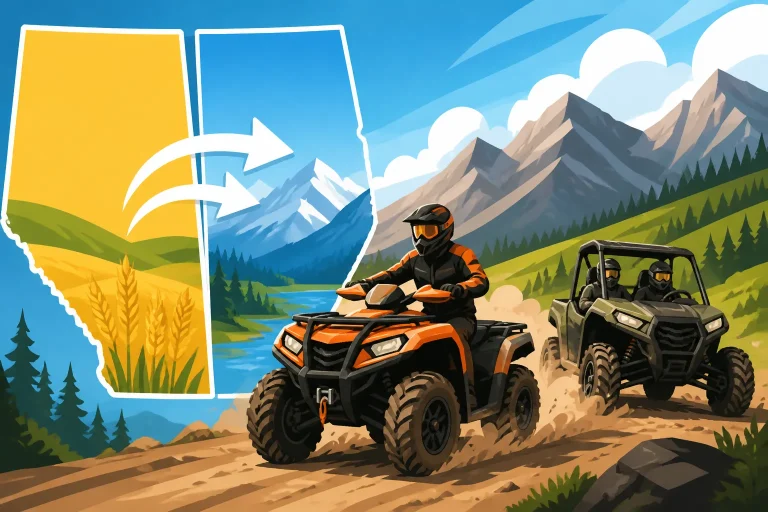
If you’re planning an overnight trip on Alberta public land, the confusing part is often not buying a pass but knowing which adults need one. The requirement is generally tied to camping in the area it covers, not simply to being 18 or older and visiting public land. Here’s how to tell whether your group needs passes and what they do—and don’t—allow.
Who needs an Alberta public lands camping pass
When camping in a part of Alberta where the Public Lands Camping Pass applies, each person aged 18 or older needs their own pass. It is a per-person requirement, not one pass per campsite, tent, family, vehicle or ATV group. If four adults are camping together, plan on four passes.
The rule can apply to residents and visitors alike. Being an Alberta resident, holding a licence from another province, or arriving with an out-of-province OHV does not by itself exempt an adult from the camping-pass requirement. If your trip includes camping in the covered area, check the pass rules for every adult in your party.
The important qualification is that the pass is not a general admission fee for all public land. It applies to camping in the areas where the pass is required. A person who is riding for the day and not camping should not assume that the camping pass is required just because they are on public land. They may still have other obligations, such as machine registration, insurance, equipment requirements and local access rules.
| Your plan | Is a camping pass generally relevant? | What else to check |
|---|---|---|
| An adult camps overnight on covered public land | Yes; each adult needs a pass | Coverage map, pass validity and camping restrictions |
| An adult joins a camping group but sleeps in a separate tent or vehicle | Yes; the pass is per person, not per campsite | Confirm the boundary and carry proof |
| A child under 18 camps with adults | Generally, the age-based pass requirement is for adults | See Do Alberta Kids Need a Camping Pass? |
| You ride on public land for the day and do not camp | The camping pass may not apply | OHV registration, insurance, trail closures and land-use rules |
| You use a developed campground | Do not assume the public-lands pass is the only payment or permission needed | Check the campground’s booking and fee rules |
| You camp outside the pass area | The pass may not be required for that location | Confirm the land status and rules for that exact spot |
The age threshold concerns the person camping, not who owns the tent or machine. An adult riding with a group of younger family members still needs their own pass if they are camping in the covered area. Likewise, buying one pass for the adult who made the reservation does not cover the other adults in the group.
For the distinction between the camping pass and OHV riding requirements, see Alberta Public Lands Camping Pass and Alberta Has No OHV Trail Pass. A camping pass does not register a quad, authorize riding on a closed trail or take the place of insurance where insurance is required.
Where the pass applies and what counts as camping
Before buying, identify the land where you intend to spend the night. Alberta’s Public Lands Camping Pass applies to designated areas, rather than automatically covering every public land parcel in the province. Use the current official coverage information and map to check your destination. A familiar trailhead, forest road or recreation area can be close to a boundary without being on the same side of it.
The trip itinerary can make this less straightforward than it first appears. You might ride through one area in the afternoon, stop to camp somewhere else and return by another route the next day. The location of the campsite—not just the staging area or the route you travelled—is central to determining whether the pass applies. If you are moving camps during a multi-day trip, check each planned overnight location.
Day riding and overnight plans are different questions
A camping pass should not be confused with a charge for operating an ATV or UTV on a trail. A day ride that does not involve camping is not the same activity as random camping. But “I’m only stopping briefly” does not settle the question if you are actually setting up an overnight camp. Check the official rules for your intended use rather than relying on a guess about how long a stop lasts.
A pass also does not create permission to camp anywhere. Public land can have closures, designated camping locations, distance requirements, seasonal restrictions or other limits. A site that looks open may be near a facility, on land with a specific access restriction or in an area where camping is not permitted. Read the applicable land-use information before unloading the tent.
If you are riding and camping in the Eastern Slopes or another location with overlapping land rules, check the trail or zone details as well as the camping-pass boundary. [Alberta Random Camping Rules Explained] is useful background on where random camping may be allowed, while What the Three-Day Camping Pass Does Not Cover helps separate the pass from other permissions and restrictions.
Developed campgrounds may have separate requirements
A public lands camping pass is not necessarily a reservation, campsite payment or substitute for a campground’s own rules. A developed campground may have its own booking system, fees, access conditions and site capacity limits. A pass purchased for random camping should not be treated as a reservation for a managed site.
Similarly, being allowed to camp does not automatically mean you can ride from the campsite in any direction. Trail access, land status and vehicle restrictions are separate questions. Check the zone rules for the route you plan to use, especially if the group will travel from a campsite to a staging area or trail network.
Choosing and buying a pass for each adult
Pass options and purchase details can change, so check the current official instructions before paying. Alberta has offered short-term and annual public lands camping pass options. The right choice depends on how often you expect to camp in covered areas and how your trip dates fit the pass validity—not on how many machines are in your group.
| Pass option | Often suits | Before purchasing, verify |
|---|---|---|
| Short-term option | A single trip or occasional camping | Start time, duration, dates covered and which adults need separate passes |
| Annual option | More than one trip or repeated camping in covered areas | Expiry date, renewal terms and whether the planned trips fall within its validity |
Do not choose based only on the trip’s calendar dates. Read the validity details carefully, including when a short-term pass begins and when an annual pass expires. The pass clock may not line up with midnight or with the date you leave home. For a closer comparison, see Alberta Three-Day Pass vs Annual Pass and Alberta Camping Pass Expiry.
A practical buying sequence is:
- Confirm the campsite is in the pass area. Use the current official map or coverage information, not a vague description such as “near the foothills.”
- Count the adults who will camp. Each adult who is subject to the requirement needs an individual pass. Don’t count vehicles or campsites instead of people.
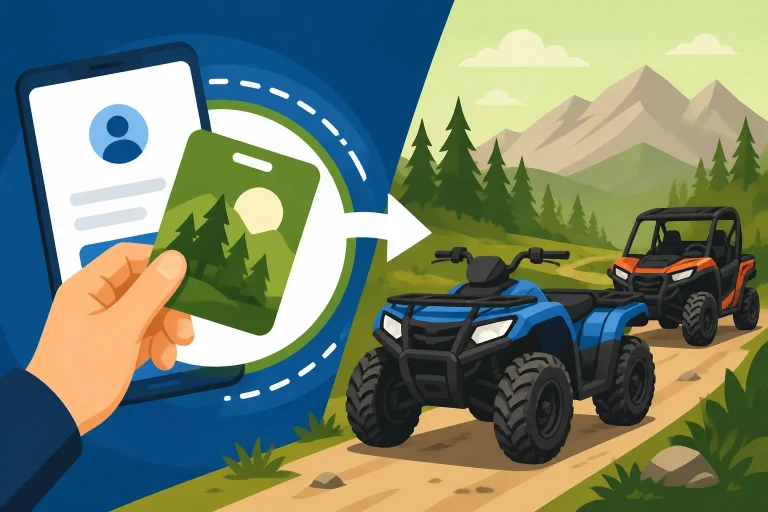
- Check whether each person has the required account information. A Wildlife Identification Number, often called a WIN card or WIN number, may be needed for the purchasing process. See Alberta’s WIN Card Explained if you are unsure how that works.
- Compare the available validity options with your dates. Check start and expiry details rather than assuming a pass starts at the time you arrive.
- Purchase through the official channel and save the confirmation. Follow the current instructions for displaying or carrying proof.
- Review the trip rules separately. Verify camping access, closures, machine requirements and any applicable local restrictions.
Buying for a group takes a little coordination. Ask each adult to confirm they have a pass before departure, or have one person help organize the purchases while ensuring that each pass is issued for the right person. Keep a simple list with names and confirmation details so the group is not trying to sort it out at the staging area.
For step-by-step purchase help, see How to Buy an Alberta Camping Pass. If you are not sure whether your purchase went through, use the confirmation or the official account system to check rather than buying a duplicate in a hurry.
Keep proof easy to retrieve
Save the confirmation somewhere you can access without reliable cell service. Depending on the current proof requirements, that may mean having the pass information available on your phone, carrying a printed copy or both. Check the official instructions about acceptable proof; do not assume that a payment receipt, screenshot or another person’s account screen is sufficient.
Backcountry trips can bring dead batteries, wet gear and poor reception. A small waterproof document pouch can keep printed confirmations and other trip paperwork together. If you buy one from Amazon, choose a size that can hold folded papers without making them awkward to reach. A compact battery bank—also available through retailers such as Amazon—can help keep a phone charged, but it is not a substitute for carrying any proof required by the current rules.
A second copy stored separately is sensible for a group leader. You might keep a printed set in the tow vehicle and the relevant digital confirmations on the phones of the adults who hold the passes. If you are already ordering ride supplies from Amazon, a waterproof pouch can be a practical addition; just remember that buying gear does not change what counts as valid pass proof.
What the camping pass does not replace
The pass addresses a specific camping requirement. It does not turn a machine into a registered vehicle, provide insurance, authorize access to a closed area or make every route legal. A group can have all its camping passes and still be missing something required for the ride.
OHV registration and insurance
For a quad, side-by-side, dirt bike or other off-highway vehicle, check registration and insurance requirements separately. In particular, riding on public land can trigger requirements that do not depend on whether you are camping. Review Alberta Requires Insurance on Public Land and Do You Need to Register an ATV in Alberta? before loading the machine.
Also check whether your registration and insurance proof will be accessible on the trip. A camping pass for the adult rider does not stand in for those documents. If you are visiting from outside Alberta, verify how your home registration and insurance are treated before relying on them for a longer stay.
Trail and land access
A pass is not a trail permit and is not permission to ride wherever you see a track. Trails can be closed, limited to certain vehicle types or subject to seasonal rules. Stay on routes open to your machine and check current information for the zone you intend to visit. Conditions can change after storms, during fire restrictions or because of land-management work.
Permission for camping and permission for OHV use are also distinct. A campsite may be allowed while a nearby route is closed, or a route may be open for day use while camping is restricted. Check both sides of the plan rather than treating “public land” as a single blanket permission.
Other passes, fees and permissions
Some destinations have separate requirements. A conservation pass, campground charge, event permit or other local authorization is not replaced by a public lands camping pass. The name “pass” can make these sound interchangeable, but each serves a different purpose. Check the current rules for the specific site and activity.
Likewise, an Alberta camping pass does not automatically authorize use of private land, a grazing lease or a route controlled by another authority. If the campsite or trail is not clearly public and open, confirm access before you go.
Planning for families, visitors and groups
The easiest way to avoid a last-minute problem is to make the pass check part of the trip plan, alongside fuel, trail maps and machine checks. Work through the overnight itinerary first: list each night’s campsite, verify the land and pass coverage, then confirm the pass for every adult who will be camping there.
For a family, keep the ages of the campers straight. The requirement is generally for people aged 18 and older; children are not simply counted as additional adults because they share a tent or ride with a parent. For details on the age rule, see Do Alberta Kids Need a Camping Pass?. Other youth-related rules—such as supervision, helmets and passenger limits—are separate from the camping pass.
For a mixed group, don’t assume the organizer’s pass covers everyone. Each adult’s obligation follows that individual, including an adult who arrives later, sleeps in a different vehicle or joins for only part of the trip. If someone is not camping but is meeting the group for a day ride, check the rules for that person’s actual activity rather than buying a pass automatically.
Visitors should check the same details as Alberta residents: whether the campsite is within the covered area, which pass option fits the dates, and how to keep proof available. A home-province plate does not answer the camping-pass question. Nor does the pass settle separate reciprocity questions for vehicle registration or insurance. If the trip includes a stay in Alberta, Alberta Visitors Under 30 Days can help with the separate rules for visiting machines.
A final pre-departure checklist helps keep the different requirements from getting mixed together:
- Confirm the exact campsite and whether the public lands camping pass applies there.
- Make sure every adult camper has an individual pass with dates that cover the stay.
- Save or print proof according to the current official instructions.
- Check that the proposed camping location is open and permitted.
- Confirm the OHV route is open to your machine and season.
- Carry the registration and insurance documents required for the ride.
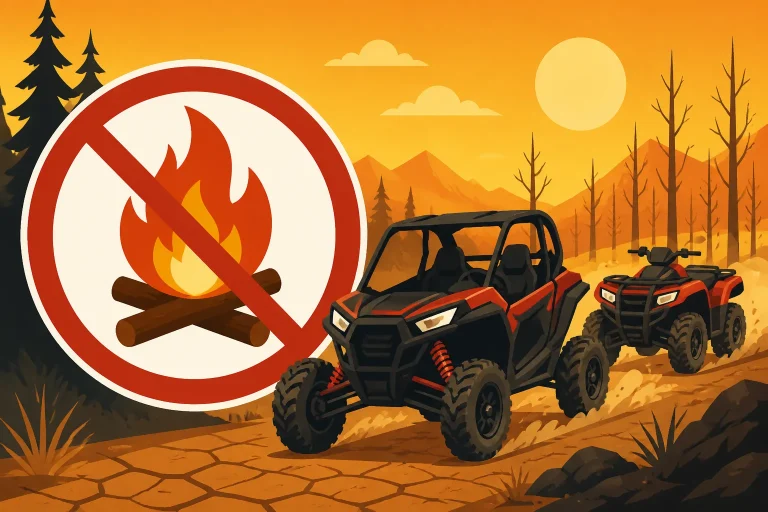
- Check for closures, fire restrictions and local access conditions before leaving.
- Tell the group who is responsible for checking the campsite, trail and pass requirements.
If you are still uncertain, ask the relevant official information service about the specific location and dates. Give them the campsite or zone name and describe whether you are day riding, camping, or doing both. A precise question is more useful than asking whether “a pass is needed in Alberta,” because the answer depends on where and how you plan to use the land.
The main takeaway is simple: the pass requirement is not triggered merely by being an adult on public land. It is tied to camping in the area where the requirement applies, and each adult camper should plan to have an individual valid pass. Verify the boundary, dates and proof requirements before the trip, then check OHV registration, insurance and access rules as separate items.
Disclaimer
This article is for general informational purposes only and does not constitute professional advice. Laws, prices and regulations vary by location and change over time. Consult a qualified professional for guidance on your specific situation.