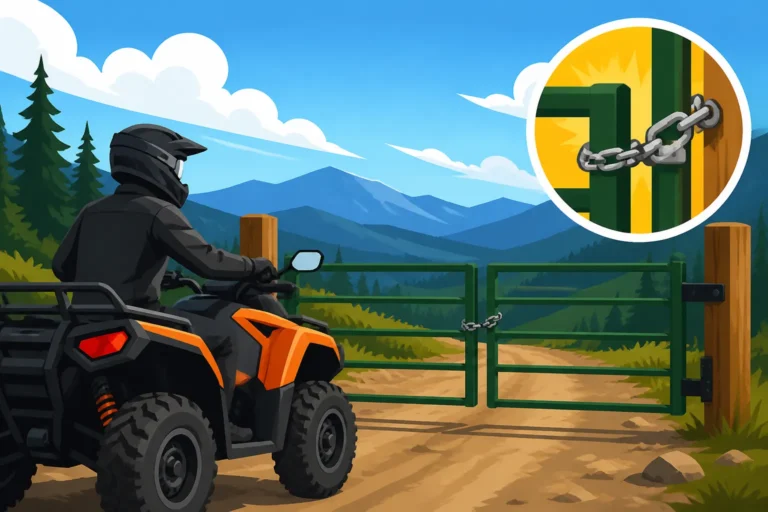
Riding Quietly Past Acreages
Passing an Alberta acreage can turn an ordinary ride into a neighbour complaint, especially when engines are revving, groups are spread out, or a route runs close to homes. This guide explains how to reduce noise, ride considerately, and check whether a ditch, road, or trail is actually open to OHVs before you go.
Why noise matters near Alberta acreages
Sound carries farther than riders expect
A quad or side-by-side can sound much louder from a yard than it does from the seat. Open fields, quiet mornings, and a line of machines approaching one after another can make engine noise noticeable well before riders reach a home. In foothill areas, hillsides and trees may also reflect or carry sound in ways that are hard to judge while riding.
The timing can matter as much as the machine. A route that seems unobtrusive in the middle of a busy afternoon may disturb someone early in the morning, during a quiet evening, or while people are outside. A short burst of acceleration can be especially jarring because it changes the sound suddenly.
Noise complaints can also affect access. Residents may contact a municipality, land manager, or enforcement officer if they believe riders are repeatedly disturbing the area or ignoring local rules. For practical ideas on reducing disruption, see [Alberta Noise Complaints About Quads] and [Alberta Trail Etiquette Locals Expect].
A quiet ride still has to be a lawful ride
Being considerate does not make an otherwise prohibited route legal. Alberta road access for OHVs depends on the specific road, local bylaws, and any applicable authorization. A ditch may fall within the legal definition of a highway, but that does not mean riders can automatically use it. Before setting out, check [Alberta ATV Road Rules: Bylaws Decide] and [Alberta Rules for Riding a Ditch].
The same distinction applies around acreage roads, private lanes, and trails. A visible track is not necessarily an invitation to ride, and a quiet machine does not replace landowner permission. Confirm the route and access rules first, then plan to pass nearby homes with as little disturbance as you reasonably can.
How to reduce ATV and UTV noise
Start with a mechanically sound machine
A machine that is maintained and operating as intended is a better starting point than one with a damaged exhaust, loose heat shield, leaking joint, or missing component. Before a ride, look for obvious exhaust damage, loose fasteners, rattles, or changes in sound. If something suddenly sounds louder than usual, investigate it rather than assuming it is normal.
Avoid removing or modifying parts intended to control exhaust noise. A replacement muffler or exhaust component should be compatible with the machine and appropriate for the places where you ride. Product listings and fitment notes from companies such as SuperATV may help you identify parts for a particular machine, but a product description is not proof that a setup meets every local rule. Check the applicable requirements and ask a qualified mechanic if you are unsure.
Alberta’s public-land equipment rules and restrictions on modified exhausts are worth understanding before changing anything. See [Alberta Equipment Required on Public Land] and [What Counts as a Modified Exhaust on Public Land]. If the exhaust is damaged, excessively loud, or has been altered, have it assessed before riding near homes or on public land.
Use smooth throttle and sensible spacing
A quiet approach starts well before you reach an acreage. Accelerate gradually, keep engine speed steady where conditions allow, and avoid unnecessary bursts of throttle. Repeated revving, spinning tires, and rapid acceleration can make a brief pass sound much more disruptive.
Groups should avoid bunching up and then surging forward together. Leave enough distance that riders can maintain a steady pace without constantly speeding up to catch the machine ahead. At the same time, do not stretch a group so far apart that riders feel pressured to accelerate hard to close gaps.
If the route is narrow or visibility is limited, ride at a pace that lets everyone stay in control. Do not coast into a corner or downhill section faster than is safe just to keep the engine quiet. A considerate ride is still a controlled ride.
Keep sound-making accessories under control
Loose cargo, rattling racks, unsecured tools, and vibrating panels can add noise even when the exhaust is in good shape. Before leaving, secure anything that may bounce or strike the machine. Check that accessories and panels are fastened, and remove gear you do not need.
If you are considering a quieter exhaust component or other sound-related accessory, compare compatibility and installation requirements carefully. SuperATV is one brand riders may encounter while researching ATV and UTV parts; treat the manufacturer’s specifications as a starting point, not as a substitute for local legal checks. SuperATV product compatibility can vary by machine and configuration, so confirm the exact fit before buying or installing anything.
| Situation | Considerate approach | What to check |
|---|---|---|
| Passing an acreage along an authorized route | Ease off the throttle early and maintain a steady, controlled pace | Whether OHVs are allowed on that road or route |
| Riding in a group | Keep a manageable formation and avoid repeated acceleration | Group rules, route width, and safe spacing |
| Hearing a new rattle or louder exhaust | Stop somewhere safe and inspect the machine | Exhaust condition, fasteners, and equipment requirements |
| Considering an exhaust change | Check fitment and intended use before installation | Public-land rules and any local requirements |
| Reaching a private driveway or trail | Stay on the authorized route and do not turn in without permission | Landowner permission and local access rules |
Plan a route that avoids unnecessary disturbance
Check road and bylaw access before the ride
A rural road, highway ditch, municipal road, and private access lane can all have different rules. Do not assume that a route is open because another rider used it, because it appears on an informal map, or because there is a well-worn track. Local bylaws can determine where OHVs may travel, and restrictions can differ between communities and counties.
Before riding near an acreage community, look up the municipality’s current rules and maps, and contact the local office if the route is unclear. Start with [Alberta Bylaw Lookups Before You Ride] and [Alberta Counties With OHV Bylaws]. If a route is on public land, check the land-use information and closures that apply to that specific area as well.
Pay special attention to the difference between riding on a road and crossing it. A permitted crossing does not automatically mean you may travel along the road or ditch. When the rule is unclear, choose a clearly authorized route rather than testing the boundary near someone’s home.
Respect private property and the people living nearby
An acreage may sit beside a public route, but its driveway, yard, fields, and connecting tracks are not automatically open to riders. Stay on the route you are authorized to use. Do not cut across a field, use a private trail as a shortcut, or enter a driveway to turn around unless you have permission.
If a landowner has posted a restriction or asks riders to stay away, take it seriously. A calm, respectful response can prevent a small misunderstanding from becoming a lasting conflict. For more on access, see [Alberta Private Land Permission].
If your intended route passes close to a home, consider whether another authorized route would be less intrusive. Where there is no reasonable alternative, ride through without stopping, revving, or gathering beside the property. Avoid lingering to unload, repair a machine, or wait for the rest of the group right near a residence.
Adjust timing and group habits
Even a well-maintained machine can be disruptive if a large group passes repeatedly at an inconvenient time. When you have flexibility, avoid starting a ride very early or returning late through residential areas. If a route is popular with local riders, use the staging area and access points intended for that purpose rather than forming a lineup on a roadside beside homes.
For a group ride, make the expectations clear before engines start. Ask everyone to keep a steady pace, avoid showing off, and wait at a designated meeting point away from residences. A short conversation at the staging area is easier than trying to correct noisy behaviour once the group is moving.
If someone in the group is new to riding, explain that the goal is not to race from one machine to the next. A newer rider may use more throttle than necessary or accelerate abruptly because they are uncertain. Pairing them with an experienced rider and choosing a suitable pace can make the ride safer and quieter.
What to do if a noise concern comes up
Respond calmly and make practical changes
If a resident approaches your group, listen first. Do not argue about whether the machine is loud or insist that the route must be open just because you are there. Ask what the concern is, and, if it is safe and lawful, reduce speed, keep moving without revving, or leave the area by an authorized route.
If the complaint suggests that the route may not be open to OHVs, do not treat that as merely a noise issue. Stop somewhere safe and check the route rules before continuing. A local bylaw or access restriction can matter independently of how quietly you ride.
Avoid filming or confronting a resident in a way that escalates the situation. If you need to record a route concern for later, do so safely and without blocking traffic or trespassing. If there is a genuine dispute about access, seek clarification from the municipality or land manager rather than trying to settle it on the trail.
Know when the machine needs attention
A muffler that has become louder, a new metallic rattle, or exhaust fumes where they should not be can signal a mechanical problem. Stop in a safe place and inspect only what you can safely check. Do not touch hot exhaust components, and do not continue riding if a damaged part could create a fire, burn, or other hazard.
If an exhaust has been modified, or you cannot tell whether a replacement component is suitable for your machine and riding area, consult a qualified mechanic and review the applicable rules. A quieter sound alone does not establish compliance. SuperATV and other parts suppliers can provide product information, but riders still need to confirm installation, compatibility, and legal suitability for the place they plan to ride.
Keep a simple pre-ride routine: listen for unusual sounds when starting the machine, check for loose components, secure cargo, and make sure everyone knows the route. Small checks can prevent a mechanical problem from becoming a noisy pass beside a home—or a breakdown in a remote area.
Build good habits into every ride
Riding quietly past acreages is not about creeping along unsafely or giving up access you are allowed to use. It is about choosing legal routes, keeping equipment in good condition, and avoiding unnecessary noise where people live. A steady throttle, secure cargo, sensible group spacing, and respectful timing make a real difference.
When a route or rule is uncertain, check before riding. If access is not permitted, a quieter machine does not change that. If it is permitted, making a calm, brief pass helps protect relationships between riders and rural residents—and helps keep riding areas welcoming for everyone.
Disclaimer
This article is for general informational purposes only and does not constitute professional advice. Laws, prices and regulations vary by location and change over time. Consult a qualified professional for guidance on your specific situation.