Permission From an Alberta Landowner
It's an age-old dream for many riders: seeing a stretch of pristine land, perhaps a vast pasture or an old logging road weaving through private forest, and imagining the perfect ride. But that dream can quickly turn into a nightmare if you don't approach it the right way. Riding on private land without explicit permission is a surefire way to land yourself in hot water, facing fines, vehicle seizure, and even criminal charges for trespassing. This guide is all about helping you respectfully and legally navigate the process of obtaining permission from an Alberta landowner, ensuring you can enjoy those private trails with peace of mind and maintain a good relationship with the property owner.
Why Explicit Permission is Absolutely Essential
The temptation to just "chance it" when you see an enticing trail on private property can be strong, especially if it looks unused or remote. However, in Alberta, the law is very clear on this: if it's not public land, you need permission. Ignoring this fundamental rule doesn't just put you at risk of a warning; it can lead to serious legal consequences and create bad blood for all riders in the area.
The Legal Ramifications of Trespass
In Alberta, the Petty Trespass Act makes it an offence to trespass on private property. While it might sound "petty," the penalties are not. An officer responding to a complaint can issue fines, and in some cases, your vehicle could be seized, particularly if there's damage or repeated offenses. Imagine having your prized quad or side-by-side impounded, not just for a day, but for weeks, incurring impound fees that quickly add up. Beyond the immediate legal trouble, a trespassing incident can lead to a criminal record if the situation escalates, or if you're involved in any further incidents on the property. It's simply not worth the risk. [Alberta Penalties for Riding Unregistered] might outline what happens if you're caught without registration, but riding on private land without permission carries its own distinct set of troubles, regardless of your machine's status.
Damaging Relationships and Future Access
Every time a rider disrespects private land, it fuels the negative stereotypes that many landowners already hold about OHV enthusiasts. A single incident of unauthorized riding, property damage, or excessive noise can lead to an entire community or a specific landowner closing their gates permanently to all riders. This makes it incredibly difficult for responsible riders to gain access in the future. Think of the ripple effect: one bad apple can spoil the bunch, cutting off potential riding opportunities for everyone else. Maintaining positive relationships with landowners is crucial for the long-term viability of private land access for our sport. Remember, what's often perceived as just "a field" or "some woods" by a rider is someone's livelihood, their home, or their family legacy. [Alberta Trespass Law for Riders] clearly defines these boundaries, and understanding it is the first step in being a responsible rider.
How to Respectfully Approach an Alberta Landowner
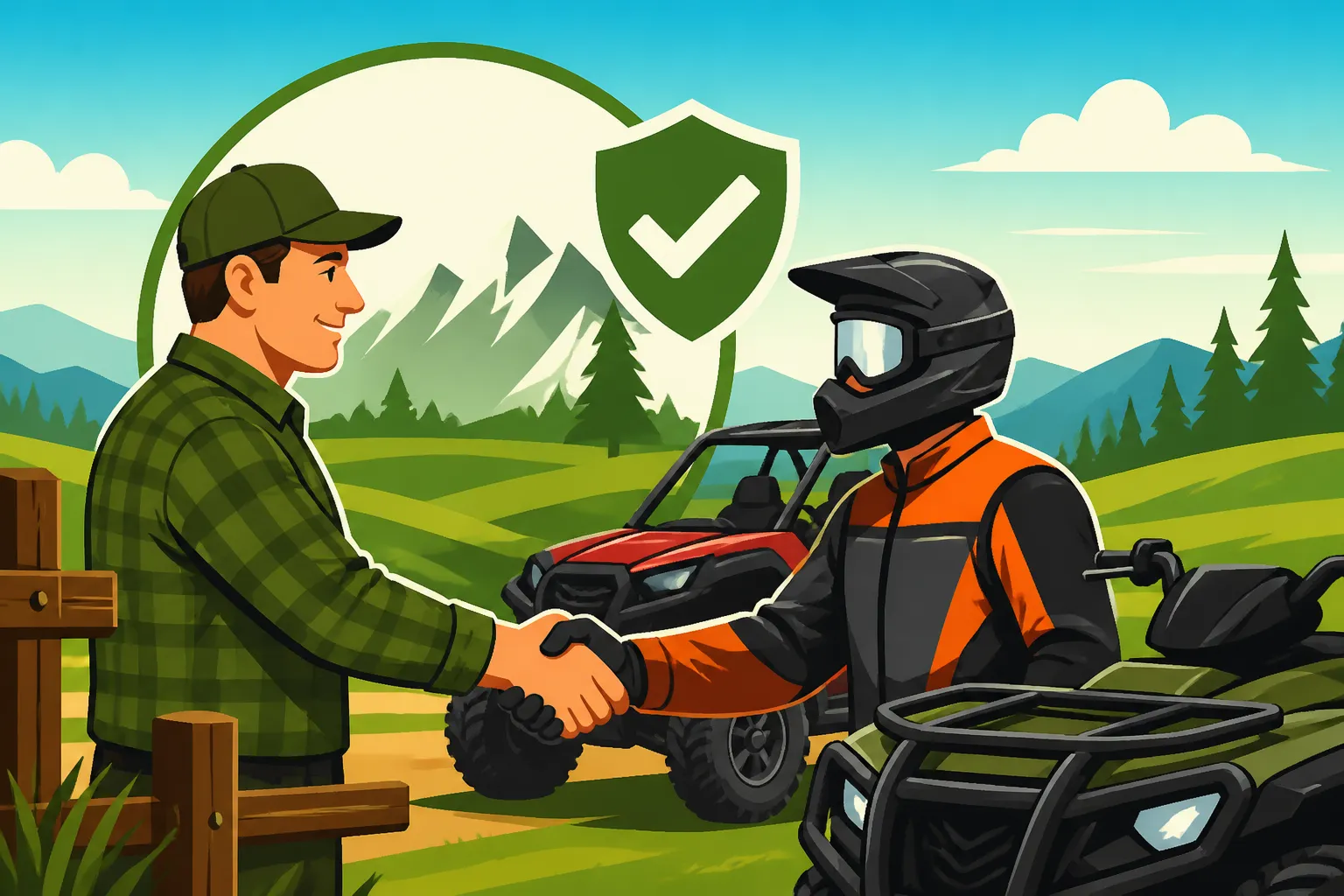
Asking for permission can feel daunting, but a polite, prepared, and respectful approach can make all the difference. Landowners are often more receptive than you might think, especially if they see you as responsible and considerate.
Do Your Homework Before You Ask
Before you even knock on a door, do a little detective work. Identify the specific piece of land you're interested in riding. Is it farmland, a forested parcel, or part of a larger ranch? Knowing this helps you tailor your approach. Try to figure out who the actual landowner is. Sometimes, the person living on the property might be a tenant or a farm manager, and while they might seem friendly, they may not have the authority to grant permission. A quick search of property maps or even a local inquiry at the nearest town office can sometimes provide owner information. The best time to approach them is when they aren't busy with fieldwork or other chores, so try to pick a quiet time of day, perhaps a late afternoon or evening.
| What to Prepare | Why It Matters |
|---|---|
| Your Introduction | State your name, where you're from, and clearly explain why you're there. Be polite and concise. |
| Your Machine Type | Specify if you ride a quad, side-by-side, dirt bike, or snowmobile. This gives the landowner context. |
| Proposed Riding Area | Clearly describe where you'd like to ride (e.g., "along the treeline," "on the old access road," "in the back pasture"). |
| Proposed Riding Frequency | Be realistic. Are you asking for a one-time ride, occasional access, or something regular? |
| Proof of Insurance | Essential for liability. Show that you're a responsible operator. [Alberta Insurance Requirements on Public Land] gives some context, but private land often has higher concerns. |
| Offer to Help (Optional) | If appropriate, offer to help with a small chore (e.g., checking fences, moving something). This can build goodwill. |
Making the Initial Contact
When you approach, remember that you are on their property, so be mindful of their space and privacy. If there's a gate, approach it on foot rather than driving your machine right up to their house. Dress neatly – you don't need a suit, but don't show up covered in mud from a previous ride. Start with a simple, polite greeting. "Hello, my name is [Your Name], and I was hoping to speak with the landowner for a few minutes about a potential riding opportunity." Be prepared for a "no," and accept it graciously if that's the answer. Pressuring a landowner will only ensure the door stays closed. You could say something like, "I understand you might have concerns, but I wanted to assure you I'm a very responsible rider and would strictly adhere to any rules you set." Having your [Alberta Proof of Insurance on Demand] ready to show can help build trust.
Sometimes, a direct knock on the door isn't possible, or the landowner lives off-site. In these cases, a well-written, respectful letter can work. Explain who you are, what you're asking, and provide your contact information. Make it clear you're not asking for anything free, but for the privilege of riding on their land, and are willing to discuss any concerns or conditions they might have.
What to Discuss and Agree Upon Before You Ride
If a landowner is open to the idea, this is where the real conversation begins. It's crucial to be thorough and clear about expectations to avoid misunderstandings down the road. This isn't just about what you can do, but also what you can't do, and what the landowner expects from you.
Clearly Define the Permitted Riding Area
One of the biggest sources of conflict is riders venturing beyond the agreed-upon areas. Sit down with the landowner and, if possible, walk the property or look at a map together. Clearly mark out where you are allowed to ride and, just as importantly, where you are NOT allowed to ride. Are there sensitive areas like freshly seeded fields, livestock pastures, or environmentally protected zones you absolutely must avoid? Make sure you understand these boundaries perfectly. For instance, if you're riding [Alberta Rules for Riding Farmland], it's critical to know where fences are, where cattle are grazing, and where crops are planted. Landowners might appreciate if your machine is equipped for respectful navigation, perhaps with sturdy GPS mounts from a brand like SuperATV to help you stick to designated routes.
Establish Rules of Conduct and Operating Hours
Discuss specific rules regarding noise, speed, and environmental impact.
- Noise: Ask about acceptable noise levels and times. Many machines, especially with stock exhausts, are reasonably quiet, but modified mufflers can be a real nuisance. [Alberta Noise Complaints About Quads] are a genuine concern for rural residents.
- Speed: Agree on appropriate speeds, especially near homes, outbuildings, or livestock.
- Time of Day: Confirm when you can start and when you need to be off the property. Respecting quiet hours, particularly early mornings or late evenings, is a sign of good faith.
- Fire Safety: Discuss fire restrictions. Even if there's no official fire ban, a landowner might have specific rules about spark arrestors. [Alberta Spark Arrestor Rules] are for public land, but on private land, fire prevention is even more critical for a landowner.
- Guests: If you plan to bring friends, discuss this upfront. Will the landowner allow additional riders? If so, ensure all your guests understand and abide by the same rules. [Alberta Group Ride Planning] should always start with clear landowner permission.
Addressing Liability and Safety Concerns
This is often the most significant hurdle for landowners. They worry about what happens if you get hurt on their property, or if you cause damage.
- Insurance: Reiterate that you carry liability insurance. While your personal insurance might cover you, it’s worth asking if they require any specific waivers or if their own insurance covers recreational use on their property. Some landowners might ask you to sign a release form.
- Emergency Contacts: Provide emergency contact information, and ask for theirs in case of an incident.
- First Aid: Make sure you're carrying a first aid kit and know basic first aid. Even if you're riding [Alberta Rules for Riding Private Land], accidents can happen far from help.
- Helmets and Gear: Even though [Alberta Helmet Law on Public Land] doesn't always apply to private property, strongly consider wearing a CSA-approved helmet and appropriate protective gear. This shows respect for your own safety and reduces the landowner's worry.
- Machine Condition: Ensure your machine is in good working order to minimize breakdowns or accidental damage. Reliable components, perhaps heavy-duty axles or tie rods from SuperATV, can provide peace of mind for both you and the landowner.
A quick markdown table summarizing key discussion points:
| Discussion Point | Rider's Responsibility | Landowner's Role |
|---|---|---|
| Permitted Area | Stick strictly to agreed routes. | Clearly define boundaries. |
| Operating Hours | Respect agreed start/end times. | Set reasonable time limits. |
| Noise Levels | Operate machine responsibly, avoid excessive noise. | Advise on sensitive times/areas for quiet. |
| Speed Limits | Ride at safe, agreed-upon speeds. | Indicate areas needing reduced speed. |
| Fire Safety | Ensure spark arrestor, carry fire extinguisher, check conditions. | Inform of specific fire risks/rules. |
| Guests/Group Size | Seek prior approval for any additional riders. | Specify limits on group size or guests. |
| Insurance | Provide proof of current liability insurance. | May request a waiver or specific coverage details. |
| Emergency Info | Share your contact info and emergency contacts. | Provide their emergency contact info. |
| Cleanup | Pack out all trash, leave no trace. | Expect the area to be left as found (or better). |
Maintaining a Good Relationship for Future Access
Gaining permission is just the first step. The ongoing relationship you build with a landowner will determine whether you get to ride there again, or if the gates close permanently.
Always Be Respectful and Considerate
This goes beyond just the initial interaction. Every time you're on their property, act as if the landowner is watching, because they very well might be. Stick to the agreed-upon trails, keep your speed in check, and be mindful of noise, especially if their home or livestock are nearby. If you see something amiss, like a broken fence or an open gate, report it to them. It shows you care about their property. Always remember the fundamental [Alberta Trail Etiquette Locals Expect], which applies just as much, if not more, on private land. Avoid riding in overly wet conditions that could cause deep ruts and damage fields or trails. Your vehicle, perhaps with enhanced ground clearance from a SuperATV lift kit, can help you navigate challenging terrain responsibly without causing unnecessary damage.
Leave No Trace and Offer Small Gestures of Gratitude
Always pack out everything you pack in. Leaving garbage behind is one of the quickest ways to lose access to private land. If you come across any trash that isn't yours, consider picking it up. It shows immense respect for their property. Small gestures of thanks can go a long way. A thank-you card, a small gift like a bottle of local jam, or even just stopping by to say hello and thank them after a ride can reinforce the positive relationship. Offering to help with a small chore, like moving some firewood or checking on an outbuilding, can also be a meaningful gesture.
Open Communication and Addressing Issues Promptly
If an issue arises – perhaps you accidentally made a rut, or a gate was left open by someone else – communicate it openly and honestly with the landowner. Don't try to hide it. Take responsibility if it was your doing, and offer to help fix the problem. This transparency builds trust. If the landowner expresses any concerns or asks you to change your riding habits, listen to them and comply immediately. Their property, their rules. [Alberta Accident Reporting on Public Land] is a legal requirement, but if an accident occurs on private land, you still have an ethical and potentially legal obligation to inform the landowner, especially if there's damage or injury.
By following these guidelines, you're not just securing a place to ride; you're building a reputation as a responsible and respectful OHV enthusiast. This benefits not only you but the entire riding community, helping to foster goodwill and ensuring that private land access remains a possibility for years to come.
Disclaimer
This article is for general informational purposes only and does not constitute professional advice. Laws, prices and regulations vary by location and change over time. Consult a qualified professional for guidance on your specific situation.