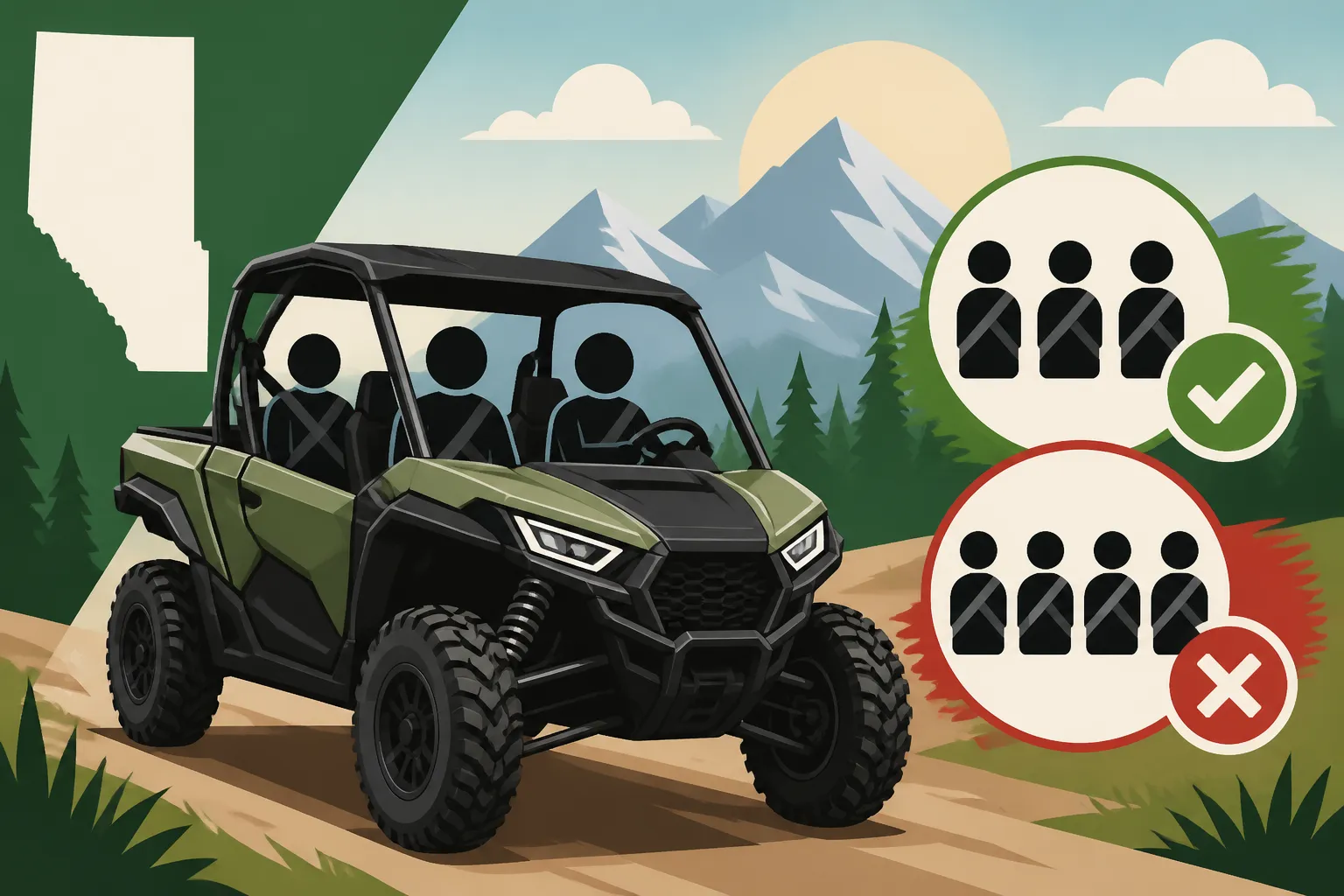
Manufacturer Passenger Limits on a Side-by-Side
It’s a common scenario: you’ve got your side-by-side, a beautiful day in Alberta, and a few friends or family members eager to hit the trails. But then you look at that bench seat, or those two bucket seats, and wonder, "Can we really fit everyone?" This guide is here to cut through the confusion and help you understand the critical manufacturer passenger limits for your side-by-side, ensuring you stay safe and on the right side of the rules when exploring Alberta's incredible backcountry.
The Manufacturer's Sticker: Your First (and Best) Guide
When it comes to understanding how many people can safely and legally ride in your side-by-side, the manufacturer’s recommendations are paramount. These aren't just arbitrary numbers; they are the result of extensive engineering, testing, and safety considerations. Ignoring them can lead to dangerous situations and potentially legal trouble.
Why the Manufacturer's Limits Matter So Much
Think of your side-by-side as a finely tuned machine, where every component is designed to work within specific parameters. The manufacturer determines passenger limits based on a multitude of factors, including:
- Weight Distribution and Stability: Adding too many passengers, or passengers who exceed the designed weight, dramatically shifts the centre of gravity. This can make your machine unstable, especially on uneven terrain, during turns, or when climbing and descending hills. What feels manageable on a flat, smooth trail can quickly become a rollover risk in challenging conditions.
- Braking Performance: More weight means longer stopping distances. Your side-by-side's braking system is calibrated for a specific maximum load, including passengers and cargo. Exceeding this limit can compromise your ability to stop quickly in an emergency, turning a minor issue into a major accident.
- Suspension and Handling: The suspension system is designed to absorb shocks and maintain tire contact with the ground for optimal control. Overloading can bottom out your suspension, reduce ground clearance, and make the vehicle unpredictable to steer. Even a strong aftermarket suspension from a company like SuperATV, while it can improve ride quality and durability, is still operating within the vehicle's fundamental design constraints regarding total load capacity.
- Structural Integrity: The frame and chassis of your side-by-side are built to withstand specific forces. Putting too much strain on these components can lead to fatigue, damage, or even catastrophic failure over time, particularly when subjected to the bumps and jostles of off-road riding.
It's easy to dismiss these limits as "just suggestions," especially if everyone seems to fit. But the engineers who designed your machine put these limits in place for your safety and the longevity of the vehicle.
Finding the Sticker and What It Tells You
Every reputable side-by-side manufacturer includes a clear label or sticker on the vehicle that outlines its passenger capacity and sometimes its Gross Vehicle Weight Rating (GVWR) or Gross Axle Weight Rating (GAWR). This is typically a yellow or white sticker, often found in easily accessible locations like:
- Driver's side door jamb: If your side-by-side has doors, check the jamb, similar to a car.
- Under the hood or in the engine compartment: Sometimes tucked away but still visible.
- On the frame near the driver's seat: Look along the structural components.
- Inside the glove compartment or storage bin: Manufacturers sometimes place auxiliary information here.
This sticker will clearly state the maximum number of occupants and often the maximum combined weight of passengers and cargo. For example, a two-seater might explicitly say "2 Occupants," while a four-seater will say "4 Occupants." It will also typically list the tire pressure recommendations and other important safety information.
Always consult your owner's manual for detailed specifications, as it will often elaborate on these limits and provide additional safety guidelines. This manual is your most comprehensive resource for understanding your specific machine.
Beyond the Sticker: Alberta's Take on Passenger Safety
While the manufacturer's limits are your primary guide, Alberta's regulations also play a significant role in ensuring safe off-highway vehicle (OHV) operation, including how passengers are carried. These regulations are designed to complement manufacturer guidelines, not override them, with a strong focus on rider safety and responsible operation on public lands.
The Role of Seating and Seatbelts in Alberta Law
In Alberta, the Traffic Safety Act and the Off-Highway Vehicle Regulation govern how OHVs, including side-by-sides, can be operated. When it comes to passengers, the key is proper seating and restraint. You can’t just have people hanging on or sitting wherever they can find a spot.
Here’s what generally applies:
- Designated Seating: All passengers must be seated in a designated seating position provided by the manufacturer. This means no riding on the cargo box, no sharing a single bucket seat, and no improvised seating arrangements. If the machine was designed for two people with two seats and two seatbelts, that's its capacity. You can't just throw a cushion in the middle and call it a third seat.
- Seatbelts are Mandatory: If your side-by-side is equipped with seatbelts from the factory, every occupant must wear one whenever the vehicle is in motion. This is non-negotiable and a critical safety measure. [Alberta Equipment Required on Public Land] clearly outlines many of these requirements. Side-by-sides with rollover protection structures (ROPS) and seatbelts are designed to protect occupants in the event of a rollover, but only if those seatbelts are properly used.
- No Impromptu Seating: Even if there seems to be "room," if there isn't a factory-installed, designated seat with a corresponding seatbelt, that space is not for a passenger. This is where it's easy to run into trouble, especially with younger, smaller riders who might seem to "fit" in odd spaces. An officer checking your vehicle on a trail ride might issue a ticket if passengers are not properly restrained in designated seats.
Some side-by-sides, particularly those with bench seats, might imply seating for three across. Always check the manufacturer's sticker and manual. Often, a bench seat designed for two will have only two sets of seatbelts, clearly indicating its two-person capacity, even if three could theoretically squeeze in. If you're considering aftermarket additions, ensure they meet all safety standards and, importantly, don't circumvent the original manufacturer's capacity limits. Products from companies like SuperATV often focus on enhancing performance, protection, or utility, rather than fundamentally altering passenger capacity beyond the original design.
| Side-by-Side Type | Typical Seating Arrangement | Manufacturer Passenger Limit | Key Safety Feature |
|---|---|---|---|
| Two-Seater | Two bucket seats | 2 occupants | 2 individual seatbelts |
| Two-Seater | One bench seat | 2 occupants | 2 seatbelts (often lap) |
| Four-Seater | Two front bucket, two rear bucket | 4 occupants | 4 individual seatbelts |
| Four-Seater | One front bench, one rear bench | 4 occupants | 4 seatbelts (lap or shoulder) |
| Six-Seater | One front bench, two rear bucket | 6 occupants | 6 seatbelts (mix of lap/shoulder) |
| Six-Seater | Two bench seats | 6 occupants | 6 seatbelts (often lap/shoulder) |
Note: Always verify specific limits for your machine via its manufacturer's sticker and owner's manual.
Young Riders and Passenger Limits
Riding with children in a side-by-side is a fantastic way to share the outdoors, but it comes with strict rules and common-sense precautions in Alberta. The province has specific age requirements and supervision rules that impact how and when young passengers can ride.
- Age Requirements: While there isn't a specific minimum age for a passenger per se, the rules around operating OHVs apply. For instance, a person must be at least 14 years old to operate an OHV on public land without direct adult supervision. When it comes to passengers, the manufacturer's guidelines for rider size, height, and weight become even more critical. Can the child sit properly in the seat, with their back against the seatback and their feet flat on the floor? Can the seatbelt fit them snugly and safely? [Alberta Rules for a Child Passenger] delves into these specifics.
- Supervision: If a child is operating an OHV, close supervision by an adult is required for those under 14. For passengers, ensure the child is always accompanied by a responsible adult, especially if they are very young. The dynamics of a side-by-side off-road can be intense, and a child needs to be mature enough to understand and follow safety instructions. [Alberta Rules for a Supervising Adult] provides more context on this.
- Manufacturer Age Guidance: Many manufacturers provide age guidance for their machines, and these should be respected. Some smaller youth-oriented side-by-sides are available, but for larger adult machines, ensure any child passenger meets the physical requirements for safe seating and restraint. Never place a child in a position where they cannot be properly secured by a seatbelt.
Riding unregistered OHVs or allowing unsafe passenger numbers can lead to penalties. It's crucial to understand [Alberta Penalties for Riding Unregistered] and generally abide by all OHV rules to avoid fines and ensure everyone's safety.
Practical Considerations for Riding with Passengers
Beyond the legal and manufacturer-dictated limits, there are practical considerations for riding with passengers that directly impact safety, comfort, and the overall experience. Being a responsible operator means thinking about more than just fitting everyone in.
The Dangers of Overloading Your Side-by-Side
It might seem like a small inconvenience to squeeze an extra person in, but the consequences of overloading can be severe. This isn't just about manufacturer recommendations; it's about physics and real-world hazards.
- Compromised Control: An overloaded machine simply doesn't handle the same way. It becomes sluggish to accelerate, slow to respond to steering input, and much harder to brake effectively. This loss of control is amplified on trails with steep climbs, sharp turns, or unexpected obstacles. Imagine trying to navigate a tricky section of [McLean Creek: Alberta's Best Known OHV Area] with a vehicle pushed beyond its limits – it's a recipe for disaster.
- Increased Rollover Risk: As discussed, exceeding weight limits raises the center of gravity, making the side-by-side far more prone to rolling over, especially on side slopes or during aggressive turns. Even a seemingly minor bump can destabilize an overloaded machine. This risk is particularly high with multi-passenger machines if the weight isn't distributed evenly.
- Premature Wear and Tear: Continuously operating your side-by-side above its designed capacity puts undue stress on every component: engine, transmission, axles, tires, and frame. This accelerates wear and tear, leading to costly repairs and a shortened lifespan for your machine. You might find yourself needing new parts much sooner than anticipated.
- Insurance Implications: In the unfortunate event of an accident, your insurance company might deny a claim if it's determined that the vehicle was overloaded or operated outside of its manufacturer's specifications. Always ensure you have adequate [Alberta Insurance Requirements on Public Land] for your OHV and understand its terms.
It’s far better to make a second trip, have another vehicle, or simply limit your group to the safe capacity of your side-by-side. No amount of fun is worth risking serious injury or damage to your valuable machine.
Accessories and Modifications for Safe Passenger Transport
The aftermarket industry offers a vast array of accessories for side-by-sides, many of which enhance safety, comfort, and utility. However, it's crucial to distinguish between accessories that improve your ride and those that appear to increase passenger capacity but do so unsafely or illegally.
- Cargo Management Systems: If you frequently carry gear, invest in robust cargo boxes, racks, or soft bags. These help distribute weight properly and prevent loose items from becoming projectiles. Instead of trying to squeeze a small child into a cargo area, use that space for legitimate cargo. Many manufacturers, and companies like SuperATV, offer excellent storage solutions that bolt directly to the frame, keeping your gear secure.
- Enhanced Seating (within limits): Some side-by-sides allow for comfortable, upgraded seats within the existing designated seating positions. These can improve comfort on long rides, but they do not increase the number of allowable passengers. A bench seat upgrade for a two-seater will still only be for two people, albeit more comfortably.
- Safety Harnesses: While factory seatbelts are mandatory, some riders opt for aftermarket multi-point safety harnesses (4-point or 5-point). These can offer enhanced occupant security, particularly for aggressive riding or racing, but they are an addition to, not a replacement for, designated seating and seatbelt use. Ensure any such modification is professionally installed and does not interfere with the vehicle's structural integrity.
- Rollover Protection Systems: For side-by-sides that come without a full ROPS from the factory (less common now), some aftermarket solutions exist. However, adding one does not automatically increase passenger capacity. Any ROPS addition should be rigorously tested and meet safety standards.
The critical takeaway is that while accessories can improve your side-by-side experience, they rarely, if ever, increase the legal or safe passenger capacity beyond what the manufacturer originally intended and stated on the vehicle. When planning your next adventure, keep [Alberta Rules for Passengers on a Quad] in mind and prioritize safety above all else.
Disclaimer
This article is for general informational purposes only and does not constitute professional advice. Laws, prices and regulations vary by location and change over time. Consult a qualified professional for guidance on your specific situation.