Putting a Child on a Machine Too Big for Them
It’s a scenario many of us have seen, and perhaps even considered ourselves: a proud parent putting their eager child on an off-highway vehicle (OHV) that's clearly too large for them. The reasoning often sounds good on the surface – "they'll grow into it," "it's safer, more stable," or "it's all we have." But the truth is, placing a child on a quad, side-by-side, or dirt bike that doesn't fit their physical capabilities or maturity level introduces significant, often unseen, dangers that can quickly turn a fun outing into a serious accident. This guide will explore why matching a child to the right-sized machine is paramount in Alberta, outlining the inherent risks and detailing the provincial rules designed to keep young riders safe.
The Serious Risks of a Mismatched Machine for Young Riders
It's natural to want to share our passion for off-roading with our kids, but rushing them onto an adult-sized machine can have dire consequences. The risks extend beyond just reaching the handlebars or footrests; they delve into fundamental issues of control, balance, and the ability to react in dynamic riding situations.
Physical Control and Handling Challenges
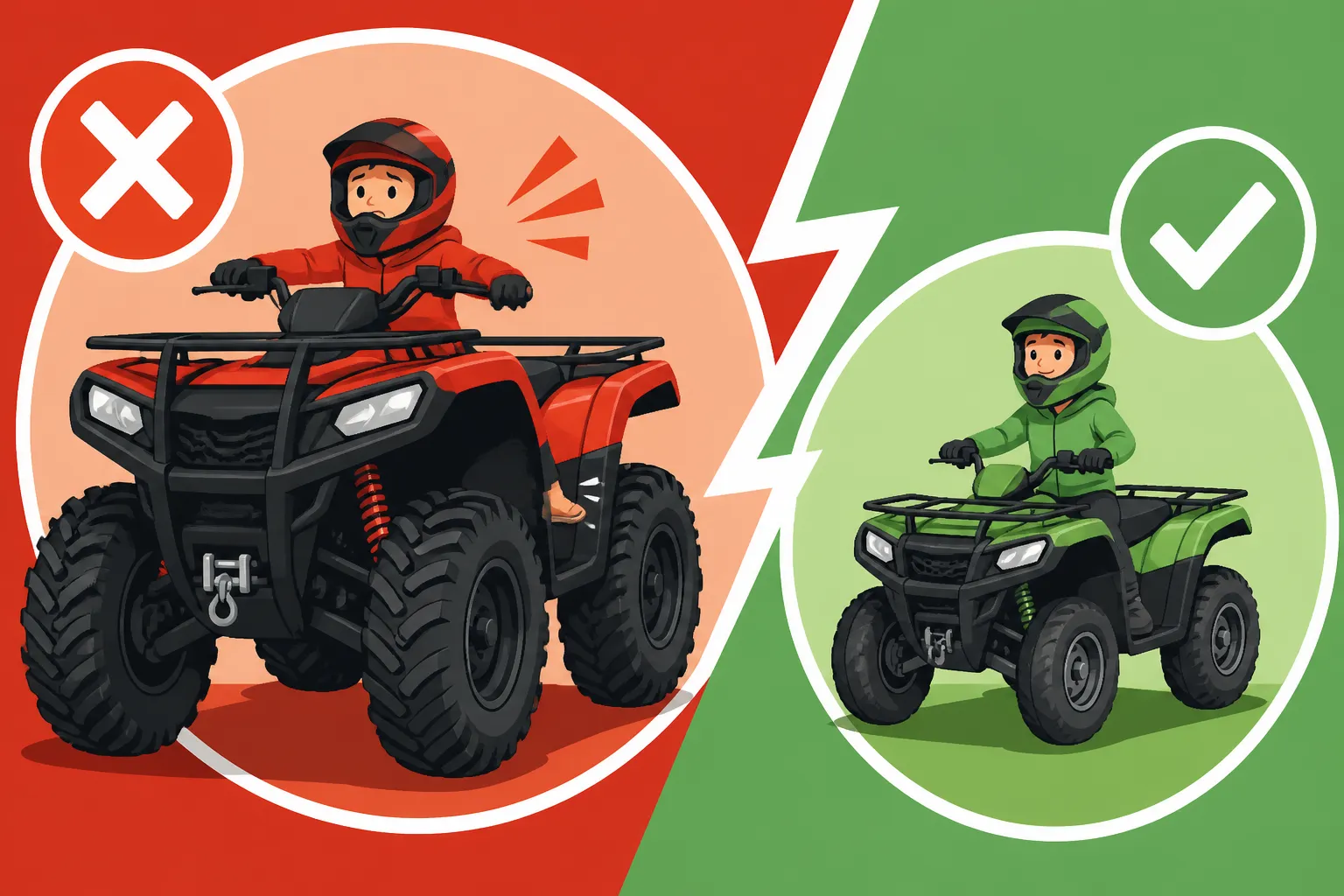
Imagine trying to drive a semi-truck when you're used to a compact car – that's often what it feels like for a child on an oversized OHV. Their smaller stature means they struggle to reach and operate critical controls. Brake levers might be too far, throttle control too sensitive for their grip strength, and the steering can feel incredibly heavy. This isn't just an inconvenience; it means they can't effectively slow down, stop, or navigate obstacles when they need to most.
Furthermore, an OHV's weight distribution is designed for an adult rider. A child's lighter body means they cannot effectively shift their weight to counterbalance the machine during turns, climbs, or descents. This significantly increases the risk of a rollover, especially on uneven terrain or when attempting even moderate maneuvers. Their feet might not even touch the ground when stopped, leading to unstable starts and stops that could easily result in them losing balance and dropping the machine on themselves. Even if they can physically sit on the seat, the center of gravity is all wrong, making the machine feel unpredictable and uncontrollable, especially at speed.
Cognitive Demands and Reaction Time
Beyond the physical, there's a huge cognitive component. Riding an OHV requires constant assessment of terrain, anticipation of hazards, and split-second decision-making. A child's brain is still developing, and their ability to process complex information, evaluate risks, and react quickly is simply not on par with an adult's. When they are also grappling with the physical challenges of controlling an oversized machine, their cognitive load becomes overwhelming.
This over-taxed cognitive ability means slower reaction times. A sudden obstacle, a changing trail condition, or an unexpected loss of traction that an adult might instinctively correct can be completely missed by a child struggling with control. The result can be a collision, a rollover, or a deviation from the trail that puts them, and potentially others, in danger. They might panic and lock up the throttle, or fail to apply brakes effectively, exacerbating an already tricky situation. This isn't about their enthusiasm; it's about their developmental stage and their capacity to handle the sheer demands of operating such a powerful piece of equipment safely.
Increased Risk of Serious Injury
The most heartbreaking outcome of putting a child on an oversized machine is the increased likelihood of severe injury. If they lose control and crash, the sheer weight and momentum of an adult OHV can inflict far greater trauma than a crash on a machine designed for their size. Broken bones, head injuries (even with a helmet, a larger impact is harder to absorb), internal injuries, and even fatalities are tragically common in these preventable accidents.
The impact forces involved in a crash with a heavier, more powerful machine are exponentially greater. A child's developing bones and organs are more vulnerable. It's not just about the child being "tough"; it's about physics and biology. Providing them with an appropriately sized machine significantly reduces these risks, allowing them to learn and develop skills in a much safer environment. It also builds confidence, rather than instilling fear from repeated near-misses or actual accidents.
Alberta's Rules and Age-Appropriate Machine Guidance
Alberta takes off-highway vehicle safety seriously, especially when it comes to young riders. While there isn't a hard and fast law directly stating "no child on oversized machines" in the same way there are age limits, the spirit of the regulations and safety guidelines from manufacturers strongly advocate for age-appropriate vehicle selection.
General Age Requirements on Public Land
In Alberta, the rules for young riders on public land are clear. Generally, a person must be at least 14 years old to operate an off-highway vehicle on public land without direct adult supervision. Even then, riders under 18 years of age must operate an OHV that has an engine size of 200 cubic centimeters (cc) or less, or a maximum dry weight of 200 kg (440 pounds). For those under 14, [Alberta's Minimum Age of 14 on Public Land] on public land, they must be under the direct supervision of an adult who is at least 18 years old. This direct supervision implies the adult is actively overseeing the child's operation and is close enough to intervene if necessary.
These rules aren't just arbitrary numbers; they're designed to reflect the developmental stages of children and their ability to safely operate powerful machinery. Putting a 10-year-old on a 500cc quad, even with an adult nearby, is violating the spirit of these rules, as the machine itself is fundamentally inappropriate for their size and strength. The law is trying to guide us toward responsible choices.
Manufacturer Age Guidance and Sizing
Beyond provincial regulations, OHV manufacturers themselves provide explicit age recommendations for their models. These are typically based on engine size, top speed, and overall dimensions. For instance, most manufacturers will label youth models as appropriate for riders aged 6+, 10+, or 14+. Ignoring these guidelines, which are often the result of extensive safety testing and engineering, is a gamble with a child's safety.
Here's a general guideline often used by manufacturers:
| Rider Age Group | Recommended Engine Size (Approx.) | Key Characteristics |
|---|---|---|
| 6-10 Years Old | 50cc – 90cc (Automatic Transmission) | Small, lightweight, often come with parental speed limiters, low seat height, easy-to-reach controls. Designed for basic learning. |
| 10-14 Years Old | 90cc – 125cc (Automatic/Semi-Auto) | Slightly larger, more power, still manageable for developing riders. May have more advanced features but remain user-friendly. |
| 14-16 Years Old | 125cc – 250cc (Manual/Automatic) | Approaching adult-sized, more power and weight, suitable for teens with some experience. Requires greater skill and physical input. |
| 16+ Years Old | 250cc+ (Manual/Automatic) | Full-size adult machines. Designed for mature riders with full strength, coordination, and judgment. |
It's crucial to understand that these are general guidelines. Individual children develop at different rates, and factors like height, weight, strength, coordination, and maturity also play a significant role. A child who is tall for their age might still lack the strength or judgment for a larger machine. Always refer to the specific manufacturer's recommendations for the OHV in question, and err on the side of caution. Remember, [Manufacturer Age Guidance on Youth Machines] is there for a reason – it's not just a suggestion.
What "Close Supervision" Really Means
When a child under 14 is riding an OHV on public land in Alberta, the law specifies that they must be under the "direct supervision" of an adult at least 18 years old. This isn't just about having an adult present somewhere in the vicinity; it implies active, engaged oversight.
Beyond Mere Presence
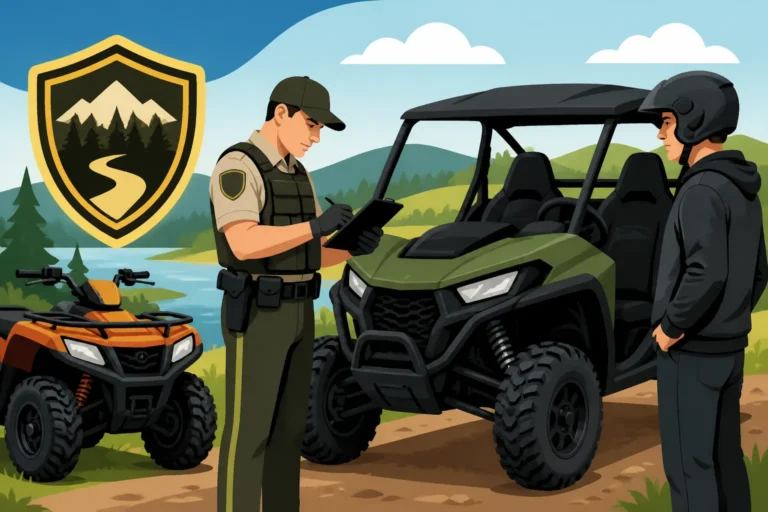
"Direct supervision" means more than simply being at the same staging area or on the same trail system. It means the adult supervisor needs to be close enough to the child to see them at all times, to hear them, and to intervene if a problem arises. If a child takes a spill, gets stuck, or makes a dangerous maneuver, the supervisor needs to be right there to assist immediately. This often means riding on a separate machine, directly behind or alongside the child, maintaining a reasonable distance to avoid startling them but close enough to be effective.
For many families, this translates into the parent riding their own quad while the child rides theirs, with the parent constantly monitoring the child's progress, speed, and handling. It's a proactive role, not a passive one. It also means the supervisor must be experienced enough to recognize potential hazards and provide guidance or warnings before issues escalate. [What Alberta Means by Close Supervision] is about ensuring an immediate response capability.
The Supervisor's Responsibility
The adult supervisor assumes significant responsibility for the child's safety and adherence to rules. This includes ensuring the child is wearing appropriate safety gear (CSA-approved helmet, eye protection, gloves, long sleeves and pants, sturdy boots), that the machine is in good working order, and that the child is operating it responsibly. If the child is on an inappropriately sized machine, even with an adult nearby, the supervisor is still putting that child at undue risk and potentially failing in their duty of care.
Consider a scenario where a child struggles with a hill climb on an oversized machine. A supervisor needs to be able to quickly assess whether the child is losing control, whether the machine is about to roll back, and provide immediate verbal coaching or even physical assistance. If the supervisor is too far back, or distracted, those critical seconds can make all the difference between a minor incident and a serious injury. [Alberta Adult Supervision at 18] highlights that this isn't just about age; it's about the adult's responsibility to mentor and protect.
Ensuring a Safe and Enjoyable Riding Experience for Kids
The goal is always for kids to have a blast and develop a lifelong love for off-roading, but safely. Choosing the right machine is the foundation, but it's part of a larger ecosystem of responsible riding.
Matching Machine to Rider
This is the non-negotiable first step. Prioritize a machine that fits the child’s size, strength, and experience level. When a child sits on a quad, their feet should touch the footrests, their knees should be bent, and they should be able to comfortably reach the handlebars without stretching. They should also be able to easily reach and operate the throttle and brake levers. If they can't, the machine is too big. Look for features like parental speed governors, which allow you to limit the top speed, giving the child time to learn control before increasing power.
Investing in an appropriately sized youth ATV or side-by-side means the child can build confidence, learn proper techniques, and react effectively to trail conditions. It also makes learning much more fun and less intimidating. Remember, it’s not about buying the biggest machine they can almost handle; it’s about buying the one they can master safely.
The Importance of Training and Gear
Once you have the right machine, formal training is invaluable. Consider enrolling your child in a recognized ATV safety course, such as those offered by the Canada Safety Council. These courses teach critical riding skills, hazard awareness, and responsible operation in a controlled environment. Even if not legally mandated in Alberta, the skills learned are priceless.
Proper safety gear is equally vital. A CSA-approved helmet that fits snugly and covers the forehead is absolutely essential. Don't skimp on this! Eye protection (goggles or a visor), sturdy over-the-ankle boots, gloves, long pants, and a long-sleeved shirt or jacket protect against scrapes, impacts, and debris. While you're thinking about outfitting machines, remember that even youth models benefit from quality components. Companies like SuperATV, known for robust aftermarket parts, can be a great resource for ensuring a machine is well-maintained and protected, even if it's not a youth model they specifically target. This might include durable skid plates or brush guards that add an extra layer of protection during inevitable tumbles or unexpected impacts on the trail.
Leading by Example and Maintaining Machines
Finally, adults must lead by example. Always wear your own safety gear, adhere to all rules and regulations, and ride responsibly. Teach your children about trail etiquette, environmental protection, and respecting other trail users. Talk to them about decision-making on the trail and what to do in emergencies.
Regular maintenance of the OHV is also critical. Ensure brakes are working, tires are properly inflated, lights are functional (if riding near dusk or dawn), and the engine is running smoothly. A well-maintained machine is a safer machine for any rider, especially a child who is still learning the ropes. This proactive approach to safety, from choosing the right machine to ongoing maintenance and training, creates the best possible environment for young riders to enjoy the thrill of off-roading safely and responsibly.
Disclaimer
This article is for general informational purposes only and does not constitute professional advice. Laws, prices and regulations vary by location and change over time. Consult a qualified professional for guidance on your specific situation.