Alberta Rules for Riding Farmland
It can feel like a maze trying to figure out where you can and can't ride your ATV or UTV in Alberta, especially when you're dealing with private property like farmland. Many riders assume the same rules apply everywhere, but that's simply not true, leading to a lot of confusion and potential headaches. This guide will walk you through the specific regulations and common-sense practices for riding your off-highway vehicle (OHV) on Alberta farmland, helping you understand your rights and responsibilities.
Understanding Private Land Versus Public Land
The biggest hurdle for many OHV riders is grasping the fundamental difference between public and private land. In Alberta, the rules that govern your off-highway vehicle change dramatically the moment you cross from one to the other. Ignoring this distinction can lead to fines, legal troubles, or even losing your machine.
The Core Distinction: Why It Matters for OHVs
When we talk about "public land" in Alberta, we're generally referring to Crown land, provincial parks (where permitted), designated Public Land Use Zones (PLUZs), municipal roads, highways (including their ditches and road allowances), and even some undeveloped alleys. On these public lands, the provincial government, through legislation like the Traffic Safety Act and the Off-Highway Vehicle Regulation, sets out specific requirements for registration, insurance, equipment, and even rider age and helmet use. These rules are designed to ensure safety, minimize environmental impact, and manage conflicts between different land users.
Private land, on the other hand, is owned by individuals or corporations. Farmland falls squarely into this category. The owner of that land has significant control over what happens on their property. This means that many of the regulations that are mandatory on public land simply do not apply when you are exclusively riding on private land. This can be a huge relief for farmers using their quads for work, or for families enjoying their side-by-sides on their own acreage, but it also means a different set of responsibilities comes into play. You’re largely operating under the discretion of the landowner, and within the general framework of property and liability law, rather than specific OHV regulations.
What Qualifies as "Farmland" in Alberta's Eyes
For the purposes of riding your OHV, "farmland" is typically any privately owned land designated for agricultural use. This can range from vast grain fields and pastures for livestock to smaller acreages with barns and cultivation. The key here is private ownership. If you're not sure if a piece of land is private, always assume it's public or check with local authorities or land titles. This distinction is paramount because unknowingly straying onto public land, even a small road allowance, will immediately subject you to all public land OHV regulations.
It's not just about what's physically being farmed; it's about the property boundaries. A farmer's yard, their fields, their wooded areas, and even their private access roads are all considered private land. This is why understanding where your property ends and public land begins is so critical. A GPS with property boundaries loaded can be a lifeful tool, especially in areas where fencing isn't always clear.
Permission Is Paramount: The Golden Rule of Farmland Riding
Even if you're riding on private farmland, it's not a free-for-all. The most crucial rule, above all others, is obtaining and respecting permission from the landowner. Without explicit permission, you are trespassing, and that carries serious legal consequences in Alberta.
Getting Express Permission from the Landowner
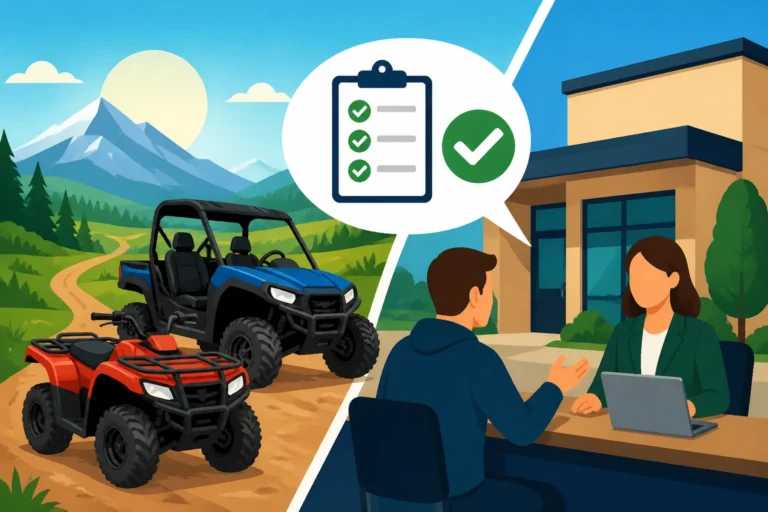
If you don't own the farmland yourself, you absolutely must get permission from the owner before riding any OHV on it. This isn't just a suggestion; it's a legal requirement. Trespassing laws in Alberta are clear: you cannot be on private property without consent. This consent should ideally be explicit and clear. While verbal permission might seem sufficient among friends, having something in writing can prevent misunderstandings down the road. A simple text message or email confirming permission, detailing the areas you can ride, and for what duration, can be invaluable.
When seeking permission, be specific. Ask:
- "Can I ride my ATV on your fields and trails?"
- "Are there any areas that are off-limits, like near livestock or sensitive crops?"
- "What times of day are best for riding, and are there any noise restrictions?"
- "Are there any specific gates I should keep closed, or areas I should avoid?"
Remember, a landowner is entrusting you with their property. Building a relationship of trust and respect is key to ensuring continued access. Never assume permission carries over year after year without reconfirming, and never assume that permission for one type of activity extends to all OHV use.
The Unspoken Trust: Responsibilities of a Rider on Farmland
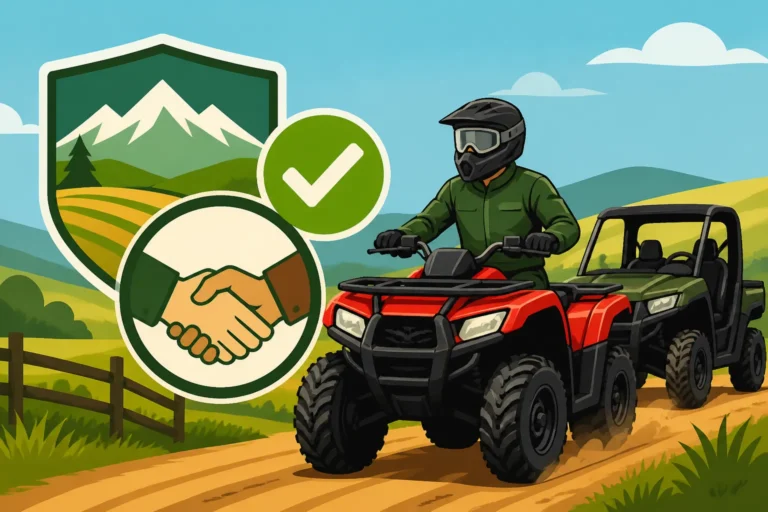
Beyond the legal requirement of permission, there's an unspoken trust involved when a landowner grants you access to their private property. Your responsibilities extend to protecting their land, livestock, and livelihood. This means riding respectfully and safely.
- Stay on Designated Paths: If the landowner specifies certain trails or areas, stick to them. Going off-path can damage crops, disrupt irrigation, or cause erosion.
- Respect Fences and Gates: Always leave gates as you found them – if they were closed, close them. If they were open, leave them open. Damaging a fence or letting livestock out can have severe consequences for the farmer.
- Watch for Livestock: Slow down and be extremely cautious around any animals. Startling livestock can cause injuries to the animals, or even to you. Avoid herding or chasing animals, even if playfully.
- Minimize Environmental Impact: Avoid riding in excessively wet areas where you could create deep ruts. Pack out all your trash, and be mindful of fire risks, especially in dry conditions.
- Consider Upgrades for Utility: Many riders who operate on farmland find practical upgrades invaluable. For instance, heavy-duty cargo boxes or utility racks, often found through aftermarket suppliers like SuperATV, can help you carry tools, feed, or fencing materials without damaging your machine or the land. Skid plates and A-arm guards, also available from SuperATV, can protect your machine from unseen obstacles when navigating uneven terrain or brush, reducing the risk of a breakdown that could leave you stranded.
Showing this level of respect demonstrates that you are a responsible rider, which is far more likely to ensure future access to private land.
Equipment, Age, and Other Considerations on Private Farmland
One of the most liberating aspects of riding on private land is the significant reduction in legal requirements regarding your machine and your gear. However, this freedom comes with a greater personal responsibility for safety and liability.
Registration, Insurance, and Helmet Laws on Private Land
This is where riding on private farmland truly differs from public land:
- Registration: In Alberta, your OHV does not need to be registered with Alberta registries if it is operated exclusively on private land. This is a common point of confusion, as many people ask [Do You Need to Register an ATV in Alberta?]. The answer is typically yes for public land, but no for private.
- Insurance: Similarly, you are not legally required to carry third-party liability insurance for an OHV operated solely on private property. However, this doesn't mean you shouldn't have it! If an accident occurs and causes damage or injury, you could still be held personally liable. Many homeowners' or farm insurance policies might offer some coverage, but it's crucial to check with your provider. For public land, [Alberta Requires Insurance on Public Land].
- Helmets: Alberta's mandatory helmet law for OHVs applies to public land only. Therefore, you are not legally required to wear a helmet while riding your ATV or UTV exclusively on private farmland. While not legally mandated, wearing a CSA-approved helmet is always a smart choice for your personal safety, regardless of where you ride. For context, see [Alberta Helmet Law on Public Land].
- Equipment: Requirements like working head and tail lights, mufflers, and spark arrestors, which are mandatory on public land, typically don't apply to private land use, unless a specific local bylaw dictates otherwise (which is rare for private land).
It's vital to stress that these exemptions apply only when you are entirely on private land. The moment a wheel touches a public road, ditch, alley, or Crown land, even for a second, all the public land rules immediately snap back into effect. This is why a farmer using their quad to check a back forty, and needing to cross a rural road or road allowance, must ensure their machine is registered, insured, and they are wearing a helmet.
Youth Riders and Supervision on Private Property
Alberta has specific age restrictions for OHV operators on public land, generally setting a minimum age of 14 for unsupervised riding. However, these provincial age limits do not apply to private land. On your own farmland, or with a landowner's permission on their property, parents can supervise younger riders as they see fit. This allows for valuable learning and skill development in a controlled environment.
However, parental responsibility remains paramount. Even without a legal age limit, it's critical to ensure:
- Appropriate Machine Size: The OHV should be the right size and power for the child's age, size, and skill level.
- Close Supervision: Always supervise young riders closely, providing instruction and guidance.
- Safety Gear: While not legally required, helmets, eye protection, and appropriate riding gear are highly recommended for young riders on private land.
- Skill Development: Private land offers a fantastic opportunity to teach responsible riding habits and machine control without the added complexities of public land regulations.
Many families find that investing in smaller, purpose-built youth machines, and equipping them with safety features (sometimes even custom modifications from aftermarket companies), creates a safer learning environment.
Avoiding Accidental Trespass and Property Damage
Even with permission, it's surprisingly easy to accidentally trespass or cause damage if you're not paying attention. Property lines aren't always marked clearly, especially in rural areas. Always clarify the exact boundaries of where you're permitted to ride with the landowner. If in doubt, stay closer to known landmarks or trails.
Accidental property damage can lead to strained relationships and financial liability. If you damage a fence, a field, or any other property, report it immediately to the landowner. Honesty and a willingness to make amends go a long way. Consider equipping your machine with a winch and recovery gear, perhaps from a brand like SuperATV, not just for extreme situations but for getting yourself unstuck from mud or snow without calling in heavy equipment that could cause more damage. This demonstrates a proactive approach to being a responsible rider.
Practical Scenarios and Best Practices
Understanding the rules is one thing; applying them in real-world situations is another. Let's look at some common scenarios.
Farm Work Versus Recreational Riding
The provincial regulations generally do not differentiate between using your OHV for farm work (e.g., checking fences, hauling feed, moving equipment) versus purely recreational riding on private farmland. In both cases, the specific public land rules for registration, insurance, and helmets typically do not apply as long as you remain exclusively on that private property. [Alberta Farmer-Owned Machines on Private Land] delves into this in more detail.
However, the purpose of your riding might influence the landowner's comfort level, especially if you're on someone else's land. A farmer might be perfectly fine with you helping them with a task, but less enthusiastic about extensive recreational trail riding that could churn up their fields. Always communicate your intentions clearly when seeking permission.
What Happens If You Briefly Leave Farmland?
This is perhaps the most critical point for Alberta riders on private land. The rules change instantly the moment your OHV enters public space. A "highway" in Alberta's Traffic Safety Act includes not just paved roads, but also the ditches, road allowances, and even undeveloped land designated as public access. So, if you're riding your unregistered, uninsured OHV without a helmet on farmland, and you decide to cross a public road or even ride a short distance in the ditch to get to another part of the property, you are immediately subject to all public land regulations.
This means you could be fined for:
- [Alberta Penalties for Riding Unregistered]
- [Alberta Vehicle Seizure for No Insurance]
- [Alberta Helmet Fines and How They Are Issued]
- [Alberta's Minimum Age of 14 on Public Land] (if a young rider is operating unsupervised)
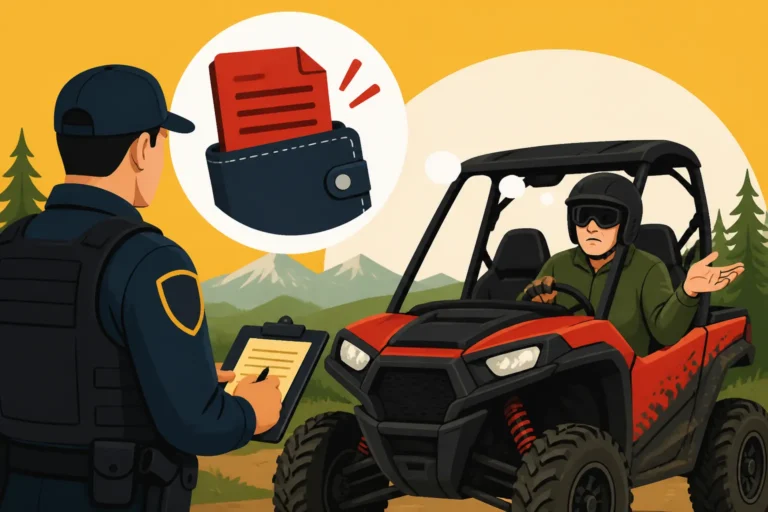
Many riders have been caught off guard by this. If there's any chance you might momentarily leave private land, even for a few feet, ensure your OHV is fully registered, insured, and you (and any passengers) are wearing CSA-approved helmets. This forward-thinking approach can save you a lot of hassle and expense. Always carry your proof of registration and insurance if there's any possibility you might enter public land.
Here's a quick comparison of key regulations:
| Regulation | On Private Farmland (with permission) | On Public Land (Roads, Ditches, Crown Land) |
|---|---|---|
| OHV Registration | Not required | Required (e.g., [What Alberta OHV Registration Costs]) |
| OHV Insurance | Not legally required (though advisable) | Required (e.g., [Alberta Requires Insurance on Public Land]) |
| Helmet Use | Not legally required (though advisable) | Required (CSA approved, e.g., [Alberta Helmet Law on Public Land]) |
| Rider Age Limit | No provincial limit (parental discretion) | Minimum 14 years for unsupervised riding (e.g., [Alberta's Minimum Age of 14 on Public Land]) |
| Spark Arrestor | Not legally required | Required (e.g., [Alberta Requires a Spark Arrestor]) |
| Muffler Type | No specific legal requirement | Cannot be modified (e.g., [Alberta Bans Modified Exhausts]) |
| Permission | Absolutely required from landowner (e.g., Alberta Trespass Law for Riders) | N/A (regulated by public land use rules) |
Riding your ATV or UTV on Alberta farmland can be a fantastic experience, whether for work or recreation. The key is to understand and respect the distinction between private and public land, always secure permission, and prioritize safety and responsible riding practices. This approach not only keeps you compliant but also fosters good relationships with landowners and fellow riders.
Disclaimer
This article is for general informational purposes only and does not constitute professional advice. Laws, prices and regulations vary by location and change over time. Consult a qualified professional for guidance on your specific situation.