Close Supervision by an Adult
There's nothing quite like sharing the thrill of Alberta's incredible landscapes from the seat of an off-highway vehicle (OHV), especially when you're introducing a younger generation to the trails. However, the excitement of hitting the dirt often comes with a significant layer of responsibility, particularly when it comes to supervising young riders. Many parents and guardians feel a real knot in their stomach trying to understand the exact legal requirements for "close supervision" of their children on Alberta's public lands, fearing they might unknowingly miss a crucial detail that could lead to a fine or, worse, an accident. This guide is here to untangle those rules, offering clear, actionable insights into what close supervision truly entails, helping you keep your young adventurers safe and compliant.
Understanding Alberta's Age Restrictions for OHV Riders
Before we even get to what "close supervision" means, it’s absolutely essential to grasp Alberta’s foundational rules regarding rider age. It’s a common area of confusion, and getting this wrong can set the stage for much bigger problems down the trail. The provincial government has put these regulations in place with safety as the top priority, recognizing that operating an OHV requires a certain level of physical capability, judgment, and risk assessment that develops over time.
The Minimum Age Requirement on Public Land
In Alberta, the Off-Highway Vehicle Regulation is quite specific: a person must be at least 14 years old to operate an off-highway vehicle on public land without direct supervision. This isn't just an arbitrary number; it's a legislative decision based on widely accepted safety standards regarding a youth's developmental stage. When you think about the complexities of navigating varied terrain, reacting to unexpected obstacles, and sharing trails with other users, it makes sense that a certain maturity level is expected. For a more detailed look at this, you might want to check out [Alberta's Minimum Age of 14 on Public Land].
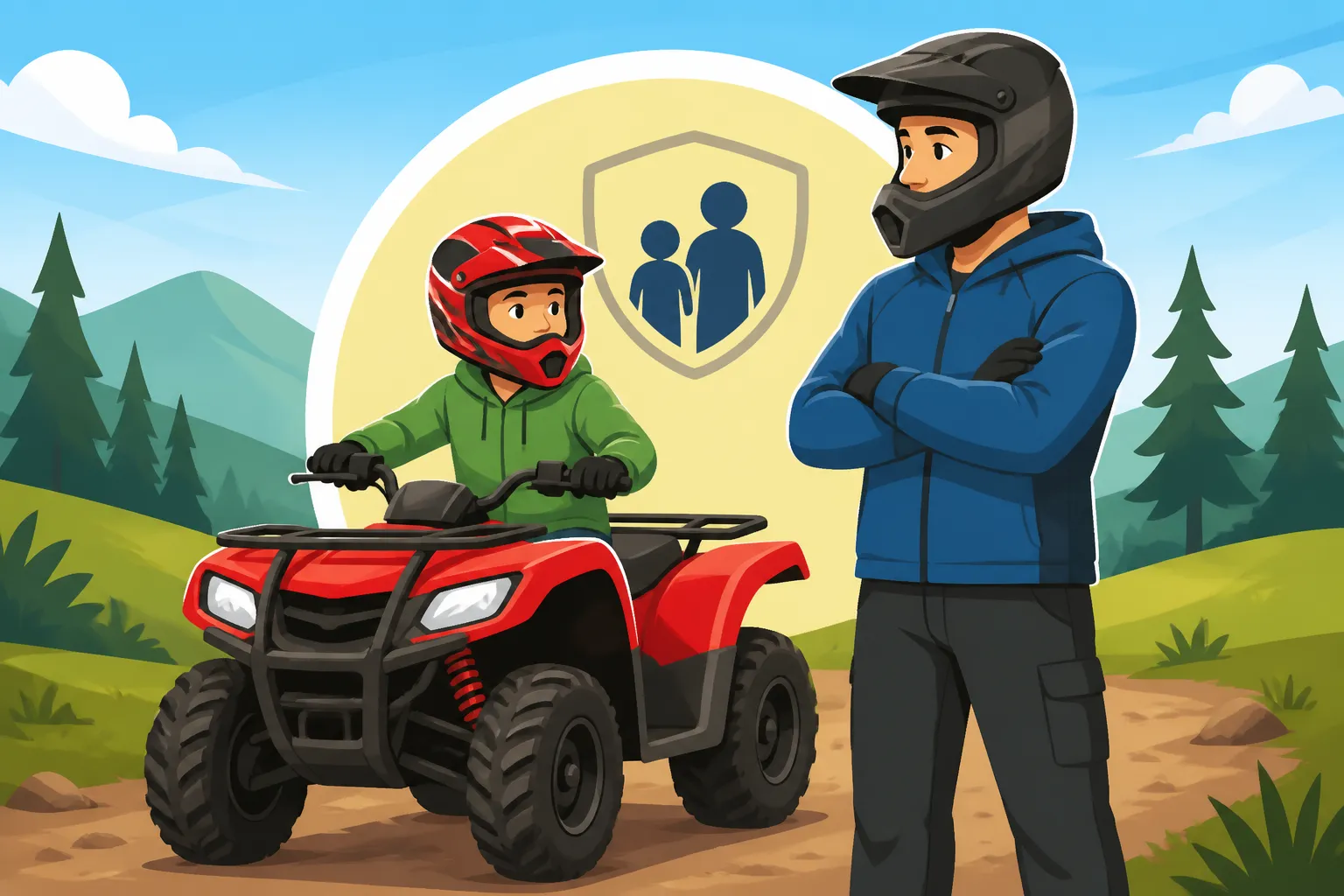
What does this mean for younger kids? It means if your child is under 14, they cannot legally operate an OHV on designated public trails, forestry roads, or public land use zones (PLUZs) without an eligible adult right there with them. This isn't to say kids younger than 14 can't learn to ride; they absolutely can, and often do, but the environment in which they learn and practice is crucial. The law recognizes that a 12-year-old rider, while potentially skilled, lacks the same cognitive processing and risk assessment abilities as an older teen or adult. For more specifics on youth riding, our article on [Alberta Rules for a 14-Year-Old Rider] provides further context.
When Supervision Becomes Mandatory
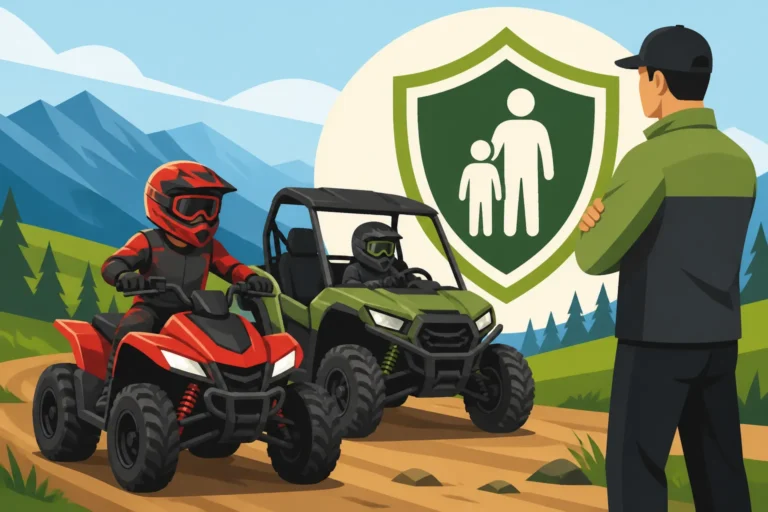
The moment your rider is under the age of 14, the requirement for adult supervision kicks in automatically on public land. This isn't a suggestion; it's a legal obligation. It means that any child, whether they're 6 or 13, must have an adult supervising them if they're operating an OHV anywhere that falls under "public land" in Alberta. This includes provincial parks (where OHVs are permitted), designated OHV trails, Crown land, and even the ditches alongside public roads if those ditches are legally accessible.
The intent behind this rule is to ensure that a mature, responsible individual can immediately intervene if a young rider encounters difficulty, makes a poor judgment call, or faces an unexpected hazard. It's about having a guardian present who understands the risks and can mitigate them. This supervision isn't just for brand-new riders; it applies regardless of how many hours your child has spent on their quad or dirt bike. For a deeper dive into these specific requirements, our article on [Alberta Supervision Rules for Young Riders] offers valuable insights. Many families find that youth rider courses, like those discussed in [Alberta Youth Rider Courses], are excellent complements to hands-on supervision, building foundational skills in a controlled environment.
Private Property Exclusions
Now, for a common point of relief and clarity: the stringent age and supervision rules primarily apply to public land. If you're riding on private property, say your own acreage, a friend's farm, or a lease road where you have explicit permission from the landowner, the provincial regulations regarding minimum age and mandatory supervision often do not apply in the same way. This is a critical distinction that many riders appreciate, as it allows for a more relaxed, family-friendly learning environment without the constant concern of breaking a provincial law.
However, a word of caution here: while the provincial legal mandate for supervision might not apply, the responsibility for safety and liability absolutely still rests with the adults present. Just because the law is less prescriptive on private land doesn't mean safety can be ignored. Any accident that occurs on private land could still lead to civil liability for the property owner and the supervising adult. It’s always best practice to maintain a high standard of safety, ensure appropriate gear is worn, and supervise young riders closely, even if it's not legally required. Our article on [Private Property With Permission] explores the nuances of riding on such lands. For those operating on a farm, there are often specific considerations, which you can learn more about in [Alberta Farmer-Owned Machines on Private Land].
Defining "Close Supervision" on Alberta's Public Land
Okay, so we know when supervision is mandatory. But what exactly does "close supervision" actually mean? This isn't a vague term; it carries specific expectations in the eyes of the law, and understanding these nuances is critical for both safety and compliance. It’s about more than just being in the same general area; it’s about being an active, engaged, and immediately responsive guardian.
Physical Proximity and Maintaining Line of Sight
The core of "close supervision" in Alberta implies that the supervising adult must be within a distance and position that allows them to maintain a constant, unobstructed line of sight with the young rider. This isn't just for a moment or two; it's throughout the entire riding experience. Imagine your child cresting a hill or navigating a tricky turn – you need to be able to see them through the entire maneuver. This means riding with them, not just letting them ride ahead while you follow far behind or take a different path.
The actual distance can vary depending on the terrain. On a wide, flat, open trail, "close" might allow for a bit more space than on a winding, forested path with limited visibility. However, the key is the ability to immediately assess their situation and respond. If you can’t see them, you can’t supervise them effectively. This is where the wisdom in [What Alberta Means by Close Supervision] becomes incredibly important. You can't be at the staging area having a snack while your child is half a kilometre down the trail. You need to be able to see every action and reaction.
Direct Communication and Intervention Capability
Beyond just seeing them, true close supervision demands the ability to communicate directly and, crucially, to intervene without delay. What if your young rider makes a mistake, gets stuck, or encounters an unexpected hazard like a fallen log or a sudden patch of deep mud? The supervising adult needs to be able to immediately shout instructions, offer guidance, or physically assist them. This often means the supervising adult should also be on an OHV, capable of keeping pace and navigating the same terrain as the youth. Trying to supervise a quad rider from a hiking trail simply won't cut it.
Many experienced riders use helmet-to-helmet communication systems or two-way radios to enhance this capability, especially in dusty conditions or where engine noise might drown out voices. While not legally mandated, these tools significantly improve the quality of supervision by allowing for real-time coaching and warnings. The ability to intervene isn't just about preventing accidents; it's also about building confidence in the young rider, knowing an experienced hand is always nearby to help.
The "Adult" in Close Supervision
The law defines "adult" quite clearly in this context: it means a person 18 years of age or older. This isn't a situation where an older sibling who's 16 or 17 can take on the role of supervisor, no matter how responsible they might be. The legal and moral responsibility rests squarely on the shoulders of an individual who has reached the age of majority. This is a critical detail because, in the event of an incident or violation, it will be the 18+ supervisor who is held accountable.
This strict age requirement for supervision is outlined in legislation and is designed to ensure that the individual providing oversight has the full legal capacity and maturity expected for such a weighty responsibility. You can find more information about this in our article [Alberta Adult Supervision at 18]. Furthermore, understanding [Who Counts as the Adult Watching a Young Rider] is crucial for anyone planning a family ride on Alberta's public lands. It's not just about age, but also about the readiness and capability of that adult to perform their supervisory duties effectively and safely.
The Responsibilities of a Supervising Adult
Being a supervising adult isn't a passive role; it's an active commitment to safety and guidance. It extends far beyond simply being present on the trail. A responsible supervisor takes on several key duties that directly impact the well-being and development of the young rider.
Ensuring Rider Readiness and Proper Equipment
One of the most fundamental responsibilities of a supervising adult is to ensure the young rider is not only mentally and physically ready for the ride but also properly equipped. This starts with the machine itself. Is the ATV or UTV appropriate for the child's size and skill level? A youth on a machine that's too powerful or too large for them is a recipe for disaster. Our guide on [Putting a Child on a Machine Too Big for Them] highlights the dangers of mismatched machines. Manufacturers provide age guidance for their youth machines for a reason, and adhering to [Manufacturer Age Guidance on Youth Machines] is a smart and safe choice.
Then there's the gear. A CSA-approved helmet is not just recommended; it's legally mandatory on public land for all OHV riders in Alberta, including youth. Don't skimp here; a proper helmet can be a lifesaver. Our article [Alberta Helmet Law on Public Land] explains this in detail, and [Buying a CSA-Approved Helmet Before an Alberta Ride] offers advice on what to look for. Beyond the helmet, ensure they have eye protection (goggles), sturdy over-the-ankle boots, gloves, long pants, and a long-sleeved shirt. These items provide crucial protection against branches, impacts, and abrasions. A quick pre-ride inspection of the youth's machine—checking brakes, tire pressure, and fuel levels—is also part of this vital preparation. While companies like SuperATV offer fantastic upgrades for durability and performance, remember that even the most robust machine benefits from a thorough check by a responsible adult before every ride.
Navigating Terrain and Environmental Factors
A supervising adult is also responsible for choosing appropriate trails and conditions for the young rider. This means selecting routes that match the youth's skill level, avoiding overly challenging obstacles, steep inclines, or highly technical sections until they have built sufficient experience. It’s about setting them up for success, not for frustration or danger. Look for trails that offer a good mix of open areas for practice and gentle turns, gradually increasing complexity as their confidence and ability grow.
Environmental factors also play a huge role. Is the weather turning? Are the trails unexpectedly muddy or icy? Is visibility poor due to dust or fog? A good supervisor constantly assesses these conditions and is prepared to adjust the ride plan, slow the pace, or even cut the ride short if it becomes unsafe for the young rider. Educating the youth about these factors as you go along, pointing out potential hazards, and explaining how to react builds their observational skills for future rides.
Emergency Preparedness and Response
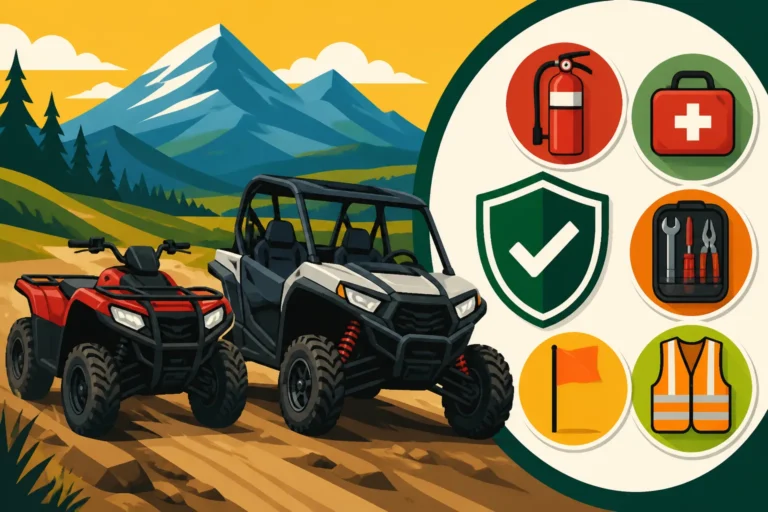
No one wants to think about emergencies, but a responsible supervising adult always prepares for them. This means carrying a well-stocked first aid kit suitable for trailside injuries. Our article [First Aid on a Backcountry Loop] provides excellent guidance on what to include. Beyond basic medical supplies, ensure you have reliable communication devices. Cell service can be spotty in many of Alberta's beautiful backcountry OHV areas, so a satellite messenger or a two-way radio might be a worthwhile investment, especially if you plan to venture further afield.
It's also about teaching the young rider what to do if they get separated or if you, the adult, become incapacitated. Simple instructions like "stay put," "blow your whistle," or "signal for help" can make a huge difference. Knowing basic machine troubleshooting, like how to fix a flat tire or pull a spark plug, can prevent a minor mechanical issue from stranding you miles from help. Ultimately, the supervising adult is the primary emergency responder, and being equipped and knowledgeable can be the difference between a minor inconvenience and a serious crisis.
Common Misconceptions About Supervising Young Riders
Despite the clear rules and common sense safety advice, there are still several misconceptions circulating among riders about what constitutes adequate supervision for youth. These misunderstandings, while often innocent, can put young riders at unnecessary risk and lead to legal trouble for the supervising adult.
"My Child Is a Natural – They Don't Need Much Watching"
This is perhaps one of the most dangerous misconceptions. While some children do pick up riding quickly and show remarkable skill, natural talent does not equate to immunity from accidents or the legal requirement for supervision. Even the most skilled young rider can make a split-second judgment error, encounter an unforeseen obstacle, or be affected by external factors like other trail users or wildlife. Complacency, especially when it comes to youth safety, is a risk no supervising adult should take. The law is designed to protect young riders from potential hazards, not just those they are personally likely to create.
Furthermore, a child's brain is still developing, particularly in areas related to impulse control, risk assessment, and long-term consequences. What an adult perceives as a minor risk, a child might not fully grasp. The legal requirement for supervision acknowledges this developmental stage, ensuring an adult with fully developed judgment is always on hand. Even if your child is rocking their SuperATV-equipped quad like a pro, the law about supervision is still firm.
"Being in the Same General Area Is Enough"
Another pervasive misconception is that as long as the supervising adult is somewhere in the vicinity, perhaps at the trailhead or a few bends behind, that counts as "close supervision." This simply isn't true. As discussed earlier, "close supervision" implies immediate proximity, direct line of sight, and the ability to intervene without delay. Being able to see them through binoculars from a lookout point is not "close supervision."
The whole point is that if something goes wrong – a fall, a wrong turn, a sudden mechanical issue – the adult must be able to respond immediately. A few minutes' delay could turn a minor mishap into a serious injury. Think about it: if your child is struggling up a steep incline and needs a spotter or immediate guidance, you can't provide that from a hundred yards away. Our article [How Close an Eighteen-Year-Old Supervisor Must Stay] directly addresses this, reiterating that the adult must be able to prevent or mitigate an issue as it happens, not just respond after the fact.
"It Only Applies to Brand-New Riders"
Some parents mistakenly believe that once their child has gained a certain level of experience, the strict supervision rules somehow become less applicable. "They've been riding for years!" is a common refrain. However, the age-based supervision requirement in Alberta applies uniformly to all riders under 14, regardless of their experience level. The law doesn't make exceptions for "experienced" 10-year-olds. It’s a bright-line rule to ensure safety for all youth on public lands.
This isn't about skill; it's about age and legal responsibility. Just like a 15-year-old with exceptional driving skills isn't legally allowed to drive a car alone on public roads, a 12-year-old with a decade of riding experience still requires adult supervision on Alberta's public OHV trails. The rules are in place to establish a consistent safety standard for all youth, acknowledging that unforeseen circumstances can always arise, and an adult's judgment is critical for guidance.
Practical Tips for Safe Supervised Riding
Effective supervision isn't just about following the rules; it's about fostering a safe, educational, and enjoyable riding experience. Integrating practical strategies into your routine can make a huge difference in both safety and compliance.
Pre-Ride Briefings and Skill Assessment
Every single ride, even a short one, should start with a quick pre-ride briefing. This isn't just for new riders; it reinforces good habits for everyone. Before heading out, gather the young rider(s) and review the plan for the day:
- The Route: Discuss the trails you'll be riding, highlighting any known challenging sections or specific features.
- Safety Rules: Briefly reiterate key safety rules, such as maintaining safe distances, looking out for others, and riding within their limits.
- Hand Signals: Go over any hand signals you use for communication, especially if you'll be riding in dusty conditions or where verbal communication is difficult.
- Machine Check: Have the youth do a quick visual check of their machine, ensuring brakes work, tires are inflated, and no loose parts are present. This also teaches them responsibility.
- Skill Check: If it’s been a while, or if you're entering a new, more challenging area, have the youth demonstrate basic maneuvers in a safe, open space. This helps you gauge their current skill level and confidence.
This consistent routine not only prepares everyone for the ride but also shows any curious officer that you’re taking safety seriously. For more on what officers look for, check out [What to Show an Officer on Alberta Public Land].
Choosing Appropriate Trails and Pace
Matching the trail difficulty and the group's pace to the least experienced or youngest rider is paramount. It's easy for adults to get carried away on challenging terrain, but remember your primary role is supervision and safety. Start with easier trails, especially for younger riders, and gradually introduce more complex terrain as their skills and confidence improve. Alberta offers many fantastic OHV areas with a range of trail difficulties. Some areas, like certain Public Land Use Zones (PLUZs), have specific designated trails that might be better suited for beginners. Our articles [Best Alberta OHV Trails for Beginners] and [Alberta OHV Trails: Riding Public Land] can help you find suitable locations.
Maintain a pace that allows the young rider to comfortably react to conditions, practice their skills, and stay engaged without feeling overwhelmed or rushed. Regular breaks are crucial for checking in, hydrating, stretching, and simply resting. Use these stops to discuss what they're enjoying, what challenges they're facing, and to provide positive reinforcement and constructive feedback.
Using Communication Tools
While direct line of sight is crucial, enhancing communication through technology can significantly improve the quality and safety of supervision. Two-way radios (FRS/GMRS radios) are an affordable and effective way to stay in touch, especially on winding trails or when dust obstructs vision. Even better are helmet communication systems, which allow for hands-free, continuous conversation, making it easier to provide real-time coaching, warnings about hazards, or simply check in with your young rider.
These tools are invaluable for maintaining that "close" connection, even when a slight bend in the trail momentarily breaks visual contact. They allow for a more dynamic and interactive supervision style, turning the ride into a continuous learning experience. While SuperATV offers impressive performance and protection accessories for your machine, remember that investing in reliable communication gear is just as vital for a truly safe and supervised family ride. Having a clear way to talk to your young rider enhances both their safety and your peace of mind.
Legal Implications of Inadequate Supervision
Ignoring or misinterpreting Alberta's supervision laws for young OHV riders isn't just about taking a risk with safety; it carries very real legal consequences. Understanding these potential penalties is crucial for any adult taking a child out on public land.
Potential Fines and Penalties
If an enforcement officer observes an unsupervised rider under the age of 14 on public land, the supervising adult (or the adult responsible for the child) can face significant fines. These aren't minor infractions; they are issued under provincial legislation and can come with a hefty price tag. An officer isn't just looking for an "unregistered" machine; they're looking for compliance with all aspects of the Off-Highway Vehicle Regulation, and that includes supervision. Our article [Alberta Ticket Costs for a Riding Violation] provides a general overview of the financial impact of such citations. While every situation is assessed individually, the message is clear: the province takes youth safety seriously, and adult supervisors are held accountable.
These fines are intended to act as a deterrent, emphasizing the importance of active and compliant supervision. It's a reminder that riding OHVs is a privilege, not a right, and that privilege comes with responsibilities, especially when minors are involved.
Liability in Case of Accidents
Beyond direct fines, inadequate supervision can open the door to serious civil liability in the event of an accident. If a young, unsupervised rider causes an accident that results in injury to themselves or others, or damage to property, the supervising adult could be held legally responsible. This means facing lawsuits for damages, medical costs, and other expenses. While your OHV insurance provides a crucial layer of protection, it's not a blanket pass for negligence. Many policies require adherence to all provincial laws, and operating in violation of supervision rules could potentially complicate insurance claims.
This is why understanding [Alberta Insurance Requirements on Public Land] and considering [Alberta Insurance Cost for an ATV] is so important, but remember: insurance is a safety net, not an excuse to disregard direct supervisory duties. The legal system places a high degree of responsibility on adults who permit minors to engage in activities with inherent risks, and OHV riding is certainly one of them. Even if your machine is outfitted with robust SuperATV components designed to withstand tough conditions, the human element of supervision remains the most critical factor in preventing accidents and mitigating liability.
Vehicle Seizure and Other Consequences
In more severe cases of non-compliance or repeated violations, officers in Alberta have the authority to seize the OHV. This can happen if there are serious safety concerns, if the machine is being operated in a highly irresponsible manner, or if there's a flagrant disregard for provincial regulations, including supervision rules. The prospect of having your quad or side-by-side impounded, often with associated towing and storage fees, is a powerful reminder of the importance of compliance. Our articles [Alberta Vehicle Seizure for No Insurance] and [When Police Seize a Quad for Having No Insurance] highlight situations where such seizures can occur, and while not directly about supervision, they illustrate the extent of enforcement powers.
Beyond immediate penalties, a serious incident involving inadequate supervision could lead to other consequences, such as mandatory safety courses, restrictions on future OHV use, or, in extreme cases, more severe legal action. The legal framework surrounding OHV use, particularly concerning minors, is designed to encourage a culture of responsibility and safety. As a supervising adult, your adherence to these rules is not just for your peace of mind; it's essential for protecting the well-being of young riders and ensuring the continued responsible enjoyment of Alberta's incredible OHV opportunities.
Disclaimer
This article is for general informational purposes only and does not constitute professional advice. Laws, prices and regulations vary by location and change over time. Consult a qualified professional for guidance on your specific situation.