When a Cage and Seat Belt Replace a Helmet
It's incredibly frustrating when you're trying to do the right thing and follow all the rules for riding your off-highway vehicle (OHV) in Alberta, only to find the regulations feel like a tangled mess. One of the biggest head-scratchers for many riders, especially those with newer side-by-sides, is the helmet law. Do you really need a helmet when you're strapped into a machine with a full roll cage and seat belts? This guide will cut through the confusion and explain exactly when Alberta allows a cage and seat belt to replace the need for a helmet, ensuring you stay safe and compliant on the trails.
Understanding Alberta's General Helmet Law for OHVs
Let's start with the baseline, because that's where most of the confusion stems from. Alberta takes OHV safety seriously, and for good reason. The trails can be unpredictable, and accidents, while we hope they never happen, are a reality.
The Mandate for Helmets on Public Land
For many years, the helmet rule for OHVs on public land was a bit… fuzzy. You knew it was a good idea, but the hard-and-fast legal requirement wasn't always crystal clear to everyone. That all changed. Since May 15, 2017, it's been mandatory for anyone operating or riding as a passenger on an off-highway vehicle on public land in Alberta to wear an approved helmet. This includes quads, dirt bikes, and even snowmobiles in winter. The provincial government implemented this to significantly reduce head injuries and fatalities, which, let's be honest, is a goal we can all get behind.
This mandate applies broadly across all public lands, from the vast stretches of Crown land to designated Public Land Use Zones (PLUZs) and even municipal land if a bylaw allows OHV use there. It was a significant shift for many riders who were used to a more casual approach, and it meant a real adjustment. Enforcement officers, whether it's the RCMP or Fish and Wildlife, take this seriously, and riding without a proper helmet can lead to a fine. It’s all about protecting yourself and those you ride with. For a deeper dive into the specific requirements, you can always check out [Alberta Helmet Law on Public Land].
What Makes a Helmet "Compliant"?
It’s not enough to just wear any helmet you might have lying around. The law specifies that the helmet must be approved under certain safety standards. In Canada, the primary standard is the CSA standard, specifically CAN3-D230-M85. This isn't just a random set of letters and numbers; it signifies that the helmet has undergone rigorous testing to ensure it provides adequate protection against impacts. You'll usually find a sticker or label inside the helmet indicating its compliance.
Beyond the Canadian standard, helmets approved by other recognized international bodies like Snell (Snell Memorial Foundation) or ECE (Economic Commission for Europe) are also generally accepted. The key takeaway here is that you need a helmet designed specifically for powersports use, not a bicycle helmet or a construction hard hat. Those simply aren't engineered to withstand the types of impacts that can occur during an OHV accident. Choosing a compliant helmet isn't just about avoiding a ticket; it's about making sure the equipment you're relying on will actually do its job when you need it most. Ensuring your helmet meets the proper criteria is crucial for both safety and legal compliance. We’ve covered this in more detail in [Alberta CSA Helmet Standards].
The Specific Exemption: Cages and Seat Belts
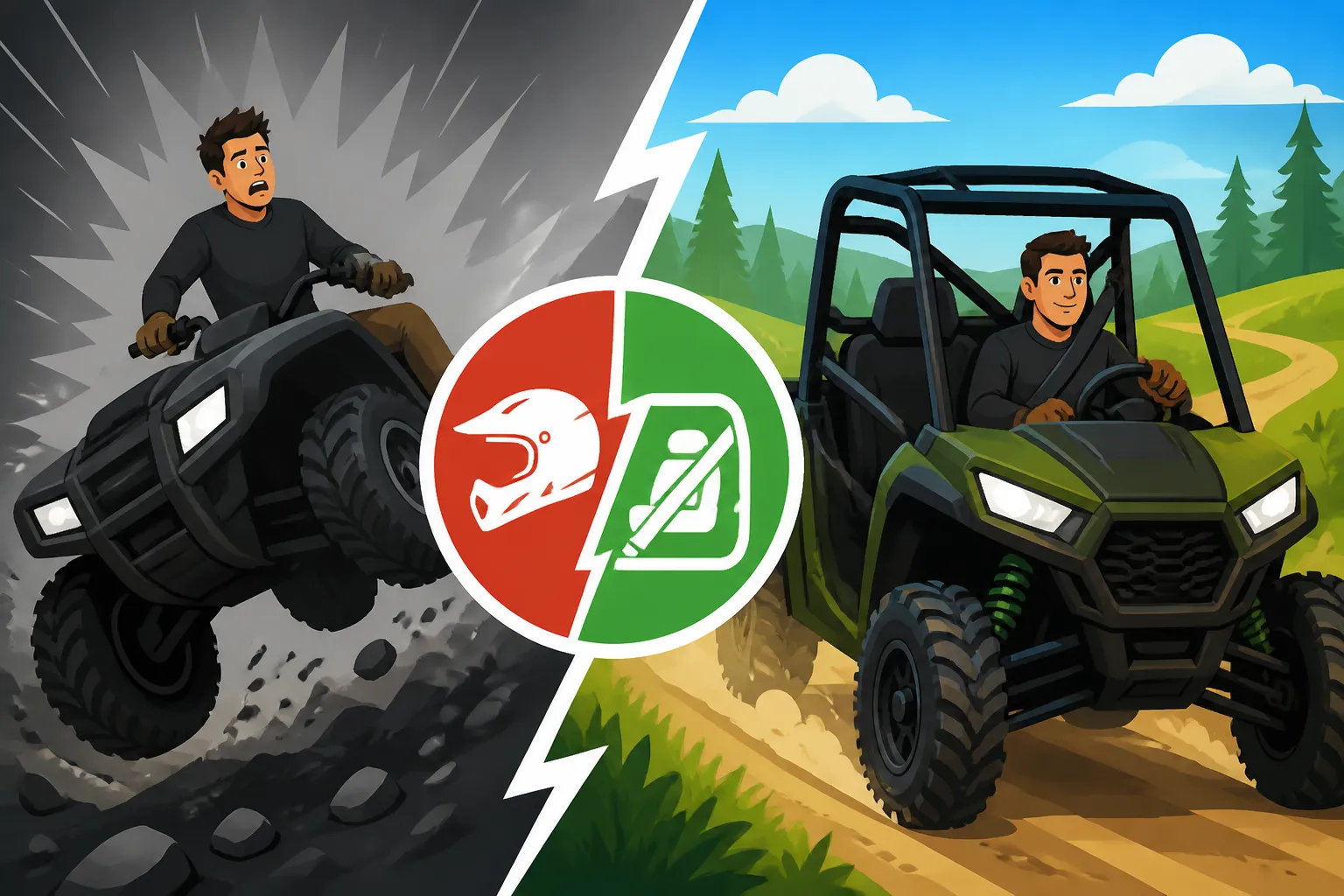
Now for the part that often causes the most head-scratching: the exemption for machines with rollover protection structures (ROPS) and seat belts. This is where side-by-sides, often called UTVs, typically fit in.
Defining the "Enclosed Seating" Exemption
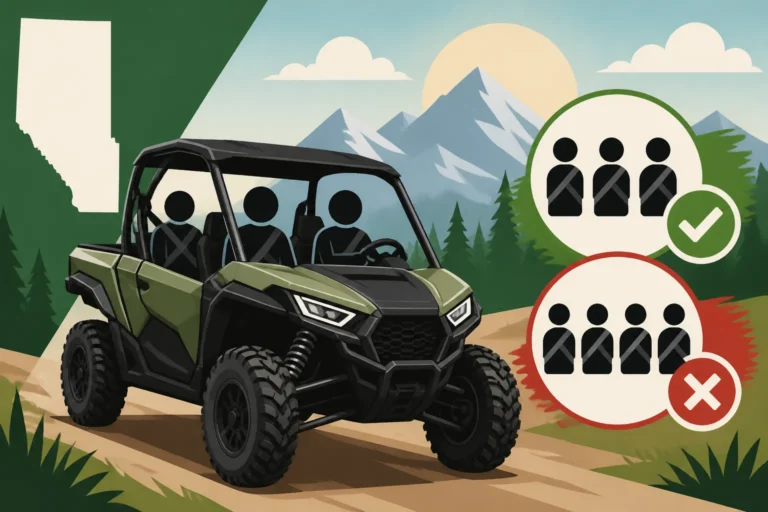
The law recognizes that certain types of OHVs offer a different kind of occupant protection due to their design. Specifically, the exemption applies to a machine where the occupant is "protected by a roll-over protective structure and a seat belt assembly." This is a crucial distinction. It's not just about having a cage; it's about a complete safety system designed by the manufacturer to protect occupants in the event of a rollover. These machines provide a more car-like experience with their bucket seats, steering wheels, and often a more substantial chassis.
The rationale behind this exemption is that the integrated roll cage and seat belts, when used correctly, provide a level of protection comparable to, or in some scenarios, even exceeding, what a helmet alone might offer in a rollover situation. This allows riders to enjoy their side-by-sides without the added bulk and heat of a helmet, provided all other safety conditions are met. It’s a practical recognition that not all OHVs are built the same, and their inherent safety features should be acknowledged in the regulations.
What Qualifies a Machine for This Exemption?
So, what exactly needs to be present for your machine to qualify for this exemption? It boils down to a few key elements, and they all work together as a system:
- Factory-Installed Rollover Protection Structure (ROPS): This is the robust cage or frame that surrounds the occupants. It must be an integral part of the vehicle's original design, installed by the manufacturer, and engineered to withstand significant forces during a rollover. Aftermarket cages, while they might look similar, need to meet the same stringent safety standards. This means a regular quad with a DIY cage typically won't qualify.
- Seat Belts for All Occupants: Every person in the machine must have access to, and properly wear, a seat belt. These are usually three-point or four-point harness systems designed to keep you firmly in your seat during sudden movements, impacts, or rollovers. The seat belts must be in good working order and not be modified or damaged.
- Designed for Seated Operation: The machine must be designed for its occupants to be seated within the protective structure, rather than straddling a seat like on an ATV. This usually means a side-by-side (SxS) or utility terrain vehicle (UTV), which often feature bucket seats or bench seats within their caged enclosure.
This exemption is specifically crafted for machines like the common Polaris RZR, Can-Am Maverick, Yamaha Wolverine, or Honda Pioneer models, which come from the factory with these safety features integrated. If you've modified a standard ATV by adding a cage, it's highly unlikely to meet the spirit or letter of this exemption, as the entire chassis wasn't engineered around that protective structure. The point is the system of protection, not just one component.
The Role of Seat Belts
While the robust roll cage gets a lot of attention, the seat belt is equally, if not more, critical for this exemption to apply. The exemption isn't just "cage = no helmet." It's "cage and seat belt = no helmet." Think of it this way: the cage protects the space around you, but the seat belt keeps you within that protected space. Without a properly fastened seat belt, you could be ejected from the vehicle or tossed around inside the cage, potentially sustaining serious injury even if the cage itself remains intact.
Therefore, for the helmet exemption to be valid, every occupant in the side-by-side must have their seat belt fastened securely while the vehicle is in motion. This isn't just a suggestion; it's a legal requirement tied directly to the exemption. If an enforcement officer observes occupants not wearing seat belts in a machine that qualifies for the helmet exemption, those occupants could face fines for not wearing helmets, as the conditions for the exemption haven't been met. It’s a package deal: the cage and the belts work in concert to provide the required safety.
Where This Exemption Applies (and Where it Might Not)
Understanding what qualifies for the exemption is one thing, but knowing where it applies is just as important. Alberta's OHV regulations are primarily concerned with public land, but there are nuances.
Public Lands and Designated OHV Zones
Generally speaking, if your side-by-side meets the criteria of having a factory-installed rollover protection structure and seat belts for all occupants, you are exempt from the mandatory helmet law when riding on public land in Alberta. This includes the vast network of Crown land, forestry roads, and specifically designated Public Land Use Zones (PLUZs) that permit OHV activity. Areas like McLean Creek, the Ghost PLUZ, or parts of the Eastern Slopes are prime examples where this exemption would typically be in effect for qualifying machines.
However, riders always need to be aware that specific PLUZs or local bylaws might have additional rules or restrictions. While the provincial legislation allows for the helmet exemption with ROPS and seat belts, it's always wise to do a quick check of the specific land use regulations for the area you plan to ride. Most of the time, the provincial rule prevails in these public areas, but knowing the local nuances can save you a headache. It's part of being a responsible rider to understand the rules of the specific terrain you're enjoying. For more information on where you can ride, take a look at [Alberta's Public Land Use Zones Explained].
Private Property Considerations
The provincial helmet law, including its exemptions, primarily applies to public lands. When you're riding on private property, the rules can change significantly. On your own land, or on land where you have explicit permission from the landowner, the provincial helmet mandate generally does not apply. This means if you're on a private farm, ranch, or a large private recreation parcel, the decision to wear a helmet (even in a side-by-side without a cage exemption) often rests with you or the property owner.
However, this doesn't mean safety should go out the window. Many responsible landowners and riders still choose to wear helmets on private land for their own protection, especially when navigating challenging terrain or operating powerful machines. If you're on someone else's private property, they may, as part of their permission, still require helmets for all riders regardless of the vehicle type, simply due to liability concerns or their own safety standards. It's always best to clarify these expectations beforehand. You can find more detail on this specific situation in [Alberta Private Property Helmet Exemption].
Municipal Roads and Bylaws (If Applicable)
This is a trickier area, as OHV use on municipal roads is highly restricted in Alberta. The vast majority of towns, cities, and even many counties do not permit OHVs on their roads, streets, or even shoulders. The provincial Traffic Safety Act defines "highway" broadly to include roads, streets, avenues, drives, and even ditches, which usually means OHVs are prohibited unless a specific bylaw or ministerial order states otherwise.
If, by some chance, a municipality has passed a bylaw to open certain roads or rights-of-way to OHVs (which is quite rare and often limited to specific contexts like agricultural access), then the provincial regulations, including the helmet exemption for machines with ROPS and seat belts, would typically apply to those designated routes. However, relying on this for everyday riding on paved or gravel roads is generally not advisable, as the default rule is usually prohibition. Always confirm local bylaws before attempting to ride an OHV on any municipal road. It's a complex topic that we've touched upon in [Can You Ride an ATV on the Road in Alberta?].
Practical Considerations for Riding Without a Helmet in a UTV
Even when you're legally exempt from wearing a helmet in your side-by-side, there are still some important practical considerations for your safety and comfort on the trails.
Enhancing Safety Beyond the Bare Minimum
Just because you don't have to wear a helmet doesn't mean you shouldn't think about other ways to boost your safety. While the roll cage and seat belts protect you from major impacts in a rollover, they don't do much for flying debris, low-hanging branches, or mud splashing up from the tires of the machine in front of you. Many riders in side-by-sides still opt for eye protection – goggles or safety glasses are a must. Some even wear lightweight helmets or half-helmets for added peace of mind without the full bulk of a motocross helmet.
Beyond personal gear, aftermarket accessories can greatly enhance your machine's safety. Full windshields, for example, can protect against bugs, dust, and branches. Side doors or door inserts can help keep limbs inside the vehicle during a dynamic ride. Upgraded four- or five-point harness systems can offer even better retention than standard three-point belts. Companies like SuperATV offer a huge range of aftermarket accessories, from full windshields to advanced harness systems and robust bumpers, that can really boost your confidence and safety on the trail, giving you an extra layer of protection even when a helmet isn't legally required. It's all about making informed choices to suit your riding style and environment.
Machine Maintenance and Inspection
Your side-by-side's rollover protection system is only as good as its maintenance. Just like you'd check your tires and oil, it's crucial to regularly inspect the ROPS and seat belts. Look for any signs of damage to the roll cage itself – bends, cracks, or loose connections. Even a minor incident or rubbing against a tree can compromise the structural integrity.
Equally important are the seat belts. Check for fraying, tears, or cuts in the webbing. Ensure the buckles click securely and release easily. Test the retractors to make sure they're functioning properly and cinching up snugly. If your machine has been involved in any kind of incident, even a minor one, it's a good idea to have a qualified mechanic inspect the entire safety system. Riding with a damaged ROPS or faulty seat belts not only compromises your safety but could also, in the eyes of an enforcement officer, negate the conditions for the helmet exemption, potentially leading to a ticket. Your safety system is a critical component; treat it as such.
Understanding Officer Discretion and Proof of Compliance
When you're out riding on public land, an enforcement officer might pull you over for a routine check or if they have a concern. If you're riding a side-by-side without a helmet, they will be looking to confirm that your machine meets the legal exemption criteria. This means they'll be checking for the factory-installed ROPS and confirming that all occupants are wearing their seat belts.
While the design of most modern side-by-sides is clearly evident, it helps to be a polite and cooperative rider. Be prepared to show your valid OHV registration and proof of insurance upon request. These are non-negotiable requirements for riding on public land, regardless of your helmet situation. Having all your paperwork in order and readily accessible (perhaps in a waterproof pouch) demonstrates responsibility and can make any interaction with an officer much smoother. Remember, they're primarily interested in ensuring everyone is safe and compliant with the regulations. Check our article on [Alberta Proof of Insurance on Demand] for what to expect.
Other OHV Helmet Exemptions
While the ROPS and seat belt exemption for side-by-sides is the most common one riders inquire about, it's worth briefly mentioning a few other specific exemptions that exist in Alberta's OHV regulations. These are typically tied to very particular circumstances.
Farm and Ranch Work Exemption
Alberta recognizes that OHVs are essential tools for many farmers and ranchers. As such, there's an exemption from the mandatory helmet law for individuals operating an OHV while performing agricultural operations on land they own, lease, or control. This exemption is quite specific: it applies to work, not recreation. If you're moving cattle, checking fences, or transporting tools on your farm, a helmet might not be legally required.
However, if that same farmer or rancher decides to take their quad out for a recreational spin on a nearby public trail, the helmet law immediately applies. The exemption is strictly tied to the nature of the activity (agricultural work) and the location (land under their control). It's not a blanket pass for anyone who owns a farm. You can delve into the specifics of this exemption in [Alberta Farm and Ranch Work Exemption].
Turban Exemption for Sikh Riders
In a move to accommodate religious freedom, Alberta law includes an exemption for Sikh individuals who wear a turban and are operating or riding as a passenger on an OHV. This exemption acknowledges that wearing a helmet over a turban is often impractical or impossible.
This is a specific exemption tied to a genuine religious practice. Like all exemptions, it's important to understand its scope. It applies to those who, for religious reasons, wear a turban, ensuring they are not penalized for adhering to their faith while participating in OHV activities. More details on this can be found in [Alberta Turban Exemption for Sikh Riders].
First Nations and Métis Settlement Exemptions
Another important exemption is for individuals operating an OHV on lands within a First Nation Reserve or a Métis Settlement. On these specific lands, the provincial helmet law generally does not apply. This acknowledges the unique governance structures and land management within these communities.
It's crucial to understand that this exemption is geographically limited. Once an OHV leaves the boundaries of a Reserve or Métis Settlement and enters provincial public land, the provincial helmet laws immediately come into effect. Riders need to be aware of these boundaries and adjust their practices accordingly to ensure compliance. For more on this, check [Alberta First Nations and Métis Settlement Exemption].
These exemptions highlight that while safety is paramount, Alberta's OHV regulations also strive to be practical and inclusive, accounting for specific vehicle designs, work requirements, and cultural or jurisdictional considerations.
Here’s a quick overview to help clarify the helmet requirements in different scenarios:
| Vehicle Type / Situation | Helmet Required? | Key Condition/Exemption |
|---|---|---|
| Quad/Dirt Bike on Public Land | Yes | Mandatory CSA/Snell/ECE approved helmet. |
| Side-by-Side on Public Land | No | If protected by factory-installed ROPS & all occupants wear seat belts. |
| OHV on Private Property | No (Provincially) | Landowner may still require it for safety/liability. |
| Farm/Ranch OHV (Work Use) | No | On land controlled by operator, for agricultural work only. |
| Sikh Rider (Turban) | No | If wearing a turban for religious reasons. |
| OHV on First Nation/Métis Land | No | Within the boundaries of the Reserve/Settlement. |
| Passenger Towed Behind OHV | Yes | Applies to the person being towed. Does Someone Being Towed Need a Helmet? |
Remember, while some situations offer exemptions, safety should always be your top priority. Always assess the risks and make the best decision for yourself and your passengers. And speaking of safety, make sure your machine also has the right equipment, like a functional spark arrestor, which you can read about in [Does Your Quad Need a Spark Arrestor in Alberta?]. Riding unregistered, regardless of helmets or exemptions, carries penalties, which you can read more about in [Alberta Penalties for Riding Unregistered].
Disclaimer
This article is for general informational purposes only and does not constitute professional advice. Laws, prices and regulations vary by location and change over time. Consult a qualified professional for guidance on your specific situation.