County of Wetaskiwin’s OHV Bylaws in Alberta
There's nothing quite like the freedom of exploring Alberta's diverse landscapes on your ATV or UTV. But let's be honest, navigating the rules and regulations can sometimes feel like a bigger challenge than the toughest trail. Especially when you venture into different municipalities, the rules of the road – or lack thereof – can change drastically. This guide is all about cutting through that confusion, specifically for the riders who want to understand the ins and outs of Off-Highway Vehicle (OHV) bylaws in the County of Wetaskiwin, helping you ride confidently and avoid unexpected headaches.
Understanding the Patchwork of Alberta OHV Bylaws
Riding an ATV or UTV in Alberta offers incredible opportunities for outdoor adventure, but the legal landscape can sometimes feel like a maze. While the province sets a baseline for OHV operation, individual counties and municipalities have the authority to create their own bylaws, adding layers of specific rules to the general framework. This means that what's perfectly acceptable in one area might land you a ticket just a few kilometres down the trail in another, leading to a lot of frustration for riders simply trying to enjoy their sport.
Why Local Bylaws Are So Crucial
You might think that if your machine is registered and insured, you're good to go anywhere in Alberta. Unfortunately, that's not always the case. The provincial Traffic Safety Act and Off-Highway Vehicle Regulation provide the foundation, covering things like registration, insurance, and general equipment requirements. However, these provincial rules often state that OHVs are prohibited from public roads and highways unless a specific bylaw or ministerial order permits them. This is where local bylaws become incredibly important – they are the key to unlocking (or restricting) access in specific areas.
Without understanding these local nuances, riders can inadvertently trespass, create noise disturbances, or ride in prohibited zones, all of which can lead to fines and negative perceptions of the riding community. It's not enough to know the big picture; you truly need to understand the local details. Imagine planning a weekend trip, only to arrive and find out your intended route is off-limits due to a bylaw you didn't know existed. It's a common scenario, and it's precisely why a deep dive into specific county rules, like those in the County of Wetaskiwin, is so vital. Local bylaws often reflect the unique characteristics and concerns of a community, whether it's protecting sensitive environmental areas, ensuring resident peace and quiet, or managing agricultural access.
The Challenge of Finding Current Bylaw Information
One of the biggest frustrations for OHV enthusiasts is simply finding accurate, up-to-date information about local bylaws. Municipal websites can sometimes be difficult to navigate, with bylaws buried deep in council meeting minutes or presented in dense legal jargon that's hard for the average rider to interpret. There might be outdated information or simply a lack of clear, concise guidance specifically for OHV users. This often leaves riders guessing, which is a recipe for accidental rule-breaking and unnecessary stress.
When you're dealing with the County of Wetaskiwin, for example, you can't just assume their rules are the same as Brazeau County or the MD of Foothills. Each council crafts its own regulations based on local needs and feedback. While some counties might clearly post maps of approved OHV routes, others might have more restrictive rules that only permit OHVs for agricultural purposes on specific roads, or ban them entirely from municipal reserves. To truly be informed, sometimes it means making a phone call to the county's administration office, or even attending local community meetings where these topics might be discussed. This proactive approach, while a bit more work, is often the most reliable way to ensure you're riding legally and responsibly, protecting your pocketbook and your reputation as a respectful OHV user.
Navigating OHV Access in the County of Wetaskiwin
The County of Wetaskiwin, like many other municipalities in Alberta, faces the challenge of balancing recreational OHV use with public safety, environmental protection, and the concerns of its residents. For riders, this means that accessing trails and even certain roads isn't always straightforward. It's crucial to understand the county's specific stance on OHV operation, as it can differ significantly from what you might expect based on broader provincial rules or experiences in other areas.
General Rules for Public Roads and Highways
Under Alberta's provincial legislation, off-highway vehicles are generally not permitted on highways. Now, here's where it gets a little tricky: the legal definition of a "highway" is much broader than just the paved roads you drive your car on. It also includes the shoulders, boulevards, and even the ditches right alongside the paved surface. This means that, by default, riding your ATV or UTV on the ditch of a county road in Wetaskiwin is likely prohibited unless the county has a specific bylaw stating otherwise. Many riders are caught off guard by this, assuming that if it's not paved, it's fair game. This misinterpretation is a common source of tickets. You can read more about this in [Why a Highway Ditch Counts as Public Land].
So, what does this mean for the County of Wetaskiwin? Typically, a county bylaw needs to explicitly open certain roads or areas for OHV use. Without such a bylaw, the provincial prohibition stands. This default rule is in place to protect road users, prevent damage to infrastructure, and minimize dust and noise for residents. Riders who use these public thoroughfares without specific permission risk fines. It’s always best to check the county’s official documents or website for any bylaws that specifically grant OHV access to certain municipal roads, rather than assuming.
Designated Trails and Routes Within Wetaskiwin County
For recreational riders, the holy grail of OHV access is often designated trails. These are areas where the municipality has actively permitted and sometimes even developed routes specifically for ATVs and UTVs. The County of Wetaskiwin might have such areas, or they might rely on provincial Public Land Use Zones (PLUZs) that fall within or border their boundaries. It's vital to remember that "designated" means precisely that: you must stick to the marked trails. Straying off these paths, even slightly, can lead to environmental damage, landowner conflicts, and fines.
If the County of Wetaskiwin has its own designated OHV trails or approved routes, they will typically be clearly marked and detailed in their official bylaws or on their website. These are the places where you can ride with confidence, knowing you're operating within the law. If no such designated areas are specifically identified by the county, then your options for legal recreational riding within the county limits might be limited to private land with permission, or you may need to travel to nearby provincial PLUZs. For more on general riding areas, check out [Alberta OHV Trails: Riding Public Land]. Always consult the most current county information before heading out, as trail designations can change due to environmental concerns, land use conflicts, or other reasons.
Accessing Private Land and Agricultural Areas
For many rural residents in the County of Wetaskiwin, OHVs are essential tools for agricultural work, not just recreational toys. Provincial law generally grants an exemption for farmers operating their machines on their own private land for agricultural purposes, and often for travelling short distances on public land between parts of their farm. However, this doesn't automatically mean you can ride your ATV across any farmer's field or down any lease road.
When it comes to private land that isn't your own, explicit permission from the landowner is always, always required. Without it, you are trespassing, which can lead to significant penalties, vehicle seizure, and irreparable damage to the relationship between riders and landowners. The County of Wetaskiwin's bylaws will often reinforce this provincial trespass law, and local enforcement will take it seriously. Even if you see tracks, or a gate is open, never assume permission. A simple conversation can save you a lot of trouble. For more details on this, you can refer to [Alberta Farmer-Owned Machines on Private Land]. For farmers, it's still advisable to understand the specific agricultural exemptions within Wetaskiwin's bylaws, especially if moving machinery on county roads, as there might be limitations on speed, time of day, or required signage.
Specific Equipment and Rider Requirements in Wetaskiwin
Beyond where you can ride, the County of Wetaskiwin's bylaws, in conjunction with provincial regulations, also dictate how your machine should be equipped and how you, as a rider, must operate it. These rules are in place primarily for safety, environmental protection, and to minimize disturbances to other residents and land users. Ignoring these requirements can not only put you at risk but also lead to fines and a poor reputation for the OHV community.
Helmet Laws and Safety Gear Considerations
Safety is paramount when riding any OHV, and Alberta has clear provincial laws regarding helmets on public land. As of May 2017, anyone operating or riding as a passenger on an OHV on public land must wear a helmet that meets specific safety standards (such as CSA, Snell, or ECE). This provincial rule applies across Alberta, including any public land within the County of Wetaskiwin. There are very limited exemptions, primarily for agricultural work on private land, Indigenous cultural practices, or specific enclosed vehicles with rollover protection. For a deeper dive into these rules, check out [Alberta Helmet Law on Public Land].
While the County of Wetaskiwin typically won't impose additional helmet requirements beyond the provincial mandate, their bylaws might reiterate the importance of safety or even suggest other gear. However, regardless of what's strictly mandated, it's always a good idea to wear appropriate safety gear. This includes eye protection, gloves, sturdy boots that cover your ankles, and durable, long-sleeved clothing. Even a minor fall can result in serious injury if you're not properly protected. Think of it this way: the helmet is a non-negotiable, but equipping yourself with a full range of protective gear is just smart riding.
Noise, Spark Arrestors, and Environmental Responsibility
Noise pollution is a common complaint from rural residents and other public land users when it comes to OHVs. Provincial regulations generally prohibit modified exhausts that increase noise levels beyond what the manufacturer intended. This is a rule that RCMP and county bylaw officers are quite familiar with enforcing. If your machine is significantly louder than stock, you could be facing a ticket. The County of Wetaskiwin, like other municipalities, has a vested interest in maintaining peace and quiet for its residents, so noise violations are often taken seriously. Learn more about modified exhausts and their consequences in [Alberta Bans Modified Exhausts].
Beyond noise, a spark arrestor is a critical safety device required on any OHV operated on public land in Alberta. This device prevents hot carbon particles from escaping the exhaust and potentially igniting dry vegetation, which is a major concern, especially during dry seasons. County bylaw officers, like provincial enforcement, can and will check for a functional spark arrestor. Ensuring your machine is equipped with one, and that it's in good working order, is not just about avoiding a fine; it's about being a responsible land user and preventing potentially devastating wildfires. [Alberta Requires a Spark Arrestor] has more information on this. Companies like SuperATV offer a range of aftermarket parts, and if you're looking at exhaust systems, always ensure they are compliant with provincial and local noise and spark arrestor requirements. Environmental responsibility extends to staying on marked trails, avoiding sensitive habitats, and always packing out what you pack in.
Machine Registration and Insurance Proof
Two foundational requirements for riding an OHV on public land in Alberta, which are enforced by Wetaskiwin County authorities, are current registration and valid insurance. Your OHV must be registered with an Alberta registry agent and display a valid license plate. This is not just a provincial suggestion; it's a legal requirement for operation on public land, which includes most trails, ditches, and even some private lands that are publicly accessible. If you're wondering about the specifics, check out [Do You Need to Register an ATV in Alberta?].
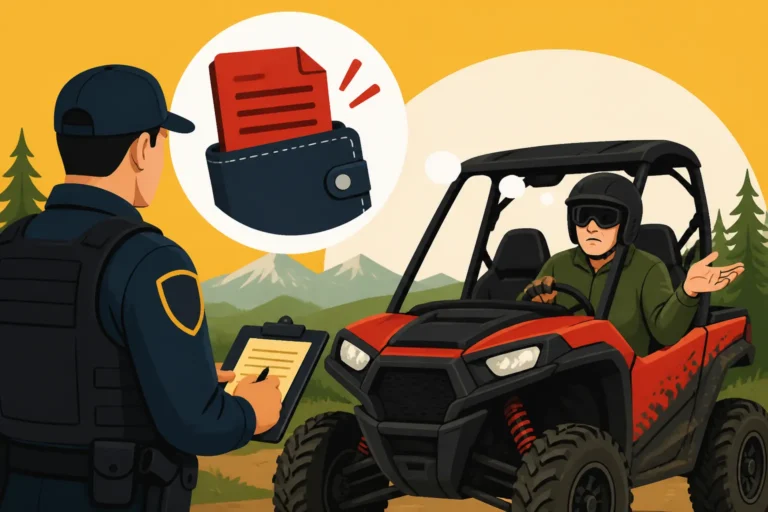
Similarly, every OHV operating on public land must carry proof of liability insurance. This protects you and others in case of an accident. While the provincial minimum is generally $200,000, many riders opt for higher coverage for better protection. You must be able to produce proof of this insurance upon demand from an enforcement officer. For comprehensive information on this, read [Alberta Requires Insurance on Public Land]. Wetaskiwin County bylaw officers, like the RCMP, have the authority to pull you over and request to see your registration and insurance documents. Failure to produce these can lead to fines, and in serious cases, even vehicle seizure. Always carry your documents, either physically or digitally, and ensure they are current.
Common Violations and Enforcement in Wetaskiwin County
Even with the best intentions, it's easy to make a mistake if you're not fully aware of specific local regulations. In the County of Wetaskiwin, like anywhere else, certain violations are more common, and understanding them is key to avoiding penalties. The county's enforcement personnel, including bylaw officers and the RCMP, are empowered to uphold both provincial laws and local bylaws, so knowing what they're looking for can save you a lot of hassle.
Prohibited Areas and Restricted Times
One of the most frequent reasons for an OHV rider to receive a warning or a ticket in any municipality, including Wetaskiwin County, is riding in a prohibited area or at a restricted time. This often includes operating machines:
- In residential areas or subdivisions: OHVs are generally not designed for street use and can create significant noise and safety concerns for residents. Most counties will have strict bans on OHVs in these zones.
- Within county parks, playgrounds, or school grounds: These are typically areas designated for other forms of recreation or for children's safety, and OHVs are usually prohibited.
- On sidewalks, boulevards, or specific groomed trails: While some provincial trails may allow shared use, county-specific bylaws often restrict OHV access on paths or green spaces intended for pedestrians, cyclists, or equestrians.
- After dark or during specific hours: Some bylaws might have time-of-day restrictions to minimize noise disturbances, especially in areas near residences.
Imagine a situation where you're new to an acreage development in Wetaskiwin County, and you decide to take your quad for a spin around the block, assuming it's like country roads you've ridden before. If a county bylaw prohibits OHV use on residential streets, even gravel ones, you could find yourself facing a fine. These restrictions are put in place for specific reasons, often related to safety and community peace, and it's up to riders to be aware of them.
Penalties, Fines, and Vehicle Seizure
The consequences for violating OHV bylaws or provincial regulations within the County of Wetaskiwin can range from warnings to significant fines, and in severe cases, even the seizure of your machine. Fines are typically issued under the provincial Traffic Safety Act or the Off-Highway Vehicle Regulation, or directly under the county's specific bylaws. The cost of a ticket for something like riding unregistered or operating in a prohibited area can quickly add up, easily reaching hundreds of dollars, plus court costs. For an overview of potential costs, check out [Alberta Ticket Costs for a Riding Violation].
More serious infractions, such as operating an OHV without insurance, impaired operation, or repeated violations, can lead to vehicle seizure. This means your prized machine could be impounded, and you'd be responsible for towing and storage fees on top of any fines. This is a scenario no rider ever wants to face, and it highlights the importance of understanding and adhering to all regulations. If your machine is seized due to no insurance, for example, the process of getting it back can be lengthy and expensive. You can find more information about this in [Alberta Vehicle Seizure for No Insurance]. The ultimate goal of these penalties is to deter irresponsible riding and ensure the safety and enjoyment of public spaces for everyone.
Interactions with Bylaw Officers and RCMP
It's an unfortunate reality that sometimes, despite your best efforts, you might encounter an enforcement officer. Knowing how to conduct yourself during such an interaction can make a significant difference. In the County of Wetaskiwin, you could be stopped by either a county bylaw officer or an RCMP officer. Both have the authority to enforce provincial OHV laws and relevant county bylaws.
If an officer signals you to stop, do so safely and promptly. Keep your hands visible and follow their instructions. You will typically be asked to produce your driver's license (if you have one), the OHV's registration, and proof of insurance. It's crucial to have these documents readily accessible, either in a waterproof pouch or digitally on your phone. For guidance on what to carry, refer to [Producing Insurance on Demand]. Being polite, cooperative, and respectful, even if you disagree with the reason for the stop, is always the best approach. Arguing or being confrontational can escalate the situation and potentially lead to further charges. Remember, officers are there to ensure safety and enforce the law; a calm, respectful interaction benefits everyone involved.
Being a Responsible Rider in Wetaskiwin County
Riding an OHV is a privilege, and with that privilege comes a responsibility to yourself, to other land users, and to the environment. In the County of Wetaskiwin, embracing this responsibility is key to maintaining access for OHV users and fostering positive relationships with residents and landowners. Being a good steward of the land and a respectful community member goes a long way.
Minimizing Impact and Protecting the Environment
Our wild spaces and agricultural lands are precious, and as riders, we have a significant role to play in preserving them. Minimizing your environmental footprint means:
- Staying on Designated Trails: This is perhaps the most crucial rule. Going off-trail can damage fragile vegetation, disrupt wildlife habitats, and create erosion, especially in sensitive areas like riparian zones near water bodies. If Wetaskiwin County has designated routes, stick to them. If not, consider riding in established Public Land Use Zones nearby.
- Avoiding Wet or Muddy Areas: Riding through deep mud can widen trails, create ruts, and spread invasive species. If a trail is too wet, consider turning around and finding an alternative, or coming back another day. This also protects your machine; nobody wants to be stuck in mud so deep it requires a SuperATV winch to get out!
- Pack It In, Pack It Out: Leave no trace. Everything you bring with you, from snack wrappers to broken parts, must go home with you. This simple act keeps our trails clean and beautiful for everyone.
- Proper Machine Maintenance: Ensure your machine isn't leaking oil or fuel, and that your spark arrestor is always functional to prevent wildfires.
By adopting these practices, you help demonstrate that OHV users are committed to sustainable recreation, which can influence future decisions about trail access and land use in Wetaskiwin County.
Respecting Other Users and Local Residents
The trails and backroads of Wetaskiwin County are often shared spaces. You might encounter hikers, horseback riders, cyclists, or even local residents going about their daily lives. Your actions as an OHV rider can significantly impact their experience and perception of our sport.
- Mind Your Speed and Noise: Slow down when approaching other users or residential areas. Excessive speed can kick up dust, create hazards, and generate unnecessary noise. Speaking of noise, a stock exhaust is always best to keep noise levels down and avoid complaints from nearby residents.
- Yield to Others: A good rule of thumb is to yield to non-motorized users. Give them plenty of space, slow down, and offer a friendly wave. This small gesture can go a long way in building goodwill.
- Be Aware of Agricultural Operations: If you're riding near farms, be mindful of livestock, farm equipment, and workers. Keep a safe distance from animals and avoid disturbing ongoing agricultural activities.
- Control Dust: When riding on dry gravel roads or trails near homes, reduce your speed to minimize dust clouds, which can be a major nuisance for residents.
Building a positive relationship with other land users and the community ensures that OHV recreation remains a welcome activity in the County of Wetaskiwin.
Staying Informed About Bylaw Changes
Bylaws are not static. They can change over time due to new community concerns, shifts in environmental policy, or updated provincial guidelines. Relying on outdated information can put you at risk of unintentional violations.
- Check the County's Official Website Regularly: The County of Wetaskiwin's municipal website is the primary source for current bylaws. Make it a habit to check for updates before you plan a ride in the area, especially if it's been a while since your last visit. Look for sections on "Bylaws," "Recreation," or "Public Works."
- Contact the County Office: If you can't find clear information or have specific questions, don't hesitate to call the County of Wetaskiwin's main administration office. They can often direct you to the correct department or provide the most current information.
- Join Local OHV Clubs: Local clubs and associations often have their fingers on the pulse of bylaw discussions and changes. They can be an invaluable resource for staying informed and advocating for responsible OHV access. They also offer opportunities to connect with other riders and learn about local trail networks.
By proactively staying informed, you not only protect yourself from fines but also become an informed advocate for the future of OHV riding in Alberta.
Provincial Default vs. Wetaskiwin County Considerations
Here's a quick look at how general provincial rules might compare to typical considerations or potential bylaws within the County of Wetaskiwin. Remember, county bylaws can vary, so always verify the current regulations directly with the county.
| Aspect | Provincial Default Rule (Alberta) | Typical Wetaskiwin County Bylaw Considerations (May Vary) |
|---|---|---|
| Public Roads/Ditches | Generally prohibited on highways (includes ditches) unless permitted by bylaw. | Likely prohibits general recreational OHV use on municipal roads, ditches, and boulevards, unless specific routes are designated. |
| Private Land | Permission required from landowner for access. | Strict enforcement of trespass laws. May have specific allowances for agricultural use on one's own land or between parcels. |
| Helmets | Mandatory on public land (CSA/Snell/ECE approved). | Enforces provincial helmet law. May reiterate safety recommendations. |
| Registration | Mandatory for public land use. | Enforcement of provincial registration requirements by local officers. |
| Insurance | Mandatory liability insurance for public land use. | Enforcement of provincial insurance requirements. |
| Noise/Exhaust | Modified exhausts that increase noise prohibited. Spark arrestor required. | Enforcement of provincial noise limits and spark arrestor rules. Strong focus due to rural residential areas. |
| Designated Trails | OHVs permitted in designated Public Land Use Zones (PLUZs). | May have its own designated OHV routes, or rely on adjacent PLUZs. Emphasis on staying on marked trails to prevent damage. |
| Residential Areas | Generally prohibited from operating on town/city streets. | Highly likely to prohibit OHV use within hamlet boundaries, subdivisions, or residential areas for noise and safety reasons. |
Disclaimer
This article is for general informational purposes only and does not constitute professional advice. Laws, prices and regulations vary by location and change over time. Consult a qualified professional for guidance on your specific situation.