Alberta Helmet Exemptions Explained
Let's face it, hitting the trails on your quad or side-by-side in Alberta is all about freedom, adventure, and the wind in your hair—or more accurately, the helmet on your head! For years, riders zipped around without a second thought about helmets on public land, but that all changed a while back. Now, navigating the rules around off-highway vehicle (OHV) helmets can feel like trying to find a clear path through a dense forest, especially when it comes to the exceptions. This guide will cut through the confusion and explain the specific helmet exemptions in Alberta, so you can ride confidently and legally.
The Baseline: Alberta's Mandatory Helmet Law
Before we dive into what you don't need to do, let's firmly establish what you generally do need to do. Alberta implemented a mandatory helmet law for OHV riders on public land back in 2017, and it fundamentally changed how we all approach our rides. This wasn't some minor tweak; it was a significant shift aimed squarely at rider safety, and it impacts nearly every one of us who enjoys the backcountry.
Why Helmets Became Law
You might remember the uproar, the discussions, and the debates when the new regulations were first announced. For decades, it was common to see riders, especially those in rural areas, on quads and dirt bikes without helmets. There was a perception that off-road riding was inherently different from street riding, and the risks were, somehow, less severe, or at least a personal choice. However, the data told a different story. Serious head injuries from OHV accidents were a real and tragic issue, putting a strain on healthcare resources and devastating families. The government's stance was clear: a helmet is the single most effective piece of safety equipment to prevent severe injury or death in a crash. It's not about stifling fun; it's about making sure you get to come home safely at the end of the day. They brought it in to protect us, even if it felt a bit like overreach to some.
The change wasn't just about reducing injury rates; it was also about standardizing safety. When you ride on designated trails, in Public Land Use Zones (PLUZs), or even just in a ditch alongside a highway, you're on public land. The government has a responsibility for public safety, and this law was an extension of that. It harmonized Alberta with many other jurisdictions that had already implemented similar rules, reflecting a growing understanding of the risks associated with OHV recreation. So, while it felt like a big change, it was part of a larger, nation-wide movement towards safer riding. You can learn more about the history of this shift in [Why Alberta Made Helmets Mandatory on Public Land].
Who The Law Applies To
This is where some of the initial confusion began. The law applies to pretty much everyone operating or riding as a passenger on an OHV on public land. This includes your quad, your side-by-side, your dirt bike, and even your snowmobile (though snowmobiles had their own long-standing helmet rules, the OHV regulation effectively brought all off-highway vehicles under the same umbrella for helmets on public land). So, if you're out exploring the vast wilderness of the Ghost PLUZ, cruising through the designated trails of McLean Creek, or even just heading down a gravel road that's considered a public right-of-way, that helmet needs to be securely fastened.
The key phrase here is "public land." This means any land that isn't privately owned, including Crown land, provincial parks (where OHVs are permitted), municipal roads (if local bylaws allow OHV access), and those roadside ditches that often serve as informal trails. Age doesn't exempt you either; whether you're a seasoned adult rider or a young enthusiast on a youth quad, the helmet rule applies. Even passengers, regardless of age, must wear a helmet. This blanket coverage was designed to remove ambiguity and ensure maximum compliance, aiming to create a culture of universal helmet use whenever you're out enjoying Alberta's incredible OHV opportunities.
What Counts as a Legal Helmet
It's not enough to just wear any helmet; it has to be a legal helmet. In Alberta, an OHV helmet must meet specific safety standards. The most commonly accepted standards include CSA (Canadian Standards Association), DOT (U.S. Department of Transportation), Snell Memorial Foundation, or ECE (Economic Commission for Europe). You'll typically find a sticker or label inside the helmet indicating which standard it meets. This is crucial because a novelty helmet, an old construction hard hat, or a bicycle helmet simply won't cut it. These alternatives aren't designed to withstand the types of impacts common in OHV accidents, leaving you vulnerable and potentially in violation of the law.
When you're shopping for a new lid, always check for that certification. Look for labels like "CSA CAN3-D230-M85" or a DOT sticker. These aren't just arbitrary markings; they signify that the helmet has undergone rigorous testing to ensure it can protect your head in a crash. A helmet that doesn't meet these standards is effectively no helmet at all in the eyes of the law, and you could still face a fine if stopped by enforcement. Make sure your helmet fits snugly, is in good condition (no cracks or excessive wear), and has a working strap system. Investing in a high-quality, certified helmet is an investment in your own safety and peace of mind on the trails. You can dive deeper into these requirements in [Alberta CSA Helmet Standards].
Understanding the "Private Land" Exemption
Now, let's talk about the first and perhaps most straightforward exemption that often comes up in conversations around OHV helmet use: private land. This is where many rural residents, farmers, and private landowners find a bit of leeway, but it's not as simple as "if it's not a public trail, you're good." There are important distinctions and conditions to understand.
Defining Private Land and Consent
The core of this exemption lies in ownership and permission. If you are operating an OHV on land that is privately owned, and you have the express permission of the landowner to be there, the mandatory helmet law generally doesn't apply to you. This means if you're riding around your own acreage, cruising on your buddy's farm, or exploring a friend's recreational property, you are not legally required to wear a helmet, provided you have the owner's explicit consent to be on that land. This exemption recognizes the autonomy of private property owners to set their own rules for activities occurring within their boundaries.
However, "private land" isn't a blanket term that covers every piece of non-public terrain. It must truly be private property, and your presence there must be with the owner's knowledge and permission. This also means that if you're riding across a neighbour's field without asking, even if it feels "private," you could be trespassing and would still be subject to public land laws if the landowner hasn't explicitly given consent. It's always best practice, even on private land, to consider wearing a helmet, especially for high-speed or technical riding. Safety should always be your top priority, regardless of legal requirements.
The Nuance of Lease Land and Right-of-Ways
This is where the "private land" exemption gets a little fuzzy and often leads to confusion. Many riders operate on grazing leases, forestry tenure areas, or utility right-of-ways that feel private because they're not explicitly marked as public trails. However, these are often public lands managed under specific agreements, not truly private property in the traditional sense. Riding on a grazing lease, for example, typically means you're still on Crown land, and therefore the helmet law does apply, even if a rancher holds the lease.
Similarly, utility corridors, pipeline right-of-ways, or even some oilfield access roads might be on Crown land or have public access rights, even if they're maintained by a private company. If the land you're on isn't deeded to a private individual or corporation, or if it's deeded but public access is permitted (even if limited), you're likely still subject to the helmet law. Always err on the side of caution: if you're not absolutely certain it's unequivocally private land and you have specific permission from the owner, put on your helmet. The consequences of assuming wrong can be a hefty fine. For a better understanding of what constitutes public versus private access, you might want to read [Alberta Registration Before Riding Crown Land] and [Alberta Registration Before Riding a Ditch].
Farm and Ranch Work Exemption: More Than Just a Chore
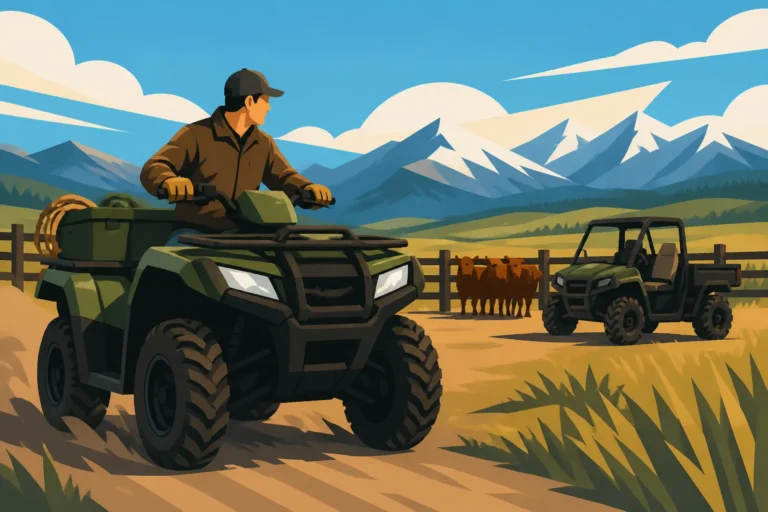
For many Albertans, especially in rural communities, ATVs and UTVs are not just recreational vehicles; they are indispensable tools for daily work on farms and ranches. Recognizing this, the provincial government included a specific exemption for those using OHVs for agricultural purposes. This exemption is practical and makes sense for those who use their machines as workhorses, but it's also one that gets misinterpreted quite often.
What Qualifies as Agricultural Work
The exemption for farm and ranch work is pretty clear: if you are using your OHV directly in the course of agricultural operations, you are not required to wear a helmet. This covers a wide range of tasks: checking fences, herding cattle, hauling feed, inspecting crops, performing maintenance on farm equipment, or traveling between fields on your own property. The machine is being used as a piece of farm machinery, essentially. This acknowledges that stopping to put on a helmet for a quick five-minute ride to check a water trough can be impractical and inefficient for someone trying to get work done.
Think of it this way: if your machine is helping you put food on the table or manage your agricultural business, you're likely covered. This exemption is designed to facilitate the smooth operation of farming and ranching activities. However, it's crucial that the primary purpose of the ride is work-related. If you're finished with your chores and decide to take your ATV for a joyride around the back forty, technically, that switches the context from "work" to "recreation," and the helmet rule might then apply, especially if that back forty is Crown land under lease.
The Grey Area of Personal Use on Farm Land
Here's where the lines can blur. Let's say you're a farmer, and your kids use the family quad to zip around the property after school. Is that "farm work"? Probably not. Or perhaps you're using the ATV to get to your hunting blind on the far corner of your land. While it's on your property, is it agricultural work? Again, likely no. The exemption is specific to work on the farm or ranch, not simply any activity that happens to occur on agricultural land.
The spirit of the law intends this exemption to apply when the OHV is being used as a tool for a specific, agricultural task. If you're using it for personal recreation, even if you happen to be on a farm, the exemption likely doesn't apply. This can be a tricky distinction, and enforcement officers might look at the context of the ride. To avoid any doubt, if your activity isn't directly related to farming or ranching operations, especially if you're on public land or a lease, it's always safest to put on a helmet. This particular nuance is a common discussion point, and it highlights the need for riders to carefully consider the purpose of their ride. For more on farm exemptions, check out [Alberta Farm and Ranch Work Exemption].
The Enclosure Exemption: Side-by-Sides and Rollover Protection
Side-by-sides (SxS), also known as UTVs, have exploded in popularity, offering a different kind of off-road experience with their car-like seating, steering wheels, and often, roll cages. Recognizing the inherent safety features of these machines, Alberta's regulations include an exemption specifically for them, provided certain conditions are met. This is a significant point of relief for many SxS owners, but it comes with its own set of rules.
When a Roof and Seatbelts Replace a Helmet
The core of the side-by-side helmet exemption is all about safety features that provide an equivalent level of protection to a helmet. Specifically, if your OHV is equipped by the manufacturer with a rollover protective structure (ROPS) or an enclosed cab, and you are properly wearing the seatbelt provided by the manufacturer, you are exempt from wearing a helmet. This makes perfect sense; the robust roll cage and seatbelt system are designed to keep you safe and contained within the vehicle in the event of a rollover or collision, much like the safety features in a car.
This exemption acknowledges the design difference between an open-air quad and a more structured side-by-side. The intent is to ensure that riders are protected, either by wearing a helmet or by utilizing the built-in safety features of their vehicle. It means you can enjoy the open air and wider field of vision that an SxS offers without the constant need for a helmet, provided you're buckled in and your machine is stock or has properly installed compliant modifications. This is particularly good news for families or groups riding together, as it simplifies the preparation for a day on the trails.
The Importance of Manufacturer Standards and OEM Equipment
Crucially, the rollover protective structure and seatbelts must be installed by the manufacturer as original equipment (OEM). This isn't just a suggestion; it's a critical component of the exemption. The manufacturers design and test these systems to rigorous safety standards, ensuring their effectiveness in protecting occupants during an incident. An officer will be looking to see that your machine is equipped as it came from the factory, or with certified aftermarket parts that meet or exceed those original standards.
If you've bought a side-by-side, check its specifications. Most modern utility and recreational SxS models come standard with ROPS and seatbelts designed to meet industry safety benchmarks. If your machine is older, or if you're unsure, it's worth checking your owner's manual or contacting the dealer. Relying on a flimsy, uncertified aftermarket roll cage or seatbelts that aren't designed for OHV use would not meet the requirements of the exemption, potentially leaving you unprotected and liable for a fine. Safety isn't an area to cut corners, and the law reflects that by emphasizing manufacturer-approved equipment. Read [Do You Need a Helmet in a Side-by-Side?] for more specific details.
Beyond the Basics: Aftermarket Enclosures
What about riders who modify their side-by-sides with aftermarket enclosures or roll cages? This is where a little more caution is needed. While many aftermarket products, such as those from reputable brands like SuperATV, offer excellent protection and enhance the riding experience, not all meet the specific criteria for the helmet exemption. The key is ensuring that any aftermarket ROPS or enclosed cab system meets or exceeds the manufacturer's original safety standards. It's not just about having a roof; it's about the structural integrity and testing behind that roof and cage.
If you're considering an aftermarket enclosure, do your homework. Look for products that are explicitly stated to be ROPS-compliant or designed to meet industry safety standards. A casual soft-top roof for sun protection, for example, would not qualify as a rollover protective structure. The intent of the exemption is to ensure substantial protection. If you're installing an aftermarket hard cab, for instance, you'd want to ensure it integrates properly with the vehicle's frame and that the seatbelts remain fully functional and correctly anchored. When in doubt, it's always better to wear a helmet, even if you have an aftermarket enclosure, until you can confirm it meets the legal requirements for exemption.
First Nations and Métis Settlement Exemption: Respecting Treaty Rights
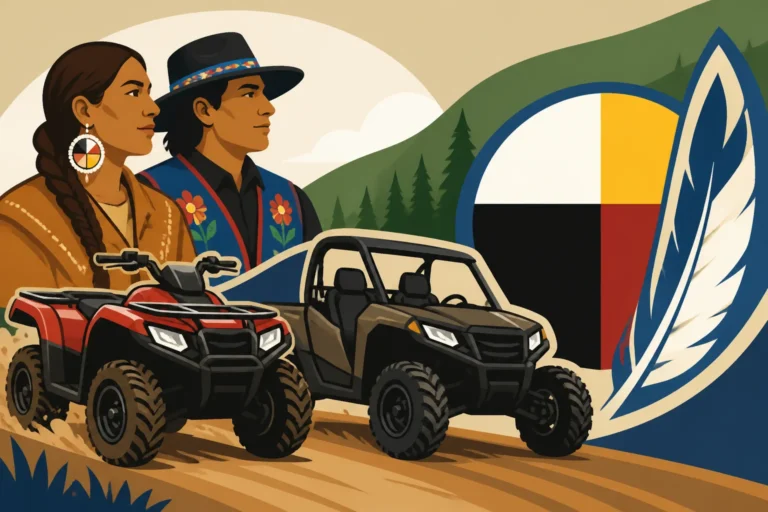
Alberta's landscape is rich with the history and ongoing presence of First Nations and Métis communities. Recognizing the unique legal and cultural relationship with these Indigenous peoples, the provincial OHV helmet regulations include specific exemptions for riders on First Nations reserves and Métis Settlements. This is an important aspect of respecting existing rights and traditional land use.
Context of the Exemption
The exemption allows for OHV operation without a helmet on land within a First Nations reserve or a Métis Settlement. This is rooted in the recognition of self-governance and the specific legal frameworks that apply to these lands. Residents and those with permission to ride on these lands are not subject to the provincial helmet mandate while within those boundaries. This acknowledges that the communities themselves have the authority to establish their own rules and norms for activities on their traditional or designated territories.
This exemption is not about blanket permission for all Indigenous people everywhere, but specifically for operations on reserve land or Métis Settlement land. It's a localized exemption that respects the distinct jurisdiction and cultural practices of these communities. It's a testament to the ongoing reconciliation efforts and the recognition of Indigenous rights within the province.
Understanding Boundaries and Traditional Land Use
For this exemption to apply, you must be physically on a First Nation reserve or Métis Settlement. Crossing outside these boundaries, even onto adjacent public land, means you are once again subject to the provincial helmet law. It's crucial for riders to understand and respect these boundaries. If you're a member of a First Nation or Métis community, or if you have permission to ride on these lands, you'll likely be aware of where these boundaries lie.
However, for non-Indigenous riders who might occasionally traverse areas near these communities, it's essential to be mindful. If you're unsure if you've crossed onto public land, the safest bet is always to wear your helmet. This exemption is designed to uphold the autonomy of Indigenous communities regarding their lands, and it's important that all riders understand its specific context and limitations. For more information, you can look up [How the Registration Exemption Works on a Métis Settlement] and [Reserve Land and the Exemption].
The Turban Exemption for Sikh Riders: A Religious Accommodation
In a demonstration of religious accommodation, Alberta's OHV helmet law includes a specific exemption for Sikh riders who wear a turban. This exemption acknowledges and respects religious practices while aiming to balance safety considerations.
Details of the Turban Exemption
The law states that a person who is a Sikh and wears a turban is exempt from the requirement to wear a helmet while operating or riding as a passenger on an OHV. This exemption is similar to those found in other traffic safety acts across Canada concerning motorcycles and bicycles, extending the same principle to off-highway vehicles. It's a specific, faith-based accommodation designed to ensure that individuals are not forced to choose between adhering to their religious beliefs and participating in OHV activities.
This exemption applies to public land as well, meaning a Sikh rider wearing a turban can legally operate an OHV on trails, PLUZs, and other public areas without a helmet. It's important to note that this applies specifically to turbans worn by Sikhs, not other forms of headwear or religious garments. The intent is clear: to remove a barrier for Sikh individuals to safely and legally enjoy Alberta's outdoor spaces with their OHVs, without compromising their religious practices. You can learn more about this by reading [Which Riders the Turban Exemption Actually Covers].
Balancing Faith and Safety
While the turban exemption provides legal relief for Sikh riders, it's important to acknowledge that safety remains a personal responsibility. A turban, while an important religious symbol, does not offer the same impact protection as a certified OHV helmet. Riders exercising this exemption should be acutely aware of the increased risk of head injury in the event of an accident.
Many Sikh riders choose to mitigate this risk by riding at lower speeds, avoiding technical terrain, or by riding with additional caution. It becomes a personal balance between religious observance and personal safety risk assessment. The law provides the exemption, but it doesn't diminish the physical risks involved. Every rider, regardless of exemption, should evaluate their own risk tolerance and ride within their capabilities, prioritizing safety in every outing.
Common Misconceptions and Risky Assumptions
Despite the clear guidelines and specific exemptions, many riders still fall victim to common misconceptions or make risky assumptions about when they can legally forgo a helmet. These can lead to fines, but more importantly, they can lead to serious injuries. Let's clear up some of these widespread misunderstandings.
"I'm Just Riding a Short Distance"
This is perhaps one of the most common and dangerous assumptions out there. "I'm just going from the cabin to the lake," or "I'm just crossing the road to my friend's place." The law doesn't have a "short distance" clause. If you're on public land and not covered by one of the specific exemptions, a helmet is required, whether you're riding for five minutes or five hours. Accidents can happen in an instant, even at low speeds or on familiar terrain. A quick, casual ride is precisely when you might be most likely to let your guard down, making a helmet even more crucial.
Think about it: most car accidents happen close to home. The same principle applies to OHVs. Complacency is a significant factor in many incidents. An unexpected bump, a patch of gravel, or even just another rider coming around a blind corner can turn a "short distance" into an emergency. Don't risk a ticket, or worse, a serious injury, by assuming the rules don't apply to brief excursions. It's a habit you need to build, no matter how short the trip.
"Nobody Will See Me Out Here"
The vastness of Alberta's backcountry can give a false sense of security. It's easy to think that if you're deep in the wilderness, away from major trails or staging areas, you won't encounter enforcement. However, this is a risky gamble. Fish and Wildlife officers, RCMP, and provincial park rangers regularly patrol these areas, often on their own OHVs. They are specifically trained to look for compliance with OHV regulations, including helmet use.
Beyond the legal aspect, relying on "nobody will see me" also ignores the safety aspect. If you have an accident in a remote area without a helmet, your chances of a severe head injury increase dramatically. And if you're injured, getting help out there can be a significant challenge. Instead of hoping to evade detection, embrace safety and wear the helmet. It's not just about avoiding a fine; it's about protecting yourself when you're far from immediate assistance.
The Consequences of Riding Without a Helmet (When Required)
Ignoring the helmet law or misinterpreting an exemption can have tangible consequences, ranging from financial penalties to severe personal costs. It's important to be fully aware of what you stand to lose if you choose to ride without a required helmet.
Understanding the Fines and Penalties
Let's not sugarcoat it: riding without a helmet when required is a ticketable offense in Alberta. The fines for non-compliance are significant enough to make you think twice. While specific amounts can change, you're generally looking at a substantial financial penalty, often in the triple digits. This isn't just a slap on the wrist; it's a clear message from the province about the importance of this safety regulation. You could be looking at a fine of [Alberta Helmet Fines and How They Are Issued].
Beyond the initial fine, there can be other repercussions. Repeat offenses could lead to more severe penalties. An officer might also issue a warning or an order to cease riding until you comply, which could effectively end your day on the trails. It's a frustrating way to cut short a long-planned trip, all for the sake of avoiding a piece of equipment designed to protect you. The cost of a ticket is almost always more than the cost of a good, certified helmet.
The Greater Risk: Injury and Liability
While fines are a nuisance, the most significant consequence of not wearing a helmet when required is the vastly increased risk of head injury. OHV accidents, even seemingly minor ones, can result in concussions, skull fractures, and traumatic brain injuries that have lifelong impacts. A helmet acts as your primary line of defense, absorbing and distributing impact forces that would otherwise directly affect your skull and brain. No amount of fun or convenience is worth the risk of a life-altering injury.
Furthermore, there's the issue of liability. If you're involved in an accident and weren't wearing a required helmet, your insurance coverage could be impacted, and you might face greater personal liability for medical costs or damages. In a civil case, not adhering to a safety regulation can significantly weaken your position. Protecting your head protects your future, both physically and financially. This isn't just about following the rules; it's about making a responsible choice for your well-being.
Choosing the Right Helmet, Even When Exempt
Even if you fall under one of Alberta's helmet exemptions, considering the inherent risks of OHV riding, choosing to wear a helmet is always a smart move. And if you are choosing to wear one, you might as well choose a good one that actually protects you effectively.
Safety First: Beyond the Minimum Requirements
The legal requirements are the bare minimum. A truly safety-conscious rider will look beyond just meeting the standard. A helmet should be comfortable, provide good visibility, and fit correctly. A poorly fitting helmet, even if certified, won't offer optimal protection. It should be snug but not uncomfortably tight, and it shouldn't shift around when you move your head.
Think about the conditions you ride in. Do you need good ventilation for hot summer days? Or extra insulation for winter riding? Are you frequently in dusty environments where a good seal around your goggles is crucial? Modern helmets come with a vast array of features, from advanced ventilation systems to integrated communication devices and quick-release cheek pads for emergency removal. Investing in a helmet that exceeds the minimum legal standard and is tailored to your riding style and environment is a proactive step towards maximum safety. Always prioritize your safety, even when not legally required to wear a helmet. You can also explore [Buying a CSA-Approved Helmet Before an Alberta Ride].
Features to Look For in a Quality Helmet
When you're shopping for an OHV helmet, here's a quick checklist of features to consider:
- Certification: Always double-check for DOT, ECE, Snell, or CSA certification. This is non-negotiable for legal compliance and effective protection.
- Fit: Try it on! The helmet should fit snugly all around your head, with no pressure points or excessive movement. Cheek pads should press against your cheeks.
- Weight: Lighter helmets can reduce neck fatigue on long rides, but don't sacrifice safety for weight.
- Ventilation: Good airflow prevents fogging and keeps you cool. Look for adjustable vents.
- Visibility: A wide field of vision is crucial. Ensure your goggles fit well with the helmet opening.
- Retention System: A double D-ring strap system is typically the most secure, though some helmets offer quick-release buckles that are also secure and convenient.
- Construction: Look for multi-density EPS foam liners and durable outer shells made from polycarbonate, fiberglass, or carbon fiber composites.
- Removable Liner: Being able to remove and wash the interior liner is a huge plus for hygiene and comfort.
A good helmet is an investment in your safety and enjoyment. Don't skimp on this essential piece of gear. Take your time, try on several models, and choose one that offers the best combination of safety, comfort, and features for your specific needs.
| Exemption Type | Applies to Who/What | Conditions | Notes |
|---|---|---|---|
| Private Land | Anyone on privately owned land | Requires express consent of the landowner to be on the property | Does NOT apply to Crown land, lease land, or public right-of-ways, even if they feel "private." |
| Farm & Ranch Work | Anyone operating an OHV for agricultural work | OHV must be used directly in the course of farming/ranching operations | Does NOT apply to recreational use, even if on farm property. |
| Enclosed OHV (Side-by-Side) | Operators/passengers in a Side-by-Side (UTV) | Must have manufacturer-installed Rollover Protective Structure (ROPS) or enclosed cab, AND occupants must wear OEM seatbelts. | Aftermarket ROPS/cabs must meet or exceed manufacturer standards. |
| First Nations/Métis Lands | Anyone operating an OHV on a First Nations reserve or Métis Settlement | Must be physically within the boundaries of the reserve/settlement | Does NOT apply once you cross onto adjacent provincial public land. |
| Sikh Riders (Turban) | Sikh individuals wearing a turban | Must be a Sikh and wearing a turban | A religious accommodation; personal safety remains a consideration as turbans offer no impact protection. |
Disclaimer
This article is for general informational purposes only and does not constitute professional advice. Laws, prices and regulations vary by location and change over time. Consult a qualified professional for guidance on your specific situation.