Why the Sticker Went Away
If you've been an off-highway vehicle (OHV) enthusiast in Alberta for a while, you might remember the days of dutifully peeling a fresh registration sticker and carefully applying it to your OHV's licence plate. It was a familiar ritual, a clear visual sign that your quad, side-by-side, or dirt bike was good to go for another year. So, when those stickers suddenly vanished a few years back, it left many riders scratching their heads, wondering if the rules had changed or if they were missing something crucial. This guide is here to clear up that confusion, explaining exactly why Alberta no longer issues those little adhesive proofs of registration and what it means for you on the trails.
The End of an Era: What Happened to Alberta's OHV Plate Stickers?
It feels like just yesterday we were all trying to line up that little square sticker perfectly on our plates, ensuring it was visible and secure. Then, one day, they just… disappeared. For many, it was a subtle change at first, perhaps noticed only when a new registration came in the mail without the familiar sticker. This wasn't some minor oversight or a shortage at the registry; it was a deliberate, province-wide policy shift that impacted not just OHVs, but all registered vehicles in Alberta. The move marked a significant departure from decades of tradition, and it definitely caught many riders by surprise.
A Province-Wide Change for All Vehicles
Let's get one thing straight right off the bat: the elimination of the registration sticker wasn't unique to off-highway vehicles. This change swept across the entire province, affecting cars, trucks, motorcycles, and, yes, your beloved quads and side-by-sides. The Alberta government made the decision to stop issuing vehicle registration stickers back in January 2021. The rationale behind this was multifaceted, primarily driven by a desire for modernization and significant cost savings. Think about all the resources involved: the printing of millions of stickers, the distribution, the mailing, and the administrative overhead. By moving away from physical stickers, the province aimed to streamline processes and reallocate funds.
For riders, this created a moment of genuine head-scratching. I remember chatting with a fellow rider at McLean Creek who was convinced his registry agent had simply forgotten to give him one. He was worried sick about getting a ticket, even though his paperwork was all in order. This kind of confusion was widespread because the sticker had been such an ingrained part of the registration process for so long. People rely on those visual cues, and when one disappears, it leaves a void that can feel unsettling, especially when you're trying to stay on the right side of the law. It’s important to understand that this wasn't a relaxation of registration rules, but merely a change in how that registration is physically indicated.
Remembering the Sticker Shock: When the Change Occurred
The specific date that Alberta officially stopped issuing registration stickers was January 1, 2021. So, if you registered your OHV (or any vehicle, for that matter) on or after that date, you would have received a new registration certificate but no accompanying sticker. This timeline is crucial for understanding why you might have an older machine with a sticker and a newer one without, or why a friend might have one when you don't. [Alberta Dropped Plate Stickers in 2021] explicitly highlights this date.
The immediate impact was a wave of questions directed at registry agents, law enforcement, and fellow riders. People genuinely wondered if their registration was still valid without that sticker. There was a sense of uncertainty about what exactly constituted "proof" of registration now. Riders who were used to a quick glance at the plate for compliance suddenly found themselves needing to understand a new system. It meant adapting to a slightly different way of thinking about vehicle legitimacy. For many of us, it was a subtle but definite shift in the mental checklist we go through before heading out on the trails, making sure everything is in order. It also underscored the fact that Alberta now [Alberta Issues a Plate, Not a Sticker], rather than a plate and a sticker.
Life Without the Sticker: What This Means for Alberta OHV Owners
So, the sticker is gone. What's the practical upshot for you, the Alberta OHV owner? Does it mean you can just forgo registration altogether? Absolutely not! The fundamental requirement to register your off-highway vehicle for use on public land or designated OHV areas remains firmly in place. What has changed is merely the visual identifier. It's like changing the colour of a uniform; the person wearing it still holds the same position and responsibilities. Understanding these practical implications is key to avoiding any unnecessary headaches or, worse, tickets out on the trail.
Your Registration Is Still Required and Active
This is perhaps the most critical point to absorb: just because there's no sticker doesn't mean you don't need a valid registration. Every OHV operating on public land in Alberta, including Crown land, designated trails, and even highway ditches, must be properly registered. The sticker was simply a visual shortcut; the actual proof of your legal ability to operate your machine comes from your registration certificate. When you register or renew your OHV, you still receive a paper certificate from an Alberta Registry agent. This document is your official proof. [Alberta Registration Before Riding Crown Land] clarifies that registration is a prerequisite for venturing onto many popular riding spots.
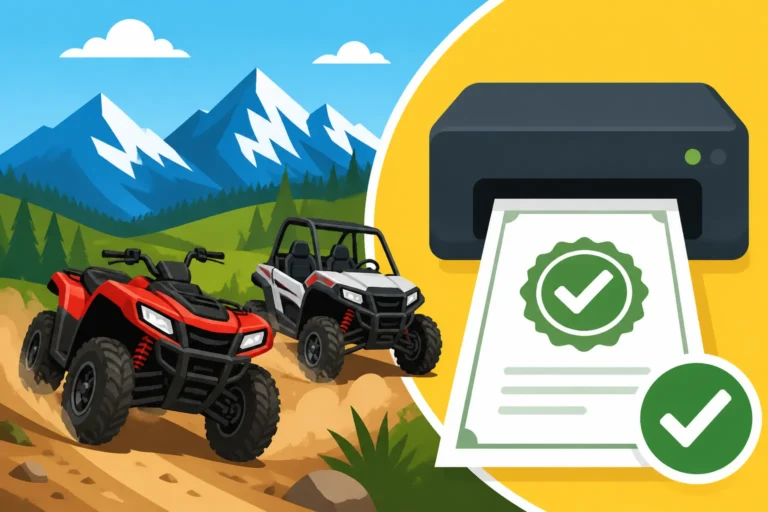
The key takeaway here is that you need to carry that physical registration certificate with you whenever you're riding. It's no longer enough to just have it at home or hope an officer can look it up in their system. Think of it like your driver's license – you wouldn't leave home without it. The registration certificate serves the same purpose for your OHV. Many riders print off the digital certificate they receive or keep the original paper copy in a waterproof bag, perhaps tucked into a storage compartment on their machine or even their riding jacket. The important thing is that it's accessible and legible if you're ever asked to produce it. [Alberta Digital Certificates Must Be Printed] is a stark reminder of this essential step.
How Police Officers Verify Registration Now
Without a physical sticker to quickly check, how do enforcement officers verify that your OHV is registered? The process now relies on digital verification and your ability to produce your documentation. When an officer stops you on the trail or at a staging area, they will typically ask to see your registration certificate and proof of insurance. They can then use information from your certificate, such as your licence plate number or VIN (Vehicle Identification Number), to cross-reference with their provincial database in real-time. This digital lookup confirms whether your registration is valid and current.
This shift places a greater emphasis on you, the rider, to have your paperwork in order. An officer expects you to be able to present your physical registration certificate on demand. Imagine a scenario where you're out exploring the beautiful Ghost PLUZ, and an Alberta Fish and Wildlife officer pulls up alongside you. They'll greet you, and then politely ask for your registration and insurance. If you fumble around, can't find it, or worse, don't have it, that's when you can run into trouble. It's why many riders now make a point of having a dedicated spot for their OHV documents, perhaps laminated or in a heavy-duty clear plastic pouch, ready to go. [What an Alberta Officer Can Ask to See] provides more detail on these interactions. This applies to your insurance too; officers will also expect you to be [Producing Insurance on Demand].
The Broader Context: Alberta's Digital Shift and OHV Registration
The removal of the OHV plate sticker isn't just an isolated incident; it's part of a larger, ongoing digital transformation within Alberta's government services. This shift aims to move more processes online, making them more convenient for citizens while reducing administrative burdens and costs. For OHV registration, this has meant changes in how you interact with the system, but ultimately, it's about leveraging technology for efficiency. The days of needing to visit a physical office for every single transaction are slowly becoming a thing of the past.
Modernizing the Registry System
Alberta has been working to modernize its registry system for years, and the move away from physical stickers is a clear manifestation of this effort. The goal is to make services more accessible and efficient through digital platforms. This includes the ability to renew your OHV registration online from the comfort of your home, something that wasn't always as straightforward in the past. This digital streamlining means fewer paper transactions, faster processing, and generally a more convenient experience for the end-user. Whether you're renewing your vehicle registration or even looking for legal document templates for a private sale, digital resources like those found on LawDepot are becoming increasingly common and helpful for managing administrative tasks.
For OHV owners, this means that while the visual proof of registration has changed, the underlying system is arguably more robust and accessible than ever. You can often [Registering an ATV in Alberta Online], allowing you to keep your OHV legal without having to take time out of your busy schedule to visit a registry office. This efficiency is a definite upside, especially for those of us who live in more rural areas or have demanding work schedules. It means you can ensure your quad is ready for its next adventure with just a few clicks, making it easier to comply with regulations.
What to Carry Instead of a Sticker
Since the sticker is no longer your visual proof, you absolutely must carry your registration certificate when riding your OHV. This paper document is the definitive proof that your machine is legally registered in Alberta. Along with your certificate, you'll also need to carry proof of insurance, as it's mandatory for riding on public land. It’s also wise to have a valid driver's license or other government-issued ID, especially if you're supervising a younger rider, or if you ever need to verify your identity.
To help you keep track, here's a quick comparison of what used to be the primary visual proof versus what is required now:
| Old Way (Pre-2021) | New Way (Post-2021) |
|---|---|
| Physical Sticker on licence plate | Physical Registration Certificate |
| – Visual, quick check | – Paper document, must be carried |
| – Issued annually | – Issued annually/bi-annually |
| – Proof of validity for the year | – Electronic verification by authorities |
| Physical Insurance Card | Physical Insurance Card |
| – Often kept in wallet/machine | – Must be carried and produced on demand |
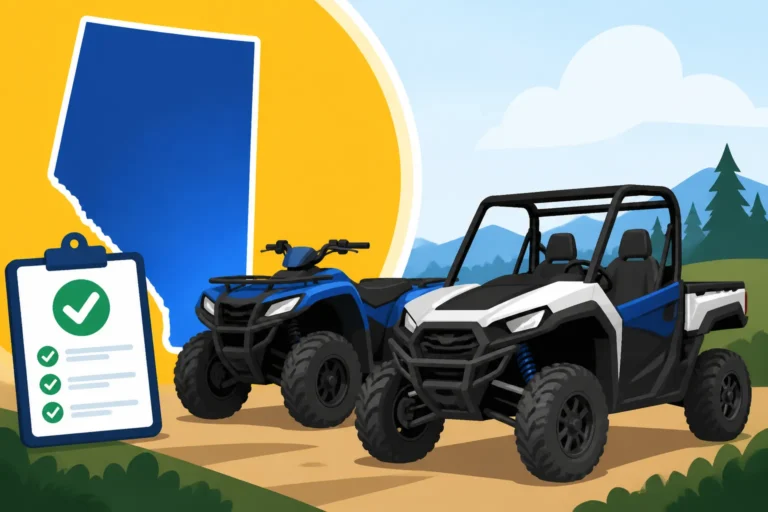
It really boils down to having your paper documentation physically with you. A comprehensive [Alberta Registration Paperwork Checklist] would include your registration certificate, proof of insurance, and personal identification. Some riders even go a step further and keep digital copies on their phone, in addition to the physical copies, as a backup – but remember, the physical copy is what an officer will typically ask to see first.
Common Concerns and Misconceptions Post-Sticker
The shift away from registration stickers inevitably led to some lingering confusion and misconceptions among OHV owners. It’s natural to question changes to long-standing practices, especially when they involve legal compliance. Let's tackle some of the most common worries that riders have expressed since the sticker went away, making sure everyone is absolutely clear on their responsibilities.
"Does No Sticker Mean No Registration?" – Dispelling the Myth
This is perhaps the biggest misconception out there: that because the sticker is gone, registration itself is no longer required or enforced. Let me be unequivocally clear: this is absolutely false. The requirement to register your OHV in Alberta for use on public land is still very much in effect. The sticker was merely a convenient visual aid for enforcement, not the registration itself. Your OHV must be registered and plated if you intend to ride anywhere other than your own private property. Riding an unregistered OHV on public land is illegal and carries significant penalties.
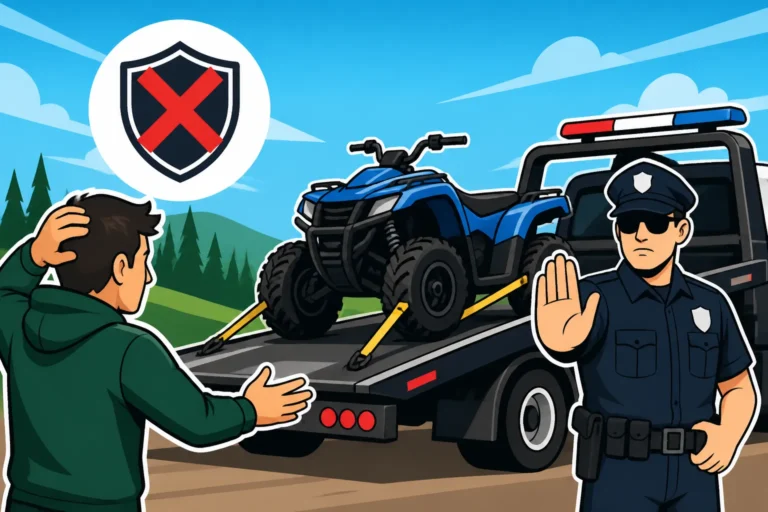
Think about it this way: when you register your OHV, you're essentially telling the province, "This machine exists, it's mine, and I intend to use it responsibly." The sticker was just a receipt, a small token of that process. Without a valid registration, you could face fines, and your machine could even be seized. [Alberta Penalties for Riding Unregistered] are no joke and can quickly turn a fun day out into a very expensive lesson. Don't let the absence of a sticker lull you into a false sense of security regarding your registration obligations. It's still a critical piece of the puzzle, and your paper certificate is your proof. If you're involved in a private sale, ensure the transfer of ownership is properly documented, perhaps with a bill of sale generated through a service like LawDepot, to facilitate proper registration for the new owner.
Out-of-Province Riders and the Sticker Situation
What about visitors from other provinces or even across the border, whose home jurisdictions might still use registration stickers? This is a great question and one that often causes concern for those planning a riding trip to Alberta. The good news is that Alberta recognizes valid OHV registrations from other Canadian provinces and territories, as well as some US states, under certain conditions. The key here is "valid registration."
If you're visiting Alberta from a province that still issues a registration sticker, your sticker is perfectly fine as proof of registration from your home province. You'll also need to carry your home province's registration certificate and proof of insurance. Alberta's rules about visiting riders typically involve a "30-day rule," where your out-of-province registration is valid for a certain period before you might need to register your machine in Alberta if you become a resident. So, for a typical recreational trip, your home province's documentation, sticker and all, should suffice. However, you'll still need to respect all of Alberta's local OHV laws and regulations, including helmet laws, age restrictions, and where you're allowed to ride. [Alberta Registration for Visiting Riders] covers this topic in more detail, ensuring you're prepared for your adventure. Just remember to always have your physical documents with you, regardless of where your machine is registered.
Disclaimer
This article is for general informational purposes only and does not constitute professional advice. Laws, prices and regulations vary by location and change over time. Consult a qualified professional for guidance on your specific situation.