Alberta Digital Certificates Must Be Printed
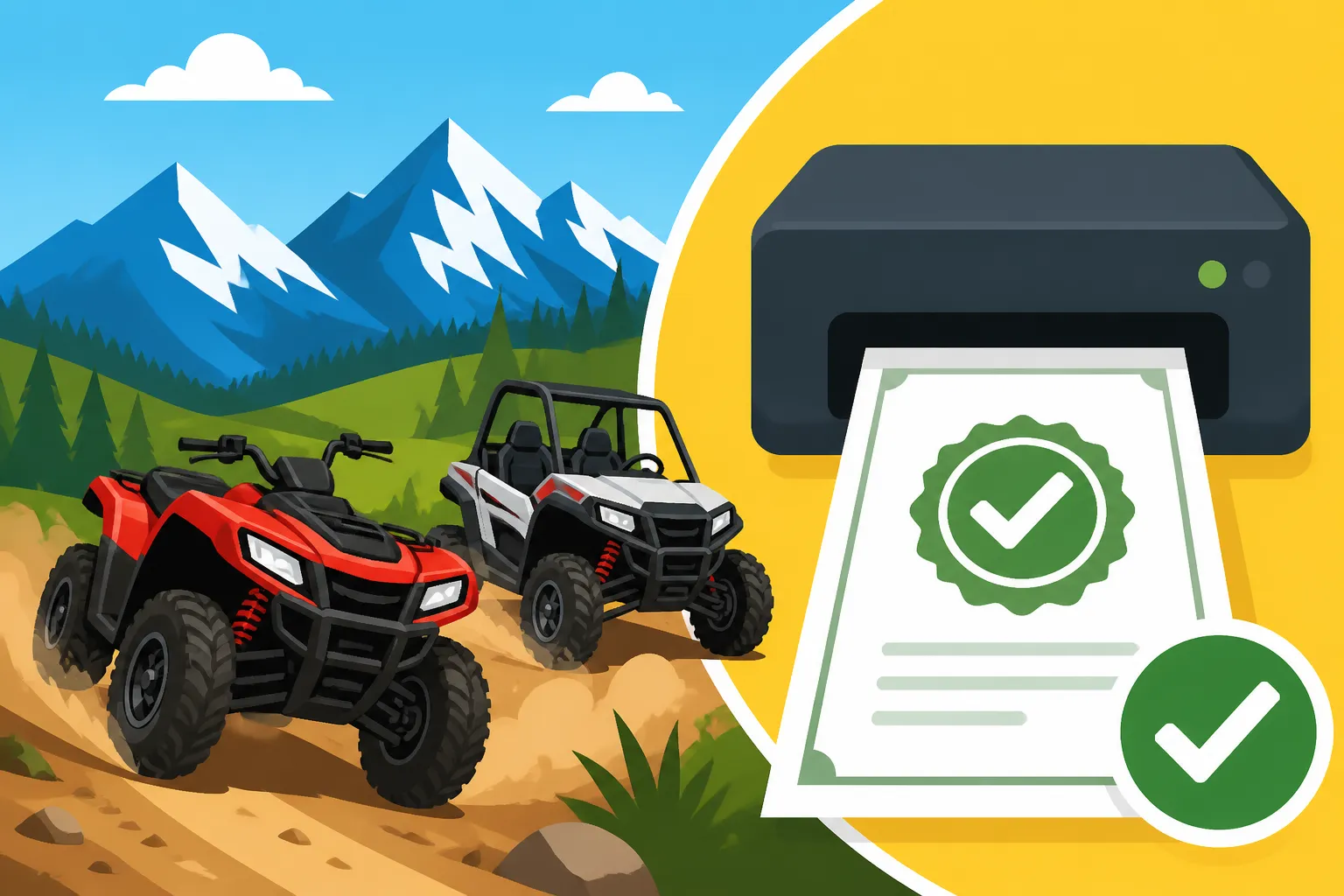
You've just gone through the process of registering your ATV or UTV in Alberta, perhaps you even did it online, and you've got that shiny digital certificate sitting comfortably on your smartphone. It's quick, it's convenient, and in our increasingly paperless world, it feels like it should be enough. But here's the reality check: when you're out there hitting the trails, Alberta law still expects you to have a printed copy of that registration certificate in your possession. This guide will walk you through exactly why that seemingly small detail matters so much, the practicalities involved, and how to stay on the right side of the law.
Why a Digital Certificate Isn't Enough on the Trail
It's 2024, and almost everything is digital. We bank on our phones, we show digital tickets, and we often have digital proof of insurance. So, it's a completely fair assumption that a digital copy of your OHV registration certificate should be perfectly acceptable. Unfortunately, when it comes to riding your off-highway vehicle on public land in Alberta, that's not quite the case. The system, for various good reasons (and some that might feel a little old-fashioned), still relies on good old-fashioned paper.
The Law's Expectation
Alberta's Traffic Safety Act and the Off-Highway Vehicle Regulation (319/2002) lay out the rules of the road, or rather, the trail, for OHVs. While the specific wording might not explicitly say "thou shalt carry a paper document," the expectation for producing proof on demand has historically, and still largely, implies a physical document. When an enforcement officer asks to see your registration, they expect a tangible piece of paper they can hold, examine, and verify. They're not going to hand over their tablet to you, and they don't want to peer at a tiny screen in bright sunlight or driving rain.
This expectation can feel a bit out of step with how many other services operate today, leading to genuine frustration for riders who are trying to be responsible and leverage modern technology. However, until the regulations are updated to specifically recognize and facilitate digital document verification in the field, a printed copy remains the safest and most compliant option. It simply removes any ambiguity about your ability to furnish proof of registration when requested.
Officer Discretion and Real-World Scenarios
While you might encounter an understanding officer who allows you to fumble with your phone, relying on an officer's discretion is never a good strategy when it comes to legal compliance. Different officers will interpret "on demand" differently, and some may simply not have the means or willingness to accept a digital display as sufficient proof. This isn't about being difficult; it's often about established protocols and the practicalities of their job.
Imagine a scenario: you're stopped in a remote area in the Ghost PLUZ, far from cell service, and an enforcement officer pulls you aside for a routine check. They ask for your registration and proof of insurance. You confidently pull out your phone, only to find you have no signal, or worse, your battery died an hour ago. Now, what started as a simple request for paperwork has turned into a potentially lengthy delay, an uncomfortable conversation, and a possible fine for failing to produce documentation. Officers carry out their duties based on established laws, and the simplest way to comply is to have the expected physical documents ready. This ties directly into what they are [What an Alberta Officer Can Ask to See] when they stop you.
The Risk of Poor Signal or Dead Batteries
This is perhaps the most practical and frustrating reason why a digital certificate falls short. Alberta's incredible OHV trails are often located in vast, wild, and rugged landscapes. These are precisely the places where cell service is notoriously unreliable, if it exists at all. You might have full bars in town, but venture a few kilometres into the backcountry, and you're in a communications black hole.
Couple that with the inherent challenges of outdoor activity – cold weather draining batteries faster, phones getting wet, or screens cracking from a tumble – and your digital proof can become inaccessible in an instant. A dead phone battery isn't an excuse that will hold up in court, nor will a cracked screen that makes the VIN unreadable. A printed certificate, however, is a resilient backup that doesn't rely on technology working perfectly in imperfect conditions. It's a simple, low-tech solution to a high-tech problem, ensuring you can always present your documentation without a hitch. While a service like LawDepot can assist with creating legal documents like bills of sale or personal agreements, the actual OHV registration certificate is an official provincial document that needs to be treated with this practical consideration in mind.
The Practicalities of Carrying Your Paperwork
So, you understand why you need to print your certificate. Now comes the next logical question: how do you carry this precious piece of paper without it becoming a soggy mess or blowing away on the first fast stretch of trail? It's not as simple as just stuffing it in your pocket; the backcountry environment demands a more robust approach to document management.
Keeping Your Documents Safe on the Trail
The trail environment is harsh. Dust, mud, water, and vibration are constant companions, all of which are enemies of paper documents. Simply tucking your registration into your wallet or a regular backpack pocket is an invitation for disaster. The key is protection and accessibility. You need a dedicated, secure spot for your documents that shields them from the elements and keeps them from getting crumpled or lost during bumpy rides.
Many riders opt for a small, zippered pouch that can be securely fastened to the machine itself, perhaps in a glove box or under the seat. Others prefer a robust, waterproof sleeve that fits inside a jacket pocket or a cargo pant pocket. The important thing is that it's not going to fall out, get crushed, or be exposed to moisture. Having a routine for where you keep your documents, and always putting them back in that same spot, drastically reduces the chances of misplacement.
Making Your Certificate Water-Resistant
Given the prevalence of stream crossings, unexpected rain showers, and muddy conditions on Alberta trails, waterproofing your documents is non-negotiable. Laminating your registration certificate is a popular choice, as it provides excellent protection against water and wear while keeping all information perfectly legible. However, ensure that the lamination does not obscure any vital security features or make the document unreadable. Alternatively, heavy-duty Ziploc bags, purpose-built waterproof document pouches, or even small, hard-shell waterproof cases are excellent options.
You're not just protecting against a complete dunking; you're also safeguarding against humidity, sweat, and splashback. A slightly damp piece of paper can quickly become illegible, especially if it's been folded and unfolded multiple times. Ensuring your certificate is protected means it will remain readable and intact for the entire duration of your ride, no matter what the weather or trail throws at you. You might also want to do this for your [Printing a Certificate Before You Ride] the first time out.
Organizing Your Machine's Essential Papers
It's not just your OHV registration that you might need to carry. Alberta law also requires you to have [Alberta Proof of Insurance on Demand] if you're riding on public land. You might also want to carry a copy of your driver's license (if you have one and are driving the OHV), or even a copy of your bill of sale, especially if you've recently purchased the machine. The thought of fumbling through multiple loose papers to find what an officer is asking for is not ideal.
A small, organized packet or folder within your waterproof container is the best approach. Keep all your essential OHV documents together in one spot. This means your printed registration certificate, your insurance pink card (or printed proof), and any other relevant permits or identification. This level of organization not only makes it easier for you to produce documents quickly when asked but also demonstrates to any inspecting officer that you are a responsible and prepared rider. For a comprehensive list, consult an [Alberta Registration Paperwork Checklist] to ensure you're never caught off guard.
What Your Printed Certificate Proves
Beyond simply complying with the law, your printed OHV registration certificate serves several critical functions. It's more than just a piece of paper; it's tangible proof of your legal right to own and operate your off-highway vehicle. Understanding its importance helps underscore why carrying a physical copy is a non-negotiable part of responsible riding.
Proof of Ownership and Registration
Your printed registration certificate is the definitive record that confirms you are the legal owner of your ATV or UTV in Alberta and that the machine is officially registered with the provincial authorities. This certificate lists crucial details such as your name, your address, the make, model, year, and most importantly, the Vehicle Identification Number (VIN) of your OHV. This VIN is unique to your machine, acting as its fingerprint.
This document is incredibly important in several scenarios: if your OHV is ever stolen, this certificate is vital for reporting it to the police and for any insurance claims. If you're involved in an accident, it helps to establish ownership and provide necessary identification for reporting purposes. It also prevents any misunderstanding or suspicion from law enforcement who might otherwise question the machine's provenance. While you might draft a private bill of sale using a service like LawDepot when buying or selling, the registration certificate is the official provincial record of ownership.
Meeting Insurance Requirements
In Alberta, riding your ATV or UTV on public land necessitates having valid liability insurance. While you'll likely carry a separate insurance card (often called a "pink card") as direct proof of your policy, the registration certificate plays a supporting role. It links your ownership to the specific machine being insured. An officer might ask for both your proof of insurance and your registration to ensure that the insurance policy matches the vehicle you are operating and that the vehicle itself is legally allowed on public lands.
If you're ever in an accident on the trail, the ability to quickly and clearly present both your registration and insurance details to other parties, as well as to emergency services, is paramount. It streamlines the information exchange process and helps ensure that all necessary legal and insurance protocols are followed. Having all your papers in order means less stress during an already difficult situation. [Alberta Requires Insurance on Public Land] is a hard rule, and your registration works with your insurance to prove compliance.
Validating Your Machine's Legal Status
The registration certificate also acts as validation of your OHV's overall legal status. It shows that the machine has been properly recorded with the province, indicating it's not a stolen vehicle and is authorized for use where permitted. This is especially important if you're stopped by an officer who may be checking for illegal activity or unregistered machines, which sadly, do exist on the trails.
The presence of a valid, current registration certificate immediately establishes your bona fides as a responsible owner. It confirms that you've completed the necessary administrative steps to legally operate your OHV. This can save you a lot of time and potential hassle during a trailside stop, allowing you to get back to enjoying your ride much faster. The certificate provides peace of mind that your machine is compliant with [Off-Highway Vehicle Regulation 319/2002] and other applicable laws.
Here’s a quick overview of what you'll find on your certificate:
| Information Type | Description | Importance |
|---|---|---|
| Owner Information | Your full name and current address. | Proof of legal ownership. |
| Vehicle Details | Make, model, year, and type of OHV (ATV, UTV, snowmobile). | Identifies the specific machine. |
| VIN | Vehicle Identification Number (unique 17-character code). | Crucial for identification, theft recovery, and transfers. |
| Plate Number | The alphanumeric code on your physical OHV plate. | Links the certificate to the plate on your machine. |
| Expiry Date | The date your current registration period ends. | Confirms the registration is current and valid. |
| Registry Office | Details of where the registration was processed. | For administrative queries or renewals. |
Dealing with Lost or Damaged Certificates
Even the most careful riders can sometimes lose or damage their important documents. Whether it slips out of a pocket during a bumpy ride, gets soaked in an unexpected creek crossing, or simply wears out from repeated handling, a lost or illegible registration certificate can put a real damper on your riding plans. But don't worry, replacing it is usually a straightforward process.
Steps to Replace a Lost Certificate
If you find yourself in the unfortunate situation of having a lost or stolen OHV registration certificate, the first thing you need to do is visit an [Alberta Registry Agents and OHV Paperwork] office. These agents are authorized by the province to handle all matters related to vehicle registration, including replacements. You won't be able to do this online, as a physical re-issue is typically required.
When you go, make sure you bring some key pieces of information with you. You'll need valid personal identification (like your driver's license), and as much information about your OHV as possible. The most crucial piece of information is your Vehicle Identification Number (VIN). Having this readily available will significantly speed up the process. A small fee is usually charged for duplicate certificates, but it's a small price to pay for compliance and peace of mind. The registry agent will be able to access your records and print you a brand-new certificate.
When to Get a New Copy
Replacing a certificate isn't just for when it's completely lost. Sometimes, the document you carry can become so worn, faded, or water-damaged that it's no longer clearly legible. A crumpled piece of paper where the VIN is smudged or the expiry date is unreadable is almost as unhelpful as no certificate at all. An enforcement officer needs to be able to quickly and clearly read all the pertinent details on your document.
If your existing certificate has reached a state where its legibility is compromised, it's definitely time to get a new copy. Don't wait until you're stopped on the trail and facing a potential fine. Proactively replacing a damaged document ensures that you're always ready to present clear, verifiable proof of your OHV's registration. Think of it as part of your regular machine maintenance – ensuring your paperwork is as ready for the trail as your ATV or UTV is.
Preventing Future Losses
Once you've gone through the hassle of replacing a lost or damaged certificate, you'll naturally want to prevent it from happening again. This circles back to the importance of secure and waterproof storage, but with an added layer of mindfulness. Consider investing in a high-quality, hard-shell waterproof case specifically designed for documents, rather than just a Ziploc bag. These cases are rugged, often float, and provide superior protection.
Another strategy is to make two printed copies: one to carry on the machine (in your secure, waterproof pouch), and a second, pristine copy to keep securely at home with your other important documents. This way, if the one you carry gets damaged, you have a reference copy and know exactly what information to provide when requesting a replacement. Having a robust system for all your personal and asset documents, perhaps utilizing digital templates from LawDepot for non-governmental needs, can certainly make life easier, but for your OHV registration, the printed copy is king.
Making Sure Your Information is Current
Having a printed certificate is one thing, but ensuring that the information on it is current and valid is just as important. Your OHV registration isn't a "set it and forget it" item; it requires periodic renewal and updates if your personal or vehicle details change. Keeping your records precise and up-to-date is a key aspect of responsible OHV ownership in Alberta.
Updating Your Address or Machine Details
Life happens, and sometimes you move. If you change your residential address, it's crucial to update this information with Alberta registries. While it might seem like a minor detail for an OHV, official correspondence, including renewal notices for your registration, will be sent to the address on file. Missing a renewal notice because it went to your old address can lead to an expired registration and potential penalties.
Generally, significant machine details that would require an update to your registration certificate are rare, beyond perhaps a complete engine swap that fundamentally changes the vehicle. However, if there was ever a legal change to the OHV's VIN or primary description, that would also require an update. It's always best practice to ensure all information registered with the province is accurate. For changes like moving, you can usually update your address at an Alberta Registry Agent for all your registered vehicles, including your OHV. Consult [Alberta Registration Address Change] for more details.
Renewing Your Registration
Unlike some other permits, your OHV registration in Alberta is not permanent. It needs to be renewed periodically, typically annually or every two years, depending on the option you chose when first registering. Ignoring the expiry date on your certificate is a surefire way to find yourself riding an unregistered machine, which carries significant risks and penalties.
The good news is that OHV registration renewal can often be completed online, which is a convenient option for many riders. However, even if you renew online, remember the core message of this guide: you will still need to print the new certificate that is issued after your renewal is processed. The old, expired certificate is no longer valid. So, mark your calendars, set reminders, and make sure you complete your renewal well before the expiry date. You can choose to be [Registering Your OHV for One Year or Two], but either way, that expiry date is real. What happens when [When an Alberta OHV Registration Expires]? You're riding unregistered!
Transferring Ownership After a Sale
If you sell your ATV or UTV, the registration must be transferred to the new owner. Your old certificate, registered in your name, becomes invalid for the person who buys your machine. It's the new owner's responsibility to register the OHV in their name promptly. As the seller, you should ensure that the bill of sale is properly completed and that you notify the registry of the sale to avoid any lingering liability.
Conversely, if you purchase a used OHV, one of your immediate priorities should be to register it in your name. You'll typically need the bill of sale (which, as we mentioned, can be a document you generate through services like LawDepot) and the previous owner's registration details to complete this process at an Alberta Registry Agent. Until the machine is registered in your name and you have your own current, printed certificate, you cannot legally operate it on public land. This is a critical step in the process of [Alberta Registration Transfer After a Sale].
Disclaimer
This article is for general informational purposes only and does not constitute professional advice. Laws, prices and regulations vary by location and change over time. Consult a qualified professional for guidance on your specific situation.