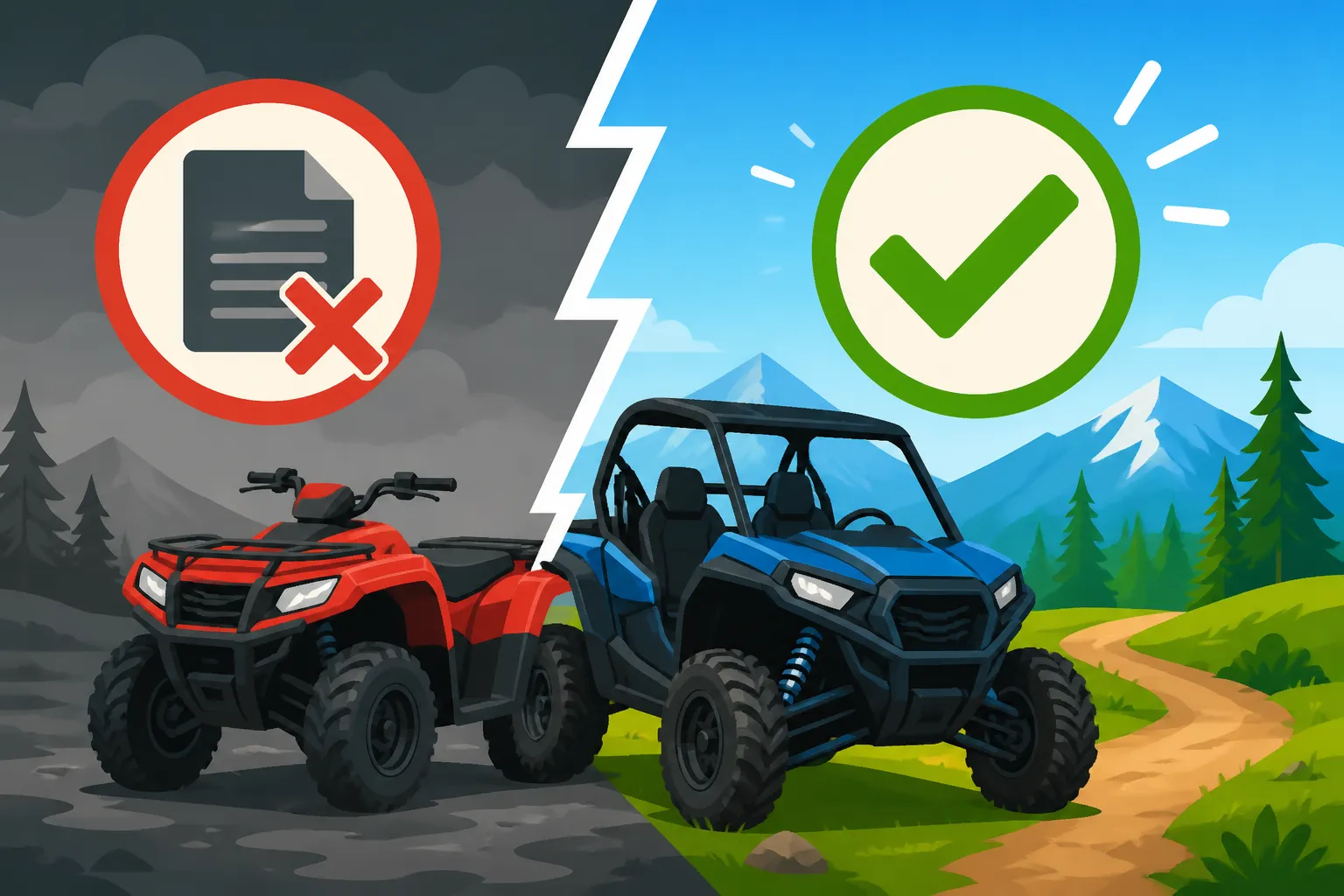
When an Alberta OHV Registration Expires
It's an all too common scenario: you're itching to hit the trails, gear packed, machine gassed up, and then that nagging little thought creeps in – "When exactly does my ATV or UTV registration expire?" For many Alberta off-highway vehicle (OHV) enthusiasts, keeping track of that crucial date can feel like a game of hide-and-seek, leading to unnecessary stress or, worse, unexpected penalties. This guide will walk you through everything you need to know about your Alberta OHV registration expiry, ensuring you stay legal, insured, and ready for adventure.
Understanding Your Alberta OHV Registration Term
Navigating the world of OHV registration in Alberta often starts with understanding the basic term options available. It’s not just a one-size-fits-all situation, and the choice you make at the time of registration directly impacts when your next renewal date rolls around.
The Standard One or Two-Year Term
When you first register your off-highway vehicle in Alberta, or when you come around to renewing it, you're generally presented with a choice: a one-year or a two-year registration term. This might seem like a small detail, but it can make a big difference in how often you need to think about paperwork. Opting for a one-year term means you'll be back at a registry agent, or online, precisely 12 months from your registration date to renew. It's a quick turnaround and can sometimes feel like you just finished the last one.
On the other hand, choosing a two-year term extends that breathing room to 24 months. For many riders, this is the preferred option simply for the convenience of reducing administrative tasks. Imagine getting an extra year of uninterrupted riding without the renewal deadline looming overhead! It’s all about balancing convenience with your personal preference and how often you want to visit a registry. [Alberta Registration Terms of One or Two Years] details more about these options.
How Your Registration Expiry Date is Determined
Your OHV registration expiry date isn't a fixed calendar day like New Year's or Christmas. Instead, it's typically tied to the date you originally registered or last renewed your machine. So, if you registered your quad on July 15th, your one-year registration would expire on July 15th of the following year. If you chose a two-year term, it would expire two years later on that same date.
This means that everyone's expiry date is unique to their individual registration cycle. This personalized approach is great for flexibility but can also be why it's easy to forget if you don't mark it down. The system doesn't operate on a mass renewal cycle; it's a rolling system based on your initial interaction. Understanding this personalized expiry date is key to staying compliant, as there's no universal date for all OHVs in the province.
Benefits of a Two-Year Registration
Beyond the obvious benefit of fewer trips to the registry or fewer clicks online, a two-year registration often brings a sense of sustained peace of mind. Knowing you're covered for an extended period means less mental overhead about remembering deadlines. For those who ride frequently or plan multi-day adventures, it's one less thing to worry about when you're loading up the trailer.
Think about it: fewer chances to miss a renewal notice, fewer opportunities for an accidental lapse in registration, and more time enjoying the trails. While the upfront cost might be slightly higher than a single year, many find the overall value and convenience well worth it. It’s a bit like buying in bulk – you save yourself time and effort in the long run.
Finding Your OHV Registration Expiry Date
It’s one thing to know that your registration expires, and another entirely to know when that date actually is. For many OHV owners, this can be a point of stress, especially if they’ve misplaced paperwork or simply can’t recall the exact month and day. Knowing where to look for this critical information is paramount to staying compliant.
Checking Your Registration Certificate
Your physical or digital registration certificate is, hands down, the most reliable source for your OHV's expiry date. When you register your ATV, UTV, dirt bike, or snowmobile, you receive an official document from the Alberta government. This certificate contains vital information, including your vehicle's details, your ownership information, and prominently, the "Expiry Date."
Take a moment to locate this document. Whether it's tucked away in your filing cabinet, saved as a PDF on your computer, or printed out and laminated for your trail bag, the expiry date will be clearly visible. It's a good habit to carry a printed copy of your [Alberta Digital Certificates Must Be Printed] whenever you ride, not just for proof of registration, but also as a quick reference for your expiry date. If you're ever stopped by an officer on the trail, this is the first document they'll ask to see, and having the current one readily available can save you a lot of hassle. [Printing a Certificate Before You Ride] explains why having a physical copy is so important.
Using Online Services for Verification
If your physical certificate is nowhere to be found, or you just prefer the convenience of checking digitally, Alberta's online services can often come to the rescue. Many registry agents offer online portals where you can view your current registration status. While you might not always be able to renew outside of specific hours, checking the expiry date is often possible at any time.
Typically, you'll need to input your OHV's plate number or VIN, along with some personal identification details, to access your records. These online systems are designed to be user-friendly, providing a quick way to confirm your expiry date from the comfort of your home. It's a fantastic backup option for those moments when you just can't put your hands on the paper copy. Be aware that [Alberta Online Renewal Hours] might restrict when you can actually complete a renewal, but checking the date is usually more flexible.
What If You Can't Find Your Certificate?
Let's be real, life happens, and sometimes important documents go missing. Perhaps your certificate was lost on a windy ride, it got soaked during a creek crossing, or you simply can't remember where you filed it. Don't panic! If you've exhausted checking your physical documents and tried online verification without success, your next best step is to visit an Alberta Registry Agent in person.
These agents have direct access to the provincial registration database and can look up your OHV's details using your personal identification and the vehicle's VIN. They can provide you with a replacement certificate that clearly displays your expiry date. While there might be a small fee for this service, it's a minor cost compared to the potential fines of riding with an expired registration. It’s always better to be proactive and get a fresh copy well before you plan your next ride.
The Importance of Timely OHV Registration Renewal
Riding an OHV in Alberta comes with responsibilities, and one of the most fundamental is ensuring your machine is properly registered and that registration is current. Letting your registration expire isn't just a minor oversight; it carries significant legal and financial ramifications that can quickly turn a fun day on the trails into a costly headache.
Legal Consequences of Riding with Expired Registration
Imagine this: you're out enjoying a perfect sunny day on a Crown land trail, feeling the thrill of the ride, when you're suddenly flagged down by a Peace Officer or RCMP. They ask for your registration, and to your dismay, you realize it expired last month. This isn't just an awkward moment; it's a violation of Alberta's Traffic Safety Act and Off-Highway Vehicle Regulation.
Riding an unregistered OHV on public land in Alberta can lead to substantial fines. These aren't just minor penalties; they can quickly add up, easily costing you hundreds of dollars. Beyond the immediate financial hit, there's the possibility of your vehicle being seized. Yes, you read that right – your beloved quad or side-by-side could be impounded, leaving you stranded and facing additional fees for towing and storage to get it back. [Alberta Penalties for Riding Unregistered] outlines these consequences in more detail. It's a scenario no rider wants to face, and it's entirely avoidable by simply keeping your registration current.
Potential Issues with Insurance Coverage
While registration and insurance are separate requirements, an expired registration can inadvertently create significant problems for your insurance coverage. Even if you diligently pay your insurance premiums, and your policy is technically active, some insurance providers might deny or severely limit a claim if your OHV was being operated illegally at the time of an incident.
Consider a scenario where you're involved in a minor fender-bender with another OHV on a public trail, or worse, sustain damage to your machine due to an accident. If your registration was expired, your insurance company might argue that you were operating your vehicle unlawfully, which could be a breach of your policy terms. This could leave you on the hook for all repair costs, medical bills, or liability claims, turning a manageable incident into a financial disaster. [Alberta Requires Insurance on Public Land] is a reminder that while insurance is crucial, it's built on the foundation of legal operation. Always ensure your registration is active to protect yourself fully.
The Alberta OHV Renewal Process Explained
Renewing your Alberta OHV registration doesn't have to be a daunting task. While it's easy to put it off, understanding the straightforward process and knowing what to expect can make it a quick and painless experience.
When and Where to Renew Your Registration
The good news is you don't have to wait until the eleventh hour to renew your OHV registration. In Alberta, you can typically renew your registration between six and ten weeks before its expiry date. This generous window gives you ample time to complete the process without feeling rushed. It’s always best to aim for the earlier side of this window, just in case you encounter any unexpected issues or busy periods at the registry. [Renewing Between Six and Ten] provides more detail on this flexible timeframe.
You have a couple of convenient options for renewal:
- Online: For many, the quickest and easiest way to renew is online through a certified Alberta registry agent's website. This allows you to complete the process from the comfort of your home, often outside of traditional business hours. Make sure you're using a legitimate registry agent site to ensure your information is secure and your renewal is processed correctly. [Alberta ATV Registration Renewal Online] gives you the rundown on this.
- In Person: If you prefer face-to-face interaction, have questions, or need to resolve a more complex issue, visiting any Alberta Registry Agent in person is always an option. They can process your renewal, provide new documentation, and answer any questions you might have about your specific situation. This is particularly helpful if you need to update information or if your records have any discrepancies.
Required Documents and Information for Renewal
Whether you're renewing online or in person, having the right information at hand will speed up the process considerably. Here’s a general checklist of what you'll typically need:
- Previous Registration Certificate: While not always strictly necessary for online renewals if your information is current, having your old certificate (or at least your plate number or VIN) makes it much easier to pull up your records.
- Valid Identification: For in-person renewals, you'll need government-issued photo ID (like an Alberta driver's license or ID card) to prove your identity. For online, you'll usually confirm your identity through personal information.
- Proof of Insurance: You'll need to declare that you have valid third-party liability insurance for your OHV, as this is a legal requirement for riding on public land in Alberta. While they might not always ask for the physical card at renewal, you must have it.
- Payment: Be prepared to pay the applicable registration fees. Registry agents typically accept various forms of payment, including debit, credit, and sometimes cash.
It's always a good idea to double-check with your chosen registry agent or their website for any specific requirements, as these can sometimes vary slightly. [What a Registry Agent Needs to Register Your Quad] outlines the comprehensive list of documents.
Understanding Renewal Costs and Payment Methods
When you renew your OHV registration, you'll incur a fee. It's important to understand that this fee generally comprises two parts: the provincial government's registration fee and a service charge added by the registry agent. The government fee is standard across the province, but the service charge can vary slightly from one registry to another. While I can't give you exact numbers, know that these costs are typically reasonable and reflect the administrative work involved.
Some riders might notice that their renewal costs more than just the base registration fee. This is often due to the registry agent's service fees, which cover the operational costs of providing the service. [Why Your Renewal Costs More Than the Base Fee] goes into more detail on this.
For payment, most online systems accept major credit cards. In-person registry agents will typically accept credit cards, debit cards, and sometimes cash. Make sure you have your preferred payment method ready to ensure a smooth transaction. After a successful renewal, you'll receive an updated registration certificate, either electronically or printed, confirming your new expiry date.
Common Scenarios and Misconceptions About Expiry
The world of OHV registration isn't always black and white, and there are several common scenarios and misconceptions that can trip up even experienced riders. Understanding these nuances is crucial for avoiding legal pitfalls and ensuring you're always operating within the law.
Dispelling the "Grace Period" Myth
This is one of the most persistent myths in vehicle registration, not just for OHVs, but for cars too: the idea of a "grace period" after your registration expires. Many people mistakenly believe they have a week, two weeks, or even a month after their expiry date during which they can still legally operate their machine. Let me be unequivocally clear: there is no grace period for OHV registration in Alberta.
The moment your registration expires, your OHV is considered unregistered. If you operate it on public land, trails, or even along a road allowance, you are immediately in violation of the law. There's no magical buffer zone. Relying on a non-existent grace period is a gamble that could result in fines, vehicle seizure, and the frustration of dealing with legal consequences. Always aim to renew your registration before the expiry date, not after.
Stored Machines and Private Land Use
Another common question I hear is, "My quad is just sitting in the garage all winter," or "I only ever ride my side-by-side on my own private acreage. Do I still need to register it?" The answer, like many things in life, depends. In Alberta, if your OHV is only ever operated on private land where you have permission, and it never touches public land, ditches, Crown land, or designated OHV trails, then technically, it doesn't need to be registered with the province. [Alberta Registration on Private Land Only] delves deeper into this.
However, the moment your machine ventures onto any public land, even just crossing a public road to get to another private field, it must be registered. This includes hauling your machine to a staging area and unloading it – if you plan to ride any public land from there, it needs current registration. Many riders find it's simply easier and safer to keep their machines registered year-round, even if they see limited public land use, just in case they decide on an impromptu trip. [Alberta Machines Stored Over Winter] examines the implications of seasonal storage.
Expired Registration During a Sale or Transfer
What happens if you're buying or selling an OHV, and the registration has expired? This can introduce some complexities, but it's not insurmountable. If you're buying a machine with expired registration, the onus will be on you, the new owner, to get it properly registered before you can legally ride it on public land. The seller can't renew an expired registration in your name.
When selling a machine, it's always best practice to ensure the registration is current, as it makes for a smoother transaction and demonstrates due diligence to the buyer. However, if it's expired, ensure you have a clear bill of sale documenting the transfer of ownership. A good bill of sale template, which you can find through services like LawDepot, will explicitly state the vehicle details, purchase price, date of sale, and signatures of both parties. This document is crucial for the buyer to then register the machine in their own name, whether the previous registration was current or not. [Alberta Registration Transfer After a Sale] and [Selling a Registered Machine in Alberta] provide more guidance here.
Proactive Steps for Managing Your OHV Registration
Staying on top of your OHV registration doesn't have to be a stressful annual event. With a few simple proactive measures, you can ensure your machine is always legally compliant, giving you peace of mind and preventing any unexpected fines or delays.
Setting Up Reminders
In our busy lives, it's incredibly easy for an expiry date to slip through the cracks. The best defense against an expired registration is a robust reminder system. Here are a few ideas:
- Calendar Alerts: Immediately after renewing, put an alert in your digital calendar (phone, computer, smart assistant) for about two months before the expiry date. Set it to repeat annually if you opt for a one-year term.
- Physical Calendar: For those who prefer analog, mark the date clearly on a wall calendar or planner.
- Email Reminders: Sign up for email reminders from your registry agent, if they offer this service. This is a common and very helpful feature.
- Sticky Notes: A classic for a reason! A sticky note on your computer monitor or fridge door can serve as a visual cue during the appropriate renewal window.
The key is to create multiple touchpoints so it's nearly impossible to forget. A little effort upfront can save a lot of headaches later.
Keeping Your Contact Information Current
Registry agents will often send out renewal notices by mail or email. If your contact information on file is outdated, these critical reminders won't reach you. This is why it's so important to ensure your address and email are current with the Alberta registries system.
Every time you move, change your email, or even get a new phone number, take a moment to update this information with your local registry agent. It's a quick process that can save you from missing a vital reminder about your OHV registration, not to mention other important vehicle-related communications. [Alberta Registration Address Change] outlines the process for updating your details. It's a small task that pays off big in terms of staying informed.
Understanding How Plate Stickers Were Phased Out
For many years, Alberta vehicle registrations, including OHVs, came with a plate sticker that clearly displayed the expiry year. This sticker was a simple, visible indicator of a valid registration. However, things changed. In 2021, Alberta eliminated the requirement for annual plate stickers. [Alberta Dropped Plate Stickers in 2021] explained the shift at the time, and [No Sticker on the Plate Since 2021] further clarifies the current situation.
This change means you no longer have that visual cue on your license plate to remind you of your expiry date. While it has streamlined the process in some ways, it also places more responsibility on the OHV owner to actively track their registration status. It reinforces the importance of using calendar reminders and keeping your registration certificate accessible. When an officer checks your plate, they're no longer looking for a sticker; they're checking the provincial database for a valid, current registration linked to your plate number.
Here's a quick reference table to help keep track of your OHV registration details:
| Aspect | Key Information | Action to Take |
|---|---|---|
| Registration Term | One year (12 months) or two years (24 months) from the date of registration. | Choose the term that best suits your convenience and riding frequency. |
| Expiry Date Location | Found on your official Alberta OHV Registration Certificate. | Keep a printed or digital copy accessible. Check it regularly. |
| Online Verification | Many registry agents offer portals to view current registration status. | Use online services as a backup if your certificate isn't handy. |
| Renewal Window | Typically 6-10 weeks prior to the expiry date. | Renew early to avoid last-minute stress and potential lapsing. |
| Required Documents | Previous certificate (or VIN), ID, proof of insurance, payment. | Gather these items before starting your renewal. |
| Grace Period Myth | There is NO grace period; registration must be current on public land. | Always renew before your expiry date. |
| Private Land Use | Registration not required if OHV never leaves private land. | Register if there's any chance it will touch public land. |
| Plate Stickers | Eliminated in 2021; no longer required on your OHV plate. | Rely on your certificate and personal reminders for expiry date tracking. |
| Selling/Buying | New owner is responsible for registration. A bill of sale is crucial. | Ensure a clear bill of sale is used, perhaps using a template from LawDepot. |
| Contact Info | Must be current for renewal reminders and official communications. | Update your address and email with Alberta registries if they change. |
Disclaimer
This article is for general informational purposes only and does not constitute professional advice. Laws, prices and regulations vary by location and change over time. Consult a qualified professional for guidance on your specific situation.