Close Supervision of a Young Rider
A child can be capable on an ATV and still need an adult nearby under Alberta’s rules. The tricky part is understanding what “close supervision” means in practice, who qualifies as a supervisor, and where the requirement applies. Here’s how to plan a ride so a young rider gets direct oversight without confusing supervision with permission to ride anywhere.
What close supervision means in Alberta
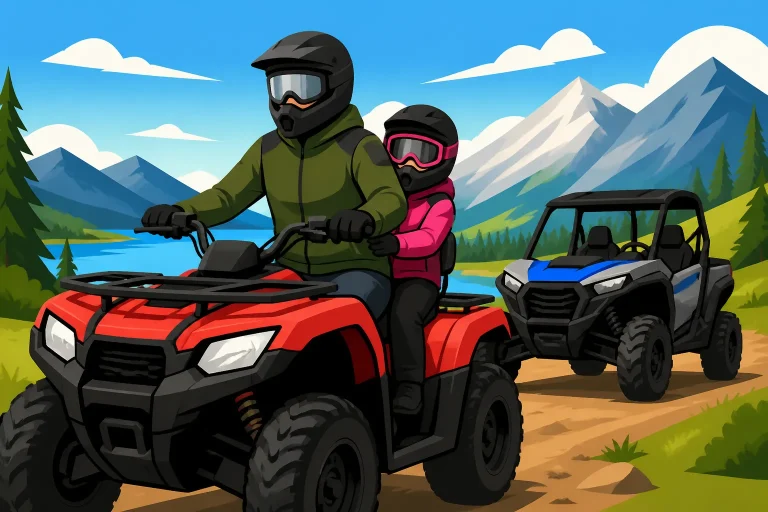
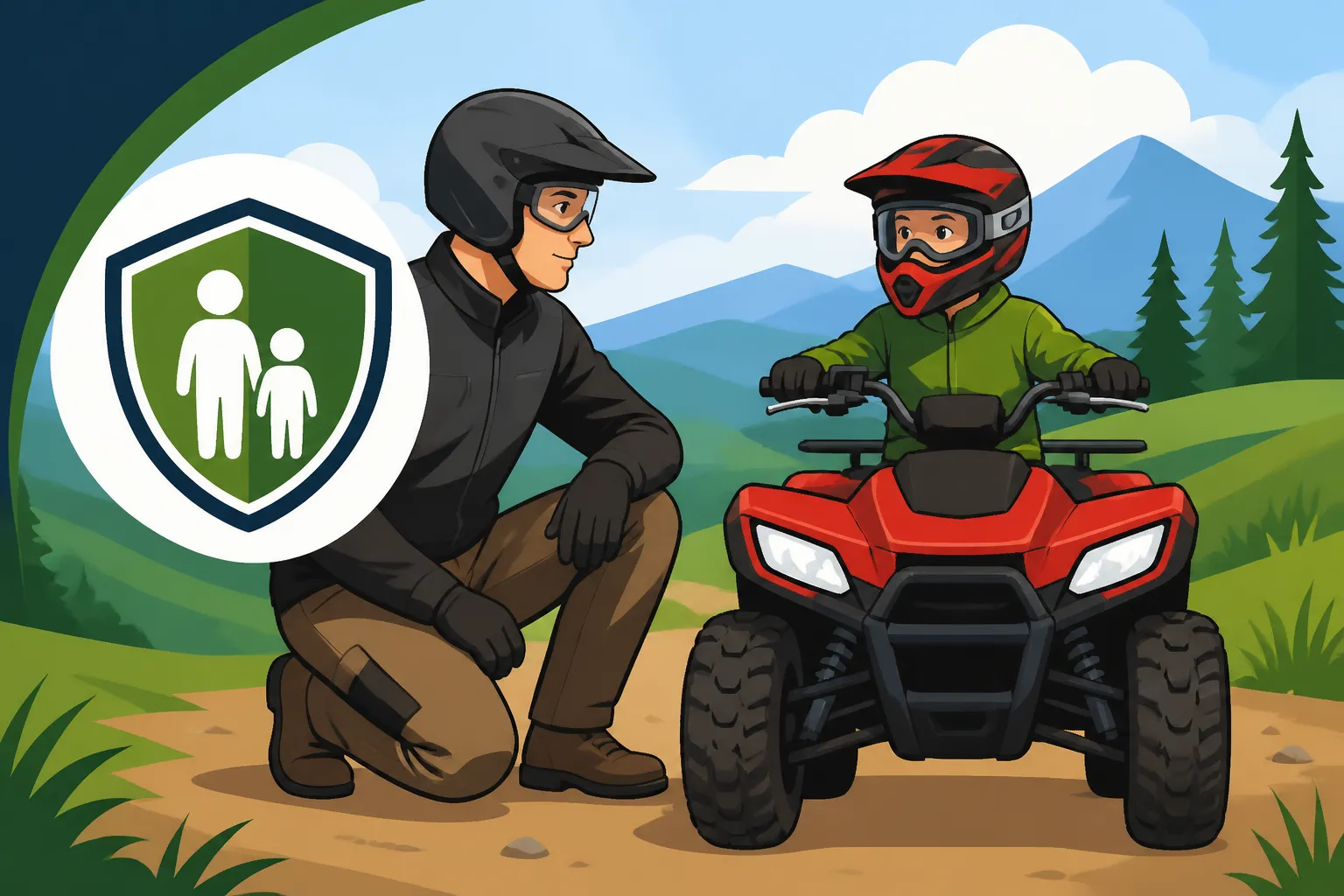
In Alberta, a rider under 14 must be under the close supervision of an adult while operating an off-highway vehicle on public land. The supervising adult must be at least 18. The rule is intended to mean more than having an adult somewhere in the group: the adult needs to be close enough to keep watch and respond if the young rider needs help.
The rule does not provide a simple distance to measure. Don’t treat a particular number of metres, or the fact that a parent is riding in the same general area, as automatic proof of close supervision. A practical standard is to keep the young rider within direct view and close enough to communicate promptly and intervene when the terrain, traffic, or the child’s behaviour calls for it.
That may mean staying close behind on a trail, stopping together at junctions, or choosing a route where the adult can maintain a clear view. Dense trees, hills, dust, trail bends, and fast group members can all make supervision less effective, even if the group is technically nearby.
The rule is about how the child is operating the machine, not just whether an adult has agreed to the outing. Leaving a young rider to travel ahead while the adult follows much farther back, or letting the rider disappear around blind corners, is a poor way to meet the purpose of close supervision. For more on the under-14 requirement, see Alberta Supervision Rules Under 14 and Alberta Adult Supervision at 18.
Supervision is not a riding permission
An adult’s presence does not make every trail or road legal to ride. The young rider still needs to stay in places where OHV use is allowed, and the adult should check land access and local rules before setting out. A route on Crown land may have restrictions, and a highway ditch is not automatically open to OHVs. See Alberta Rules for Riding Crown Land and Alberta Ditch Riding Is Not Automatic when planning a route.
The same distinction applies to equipment and other obligations. Supervision does not replace any applicable helmet, registration, insurance, or machine-safety requirements. An adult should check each requirement separately rather than assuming that staying beside a child covers them all. Alberta Helmet Law on Public Land explains the helmet rules, while Alberta Equipment Required on Public Land covers other equipment considerations.
Who can supervise and where the rule applies
The age threshold matters: the specific close-supervision requirement applies to riders who have not yet turned 14. A supervisor must be an adult who is at least 18. A teenager who is 16 or 17 does not meet that age requirement, even if they have considerable riding experience.
Turning 14 changes the application of this particular supervision rule, but it does not remove other legal or safety requirements. A 14-year-old still needs to follow the rules for the land, machine, equipment, and route. The age change also does not mean that every 14-year-old is ready to ride without an adult nearby. Alberta Rules for a 14-Year-Old Rider provides more detail about that age threshold.
| Situation | What to keep in mind |
|---|---|
| Rider is under 14 on public land | An adult who is at least 18 must provide close supervision. |
| Rider is 14 or older | The under-14 supervision rule no longer applies, but other riding rules still do. |
| Supervisor is under 18 | They do not meet the adult age requirement for this rule. |
| Ride is on private land | The public-land rule may not apply in the same way; permission and other applicable rules still matter. |
| Ride is on a road, ditch, or right-of-way | Check whether OHV use is allowed there. Supervision does not make an otherwise prohibited route legal. |
The requirement is tied to public land. Private property is a different setting, but that is not a blanket exemption from every rule. The landowner’s permission matters, and local rules or other legal requirements may still apply. Some areas that look like ordinary ground beside a road may legally be treated as a highway or public right-of-way. When the land status is uncertain, check before riding rather than relying on appearance.
A useful distinction is between where the child is riding and how the child is being supervised. First confirm the route is open to the machine. Then decide whether the adult can stay close enough to supervise throughout that route. If the route includes busy staging areas, steep sections, narrow trails, or places with limited visibility, choose a different path or keep the group together more closely.
How to supervise a young rider on a real ride
Close supervision works best when the adult plans for the child’s pace and ability instead of expecting the child to keep up with a faster group. Before leaving, agree on simple rules: where the child rides in the group, what to do at a junction, how to signal a stop, and what to do if the machines become separated.
A practical approach is to:
- Choose a suitable route. Start with terrain the young rider can handle without pressure. Check the current access information and avoid routes where visibility or conditions make it hard to stay together.
- Put the supervisor in a position to observe. Keep the child in sight, adjust spacing when the trail bends or visibility drops, and stop if the adult can no longer keep track of the rider.
- Set a pace for the youngest rider. Don’t let a group’s faster members pull the child ahead or leave the adult far behind. The group should wait at turns and other decision points.
- Agree on signals and stopping points. A child should know how to signal trouble and what to do if separated. The adult should also know where to regroup if communication fails.
- Reassess as conditions change. Mud, dust, rain, fatigue, unfamiliar terrain, and a busy trail can all reduce the adult’s ability to supervise closely. Turn around or take a break if control of the group is slipping.
An adult may ride on another machine or travel with the young rider in a way that allows direct oversight, but the setup should preserve a clear view and quick communication. Don’t assume that travelling in a large group is enough. The supervisor should be able to focus on the child, not just rely on someone else in the group to keep an eye out.
Riding together on one machine is not automatically a substitute for supervising a child who is operating a separate ATV. If the child is a passenger instead, check the machine’s passenger design and manufacturer limits, as well as applicable passenger rules. A seat that appears large enough is not necessarily intended for a second rider. See Alberta Rules for Passengers on a Quad for passenger considerations.
A short pre-ride check helps make supervision more effective. Confirm that the young rider knows how to stop, understands the controls, can reach and operate them, and is comfortable with the terrain. Make sure the adult has a way to communicate with the child where practical, but don’t rely on a phone or radio to compensate for riding out of sight. On many trails, communication devices may not work consistently.
The supervising adult should also avoid distractions. If the adult is leading a long group, managing several children, or dealing with another task, it may be difficult to keep close watch on one young rider. A smaller group and a route with frequent safe stopping places can make a ride easier to manage.
Common mistakes and a safer way to plan
The most common misunderstanding is treating “close supervision” as a formality. An adult being present at the staging area, waiting at camp, or riding somewhere else on the same trail network is not the same as keeping close watch while the child operates the machine.
Another mistake is assuming that supervision fixes other problems. It does not allow a child to ride on a closed trail, bypass a local restriction, or operate a machine that is unsuitable for them. It also does not transfer every responsibility to the supervising adult while the child rides without limits. The child should be taught to stop, wait, and ask for help when unsure.
Before a ride, check these points:
- Age and supervisor: Is the rider under 14, and is the supervising adult at least 18?
- Location: Is the route public land, private land, a road, or a right-of-way? Is OHV use allowed there?
- Visibility: Can the adult keep the young rider in view through the route’s turns and changes in terrain?
- Rider readiness: Can the child operate the machine safely and follow the agreed signals?
- Other obligations: Are the machine, registration, insurance, helmet, and required equipment in order?
If the answer to any safety question is uncertain, make the ride simpler: choose a shorter route, reduce the group size, or keep the adult and child closer together. The goal is not merely to satisfy a rule on paper. It is to make sure the adult can notice a problem early and help before a small mistake becomes a serious one.
For a child approaching 14, avoid treating the birthday as an automatic readiness test. The legal supervision requirement changes at the age threshold, but confidence and judgement develop at different rates. An adult can continue riding nearby voluntarily, especially on unfamiliar or more demanding terrain. That is a practical safety choice, separate from the specific under-14 rule.
Disclaimer
This article is for general informational purposes only and does not constitute professional advice. Laws, prices and regulations vary by location and change over time. Consult a qualified professional for guidance on your specific situation.