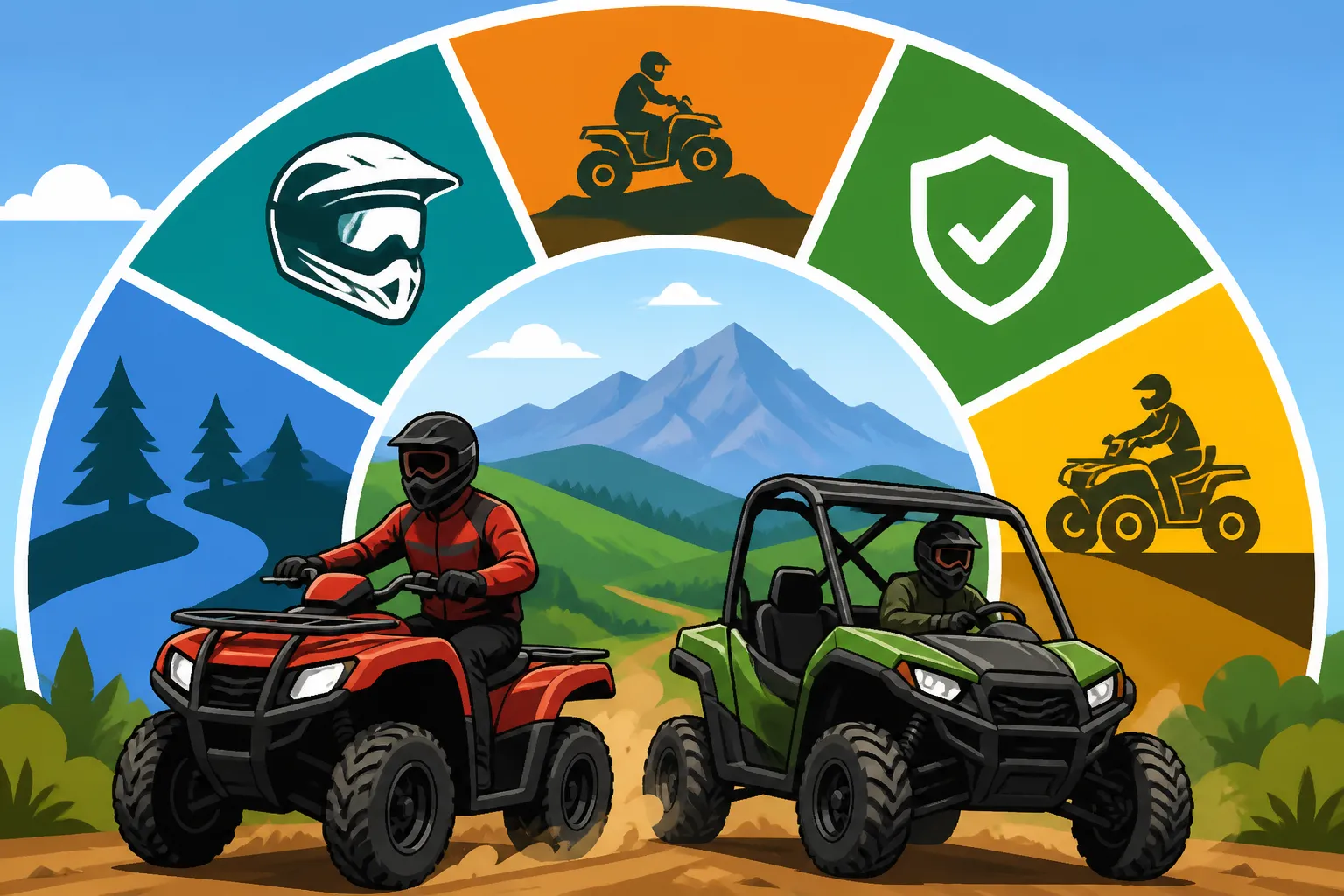
What a Rider Course Covers
A rider course is useful only if it teaches skills you can apply to your machine and the places you ride. In Alberta, course content varies by provider, and training is voluntary rather than a general legal requirement. Here’s what a typical ATV or UTV course may cover, what to ask before booking, and how to tell whether it fits your experience.
What an ATV or UTV rider course usually covers
A course commonly combines instruction with some form of practical riding. The balance depends on the provider, the students’ experience and the machines being used. A classroom session may explain safe operation and decision-making; a practical session lets riders work on handling under supervision.
| Course topic | What you may practise or discuss | Why it matters |
|---|---|---|
| Pre-ride inspection | Checking controls, tires, lights, brakes and visible damage | Helps identify problems before they become trail hazards |
| Controls and fit | Finding the controls, adjusting the machine and choosing a suitable riding position | Makes it easier to stay in control and respond quickly |
| Starting and stopping | Smooth starts, controlled stops and choosing where to stop | Builds basic control at low speed |
| Steering and balance | Turning, shifting body position and managing pace | Helps the rider stay stable on changing terrain |
| Terrain and obstacles | Approaching slopes, ruts, loose ground or obstacles cautiously | Encourages riders to assess conditions instead of rushing |
| Group riding | Spacing, communication and agreeing on a pace | Reduces confusion and close calls when riding with others |
| Safety and legal responsibilities | Protective equipment, passengers, access rules and emergency planning | Connects machine operation with the conditions of a real ride |
A pre-ride inspection is often one of the most practical parts. Riders may be shown how to look over the machine, identify obvious damage, check that controls respond and confirm that lights work. Ask the provider whether students inspect the machines themselves or only hear about the checks. Doing the inspection is more useful than simply watching someone else do it.
Instruction on controls and fit is particularly helpful for a new rider. An instructor may explain where the controls are, how to sit or stand for the machine and how to keep a manageable speed. ATV and UTV controls and seating differ, so make sure the course is relevant to the type of vehicle you plan to operate. A course built around a quad may not give you the same hands-on practice in a side-by-side.
Basic handling exercises may include starting, stopping, turning and changing speed in a controlled area. A beginner course should make room for riders to repeat those actions rather than moving quickly into challenging terrain. If you already ride confidently, ask whether the course includes more advanced exercises or is mainly an introduction.
Some providers include instruction about riding on slopes or over uneven ground. The point should be to understand how to assess the terrain and operate within your ability, not to encourage risky challenges. Good instruction makes clear that conditions can change and that turning back is sometimes the safest choice.
How practical training builds useful habits
A course can explain safe riding, but practical exercises help connect the advice to the way a machine responds. The exact exercises vary, so check what is included before you register. Ask whether students ride the course’s machines or bring their own, whether instruction is one-on-one or in a group, and how much supervised riding is planned.
For a first-time rider, useful practice is usually gradual. A learner can start with basic control in a predictable space, then work on simple turns and stops before taking on more complex tasks. If the pace feels too fast, tell the instructor. A course should make it possible to ask questions and build confidence without pressure to attempt a manoeuvre that feels beyond your ability.
More experienced riders may benefit from focused feedback. For example, an instructor might help identify habits that reduce control, such as carrying too much speed into a turn or failing to look far enough ahead. A course is not a substitute for sensible judgment on the trail, but it can help riders notice where their technique needs work.
Group riding may also come up, including keeping space between machines, communicating when someone needs to stop and agreeing on a pace that works for the least experienced rider. These habits matter on a recreation ride, where visibility, dust, noise and changing trail conditions can make it harder to keep track of everyone.
Courses may discuss what to do if a rider becomes separated from the group, gets stuck or encounters a mechanical problem. Ask whether emergency planning is part of the curriculum and whether the course covers carrying basic supplies or communicating when service is limited. The course may not provide a complete backcountry survival program, so understand its scope.
A provider may teach on its own machines or ask you to bring yours. If you use your own, confirm that it is suitable for the training area and that it is in safe working condition. If you use a course machine, ask what type it is and whether the skills covered will transfer to your ATV or UTV.
Safety, equipment and Alberta riding rules
A course may cover protective equipment, including helmets and other gear appropriate to the machine and conditions. Ask what equipment is required, whether anything is supplied and whether there are standards the provider expects. If you are preparing for public-land riding, review the applicable helmet requirements separately; training advice does not replace legal requirements. Alberta Helmet Law on Public Land
The course may also discuss passenger safety. A passenger must be accommodated by the machine’s design and the manufacturer’s limits. A course can explain riding considerations, but it cannot make an unsuitable machine safe for carrying a passenger. For additional detail, see Alberta Passenger Rules on an OHV.
Riders should understand that taking a course does not automatically grant access to every road, trail or parcel of land. Alberta riding rules depend on where you are, and local bylaws can affect whether an OHV may use a road or right-of-way. Before planning a route, check the rules for that specific place. Alberta Bylaw Lookups Before You Ride
The same distinction applies to registration, insurance and other paperwork. A course may mention these responsibilities, but the instructor is not necessarily providing a full review of your machine’s legal status. For riding on public land, check whether your machine needs registration and insurance, and make sure you know what documents to carry. Alberta Insurance Proof on Public Land For registration details, see Do You Need to Register an ATV in Alberta?
Alberta does not generally require riders to complete a safety course before riding an OHV, but voluntary training can still be worthwhile, especially for a new rider or a young person developing basic skills. Rules for young riders and supervision are separate from course completion. See Alberta Supervision Rules for Young Riders and confirm the rules that apply to your circumstances.
A course certificate may be useful as a record of training, but do not assume it replaces a licence, registration, insurance or a permit. Ask the provider what the certificate represents and whether it is recognized for any specific purpose. For more on the voluntary nature of training, see Alberta Has No Mandatory Safety Course.
Choosing a course that fits your needs
Before you book, compare the course’s format, machine type and level. Course descriptions can use similar labels while offering different amounts of practical instruction. A short introductory session may be right for a first ride, while someone with experience may want a course that includes targeted feedback or more challenging skills.
Consider these questions when speaking with a provider:
- Is the course designed for ATVs, UTVs or both?
- Is it aimed at beginners, experienced riders or a specific age group?
- How much time is spent riding under instruction?
- Do students use course machines or bring their own?
- What protective equipment and clothing are required?
- What is the instructor-to-student ratio?
- Does the course include a skills assessment or completion certificate?
- What happens if weather or trail conditions make practical training unsafe?
- Does the course cover group riding, pre-ride checks and emergency planning?
- Are there prerequisites or age restrictions?
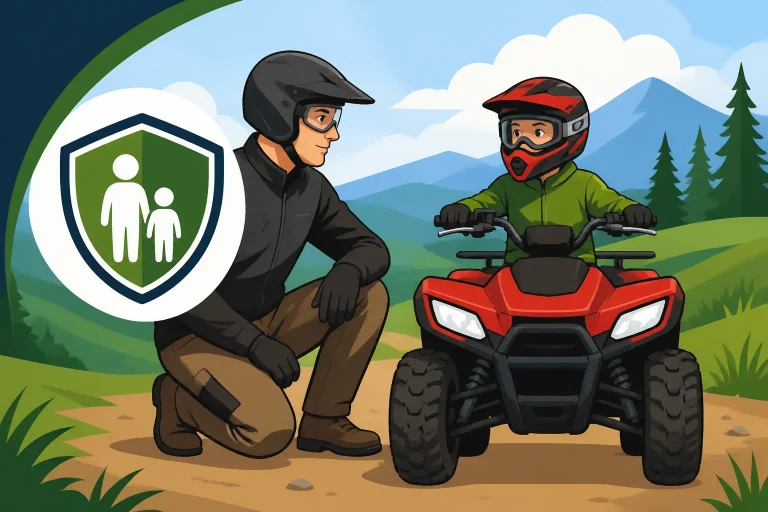
For a child or teenager, look for a course designed for the rider’s age and machine size rather than assuming an adult beginner class is suitable. Ask how the instructor manages different experience levels and whether the young rider will have enough time to practise safely. Rider Courses Built for Youth on Quads
Some providers offer training through safety organizations or councils. Compare the actual course outline, not only the organization’s name. Alberta Courses Through Safety Councils If you are considering a course associated with the Canada Safety Council, check its current description and delivery details before booking. Taking the Canada Safety Council’s Rider Course
A useful course should leave you with clearer habits, not just a certificate. You should be more comfortable checking the machine, handling basic controls, judging your limits and planning a responsible ride. Training is only one part of preparation: inspect your machine, use appropriate protective equipment, follow local access rules and ride within your ability.
Disclaimer
This article is for general informational purposes only and does not constitute professional advice. Laws, prices and regulations vary by location and change over time. Consult a qualified professional for guidance on your specific situation.