Does Every Adult in Camp Need Their Own Pass?
Planning an Alberta camping trip can leave one question easy to miss: is a single pass enough for the whole group? For covered public-land camping, each adult camper needs an individual pass. Here’s who needs one, who doesn’t, how the pass differs from riding requirements, and what to check before you set up camp.
The short answer: each adult camper needs an individual pass
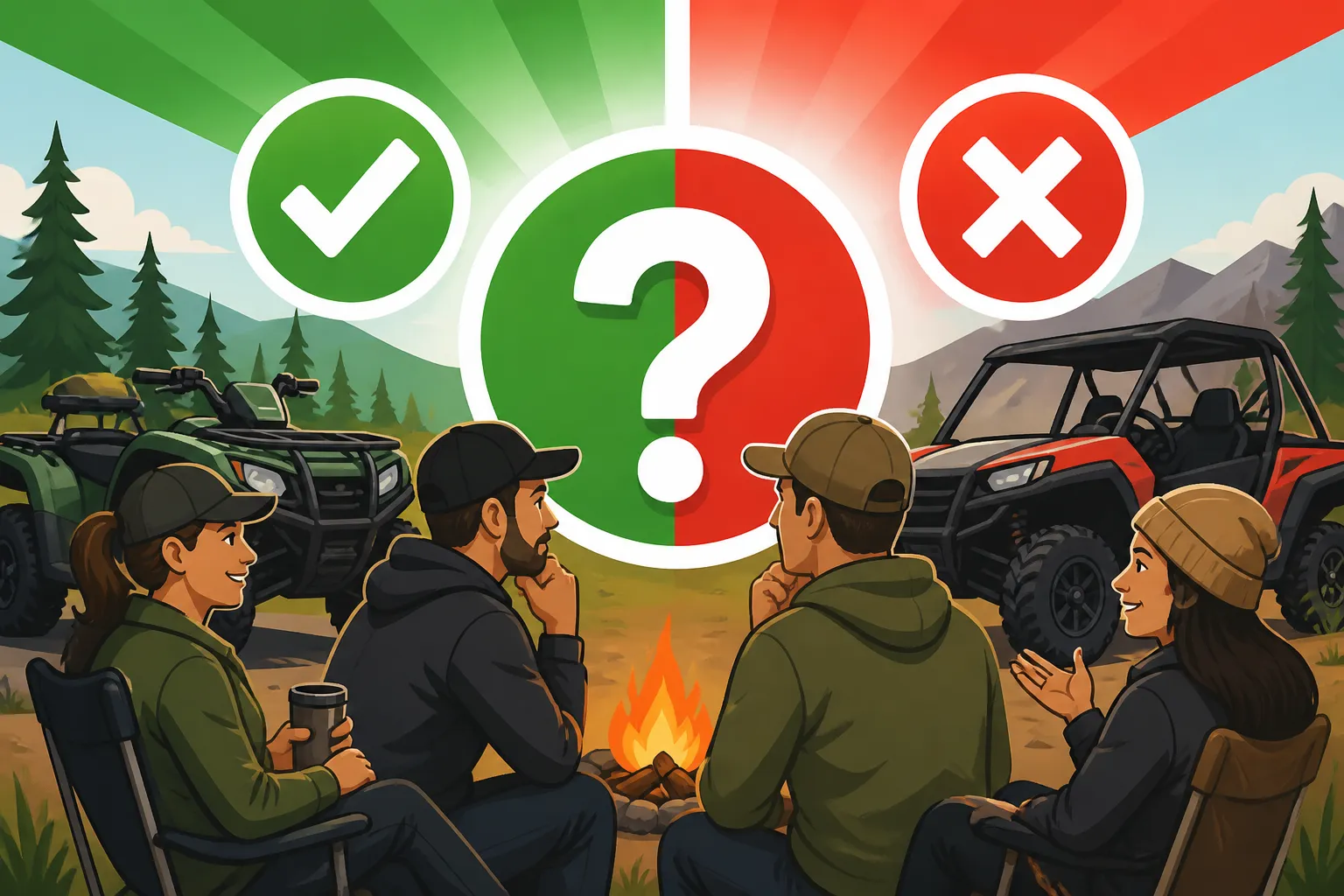
If several adults are camping together on public land where Alberta’s Public Lands Camping Pass is required, one pass does not cover the whole group. Each camper who is 18 or older needs their own valid pass. A shared campsite, vehicle, trailer or reservation does not make one adult’s pass apply to everyone else.
The key word is camper. An adult who is staying overnight as part of the camping group should plan to have an individual pass. A person who only visits during the day and does not camp is a different situation, but don’t assume that a visitor’s presence or role in the group automatically settles the question. If your plans are unusual, confirm what applies to your location and activity before heading out.
| Person or situation | Does that person generally need an individual camping pass? | What to keep in mind |
|---|---|---|
| Adult camping overnight on covered public land | Yes | Each adult camper needs their own valid pass. |
| Child under 18 camping with adults | No | The adult campers still need their own passes. |
| Adult joining the group for part of the overnight trip | If they camp overnight, plan on yes | A pass held by the trip organizer does not cover another adult. |
| Adult who visits during the day but does not camp | Not simply because they visit | Check the rules for the site and any other activity they take part in. |
| Group using a commercial or designated campground | The public-land camping pass may not be the relevant fee or permission | Check the campground’s own booking and payment rules. |
| Rider using an OHV during the day | The camping pass is not an OHV registration or trail permit | Registration, insurance and local access rules are separate. |
The pass requirement applies only where the rule covers the land and type of camping in question. It is not a province-wide fee for every person who sleeps outdoors anywhere in Alberta. The covered area and the kind of camping matter, so check the current official map or information for your destination. The overview in Alberta Public Lands Camping Pass can help you distinguish the camping-pass requirement from other access rules.
For a group trip, the practical approach is straightforward: count the adults who will camp overnight, then make sure each has their own pass before the trip. Don’t rely on a single pass kept by the driver, the person who booked the site or the owner of the vehicle.
Who needs a pass, and who does not
Adults camping overnight
The individual-pass rule is easiest to apply when everyone is staying overnight. If four adults are camping together in a place where the pass is required, each of the four should have a pass. It does not matter whether they sleep in one tent, separate tents, a camper or a side-by-side setup with camping gear nearby. The pass is for the adult camper, not a campsite or piece of equipment.
This also applies when one person organizes the outing or pays for shared supplies. A group purchase or a single transaction should not be treated as proof that every adult has a pass. Each camper’s pass needs to be associated with that individual, and each person should be able to produce their own proof if asked.
If one adult plans to arrive later, leave early or stay for only part of the trip, check the pass terms for the dates they will camp. Don’t assume that the main group’s pass covers someone who joins after the original purchase. An adult who camps for even part of an overnight outing should confirm they have the right pass for that period.
Children and young campers
Children under 18 do not need their own Public Lands Camping Pass under the age-based rule. That does not remove the requirement for accompanying adults: each adult camper still needs an individual pass where one is required.
A family should also separate the camping-pass question from any requirements for riding an ATV or side-by-side. A child may not need a camping pass but may still be subject to age, supervision, helmet and passenger rules when riding. For the camping question specifically, Do Alberta Kids Need a Camping Pass? covers the age distinction.
Day visitors and people who are not camping
A person who stops by a campsite for a daytime visit is not automatically the same as an overnight camper. The pass is about covered camping, not simply being in a group photo or travelling in the same vehicle. However, a day visitor may still have to follow other rules for the area, and the answer can depend on what they do and where they go.
Be especially careful when a day visitor is also using the area for another activity. Riding an OHV, entering a restricted area or using a facility can trigger requirements that are separate from the camping pass. If the visitor decides to stay overnight, treat them as an adult camper and confirm that they have their own pass.
When the destination is not public-land camping
Not every overnight stay is subject to the same pass rule. A commercial campground may use its own booking and payment system. A designated recreation area can have separate requirements, and private land is not the same as public land. The pass should not be treated as a substitute for a reservation, campground fee, landowner permission or other approval.
Before the trip, identify the type of land where you will sleep, not just the nearest town or trailhead. A staging area and a camping location can have different rules even when they are close together. If the group plans to camp near a public-land recreation area, check the boundary and site-specific information rather than assuming the rules for one location extend to the next.
What the camping pass covers—and what it does not
The Public Lands Camping Pass is connected to camping on covered public land. It does not give the holder unrestricted permission to camp anywhere, and it does not replace other requirements for lawful access. A pass does not open a closed zone, authorize camping in a prohibited location or give permission to cross private land.
It is also not an OHV registration, insurance policy or general trail permit. If adults plan to ride during the trip, they need to think about the machine and the route as well as the campsite. Depending on the machine and where it will be ridden, check registration, insurance, equipment and local access rules separately. Alberta Requires Insurance on Public Land and Alberta Registration Before Riding Crown Land explain two requirements that should not be confused with a camping pass.
| Requirement | What it relates to | Does a camping pass replace it? |
|---|---|---|
| Public Lands Camping Pass | Covered camping on public land | No; it applies to camping, not every form of access. |
| OHV registration | The machine and its lawful use | No. |
| OHV insurance | Required situations for operating an OHV | No. |
| Local access rules | Whether a route or area is open to the activity | No. |
| Campground booking or fee | Use of a managed campground or facility | No; check that operator’s requirements. |
| Landowner permission | Access to private land | No. |
A camping pass also should not be mistaken for a reservation. It does not necessarily hold a site for the group, guarantee a place to camp or protect the group from a closure. Check whether the location allows the kind of camping you intend to do, whether a stay limit applies, and whether fire restrictions or other temporary rules are in effect. Conditions can change, so look up the destination shortly before travelling.
If you are planning to ride from camp, check the route and zone rules independently. Public land may have designated trails, seasonal closures, or restrictions on where particular types of machines can go. The fact that you have a camping pass does not mean that an adjacent trail is open. Alberta’s Public Land Use Zones Explained is a useful starting point for understanding why the map and rules for the specific area matter.
How to arrange passes for a group
Count the adult overnight campers
Start with the people who will actually camp overnight in the covered area. Count each adult individually, including the trip organizer and anyone arriving separately. Do not count children under 18 as needing their own pass, but remember that their adults do.
If the group is changing, make a list of who will stay each night and ask each adult to confirm their own pass. This avoids the common mistake of assuming the person who booked the trip or drove the truck purchased something that covers the whole party.
Have each adult arrange their own pass
Because the pass is individual, it is sensible for each adult to arrange their own rather than relying on one person to manage every purchase. The official purchasing system may require personal information or a Wildlife Identification Number. If someone does not already have what the system asks for, allow time to check the process before departure. Why You Need a Wildlife Identification Number First explains why that number can come up during a purchase.
Pass options and purchase methods can change, so use the official channel to confirm what is available and which dates the pass covers. For a short trip, compare the available short-term option with an annual option based on your own plans. Don’t choose based on an old screenshot or another camper’s past purchase; confirm current terms and costs with the provider. Alberta Three-Day Pass vs Annual Pass and Renewing an Annual Public Lands Camping Pass can help frame that decision.
Keep proof accessible
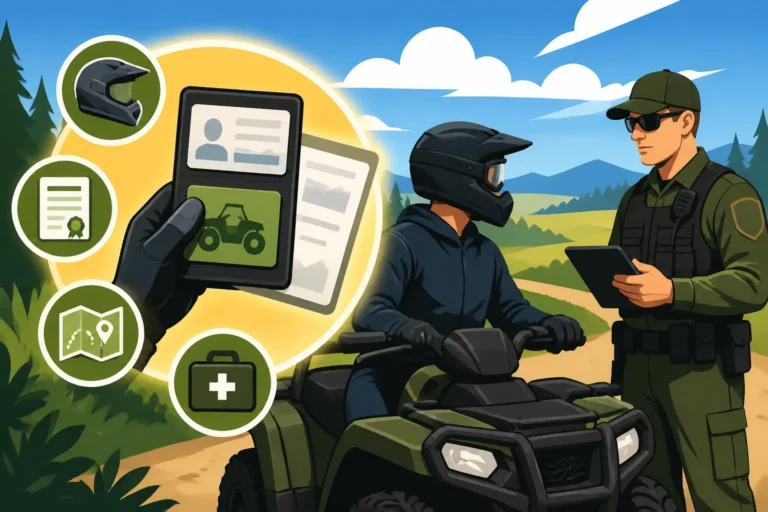
Each adult should know how to show proof of their own pass. If the pass is stored digitally, make sure the holder can access it where the group will be travelling. A phone may have poor or no service in a remote area, so consider checking in advance whether the proof can be viewed offline or whether printing it is practical. A screenshot is useful only if it clearly shows the relevant details and is accepted for the purpose.
The group organizer can keep a checklist, but that is a backup—not a substitute for each adult being able to produce their own proof. Avoid putting every pass on one phone that may stay in the vehicle while the group separates. If adults ride or walk away from camp, each should know where their own proof is.
Recheck the site and the rules before leaving
Use a short pre-trip check to avoid treating a pass as an all-purpose permission slip:
- Identify the exact camping location and confirm that it is public land.
- Check whether the Public Lands Camping Pass applies to that location and type of camping.
- Count the adults who will camp overnight and confirm that each has an individual pass.
- Check any separate campground booking, access, fire, stay-limit or closure requirements.
- If riding, confirm machine registration, insurance, route access and other OHV requirements separately.
- Make sure each adult can access proof of their own pass.
If your group is unsure whether a location is inside the covered area, do not guess from a broad regional description. Check the official information for the specific destination. A location’s proximity to the foothills or a public road does not by itself tell you whether the pass requirement applies.
The useful rule of thumb is simple: for covered public-land camping, one adult’s pass is not a group pass. Each adult who camps should have their own; children under 18 do not need one. Then check the destination and treat riding, campground use and other access requirements as separate questions.
Disclaimer
This article is for general informational purposes only and does not constitute professional advice. Laws, prices and regulations vary by location and change over time. Consult a qualified professional for guidance on your specific situation.