Alberta Game Retrieval by Machine
Recovering a harvested animal can be the hardest part of a hunt, especially when the terrain is steep, wet or far from the truck. In Alberta, a successful harvest does not automatically make every route open to an ATV or side-by-side. The safe approach is to check land access and machine rules before you ride, then plan a recovery that stays within them.
The short answer: a harvest does not open every route
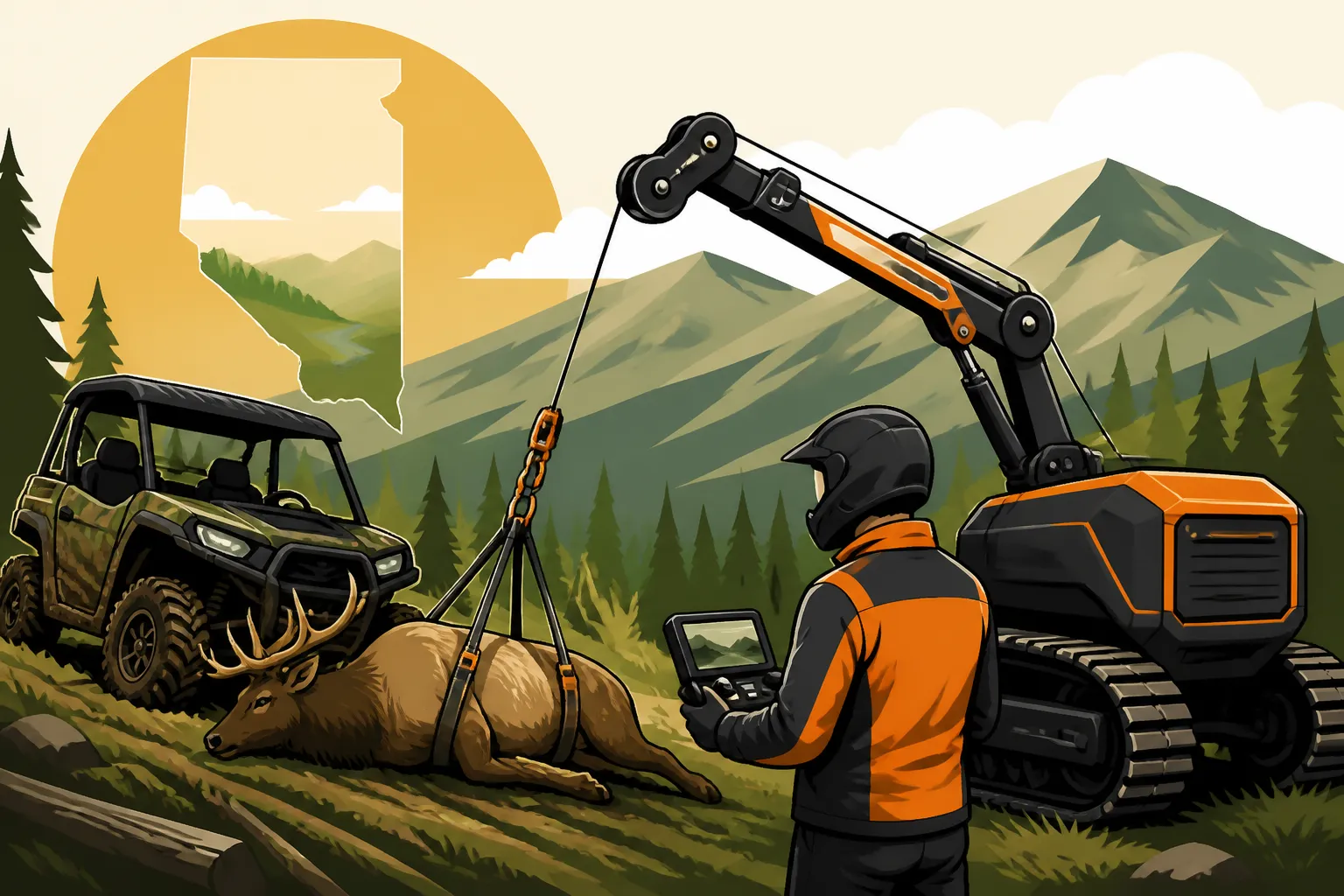
You may be able to use an ATV or UTV to retrieve legally harvested game, but there is no blanket permission to drive wherever the animal lies. The route still needs to be open to that machine, and you must have the required access to the land. If the only way to reach the animal would mean leaving a trail where off-trail riding is prohibited, crossing land without permission or ignoring a closure, stop and find another recovery method.
Keep two activities distinct: hunting and retrieving. Using a machine to pursue, harass or flush wildlife can create separate legal problems. A lawful shot does not turn a machine into permission to chase an animal or travel through restricted terrain. Follow the hunting rules for your species and location, and use the machine only in ways permitted on the route.
Land designation matters. A route may be open to OHVs in one area and closed in another, or subject to a seasonal closure. In a Public Land Use Zone, for example, local rules and trail designations determine where you may ride; the fact that a harvested animal is nearby does not, by itself, change those rules. Start with Alberta Public Land Use Zones Explained and Alberta Rules for Riding Crown Land, then check the current map and notices for the specific area.
| Situation | What to check before using a machine |
|---|---|
| The animal is beside a route open to OHVs | Confirm the route is open now and that you have access to the land |
| The animal is off a designated trail | Check whether off-trail travel is specifically allowed there; do not assume recovery is an exception |
| The route crosses a grazing lease | Confirm the access conditions and contact the leaseholder when required |
| The route crosses private land | Get the landowner’s permission before entering |
| A road or trail has a seasonal or temporary closure | Treat the closure as in force unless the responsible authority confirms otherwise |
| You are in a park or another restricted area | Check the site’s rules; general public-land access rules may not apply |
If you cannot confirm that the route is open, do not make a quick assumption based on tracks, gates, an old map or another rider’s advice. Check the relevant land manager’s current information, and choose a recovery plan that does not depend on crossing a closed route.
Check the land, route and access first
Before the hunt, identify where the machine can legally go and where it can be parked. On the day, confirm that conditions have not changed. Weather, fire restrictions, forestry operations, wildlife concerns and temporary closures can affect access. A road that appears on a map is not necessarily open to recreational OHV use.
Public land and designated trails
Rules vary by location. Some areas restrict OHVs to designated trails, while others have different conditions. Do not interpret a trail shown on an old map as permission to ride it today. Check the current information for the land and route, including any notices at the staging area. Alberta OHV Trails: Riding Public Land offers more background on planning a ride on public land.
Pay particular attention to the difference between reaching an animal on an open route and leaving that route to get closer. If off-trail travel is prohibited, a short detour through trees, muskeg or a meadow is still off-trail travel. Driving around a puddle or a muddy section can also widen a trail and damage ground beyond the tread. Where access is limited to designated trails, stay on them even when a more direct line seems convenient.
If an animal is down away from a legal route, consider carrying it to the machine in manageable loads, using a pack frame, game bags or a hand-operated sled where the terrain allows. If the distance or terrain makes that unsafe or impractical, reassess the recovery plan rather than treating the restriction as optional.
Grazing leases, private land and gates
Access to public land under a grazing lease has its own conditions. Do not assume that a hunting licence, a harvest or the public status of the land gives permission to travel across a lease by machine. Review Alberta Grazing Lease Access Rules and contact the leaseholder when the applicable rules require permission. Contacting a Grazing Leaseholder Before You Ride can help you plan that conversation.
On private land, get permission from the owner before entering, even if the animal crossed onto the property after the shot. Explain that you are recovering harvested game, where you would travel and whether you need to bring in a machine. Agree on the route and any limits, such as staying out of crops or avoiding livestock.
Leave gates as you found them, unless the landholder has told you otherwise. Do not push through a closed gate, bypass a barrier or use another person’s tracks as proof of access. An animal’s location does not cancel the need to respect land boundaries and access conditions.
Parks and temporary restrictions
Provincial parks, protected areas and other managed sites may have rules that differ from nearby public land. Confirm whether OHVs are permitted at all, and whether hunting or game transport is allowed in the area. Fire restrictions, active work and temporary closures can also change where you may ride. Check current notices before setting out, not only when you arrive at the trailhead.
Plan a recovery that protects the animal and the terrain
A recovery plan should answer three questions before the hunt: where the machine can legally travel, how the animal will get from the harvest site to that route, and what to do if the planned route is blocked or unsafe.
- Mark the harvest location and the nearest legal access. Use a phone map or GPS, but do not rely on cell service being available. Save an offline map if you can, and note recognizable landmarks.
- Confirm the route and access conditions. Check current trail information, closures and land access requirements. If a leaseholder or landowner’s permission is needed, obtain it before riding in.
- Choose a recovery method for the terrain. A pack frame, game bags, a drag or a hand-operated sled may be more appropriate than trying to bring the machine to the animal. A method that works on firm ground may be unsafe in muskeg, steep terrain or deep snow.
- Carry the load securely and within the machine’s limits. Keep the load balanced and secured so it cannot shift into the wheels, exhaust or moving parts. Follow the manufacturer’s capacity guidance and keep the rider’s view and control clear.
- Stop if the route is closed, damaging or unsafe. Do not widen a trail, cut around a barrier or continue into terrain that could trap the machine or injure someone. Use a different route or arrange help.
A machine can reduce the distance you need to carry an animal, but it does not remove the need to handle the carcass properly. Keep meat clean, avoid dragging it through mud or contaminated water, and protect it from heat and insects as conditions require. Plan for the time and equipment needed to field dress and cool the meat, not just for getting the animal back to the staging area.
For a long carry, divide the load into manageable sections and make more than one trip if necessary. A side-by-side’s cargo bed may be useful, but only if the load is within its capacity and secured. A quad rack is not a substitute for a proper tie-down or a safe load. Do not carry a person in a position not designed for passengers, and do not let a bulky load block lights or controls.
Useful recovery items can include game bags, sturdy straps, a compact hand saw, gloves, a headlamp and a first-aid kit. Choose equipment that fits the animal, terrain and machine rather than buying a large accessory you may not be able to transport safely. If shopping online, Amazon is one place to compare basic gear, but check the product dimensions, load ratings and return terms before ordering.
What if the animal is beyond the open route?
Do not ride off a designated trail simply because carrying the animal will take time. First look for another legal route or a permitted way to move the animal by hand. If the recovery would require access across private property or a lease, contact the relevant owner or leaseholder. If you cannot confirm what the rules allow, ask the land manager or a qualified local authority before proceeding.
Also keep the machine out of sensitive ground. Wetlands, stream edges and soft slopes can be damaged quickly by repeated passes, and rutting can make a narrow access route much worse. Even where riding is allowed, avoid unnecessary trips and turn around rather than forcing a machine through conditions that risk damage or getting stuck.
Common mistakes to avoid
Assuming game retrieval is an automatic exception. The need to retrieve a harvest does not make a closed route open. Check the location’s rules before you ride, and do not treat urgency as permission to cross a barrier or leave a designated trail.
Confusing hunting access with OHV access. Being allowed to hunt in an area does not necessarily mean you can ride a machine throughout it. Hunting regulations, land access conditions and OHV rules can all apply at once. For broader context, see Alberta Hunting Access by OHV.
Relying on an old map or another rider’s tracks. A trail may have changed status, been closed seasonally or been damaged since a map was made. Tracks show that someone travelled there, not that the route is currently open.
Failing to ask about a lease or private boundary. A harvest close to a boundary can make it tempting to cross first and ask later. Confirm access before taking a machine onto land where permission or specific conditions apply.
Overloading the machine. A large animal can make a quad or side-by-side unstable, particularly on side slopes or rough ground. Respect the manufacturer’s load limits, secure the cargo and make more trips if needed.
Leaving the trail to avoid difficult ground. Going around mud, water or a downed tree can create a wider, more damaging route. Turn back, find a legal alternative or carry the animal out.
Forgetting that conditions can change during the hunt. A closure, rising water, a fire restriction or deteriorating weather can make the original plan unsuitable. Check again before starting the recovery, and have a non-motorized backup plan.
A little preparation can prevent a difficult recovery from becoming an access violation or a damaged trail. Identify legal routes before the hunt, confirm who controls the land, and be ready to carry the animal from the harvest site if a machine cannot lawfully reach it. When rules are unclear, verify them before riding rather than relying on an assumption.
Disclaimer
This article is for general informational purposes only and does not constitute professional advice. Laws, prices and regulations vary by location and change over time. Consult a qualified professional for guidance on your specific situation.