Skid Plates for Eastern Slopes Rock
Rock on Alberta’s Eastern Slopes can turn an ordinary ride into a costly repair if a quad or side-by-side takes a hit underneath. A skid plate helps shield vulnerable parts, but the right setup depends on your machine, the terrain and how you ride. This guide explains what to protect, how to choose and fit plates, and how to check them after a rocky outing.
Why skid plates matter on the Eastern Slopes
The terrain can catch more than your tires
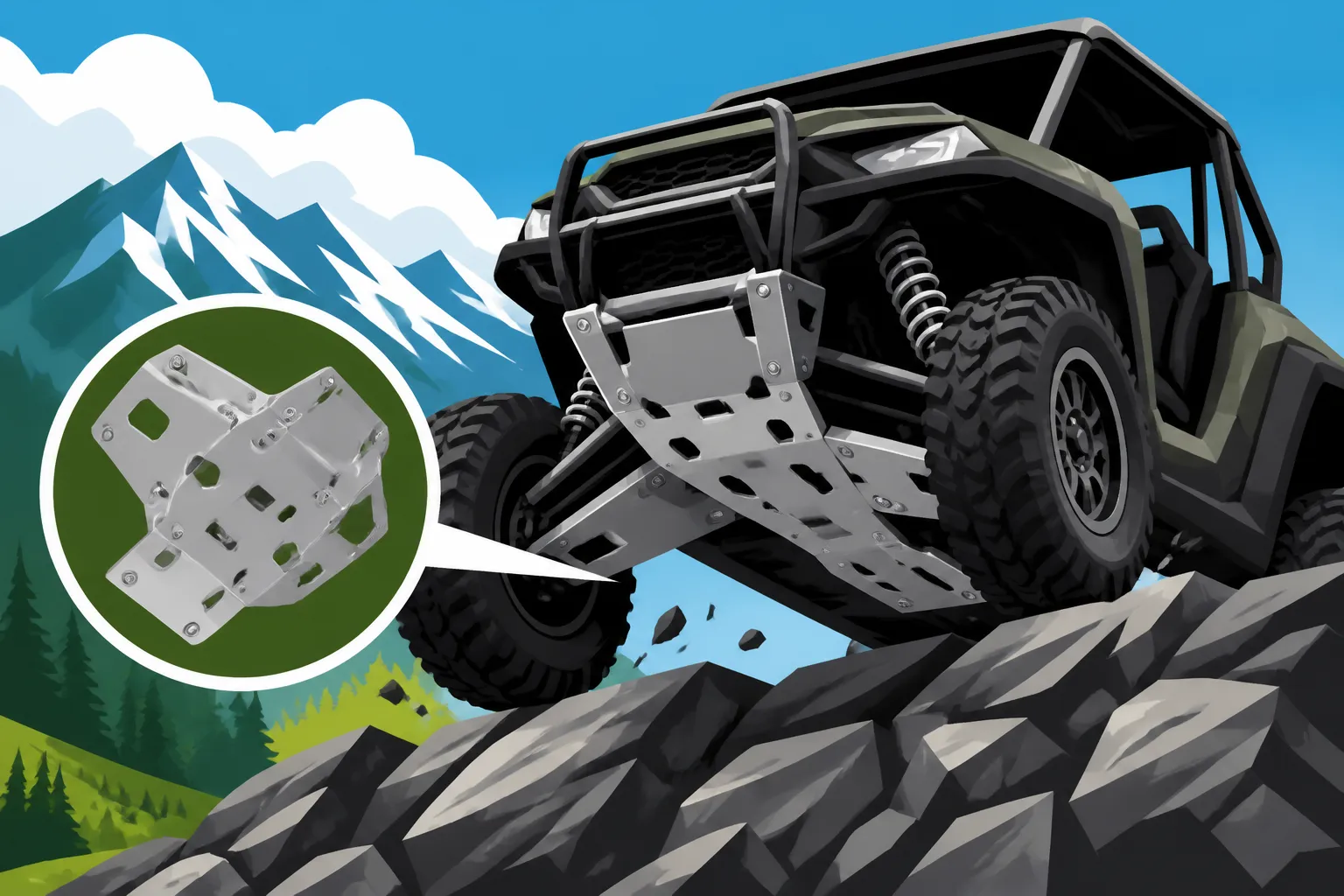
Rocky foothills routes can include exposed stone, uneven ledges, embedded rocks and ruts where the ground changes abruptly. A tire may roll over a rock while the frame, suspension components or underside of the machine pass close to it. On a quad, that can mean a sharp impact beneath the engine or footwell. A side-by-side has more underbody area to protect, and its extra width and weight can make a contact harder to shrug off.
The damage is not always dramatic. A rock can scrape a plate, bend a thin guard, loosen a fastener or leave a dent that becomes a problem later. A harder strike may damage a vulnerable component or catch an exposed edge. Even a small issue can spoil a ride if it means stopping to inspect the machine far from the staging area.
A skid plate is a protective layer between the terrain and parts of the vehicle. It cannot make a machine immune to damage, but it can reduce the chance that routine contact turns into a repair. If you are exploring areas described in Alberta Eastern Slopes Riding Areas, the mix of terrain and route conditions is a good reason to think about underbody protection before unloading.
Your riding line still matters
A skid plate should not be treated as permission to drive straight over every obstacle. Choosing a careful line remains the first defense. If a rock is taller than your ground clearance, or the approach would put the machine’s belly onto it, look for a safer route where permitted. Slow down enough to read the ground, and avoid straddling a sharp obstacle if it could catch the frame or a plate edge.
This matters especially when the surface is loose, wet or partly hidden by vegetation. A route that looks straightforward from the seat may conceal a step or rock shelf. Walking a short section, spotting for a passenger or turning around can be wiser than testing the machine’s protection on an unknown obstacle.
It also helps to match your plans to your experience and equipment. Trail ratings and local conditions can help set expectations, but a route can feel different after rain, erosion or heavy use. Review Alberta Trail Difficulty Ratings and check the specific area before you ride. Protection is useful backup, not a substitute for sound judgment.
Choosing skid plates for your ATV or UTV
Compare materials and coverage
Skid plates are commonly made from materials such as aluminum, steel or high-density polyethylene. Each has trade-offs. Metal plates can feel reassuring against sharp impacts, while plastic-style plates can slide over rocks and may be quieter. Weight, stiffness, noise, heat, drainage and ease of removal all matter. The best option is the one designed for your make and model and suited to the terrain you actually ride.
Coverage is just as important as material. A basic plate may protect only the central underside, while a more complete kit can include guards for the front, rear, A-arms, footwells or other exposed areas. More coverage can mean more protection, but it can also make inspection and cleaning less convenient. Look closely at what is included rather than assuming that a “full” kit covers every exposed component.
| Consideration | What to check | Why it matters |
|---|---|---|
| Material | Construction, flexibility and resistance to impact | Affects how the plate handles rock contact and wear |
| Coverage | Centre, front, rear, footwells and suspension areas | Identifies exposed areas the kit does not protect |
| Fitment | Exact make, model and year compatibility | Poor fit can leave gaps or interfere with components |
| Access | Drain holes, service panels and fastener locations | Makes cleaning, inspection and maintenance easier |
| Hardware | Supplied fasteners and mounting points | Correct installation helps prevent rattling or movement |
For riders who mostly travel maintained routes, extensive coverage may not be necessary. If your usual rides involve rocky sections, uneven cutlines or frequent underbody contact, broader protection may make more sense. Consider what you have already damaged, which parts sit lowest, and whether you ride alone or with a group that can help if a machine needs attention.
Match the plate to the machine
ATVs and UTVs have different shapes and vulnerabilities. On a quad, check the engine area, frame rails, footwells and exposed suspension components. On a side-by-side, inspect the larger central belly, lower doors or footwell area, and any exposed driveline parts. A plate made for one model may not fit another, even if the machines look similar.
Before buying, confirm the exact machine year and trim, and compare the product’s fitment details with the vehicle. Look for clear information about included sections, mounting points and whether the plate works with accessories already installed. A winch mount, frame accessory or aftermarket component can affect fit. If anything is unclear, ask a qualified dealer or installer to confirm compatibility rather than forcing a plate into place.
Do not overlook ground clearance. A plate that hangs lower than the original underbody may contact rocks sooner. Poorly fitted hardware can also snag or rattle. The aim is protection that follows the machine’s intended mounting points—not a loose panel that creates a new obstacle. If you are comparing routes in advance, Alberta Trail Maps Worth Downloading can help with planning, but confirm access and current restrictions for the specific riding area before setting out.
Prepare and install protection properly
Inspect before mounting
Start with a clean underside so you can see the frame, existing guards, fasteners and any damage. Check for bent parts, cracks, corrosion, loose hardware or signs that a previous impact shifted a component. Installing a new plate over an existing problem can hide it and make later inspection harder.
Read the installation instructions for the exact kit. Use the specified mounting locations and hardware, and make sure the plate does not press against moving or hot components. Avoid improvising with fasteners that are too long or too short. If the plate requires drilling, cutting or modifications you are not comfortable making, get help from a qualified installer.
Once mounted, check that the plate sits evenly and does not rattle when gently tested. Confirm that steering, suspension movement and access to routine service points are not blocked. If a plate has inspection or drain openings, make sure they remain unobstructed. A secure fit is essential: a loose plate can make noise, shift under impact or catch on terrain.
Plan around maintenance and trail conditions
Protective plates can collect mud, grit, needles and small stones. That debris can make it harder to spot a developing problem and may interfere with drainage or service access. After a wet or dusty ride, clean around the plate and check the mounting points. If the design allows easy removal, follow the manufacturer’s guidance for periodic removal and inspection.
Before a trip, think beyond the machine itself. Confirm the area’s access rules, closures and route conditions, and carry tools suitable for basic checks. A mapping app such as onX Offroad can be useful for reviewing routes and saving information for navigation, but do not rely on an app alone as confirmation that a trail is open or appropriate for your vehicle. Check the applicable land-manager information as well. Checking a Zone Before You Go is a sensible part of preparing any ride.
When a route becomes rougher than expected, slow down and reassess. A skid plate can help with incidental contact, but repeated hard impacts can still damage the plate or the vehicle beneath it. If you hear a new scrape, clunk or rattle, stop somewhere safe and inspect rather than hoping the noise disappears.
Ride with protection and inspect afterward
Use the skid plate as a backup
A practical approach is to ride as though the underside is still vulnerable. Keep a steady pace that lets you react to rocks, avoid sudden throttle changes on ledges, and use a spotter when a passenger can safely guide you through a difficult section. If the obstacle requires dragging the machine over a sharp edge, consider turning around or finding another permitted route.
Stay on designated routes and avoid widening trails to get around obstacles. Leaving the trail tread can damage vegetation and create new tracks that other riders may follow. Staying on the Trail Tread is part of protecting the riding area as well as your machine. Respect closures and posted restrictions even if an alternate line appears easier.
Good preparation includes checking the map before signal disappears. onX Offroad may help you organize route information and keep a planned track available, but local conditions and land-use rules still need to be checked separately. A route shown on a map is not, by itself, a guarantee of permission or safe passage.
Check for damage after the ride
After returning to the staging area, look over the plate before loading the machine. Check for fresh gouges, bends, cracked areas, missing or loose fasteners, and anything wedged between the guard and the vehicle. Listen for rattles during a slow walk-around. If the plate is badly bent or has shifted, do not assume it is safe to keep riding.
Also inspect what you can see through access openings and around plate edges. A guard may look intact while a mounting point has loosened, or debris may be pressing against a component. If you suspect damage to the frame, suspension, steering or driveline, have the machine assessed before the next ride. A quick check at home is easier than discovering a problem on a remote route.
Keep a record of recurring contact points. If the same area of the plate is taking repeated hits, it may point to a fitment issue, a route choice that needs adjusting or a component that needs more targeted protection. onX Offroad can help you keep route notes alongside your planning, while a simple maintenance log can track inspections and repairs. The useful goal is not to make every ride risk-free; it is to catch small issues before they become bigger ones.
Disclaimer
This article is for general informational purposes only and does not constitute professional advice. Laws, prices and regulations vary by location and change over time. Consult a qualified professional for guidance on your specific situation.