Firewood Rules at a Random Camp
A quiet campsite can turn into a frustrating one when you realize you’re unsure whether you can gather wood, whether a fire is allowed, or how to put it out before leaving. This guide explains how to handle firewood at an Alberta random camp, what to avoid cutting or collecting, and how to check local restrictions before riding in with your ATV or UTV.
Know what firewood you can gather at an Alberta random camp
Gather only loose deadwood when local rules allow it
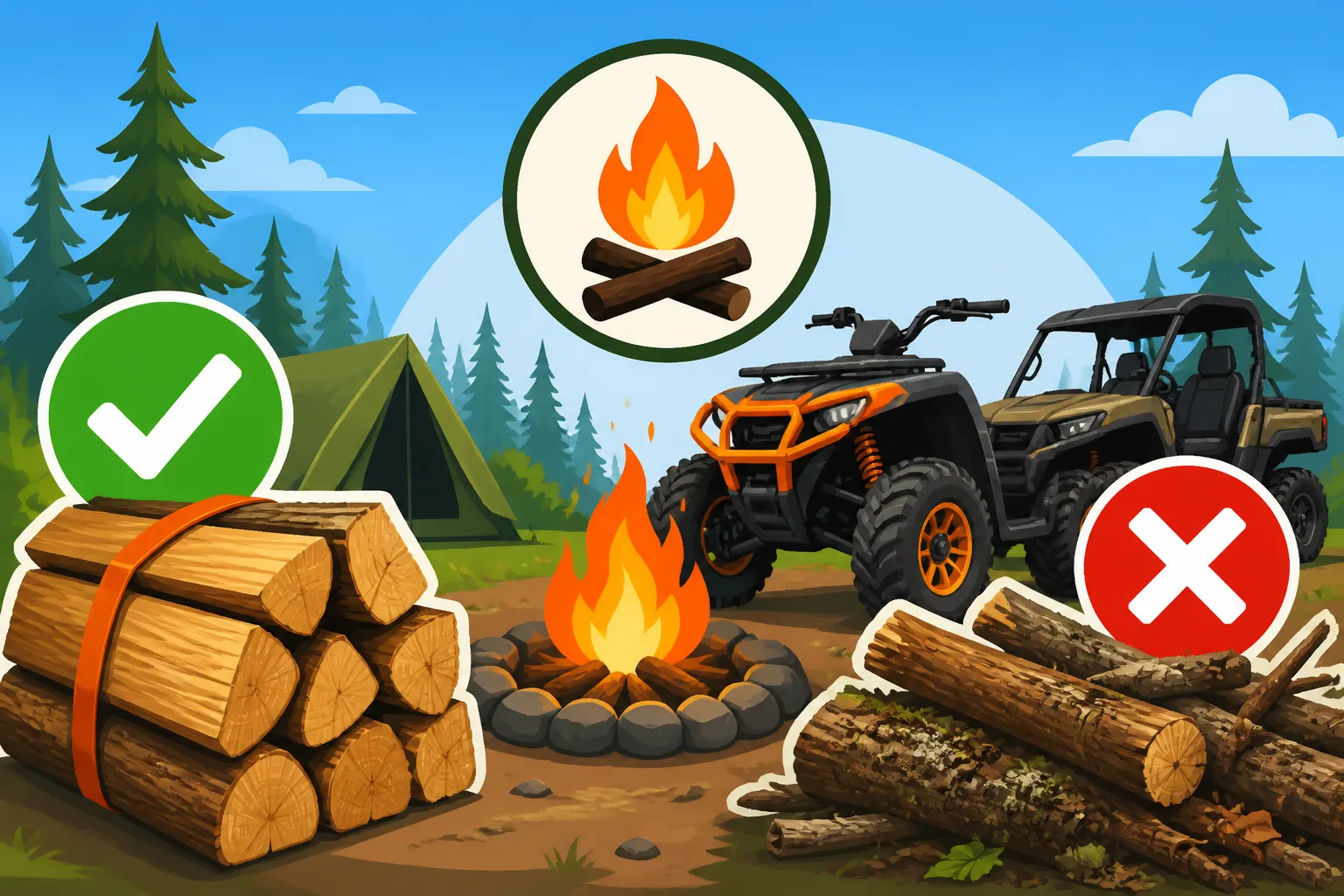
For a small campfire, the cautious approach is to use loose, dead wood already on the ground, and only where the rules for that public land area permit gathering it. Keep your collection modest and use it at the campsite. Dead branches and fallen sticks are very different from cutting down a tree or taking a load of wood home.
Do not cut live trees, standing dead trees, or large fallen logs unless you have confirmed that the activity is permitted and have the required authorization. A tree that looks dead can still provide wildlife habitat, and cutting or removing wood can damage a campsite or the surrounding area. If you are uncertain whether a piece of wood is okay to take, leave it where it is.
The distinction between gathering a few pieces for a campfire and harvesting wood matters. Collecting firewood for household use, selling it, or taking a substantial quantity away from public land may require authorization. Rules can also vary by land designation and temporary closure. Check the applicable area information rather than assuming that a practice allowed at one campsite is allowed everywhere.
Bring firewood when collection is restricted or impractical
Gathering wood at camp is not always a reliable plan. A campsite may have little suitable deadwood, the ground may be wet, or local restrictions may prohibit collecting it. In those situations, bring a small amount of clean firewood from a permitted source, or plan to camp without a wood fire.
Transporting firewood can also introduce insects or tree diseases to new areas. Use locally sourced firewood where possible, and follow any local movement restrictions or instructions. Avoid bringing wood with visible insects, fresh holes, or signs of disease. If a firewood advisory applies to your destination, follow it even if you already have wood loaded in the trailer.
An ATV or UTV makes it tempting to carry extra wood in a cargo box or on a rack. Keep the load secure, do not exceed the machine’s limits, and avoid hauling wood from public land as though it were a free supply. If you are planning a longer trip, check whether firewood is available near your staging area or campsite before leaving home.
Don’t assume every kind of public land has the same rules
Alberta public land includes areas with different designations, access rules, and management conditions. Rules for a random camp can differ from those at a developed campground, a designated camping node, or a particular Public Land Use Zone. A firewood rule you heard about from another rider may apply only to that person’s destination.
Before you go, use the official information for the specific area and read the restrictions that apply to your planned campsite. Alberta Random Camping Rules Explained is a useful starting point for understanding the broader camping framework, while Checking a Zone Before You Go can help you make the area check part of your trip planning.
An offline mapping app such as onX Offroad can help you keep track of your route and campsite location, especially where cell service is unreliable. Use mapping tools for navigation, but don’t treat a map app as permission to collect wood or make a fire. Confirm land rules and current notices through the responsible authority.
Check whether a campfire is allowed before gathering wood
Firewood permission and fire permission are separate questions
Finding suitable deadwood does not automatically mean you can burn it. A fire ban, fire restriction, local closure, or site-specific rule can prohibit a campfire even when wood gathering would otherwise be allowed. Check both questions separately: whether you may collect the wood, and whether you may have a fire at that location.
This is easy to miss when you arrive late. You may have spent the afternoon riding, reached camp near dusk, and noticed a fire ring left by a previous visitor. That ring does not prove a fire is allowed today. Restrictions can change with dry conditions, wind, or local fire risk, so check the current notices before you set out and again when practical before lighting a fire.
Start with Alberta Fire Bans and Riding and Alberta Fire Restrictions in Dry Summers for context on how fire conditions can affect a trip. Then check the official notices for the exact area you plan to visit. If you cannot confirm that a fire is allowed, choose a no-fire meal and leave the matches packed away.
Use the fire facility or method required at the site
Where fires are permitted, follow the instructions for that specific place. Some areas may have designated fire facilities or restrictions on where a fire can be built. Do not create a new fire ring if one is required, and do not assume a rock circle makes an otherwise prohibited fire acceptable.
Keep a campfire small and manageable. Avoid lighting one beneath low branches, near dry grass, or where wind could carry sparks into brush. Do not burn garbage, cans, plastic, food packaging, or treated wood. These materials can create hazardous smoke and leave a mess for the next camper.
If you use a camp stove instead, follow its operating instructions and any applicable restrictions. A stove may be a practical alternative when gathering wood is not permitted or when conditions make a wood fire a poor choice. It still needs a stable, clear location, and local fire notices may restrict equipment use too.
Make a fire decision before unloading the machine
A quick pre-trip check can prevent a lot of avoidable hassle. Before loading an ATV or UTV, decide whether your meal plan depends on a fire, look up the area’s current notices, and pack a stove or ready-to-eat food as a backup. That way, a restriction does not leave you scrambling after dark.
| Before the trip | What to check | Safer choice if uncertain |
|---|---|---|
| Choosing a campsite | Whether fires are allowed at that location | Plan for a no-fire meal |
| Gathering wood | Whether local rules allow deadwood collection | Bring permitted, locally sourced firewood |
| Packing an ATV or UTV | Cargo limits and how the wood will be secured | Carry only a manageable amount |
| Arriving at camp | Current notices, wind, and dry ground cover | Do not light a fire if conditions are unsafe |
| Leaving camp | Whether embers are fully cold | Stay until the fire is completely out |
If you use onX Offroad or another mapping app to mark a campsite, add a reminder to check fire notices separately. A route can remain useful for navigation while fire conditions change. Keep official closure information as the deciding factor.
Put out the fire completely before riding away
Drown the embers and check for heat
Never leave a fire unattended, even if it looks nearly finished. Before going to sleep or heading out for a ride, put it out completely. Add water slowly, stir the ashes and embers, and continue until there is no heat, smoke, or glowing material. If water is limited, plan ahead so you have enough for extinguishing the fire rather than using every drop for cooking.
Do not bury hot coals. They can remain hot beneath the surface and reignite when exposed to air or dry debris. Do not kick dirt over a fire and assume the problem is solved. Stirring and checking for heat is what helps reveal embers hidden under ash.
A useful final check is to hold your hand close to the ashes without touching them. If you can feel warmth, the fire is not out. Add more water, stir again, and check repeatedly. Be careful with hot metal cookware and fire rings, which can remain hot after the visible flames disappear.
Leave the campsite clean and undamaged
Pack out food wrappers, cans, foil, and other waste rather than burning them. Look around the fire area before leaving for small pieces of trash, loose gear, or food scraps. Food left behind can attract wildlife and make a campsite unpleasant for the next group.
Leave standing trees, shrubs, and large logs undamaged. Avoid widening a bare patch around a fire, moving rocks from sensitive areas, or creating extra fire rings. A campsite that looks “already used” is not an invitation to make it larger or remove whatever wood remains. Packing Out What You Bring offers a useful reminder that responsible camping includes everything brought to the site, not just the obvious garbage.
If you are moving camp after a stay, be especially careful not to leave warm ashes or scattered firewood behind. Follow the applicable stay limits and relocation requirements, including Alberta’s 14-Day Camping Limit and Moving a Random Camp After Fourteen Days. Fire safety and campsite care still matter on the final morning, even when you are eager to get back on the trail.
Plan for firewood and camping conditions on an OHV trip
Check the destination, access route, and nearby rules
Random camping is not permission to camp or make fires anywhere that looks convenient. Confirm that your intended site is allowed, check any area-specific restrictions, and make sure your ATV or UTV route is permitted. Alberta Camping Away From Recreation Areas can help clarify the broader camping context, while [Alberta Random Camping Rules] is another useful reference when you are sorting out where a random camp fits into the rules.
A map can make it easier to understand where you are in relation to roads, trails, and boundaries. onX Offroad may help you plan and save a route before entering an area with poor reception. Still, map layers can’t replace official land-use information, closure notices, or a direct check with the responsible authority. Use the tool to support navigation, not as the final word on access or firewood.
If your plan depends on reaching a particular campsite, have a backup location or a no-fire option in mind. A trail closure, poor conditions, or a full staging area can change your day. Knowing how to adjust is more useful than assuming you will be able to gather wood wherever you end up.
Carry only what you can secure safely
Loose firewood can shift, fall, or interfere with handling if it is piled on an ATV rack or UTV cargo bed. Secure it so it cannot slide into the rider’s space, block lights, or fall onto the trail. Keep the load within the manufacturer’s limits and remember that passengers, fuel, tools, and recovery gear also add weight.
Avoid carrying long branches that stick out where they could hit another rider, catch on brush, or make a tight turn harder. If your route includes rough ground, steep sections, or narrow trails, a bulky load can make the ride less predictable. When in doubt, pack less wood or plan to use a stove.
A practical camp kit includes water for extinguishing a fire, a shovel where appropriate, a reliable way to cook without an open fire, and a way to check official notices before departure. For a remote ride, save the route and essential area details offline. onX Offroad can be one part of that navigation plan, but keep your fire-safety plan independent of whether you have mobile coverage.
Use a simple decision process at camp
When you arrive, take a moment before unloading. Confirm that you are in an allowed camping area, check that fires are currently permitted, and look at the ground and weather conditions. If all three checks are clear, use only the permitted fire setup and a modest amount of appropriate wood.
If any answer is uncertain, skip the fire. A camp stove, cold meal, or early night is a much better inconvenience than an uncontrolled fire or a violation. The same goes for wood gathering: if you cannot tell whether collection is allowed, do not cut or remove it.
Before leaving, make sure the fire is fully extinguished, pack out your waste, and leave the site in good shape. A little preparation makes an Alberta random camp more enjoyable, and it helps keep public land safe and usable for the riders who come after you.
Disclaimer
This article is for general informational purposes only and does not constitute professional advice. Laws, prices and regulations vary by location and change over time. Consult a qualified professional for guidance on your specific situation.