Alberta Wildlife on the Trail
Wildlife is part of riding Alberta’s backcountry, but meeting a moose around a blind corner or spotting a bear near the trail can turn a fun day tense fast. Knowing when to slow down, stop, give animals space, and change your route helps protect both riders and wildlife. This guide covers common encounters, seasonal patterns, and practical ways to prepare.
Wildlife You May See on Alberta Trails
Alberta’s riding areas range from forested foothills to open grassland and northern boreal forest, so the animals you encounter depend on where and when you ride. Even on a familiar route, wildlife can appear without warning, especially near water, food, or cover.
Common animals and how they behave
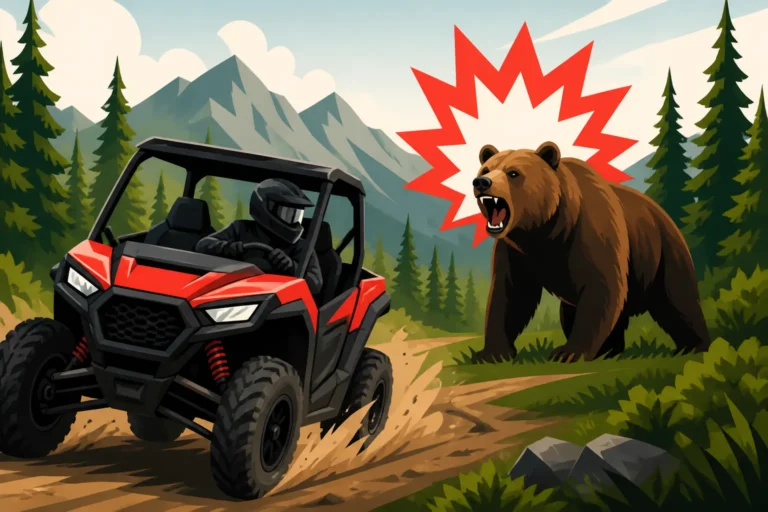
Black bears and grizzly bears may cross trails or feed near berry patches, streams, and forest openings. A bear that has not noticed you may move away once it hears the machine. If it is close, do not ride toward it to get a better look or try to squeeze past. Stop at a safe distance, keep an escape route open, and wait for the bear to leave or turn back.
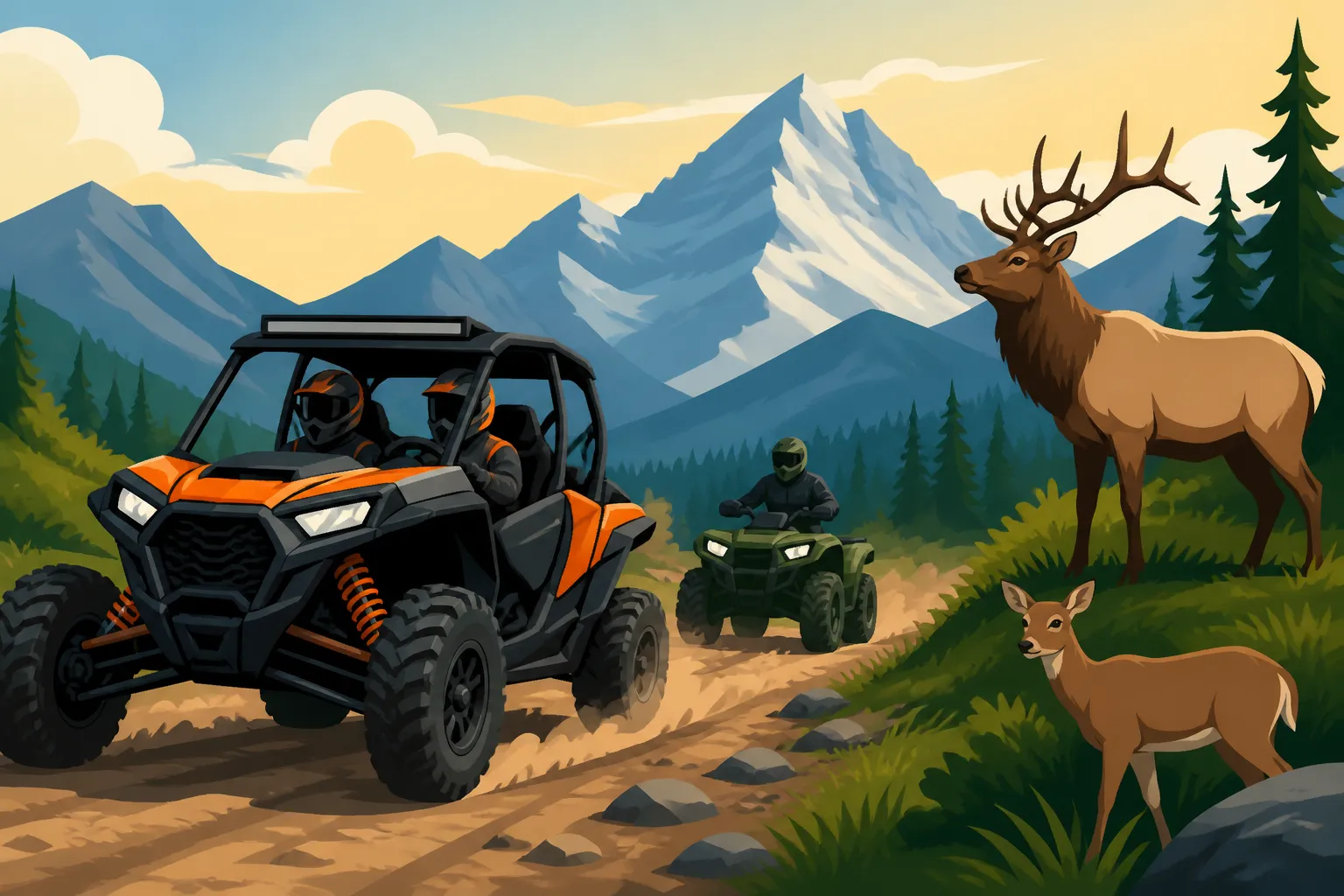
Moose are large, powerful animals that can be difficult to see in thick brush. They often use wet areas and forest edges, and a cow with a calf may react defensively if she feels crowded. Elk and deer can also bolt across a trail with little warning. On a machine, the danger is not only a collision: a sudden animal movement can cause a rider to swerve into a ditch, tree, or another machine.
You may also see bighorn sheep, mountain goats, coyotes, wolves, or smaller animals such as foxes and hares, depending on the region. Wildlife is less predictable than trail traffic. A sheep standing on a slope may seem unbothered, while a group of animals may suddenly move across the route. Give them room and avoid surrounding them with a group of riders.
Notice the habitat, not just the animal
Certain trail features make wildlife encounters more likely. Slow down around bends with limited visibility, narrow sections bordered by brush, creek crossings, marshy ground, and open areas where animals may feed. A quiet stretch can also be misleading: animals may be nearby even when you cannot see or hear them.
Pay attention to tracks, fresh scat, disturbed vegetation, and warning calls from birds or other animals. These clues do not tell you exactly what is ahead, but they are a good reason to reduce speed and stay alert. If you see one animal, scan the surrounding area before moving on. A calf, cub, or second animal may be hidden nearby.
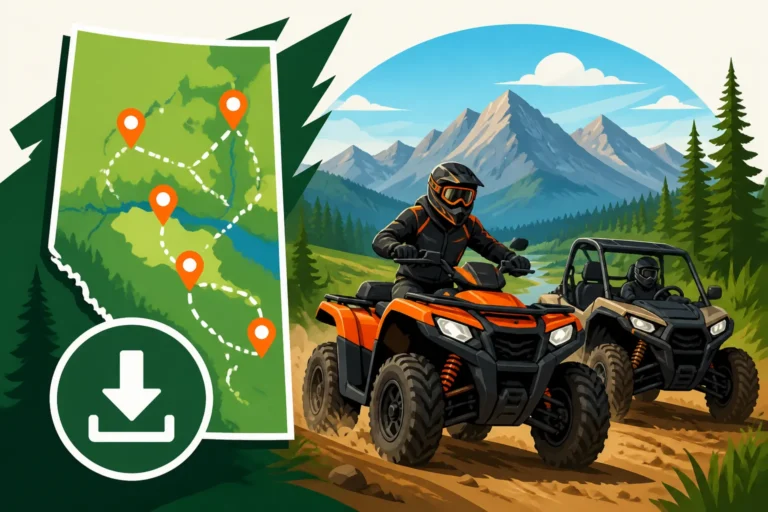
A trail plan should account for the terrain and the wildlife it supports. Before riding in an unfamiliar Public Land Use Zone, check current access information and any closures. [Checking a Zone Before You Go] is a useful companion to that pre-ride routine. Mapping tools such as onX Offroad can help you review your route and keep track of where you are, but use official notices for current restrictions and closures.
What to Do When Wildlife Is on the Trail
The most useful response is usually a calm one: stop, leave space, and avoid making the animal feel trapped. That sounds simple, but it can be hard to remember when you are riding with friends or have a schedule to keep. Talk through the plan with your group before heading out.
A safe response, step by step
- Slow down as soon as you notice an animal. Avoid a sudden close approach, sharp turn, or burst of acceleration.
- Stop at a safe distance. Keep the machine pointed in a direction that lets you retreat without driving toward the animal.
- Give the animal an open route away. Do not block its path with your group, park between an adult and young, or surround it for a photo.
- Stay together and speak calmly. Keep children close to an adult and avoid shouting, honking, or revving the engine.
- Wait, back away, or choose another route. If the animal does not leave, do not pressure it. Turn around if that is the safer option.
- Continue only when the area is clear. Look around for other animals before restarting or passing through.
If you encounter a bear, do not approach it, feed it, or try to drive it away. Keep bear spray accessible rather than buried in a pack or strapped somewhere you cannot reach while seated. Learn how to use it before your ride, and follow the product’s instructions. [Carrying Bear Spray on a Foothills Ride] covers practical preparation for a backcountry outing.
If an animal approaches, charges, or appears injured, prioritize getting yourself and your group to safety. Do not stop to take photos or try to handle an injured animal. Once you are at a safe location, report the incident to the appropriate local authority or land manager. For more encounter-specific planning, see [Alberta Bear Encounters While Riding].
Group riding and trail etiquette
A group can be more noticeable to wildlife than a single rider, but it can also make encounters harder to manage. Keep enough space between machines to avoid crowding the animal, while staying close enough that riders can communicate. When the lead rider stops, signal clearly so the rest of the group does not roll forward toward the wildlife.
A common mistake is to assume that an animal will move because a machine is loud. It may not. A bear, moose, or elk can react unpredictably, and noise can make a stressful encounter worse. Do not rev engines, chase an animal, or ride off-trail to get around it. [Alberta Trail Etiquette Locals Expect] offers broader guidance on sharing trails responsibly, while [Staying on the Trail Tread] explains why keeping to established routes matters for the land as well as for other users.
| Situation | Safer response | Avoid |
|---|---|---|
| Animal visible ahead on a clear trail | Slow down, stop well back, and wait for it to move away | Riding closer to get a photo |
| Wildlife near a blind corner | Reduce speed and approach cautiously | Accelerating through the corner |
| Animal with young nearby | Give extra space and retreat if needed | Passing between the adult and young |
| Animal does not leave the trail | Turn around or wait from a safe location | Honking, revving, or trying to push past |
| Fresh signs of wildlife in dense cover | Slow down and scan the area | Assuming the trail is empty |
Seasonal Wildlife Patterns and Riding Conditions
Wildlife activity changes through the year. Seasons do not create a guarantee that you will see an animal, but they can help you anticipate where extra care may be needed. Trail conditions also affect how much time you have to react.
Spring and early summer
Spring riding often means soft ground, runoff, and limited visibility along muddy or brushy sections. It is also a period when many animals are caring for young. A young animal alone may not be abandoned; its parent could be nearby. Do not approach it or stop beside it for an extended look. Give the area a wide berth and leave quietly.
Be especially cautious near wet ground and waterways, where animals may feed or travel. If you encounter an animal on a narrow route, patience is safer than trying to squeeze by. In some conditions, postponing the ride is the best decision for both the trail and the animals. [Alberta Riding in Spring Melt] offers more on choosing routes and managing changing ground conditions.
Late summer, fall, and winter
Late summer and fall can bring more visible wildlife activity as animals feed and prepare for colder weather. During fall, elk and deer may be more active, and hunting activity can also affect where people are travelling. Ride defensively, watch for other trail users, and check access information before setting out. [Alberta Riding in Fall Hunting Season] can help you plan around the added activity.
In winter, snow can make tracks easier to spot, but it can also hide hazards and narrow the usable trail. Animals may be conserving energy or moving through areas where food is available. Keep your speed appropriate for visibility and traction, and do not follow tracks off the designated route. A machine’s ability to travel through deep snow does not mean the route is suitable or open.
Route planning can be particularly helpful when daylight is short or a trail network has several intersections. onX Offroad can be used to review a route before leaving, and downloaded maps may help with navigation where phone service is unreliable. Still, a digital map is not a substitute for posted signs, current land-manager information, or turning back when conditions change.
Prepare Before You Ride
Good wildlife safety starts before you unload the machines. A few minutes of planning can prevent a stressful encounter from becoming a dangerous one, especially when you are travelling with children, new riders, or a large group.
Build a practical wildlife plan
Before the ride, decide who is leading, how the group will signal a stop, and what everyone should do if wildlife blocks the route. Make sure riders know not to pass the lead machine when it stops. If someone spots an animal, they should alert the group without charging ahead to investigate.
Carry bear spray where it can be reached quickly, and make sure everyone knows which rider has it. Bring a first-aid kit, water, and a way to communicate if the group becomes separated. In areas with limited service, tell someone your route and expected return time. A route-planning app such as onX Offroad can help you organize the day, but keep a backup plan for navigation and follow local signs and restrictions.
Check the expected weather and trail conditions, then choose a route that matches the least experienced rider in the group. If recent conditions have damaged a trail or led to a closure, do not try to bypass the restriction by cutting through brush. [Alberta Trail Closures After a Storm] is useful reading before a trip when weather may have changed access.
Make room for wildlife to remain wild
Responsible riding means leaving animals undisturbed, even when an encounter feels like a rare opportunity. Do not feed wildlife, follow it, or post a location in a way that encourages others to crowd a sensitive area. Keep dogs controlled and away from wildlife; a dog that runs after an animal can bring it back toward people.
Most encounters are brief when riders stay calm and leave animals a clear way out. The goal is not to get as close as possible or to make wildlife move on your schedule. It is to keep people safe, protect animals from unnecessary stress, and leave the trail in good shape for the next rider. That approach makes the outing better for everyone sharing Alberta’s backcountry.
Disclaimer
This article is for general informational purposes only and does not constitute professional advice. Laws, prices and regulations vary by location and change over time. Consult a qualified professional for guidance on your specific situation.