Alberta Rules That Changed in 2017
Riding an ATV or UTV in Alberta has always been about freedom, adventure, and getting out into our incredible landscapes. But let's be honest, staying on top of the rules can feel like trying to hit a moving target, especially when changes come into effect that completely shift how we've always done things. This guide is here to walk you through some of the significant regulatory shifts that happened in Alberta in 2017, particularly those impacting off-highway vehicle (OHV) use, so you can ride confidently and safely within the law.
The Landmark Shift: Mandatory Helmets for OHVs on Public Land
For years, many of us grew up riding quads and dirt bikes without giving much thought to helmets, especially on backcountry trails or private land. It felt like a personal choice, a risk we weighed ourselves. Then 2017 rolled around, and everything changed with the introduction of the mandatory helmet law for OHVs on public land. This wasn't just a minor tweak; it was a fundamental shift in how we approach safety as riders.
Why the Helmet Law Came Into Effect
The move to make helmets mandatory on public land was driven by a genuine concern for rider safety and a desire to reduce serious injuries and fatalities. Before 2017, emergency rooms across Alberta saw far too many OHV-related head injuries, many of which could have been prevented or significantly mitigated by wearing a helmet. It wasn't about trying to restrict our fun, but rather about ensuring that when an accident inevitably happened—because let's face it, they do happen—riders had a better chance of walking away. The government looked at statistics, listened to medical professionals, and decided that the time had come to make this critical piece of safety gear non-negotiable on shared public spaces. It was a tough pill for some long-time riders to swallow, feeling like an intrusion on personal liberty, but the intent was truly rooted in public safety.
What the New Helmet Rules Entailed
Effective May 15, 2017, the law mandated that all OHV operators and passengers must wear an approved helmet when riding on public land. This isn't just any helmet; it has to meet specific safety standards. We're talking about helmets that comply with standards like CSA, Snell, ECE, or DOT. If your helmet doesn't have one of these certifications, it might not be considered legal. This meant a lot of riders had to go out and buy new headgear, ensuring their existing lids met the updated requirements. The rule applies whether you're ripping through a designated OHV zone like McLean Creek, crossing a Crown land lease, or just traversing a ditch beside a highway—if it's public land, a helmet is required. The specifics are detailed in [Alberta Helmet Law on Public Land]. It changed the culture of riding, making helmets a standard piece of equipment, much like a seatbelt in a car.
Exemptions and Specific Scenarios
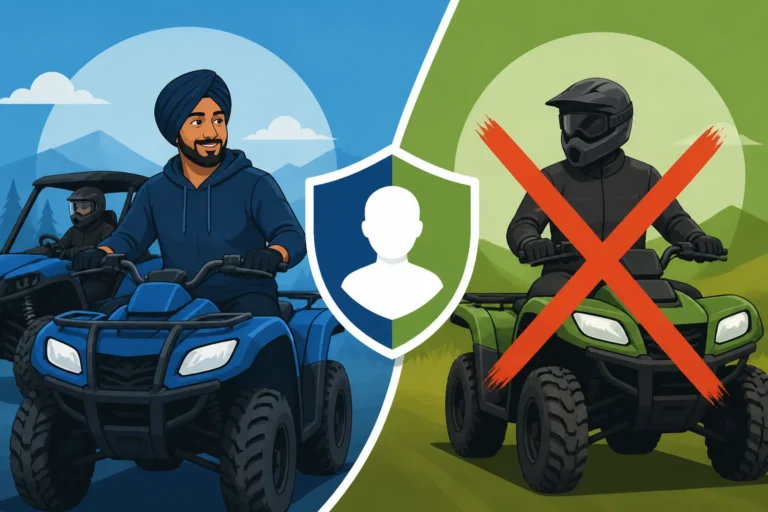
While the 2017 helmet law was broad, there were a few specific exemptions and scenarios that riders needed to understand. For instance, if you're riding a side-by-side or an ATV equipped with a rollover protective structure (ROPS) and seatbelts, and you're properly belted in, a helmet might not be required. This acknowledges that some machines offer inherent protection. However, these exemptions are very specific, and it's crucial to understand them thoroughly before assuming you're covered. For example, if you're on private property, say your own farm or a friend's acreage, the public land helmet law doesn't apply, though common sense and personal safety should still dictate wearing one. [Alberta Private Property Helmet Exemption] covers this in more detail. There are also specific exemptions for those engaged in farm or ranch work, and for Sikh riders wearing a turban, provided certain conditions are met, as you can read about in [Alberta Farm and Ranch Work Exemption] and [Alberta Turban Exemption for Sikh Riders]. These exemptions highlight the nuances of the law, aiming to balance safety with practical considerations and cultural observances.
To give you a quick visual, here's a table summarizing the pre and post-2017 helmet rules on public land:
| Aspect | Before May 15, 2017 | After May 15, 2017 |
|---|---|---|
| Helmet Requirement | Generally recommended, but not legally mandatory on public land for most OHVs. | Mandatory for all OHV operators and passengers on public land. |
| Helmet Standard | No specific legal standard enforced for casual riding. | Must meet approved safety standards (CSA, Snell, ECE, DOT). |
| Exceptions | No specific legal exemptions for helmet use on public land (as it wasn't mandatory). | Specific exemptions for machines with ROPS/seatbelts (when belted), farm work, private land, and Sikh riders wearing turbans. |
| Public Land Scope | Defined, but helmet use wasn't directly tied to it. | Any land not privately owned, including Crown land, ditches, and designated trails. |
| Penalties | No penalty for not wearing a helmet on public land. | Fines for non-compliance; for example, [Alberta's $93 Non-CSA Helmet Fine]. |
Beyond Helmets: Other Rule Clarifications and Emphasis
While the helmet law certainly dominated the headlines in 2017, the shift in focus towards OHV safety and responsible riding also brought a renewed emphasis and, in some cases, clearer interpretations of other existing regulations. It wasn't just about what changed but also about what was highlighted and enforced more rigorously in the wake of the major helmet rule.
Age and Supervision Rules Re-emphasized
Along with the helmet legislation, there was a consistent re-emphasis on the rules surrounding young riders and supervision. Alberta has always had regulations about the age at which a child can operate an OHV on public land, and who needs to be supervising them. What became clearer post-2017 was the expectation that these rules would be enforced more stringently. It’s not uncommon for officers at staging areas or on patrol to be looking for proper supervision. For instance, children under 14 generally need to be under the close supervision of an adult aged 18 or older, and they need to be operating an OHV that's appropriate for their size and skill level, as per manufacturer guidelines. This is directly related to [Alberta Riders Under 14 Need Supervision]. This wasn't a new rule in 2017, but the overall climate of increased enforcement around OHV safety meant these age and supervision guidelines gained greater prominence and scrutiny. It’s crucial for families riding together to be completely clear on these stipulations to avoid any issues.
The Persistent Question of Public vs. Private Land
Another area that received renewed attention in the context of the 2017 changes was the distinction between public and private land. Many riders mistakenly believe that if they're not on a formal, designated trail, they're on private land or in an area where rules don't apply. The 2017 helmet law, by explicitly stating "public land," inadvertently brought this distinction into sharper focus. It made it abundantly clear that ditches alongside public roads, Crown land, and many forestry trails are all considered public land, and therefore, the helmet rule and other OHV regulations apply. Understanding this difference is paramount. Riding on someone else's private property without explicit permission is trespassing, regardless of the helmet rule, and riding unregistered or uninsured on public land can lead to significant penalties, as outlined in [Alberta Penalties for Riding Unregistered]. The 2017 changes encouraged a more nuanced understanding of where we're actually allowed to ride and what rules govern those areas.
Enforcement and Penalties Post-2017
With any significant rule change, especially one focused on safety, comes an increase in enforcement. After the 2017 helmet law came into effect, riders noticed a more visible presence of law enforcement and park rangers in popular OHV areas. This wasn't just about handing out tickets, but also about educating riders on the new requirements. However, ignorance of the law is never an excuse, and penalties for non-compliance became a very real possibility. A fine for not wearing an approved helmet is significant, and other violations, such as riding an unregistered machine or operating without appropriate insurance on public land, also carry hefty consequences. For context, you might want to look at [What an Alberta Officer Can Ask to See] to understand what documentation and equipment they might check for during a stop. The shift emphasized proactive compliance rather than hoping to fly under the radar. It created a more structured environment for OHV recreation, with a clear message: safety and adherence to rules are paramount.
Adapting to the New Landscape: What Riders Needed to Know
The 2017 rule changes, particularly the mandatory helmet law, undoubtedly presented a period of adjustment for many Alberta OHV enthusiasts. It wasn't just about buying a new helmet; it was about shifting mindsets, understanding new responsibilities, and integrating safety more deeply into every aspect of riding.
Equipping Yourself for the New Norm
The most immediate impact for many riders was the need to ensure their gear met the new standards. It wasn't enough to just have a helmet; it had to be an approved helmet. This meant checking for CSA, Snell, ECE, or DOT certifications. For some, it was an opportunity to upgrade their gear entirely, perhaps investing in more comfortable or advanced helmets. Beyond helmets, the renewed focus on safety often extended to other essential equipment. Many riders began to more consciously carry items like first-aid kits, appropriate tools, and proper lighting, especially if they enjoyed riding at dusk or in low-visibility conditions. Companies like SuperATV offer a huge range of aftermarket accessories that can enhance safety and compliance, from lighting kits to sturdy windshields. While not a direct legal requirement tied to 2017, the overall emphasis on safety encouraged a more comprehensive approach to what we carry and how we prepare for a ride.
Understanding Your Responsibilities as a Rider
The 2017 changes underscored the fact that riding an OHV is a privilege that comes with significant responsibilities. It’s not just about wearing a helmet; it’s about understanding the entire legal framework. This includes knowing where you can and cannot ride, adhering to environmental regulations to protect our natural spaces, respecting private property, and operating your machine safely and considerately around others. For example, understanding [Alberta's Public Land Use Zones Explained] is crucial, as different zones can have different rules regarding OHV access and activity. It also means having all your paperwork in order: valid registration, proof of insurance, and your driver's license (if applicable). The increased visibility of enforcement meant that being unprepared or unaware of the rules was no longer a viable option. It prompted many riders to become more diligent in checking current regulations before heading out.
Staying Informed About Future Changes
The 2017 changes were a significant milestone, but they also served as a reminder that regulations can and do evolve. What's current today might be updated tomorrow, driven by ongoing safety concerns, environmental considerations, or shifts in land-use policies. Riders need to stay proactive in seeking out information from official sources, like the Alberta government's transportation and parks websites, or reliable community groups. Subscribing to newsletters from OHV associations, following official social media channels, or even just making a point to chat with staff at local registry agents can help keep you in the loop. The world of OHV riding is dynamic, and being an informed rider is just as important as being a skilled one. Keeping abreast of potential changes, perhaps even those affecting [Alberta ATV Road Rules: Bylaws Decide] for specific municipalities, ensures that your passion for riding remains both thrilling and compliant.
Disclaimer
This article is for general informational purposes only and does not constitute professional advice. Laws, prices and regulations vary by location and change over time. Consult a qualified professional for guidance on your specific situation.