Alberta Rules for Riding a County Road
It's incredibly frustrating, isn't it? You've got your quad or side-by-side all gassed up, ready for a day of adventure, but you hit a paved or gravel county road and immediately wonder: "Can I actually ride here, or am I just asking for a ticket?" The rules for riding your Off-Highway Vehicle (OHV) on county roads in Alberta can feel like a confusing maze, leaving many riders scratching their heads. This guide is here to untangle that complexity, helping you understand exactly what's allowed and, more importantly, what isn't, so you can ride safely and legally.
The Baseline: Why County Roads Are Tricky for OHVs
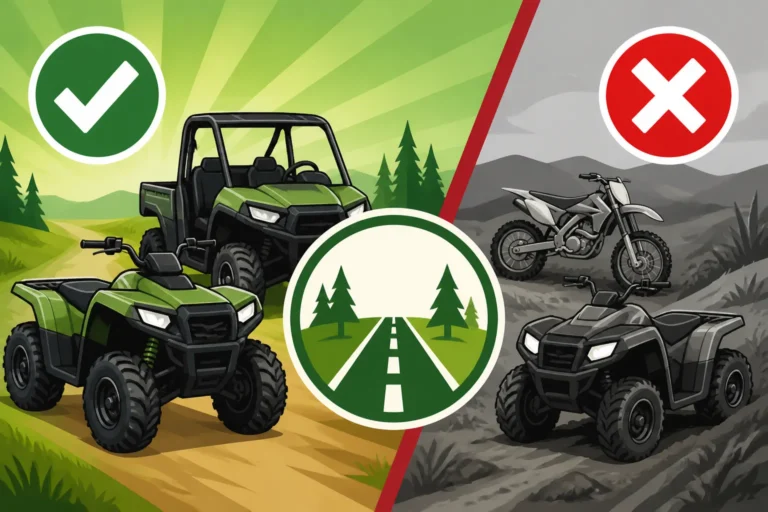
Let's start with the fundamental principle in Alberta: off-highway vehicles, including your beloved ATV, UTV, or dirt bike, are generally NOT permitted on public roads. This includes most county roads, rural highways, and even those quiet back alleys. The provincial legislation, specifically the Traffic Safety Act, defines what a "highway" is (and it's a lot broader than you might think, encompassing everything from a major freeway to a back lane or even a ditch), and it restricts OHVs from operating on these defined highways.
The reasoning behind this is multifaceted. OHVs are designed for off-road conditions, not for sharing space with cars, trucks, and other conventional vehicles. They often lack the same safety features, signaling, and braking capabilities, which can create significant hazards. From the province's perspective, consistency is key, and the default is to keep OHVs off the main arteries of travel. Many riders feel this is overly restrictive, especially in rural areas where an OHV might be the most practical way to get from a cabin to a trailhead, or from one pasture to another. It's a valid point, but the law, as written, sets a high bar for road access.
This blanket prohibition is often the biggest hurdle and source of confusion. Many assume that because a road is unpaved or in a rural setting, it's fair game for an OHV. Unfortunately, that's rarely the case without specific local permissions. This is where local bylaws come into play, offering a glimmer of hope and a significant layer of complication.
The Role of Local Bylaws: Your County's Discretion
While the provincial Traffic Safety Act provides the overarching framework, it also grants municipalities, including counties, the power to create their own bylaws that can permit OHV use on specific roads under certain conditions. This is where things get really localized and why you can't assume what's okay in one county is okay in the next.
Imagine two neighbouring counties, both rural and similar in landscape. County A might have passed a bylaw allowing OHVs on all its unpaved county roads between sunrise and sunset, provided the rider is licensed and the machine is insured and registered. County B, right next door, might have a bylaw that strictly prohibits OHVs on all public roads, even unpaved ones, except for specific agricultural purposes. This creates a patchwork of rules that can be incredibly frustrating for riders who travel across municipal boundaries or who have property in different areas. [Alberta ATV Road Rules: Bylaws Decide] are truly the deciding factor here, making your homework absolutely essential.
Why Counties Create These Bylaws
Counties choose to open up roads to OHVs for a variety of reasons. In heavily agricultural areas, OHVs are often essential tools for farmers and ranchers to move between fields, check fences, or manage livestock. In these cases, bylaws might permit OHV use for agricultural purposes only, or they might open certain roads to the general public to support local recreation and tourism, acknowledging the economic benefits riders can bring. Some counties may have designated OHV zones where allowing road access helps riders connect trails. [Alberta Municipalities That Opened Roads] often do so after extensive community consultation and assessment of safety concerns.
Other counties might prioritize traffic safety, noise reduction, or preservation of road infrastructure, leading them to maintain stricter prohibitions. It's a delicate balance for local councils, trying to cater to different segments of their population while ensuring public safety.
The Specificity of Bylaws
When a county does allow OHVs on its roads, the bylaw will usually be incredibly specific. It won't just say "OHVs allowed." Instead, it will detail:
- Which roads are open: It might be all unpaved county roads, or only certain designated routes. Sometimes, it's only roads that lead directly to an OHV staging area or trail system.
- Time of day restrictions: Riding might only be permitted during daylight hours.
- Speed limits: Often much lower than the posted limit for conventional vehicles.
- Rider requirements: Such as needing a valid driver's license (even though you don't need one to operate an OHV off-road, you might for road sections), age restrictions, or requiring adults to supervise youth.
- Machine requirements: Your OHV will need to meet specific equipment standards to be considered "road-ready" even on these designated county roads.
It’s not enough to know if a county has a bylaw; you need to know the exact details of that bylaw for your specific area.
What to Expect If a County Road Is Open to OHVs
So, let's say you've done your homework, and your local county does permit OHV use on certain roads. That's great news, but it doesn't mean you can just hop on and go. There are critical provincial and local requirements you'll still need to meet to ensure you're riding legally and safely. Think of it as earning your road stripes, even on a gravel road.
Provincial Requirements That Still Apply
Even if a county bylaw opens a road, several provincial requirements remain in effect because, fundamentally, you're still operating a motorized vehicle on a public thoroughfare.
- Registration and Plate: Your OHV must be properly registered with the province. [Alberta OHV Registration Cost] involves paying a fee, and you'll receive a registration certificate and an Alberta plate. This plate must be securely mounted and visible on your machine, usually at the rear. [Alberta Plate Placement on a Machine] is critical, as a hidden or improperly mounted plate can still get you pulled over.
- Insurance: This is non-negotiable. You absolutely need valid liability insurance for your OHV. While you need insurance to ride on public land anyway, it becomes even more vital when sharing a roadway with other vehicles. [Alberta Insurance Requirements on Public Land] are clear, and a county road, even when opened, is still a form of public land in this context. You must be able to produce proof of insurance on demand.
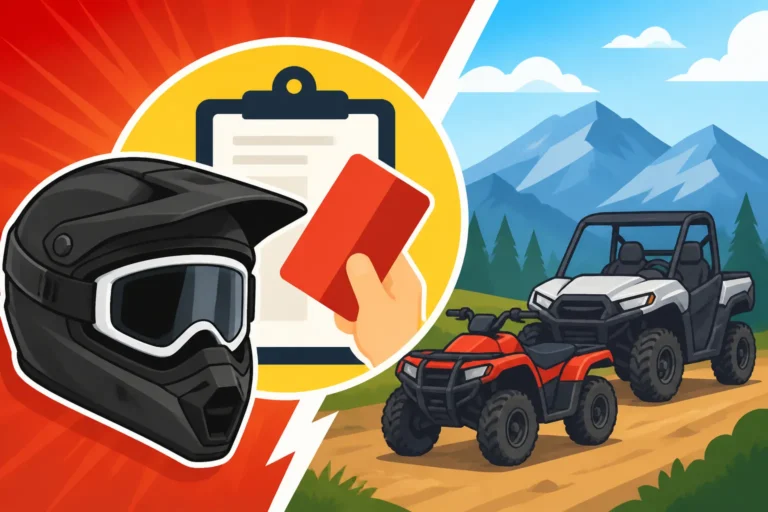
- Helmet Use: Unless you're operating a side-by-side with a roll cage and seatbelts, or meet one of the very narrow exemptions (like for Sikh riders wearing a turban), you must wear a CSA-compliant helmet while riding an OHV on public land, which includes open county roads. [Alberta Helmet Law on Public Land] is a serious safety measure.
- No Impaired Operation: Just like a car, it is illegal to operate an OHV while impaired by alcohol or drugs, whether you're off-road or on a county road. The penalties are severe and can include vehicle seizure and criminal charges.
Machine-Specific Equipment for Road Use
Beyond the basic provincial requirements, if a county bylaw allows OHV access to roads, it will invariably stipulate additional equipment your machine needs to have, transforming it from a pure off-roader into something that can safely navigate alongside conventional traffic. [Alberta Equipment Required on Public Land] gives a baseline, but county bylaws typically go further for road use.
Here's a breakdown of what you might need:
- Working Head and Tail Lights: Essential for visibility, especially if the bylaw allows riding during dawn or dusk. These must be properly functioning and clearly visible. [Alberta Requires Working Head and Tail Lights] is a provincial requirement for night riding, but for county road access, they often become mandatory at all times.
- Brake Lights: So that drivers behind you know when you're slowing down or stopping.
- Mirrors: Typically, at least one rear-view mirror is required, often two, one on each side, to give you awareness of traffic approaching from behind. Aftermarket solutions from companies like SuperATV can provide robust, adjustable mirrors that stand up to both road vibration and off-road abuse.
- Turn Signals: While not always required for off-road use, turn signals are critical for communicating your intentions to other drivers on a road. Again, SuperATV offers great kits to add turn signals to many OHV models.
- Horn: A functional horn is necessary to alert other road users to your presence if needed.
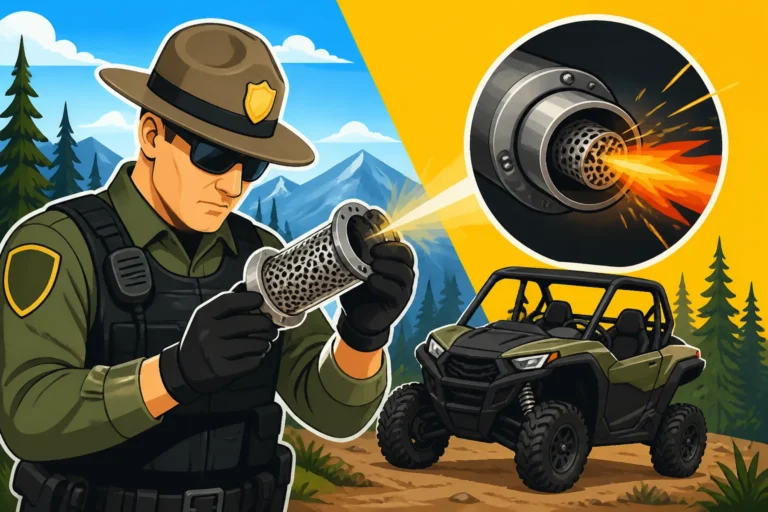
- Spark Arrestor: Your exhaust system must be equipped with a spark arrestor. This isn't just a road rule; it's a critical fire prevention measure for all OHV use on public land. [Alberta Requires a Spark Arrestor] to prevent accidental wildfires, which is a major concern in rural areas.
- Muffler: The machine must have a muffler in good working order, and modified exhausts that increase noise levels are generally prohibited. Loud machines draw complaints and give OHVs a bad reputation. [Why a Modified Muffler Can Cost You a Ticket] is something every rider should understand.
- Fenders/Mudguards: To prevent debris from being thrown up onto other vehicles or pedestrians.
- Tires: Your tires must be in good condition, without excessive wear, and appropriate for road use (though this can be a gray area for knobby off-road tires, usually the focus is on overall condition).
- Age and Licence: While a driver's license isn't generally needed to ride an OHV off-road, many county bylaws specifically require riders to hold a valid Class 5 (or equivalent) driver's license to operate an OHV on their open roads. The provincial minimum age of 14 for unsupervised OHV riding on public land also applies. [Alberta Rules for a 14-Year-Old Rider] states that riders under 14 need adult supervision.
Riding with Care on County Roads
Even with all the right paperwork and equipment, remember that sharing a county road with conventional traffic means exercising extreme caution.
- Be Predictable: Use hand signals or your newly installed turn signals to indicate turns.
- Maintain Distance: Keep a safe following distance from other vehicles.
- Stay Right: Ride as far to the right as safely possible to allow other vehicles to pass.
- Watch for Traffic: Assume other drivers might not see you. OHVs are smaller and often less conspicuous than cars.
- Road Conditions: Gravel roads can be unpredictable. Watch for washboards, loose gravel, potholes, and unexpected wildlife.
Finding the Rules for Your Specific County
This is arguably the most crucial step, and where many riders get frustrated. Because the rules are set at the municipal level, you can't just look up a single provincial guide that covers all county roads. You need to identify the specific county you'll be riding in and then find their local bylaws.
How to Research Local Bylaws
- Identify the County: Know the name of the municipal district, county, or specialized municipality where you plan to ride. Alberta has numerous such entities. For example, if you're riding near Rocky Mountain House, you'll be looking for Clearwater County. If you're near Grand Prairie, it might be the County of Grande Prairie No. 1.
- Visit the County's Website: Most counties have a dedicated website. Look for sections titled "Bylaws," "Transportation," "Public Works," or "Off-Highway Vehicles." Use their search function for "OHV," "ATV," "UTV," or "Off-Highway Vehicle Bylaw."
- Contact the County Office: If you can't find the information online, don't hesitate to call the county's main administration office. Ask to speak to someone in enforcement or bylaw services. Be specific: "I'm looking for information on riding ATVs on county roads in your area. Do you have a bylaw that permits this, and if so, what are the requirements?"
- Check with Local OHV Clubs: Local riding clubs are often excellent resources. They are usually well-versed in the local bylaws and can provide guidance on where it's legal to ride and what the specific requirements are.
It might take a bit of digging, but this research is essential to avoid potential fines and vehicle seizure. [Alberta Bylaw Lookups Before You Ride] should become your mantra.
Common County Examples and Their Approaches
While I can't give live, up-to-the-minute details, historically, some counties have been more accommodating to OHV use on specific roads than others. For instance:
- Rural Municipalities in Central Alberta: Many of these have considered or implemented bylaws to allow agricultural or recreational access on unpaved roads, recognizing the integral role OHVs play in their communities.
- Counties Near Popular OHV Areas: Areas bordering or containing Public Land Use Zones (PLUZs) like McLean Creek, Ghost PLUZ, or areas near Rocky Mountain House (like Clearwater County) might have bylaws that allow OHV access on certain roads to connect staging areas to trails. This is often done to reduce illegal riding on non-designated roads.
- Northern Alberta Municipalities: With vast stretches of wilderness and resource industries, some northern municipalities have different approaches, sometimes allowing OHVs on undeveloped or lease roads.
It’s crucial to verify the current bylaw for your specific county, as these rules can change.
Table: Essential Checklist for County Road Riding (If Permitted by Bylaw)
| Requirement Category | Description | Specific Items |
|---|---|---|
| Provincial | Baseline legal requirements for all public land OHV use. | Registered OHV, Alberta License Plate (mounted correctly), Valid Liability Insurance, CSA-Approved Helmet (if applicable), No Impaired Operation |
| Local Bylaw (Machine) | Equipment required by county bylaws for road-legal operation. | Working Headlights & Taillights, Brake Lights, At least 1 Rear-View Mirror (often 2), Turn Signals (recommended/required), Functional Horn, Spark Arrestor, Non-Modified Muffler, Fenders/Mudguards |
| Local Bylaw (Rider) | Requirements for the operator as specified by county bylaws. | Valid Class 5 Driver's License (often required), Minimum Age (provincial 14 for unsupervised riding), Adult Supervision for Youth (under 14), Adherence to Posted Speed Limits |
| Safety & Conduct | Best practices for sharing roads with other vehicles. | Ride predictably, Maintain safe distance, Stay right, Be visible, Watch for other traffic and hazards, Respect local residents |
Remember, this table is a general guide. The specific local bylaw is your definitive source for what's required on county roads in that area.
Ultimately, while the idea of freely riding your ATV or UTV on every county road in Alberta is a tempting one, the reality is far more complex. The default position of the province is prohibition, but local municipalities have the power to create exceptions through specific bylaws. Your job as a responsible rider is to do your homework, find those bylaws, and ensure your machine and your riding habits comply with every single rule. It means a bit more effort upfront, but it ensures safer, more enjoyable riding and helps preserve access for all of us who love the Alberta outdoors.
Disclaimer
This article is for general informational purposes only and does not constitute professional advice. Laws, prices and regulations vary by location and change over time. Consult a qualified professional for guidance on your specific situation.