Winches for Steep Foothills Climbs
A steep foothills climb can turn from manageable to stressful in a few seconds: tires spin, the machine slides toward a rut, and pushing harder only digs it in. A winch can help you recover without relying on engine power alone—but only if you choose a suitable setup, anchor carefully, and know when the safest move is to stop.
Why a winch matters on Alberta foothills trails
What a winch can and cannot do
A winch is a recovery tool, not a way to make every slope rideable. It can help pull an ATV or side-by-side out of a muddy rut, ease it up a short, difficult section, or recover it after a loss of traction. On a steep trail, controlled pulling can be gentler on the machine than spinning the tires and charging uphill.
But a winch does not make an unsafe route safe. It cannot guarantee that a machine will stay upright on a side slope, that the anchor will hold, or that a cable will not fail. A recovery can also become more dangerous if the machine is sliding, the line is under tension, or people are standing in the wrong place. Think of the winch as one part of a recovery plan, alongside judgment, suitable equipment, and a riding partner.
This matters in foothills terrain, where a short climb may combine loose rock, mud, exposed roots, and a sharp turn. Conditions can change along the same trail: a shaded section may stay wet while an exposed slope dries out, or recent rain can make a familiar climb far slicker than expected. For riding-area preparation, see Alberta Eastern Slopes Riding Areas and Alberta Trail Difficulty Ratings.
When to winch instead of adding throttle
If your tires are spinning and the machine is moving sideways, stop. More throttle may dig deeper ruts, send mud flying, or make the machine harder to control. It is usually better to pause, assess where the machine is pointing, and decide whether a winch recovery is appropriate.
A winch may also be useful when you can’t safely back down under power. Before pulling, check whether the machine can be guided along a stable line and whether there is a sound anchor in the right direction. If it is leaning sharply, lodged against an obstacle, or at risk of rolling, do not assume a straight pull will solve the problem. A second rider can help assess the situation from a safe position, but should not stand near the cable or in the path of a possible slide.
Sometimes the best decision is to leave the machine where it is and get experienced help. That can feel frustrating when you are close to the top, but pushing on can turn a manageable recovery into a damaged machine or an injured rider. Trail choice and current conditions matter just as much as the equipment you carry. Check Alberta OHV Trails: Riding Public Land and Checking a Zone Before You Go before setting out.
Choosing a winch for an ATV or side-by-side
Match the winch to the machine and the job
Start with the machine manufacturer’s guidance and the winch manufacturer’s specifications. The winch needs to be compatible with your ATV or UTV and its mounting system. Consider the machine’s weight, the type of terrain you ride, and whether you expect to do occasional self-recovery or frequent, demanding pulls. A steep, muddy climb creates a different recovery challenge from a light pull on flat ground.
A winch’s stated pulling capacity is not a promise that it can safely handle every recovery. Pulling uphill, through mud, or at an angle can demand more effort than a straightforward pull on firm, level ground. Accessories such as a suitable mounting plate, a compatible electrical setup, and recovery gear also matter. Follow the equipment maker’s instructions rather than improvising with parts that only seem to fit.
| Riding situation | What to consider | Practical check |
|---|---|---|
| Occasional trail recovery | A compatible winch and secure mounting system | Confirm the mount and electrical setup suit your machine |
| Muddy or steep climbs | Higher recovery demands and a controlled pull | Avoid treating the listed capacity as a guarantee for every slope |
| Long rides with limited support | Reliable equipment and a complete recovery kit | Inspect the winch, line, controls, and accessories before leaving |
| Riding with a group | A recovery plan everyone understands | Agree on signals and safe positions before the ride |
The right setup is the one you can operate safely and maintain—not simply the largest unit you can mount. Before buying, read the installation instructions, check machine compatibility, and understand how the winch is controlled. If installation involves wiring or structural mounting you are unsure about, have a qualified shop inspect the work.
Choose the line and recovery accessories carefully
Winch lines may be made from synthetic rope or wire cable. Each has different care and handling requirements, so follow the product instructions for inspection, cleaning, storage, and replacement. Look for cuts, broken strands, crushed sections, corrosion, or other damage before use. Do not keep using a line that appears compromised just because it worked on the last ride.
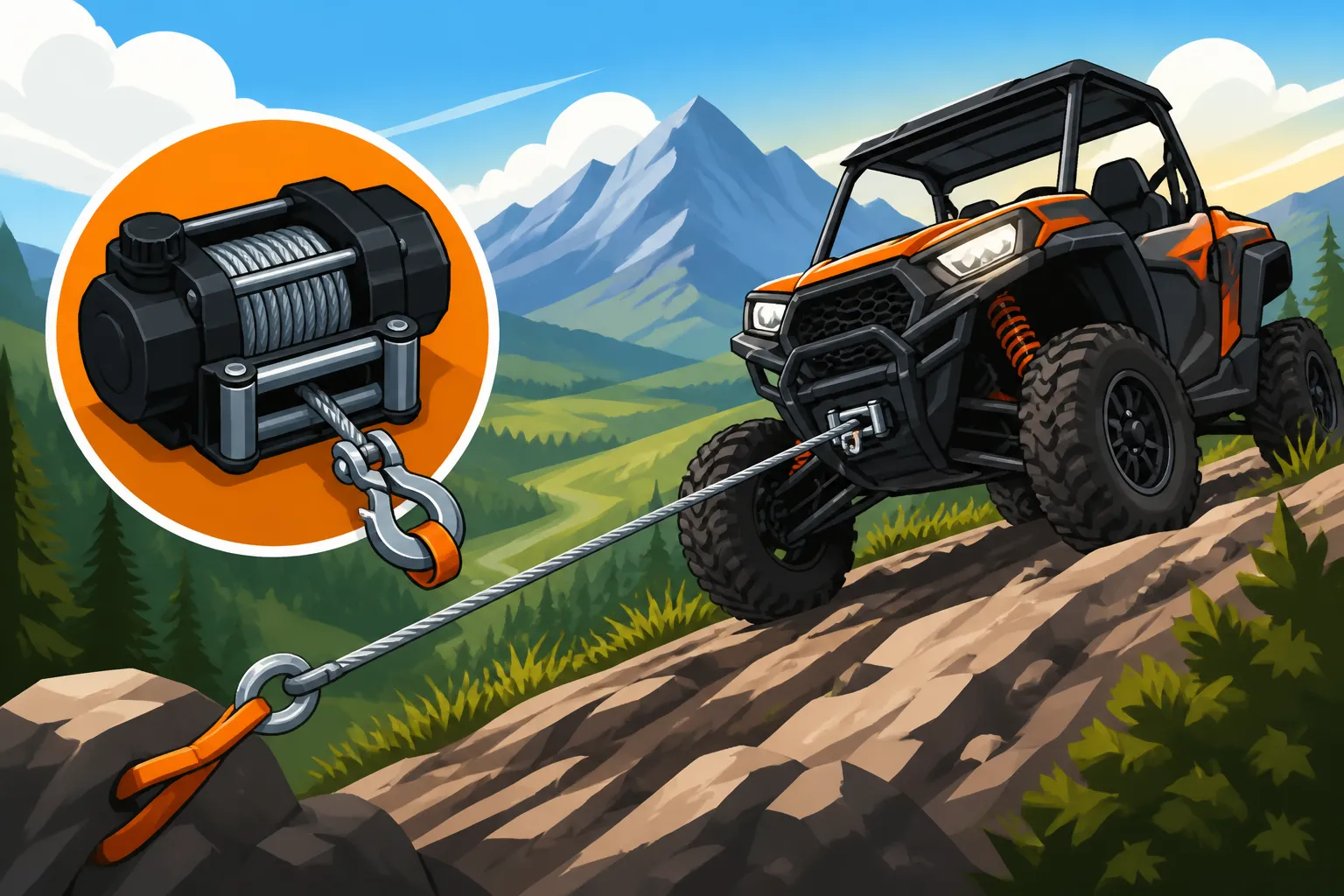
A recovery kit should suit the winch and the kinds of anchors available where you ride. A tree-saver strap can help protect a suitable tree when the manufacturer’s instructions and local conditions make that anchor appropriate. A snatch block may change the direction of a pull or help configure a recovery, but it also changes the forces on the equipment and must be rated and used correctly. Never wrap a winch line directly around a tree or use a strap, hook, or attachment point that is not intended for recovery.
Pack gloves and a line dampener designed for recovery use, and learn how each accessory works before you need it. A dampener does not make a damaged line safe or eliminate the need to keep people clear. For general machine preparation, also review Alberta Equipment Checks by Officers and Tires for Foothills Mud.
How to winch safely on a steep climb
Assess the slope and choose an anchor
Before touching the controls, stop the machine and make the area as stable as possible. Keep riders clear of the line and the machine’s likely path. Look at the direction of pull, the ground beneath the tires, and what could happen if the anchor shifts or the machine slides. A winch pull should be as straight and controlled as the situation allows. Pulling sharply sideways can increase the risk of tipping or damaging equipment.
Choose an anchor that is strong, stable, and suitable for the recovery. Do not assume a small tree, loose stump, exposed root, or trail-side post can take the load. If you use a tree, protect it with an appropriate strap and check that the tree and surrounding ground are sound. Avoid damaging vegetation or widening the trail to create a recovery point. If you cannot identify a trustworthy anchor, do not proceed with a pull that depends on one.
On a steep slope, also consider where the machine will end up if it moves unexpectedly. A successful pull is not just about getting unstuck; it needs to leave you in a position where you can stop, secure the machine, and continue or turn around safely. If the only available direction pulls the machine toward an edge or into a worse obstacle, reassess the plan.
Use slow, controlled pulls
Read the winch instructions and use the controls as specified. Keep hands and clothing away from the line, fairlead, drum, and other moving parts. Do not step over a tensioned line or stand close to it. Everyone in the group should remain outside the potential path of the line and machine, including the area between the machine and anchor.
Take up slack carefully and pause to check that the line is seated correctly and the anchor is holding. Pull gradually rather than attempting a sudden jerk. If the line shifts, the anchor moves, the machine begins to tilt, or anything looks wrong, stop and reassess. Never use a winch line as a tow rope or attach it to an improvised point on a person or machine.
If you are riding solo, the stakes are higher: you may have nobody available to watch the anchor, operate controls from a safe position, or call for help. That is a good reason to avoid remote or difficult routes alone, especially when recent rain or trail conditions make traction uncertain. Pack a communication plan and tell someone where you intend to ride. For backcountry preparation, see First Aid on a Backcountry Loop and Cell Dead Zones in the Foothills.
Prepare for recovery before you leave
Inspect and practise at home
A winch is far less useful if its controls are unfamiliar or the line is damaged. Before a ride, inspect the mounting points, wiring, remote or switch, line, hook, and recovery accessories. Make sure the hook latch functions and that the line winds onto the drum neatly. Follow the manufacturer’s maintenance instructions, particularly after exposure to mud, water, or grit.
Practise in a controlled, level area with a suitable anchor and another person present. Learn how to engage and disengage the winch, take up slack, stop a pull, and spool the line back evenly. Rehearsing slowly can reveal practical issues—such as a control that is hard to reach or gloves that make a switch awkward—before you are stopped on a wet incline.
A short checklist can prevent avoidable surprises:
- Confirm the winch and mount are suitable for your machine.
- Inspect the line, hook, controls, wiring, and recovery accessories.
- Carry gloves and any accessories required by the winch instructions.
- Tell your riding group how you will communicate during a recovery.
- Check trail access, conditions, and closures before riding.
Plan the route and know when to turn around
A winch is not a substitute for checking where you are going. Choose routes that suit the least experienced rider and the machines in the group. Look for current access information, seasonal closures, and designated routes before leaving. A mapped line on a screen does not necessarily mean the trail is open or suitable for your machine.
Offline mapping can be useful when mobile coverage drops, but it should be one part of your navigation plan. Some riders use onX Offroad to prepare routes and keep map information available for areas with weak service. Download and check what you need before leaving a connected area, and compare your route with official land-management information. onX Offroad should not be treated as proof that a route is open, particularly when gates, weather, or closures change access. Keep a backup navigation method and tell someone your plan.
At a staging area near McLean Creek, the choice to turn around may come before a climb, not halfway up it. If the route is slick, the slope is beyond the group’s comfort, or there is no safe way to recover a machine, choosing another trail is a sound decision. Riders exploring the Ghost area should check Ghost PLUZ Riding in Alberta and Seasonal Closures in the Ghost. onX Offroad can help with advance planning, but on-the-ground conditions and official closures still need to guide the final call.
A well-maintained winch can make a difficult recovery more controlled, but good judgment is the most important tool on a steep Alberta climb. Stop when traction disappears, assess the anchor and pull direction, keep everyone clear, and avoid forcing a recovery when the setup is not safe. That approach helps protect the machine, the trail, and the people riding with you.
Disclaimer
This article is for general informational purposes only and does not constitute professional advice. Laws, prices and regulations vary by location and change over time. Consult a qualified professional for guidance on your specific situation.