Carrying Bear Spray on a Foothills Ride
A foothills ride can turn from a relaxed loop into a stressful situation when you spot a bear near the trail—or realize your bear spray is buried under tools in the back of your machine. This guide explains how to choose, carry, check, and use bear spray responsibly on an Alberta ATV or UTV ride, while helping you plan around wildlife and remote-trail conditions.
Why bear spray belongs in your ride plan
Foothills riding means sharing space with wildlife
Alberta’s foothills are working landscapes as well as recreation areas. Trails, cutlines, creek valleys, and staging areas may pass through habitat used by bears and other wildlife. Areas near McLean Creek and the Ghost Public Land Use Zone can feel busy on a long weekend, but a full parking lot does not mean the backcountry is free of wildlife. Conditions and animal activity can change along a route.
A bear sighting does not automatically mean an encounter is likely. The practical goal is to notice wildlife early, avoid surprising an animal, and leave it a clear way to move away. Riding with bear spray is one part of that plan. It does not replace paying attention, keeping your distance, or following local access rules. For broader encounter-prevention advice, see Alberta Bear Encounters While Riding.
It can be tempting to treat a machine as a protective barrier. That is not a reliable plan. A bear may appear beside a trail, near a blind corner, or around a parked machine while you are taking a break. If your spray is stowed in a bag strapped to the rear rack, you may not be able to reach it quickly when you need it.
Bear spray is a backup, not a reason to take risks
Bear spray is intended as a last-resort deterrent during a close encounter. It is not a tool for approaching, moving, or “testing” wildlife, and it is not a substitute for giving an animal space. Never ride closer to a bear to get a better look or a photo. If you see one ahead, keep a safe distance, avoid blocking its route, and leave the area when you can do so without moving toward it.
Your response depends on the situation, the animal’s behaviour, and the directions on the specific product. Read the label before you head out and make sure everyone in your group knows where the spray is kept. A passenger should not have to guess whether it is in a glove box, a pack, or another rider’s pocket during a stressful moment.
A useful ride plan also includes the basics that are easy to forget: tell someone where you are going, know which route you intend to take, and have a way to navigate if you lose cell service. Alberta Wildlife on the Trail offers useful context for thinking about wildlife as part of normal trail planning, rather than an unlikely interruption.
Plan for the whole route, not just the staging area
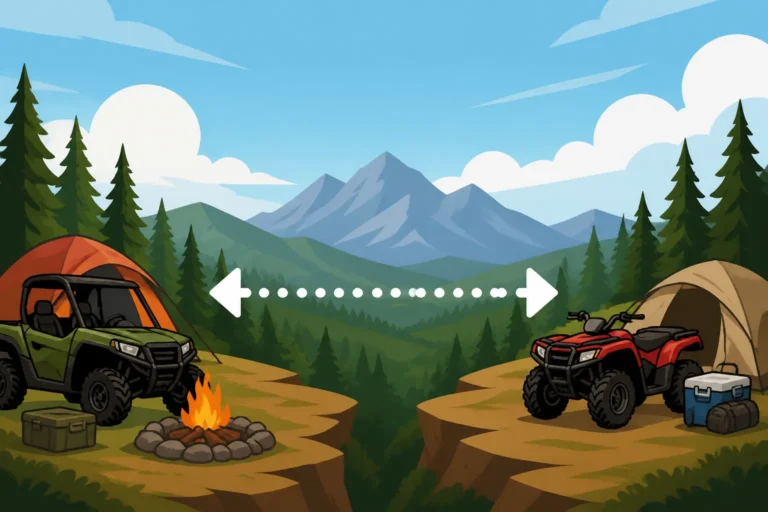
The first few kilometres from a staging area may feel familiar and open. Farther along, trails can wind through brush, cross creeks, or narrow around terrain that limits visibility. A group may also spread out, especially when riders have different machines or experience levels. Agree on how the group will stop, regroup, and communicate before heading out.
Think through the practical details before unloading. Who is carrying spray? Is it accessible to the driver and passenger, if applicable? Does each rider know how to reach their own canister? If one machine breaks down or someone walks away from the group, will that person still have access to protection?
A route can change too. A closed trail, muddy section, or unexpected wildlife sighting may send you back along a different line than planned. Check current local conditions and trail access before departure, and avoid treating a downloaded map as proof that every route is open. For route planning, Alberta Trail Maps Worth Downloading can help you think about what to prepare before leaving the staging area.
How to carry bear spray on an ATV or UTV
Choose a position you can reach without digging
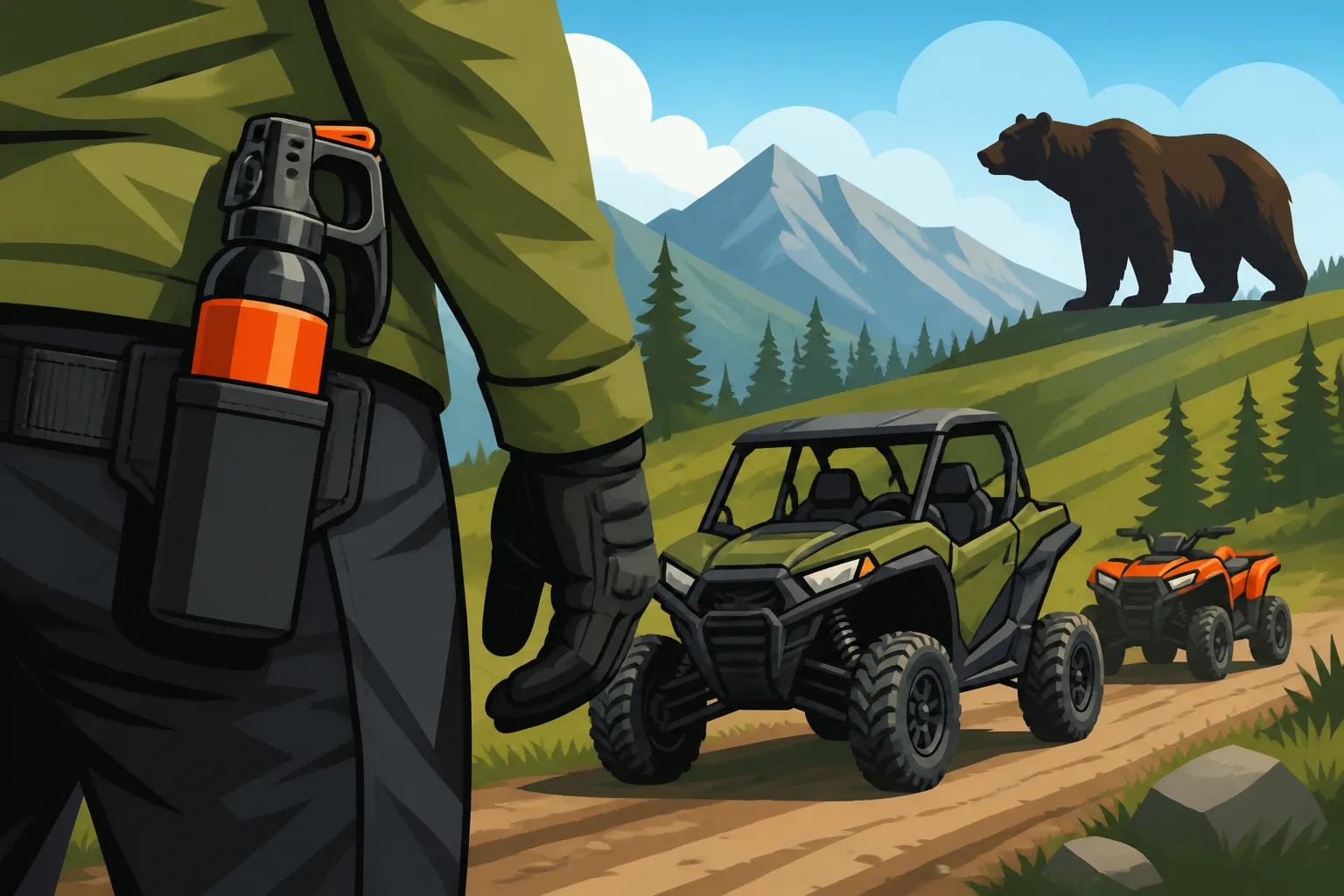
Bear spray only helps if you can get to it. Carry it in a secure, purpose-made holster or a clearly accessible pocket that stays with you while riding. A belt or chest position may work for some riders, while others may prefer a pack strap or another stable location. The best choice is the one that is comfortable, does not interfere with controls or protective gear, and allows a quick, familiar reach.
Avoid packing the canister beneath rain gear, food, tools, or extra clothing. A storage box, cargo bag, or UTV compartment can be useful for spare supplies, but it is a poor place for the spray you may need immediately. If you transfer your riding gear between machines, check that the canister comes with you rather than staying in the vehicle you are no longer using.
The canister should remain secured so it does not fall, bounce around, or get crushed by other gear. At the same time, a holster should not make it difficult to remove. Before a ride, practise locating and drawing the canister while wearing the gloves and layers you expect to use. Do this calmly and safely, following the product’s instructions; the point is to find out whether your setup is awkward before you are on the trail.
Keep it protected from heat, impact, and accidental discharge
Follow the storage and temperature guidance printed on the canister. Avoid leaving bear spray in direct sun, beside an exhaust, or in a hot enclosed space. A machine parked in warm weather can heat up, and cargo packed tightly around the canister can make it harder to inspect or remove. Do not attach it where it may be struck by a branch, crushed beneath gear, or snagged while mounting and dismounting.
Keep the safety mechanism in the condition specified by the manufacturer. Do not modify the canister, its trigger, or its holster to make it easier to carry. A secure fit matters on rough ground, but the canister must also be accessible as designed. If it has been dropped hard, damaged, or exposed to conditions outside the label’s guidance, do not assume it is still in dependable condition.
Check the canister before each ride. Look for damage, corrosion, a loose or compromised safety feature, and an expiry date or other product-life information. If anything looks wrong, replace it rather than carrying a questionable canister as if it were ready to use. For more remote routes, it is also sensible to review First Aid on a Backcountry Loop and make sure your group has a broader emergency plan.
Make access part of your group’s routine
A quick pre-ride gear check can prevent the common “I thought you had it” problem. Each rider should know whether they are carrying a canister and where it is. If a passenger shares a machine, both people should understand the setup and be able to reach it safely. Do not rely on one person carrying spray for a group that may become separated.
Before moving off, check that the holster is secure and that riding gear has not covered the canister. Repeat the check after a stop if you have taken off a jacket, changed layers, or moved equipment. A small adjustment at the staging area is much easier than discovering on a narrow trail that a strap has shifted beneath your pack.
If you use onX Offroad to plan or review your route, treat it as one planning aid, not a live guarantee of access or a replacement for local trail information. Mark the route you expect to follow, identify likely regrouping points, and make sure riders know what to do if the group becomes separated. Navigation and wildlife planning work best together: know where you are, but do not let a map draw your attention away from the trail and the surroundings.
What to do when you see a bear
Notice, pause, and give the animal room
If you spot a bear, do not accelerate toward it or try to squeeze past at close range. Reduce the chance of startling it, keep your distance, and avoid blocking its way out. If you can safely turn around or wait for the animal to move away, do so. Stay with your group and keep people from approaching on foot to get a closer look.
The exact response depends on distance, terrain, and the bear’s behaviour. Follow current wildlife guidance and the directions on your bear spray. Avoid assuming that every encounter will unfold the same way. A bear feeding beside a trail, for example, may behave differently from one that appears suddenly at close range. In either case, do not crowd it or try to push it off the route.
Make sure riders behind you know what is happening without creating a chaotic rush. A clear hand signal or calm verbal instruction can help the group stop and regroup. Keep the machines under control, leave room to move away, and do not rev engines or surround the animal. If you are unsure how to proceed, prioritize distance and follow the advice of local authorities or posted area guidance.
Know where your spray is before you need it
If a situation becomes close or threatening, bear spray may be an option, but its use should follow the canister’s instructions and established wildlife-safety guidance. Do not wait until an encounter to figure out how the safety mechanism works. Review the label beforehand, and make sure your group understands that wind and other conditions can affect where the spray goes. Take care not to expose yourself or others unnecessarily.
Do not discharge bear spray casually, to create a scent barrier, or as a test on the trail. An accidental discharge can leave a rider without a usable canister and affect nearby people. It can also contaminate equipment and make a difficult backcountry situation worse. If spray is discharged, deal with the immediate safety issue, move away from the area when safe, and follow the product’s instructions for handling contaminated clothing or gear.
Avoid treating a canister as a guarantee. It can be damaged, out of date, inaccessible, or difficult to use under pressure. That is why noticing wildlife early, staying calm, keeping space, and maintaining a sensible group plan matter just as much as carrying the spray.
Do not let the machine or the map create false confidence
A UTV cab or ATV may make a rider feel removed from the surroundings, but neither one makes wildlife encounters impossible. Keep looking ahead, especially where brush or terrain limits sightlines. Stop in appropriate places to check directions rather than continuing while focused on a screen or phone.
Cell coverage can be unreliable in remote terrain, so download or prepare for navigation before leaving service. Cell Dead Zones in the Foothills is a useful reminder that a route plan should still work when a phone cannot connect. If you use onX Offroad, save the relevant map or route for offline reference where available, then confirm that you understand the intended trail and any access restrictions before departing.
Keep the group together at a pace that suits the least experienced rider. A fast lead machine can leave the last rider alone on a quiet stretch, while frequent stops in poor locations can create unnecessary exposure. Choose safe places to regroup and make sure nobody is left to navigate an unfamiliar junction without the group’s support.
Pre-ride checklist for a foothills trip
Check the canister and your riding setup
Use this table as a quick check before loading up. It does not replace the product label or local wildlife guidance, but it can catch the small oversights that turn into big frustrations once you are away from the staging area.
| Check | What to look for | Why it matters |
|---|---|---|
| Product condition | No visible damage; safety features appear intact | A damaged canister may not be dependable |
| Product-life information | Check the date and instructions on the canister | Do not assume an old canister is ready to use |
| Carry position | Secure, accessible, and not buried under gear | You need to know where it is without searching |
| Riding clothing | Canister remains reachable with gloves and layers on | Gear can shift or cover a holster |
| Group awareness | Riders know who has spray and where it is carried | Prevents confusion if the group separates |
| Route planning | Check access, closures, and navigation options | A saved route does not guarantee a trail is open |
| Emergency plan | Share the route and regrouping plan | Helps if a machine or phone fails |
Give the holster a gentle check once your riding gear is on. Make sure it is not positioned where a seat belt, harness, pack strap, or machine control interferes with access. In a side-by-side, confirm that the driver and passenger can move safely around the cab and that the canister is not loose in a cup holder or console.
If the ride includes multiple machines, agree on a simple way to communicate a stop or wildlife sighting. Hand signals are useful when engines are running, but every rider needs to know what they mean. A group should also have a plan for mechanical trouble, an injury, or a rider falling behind.
Prepare for changing trail and weather conditions
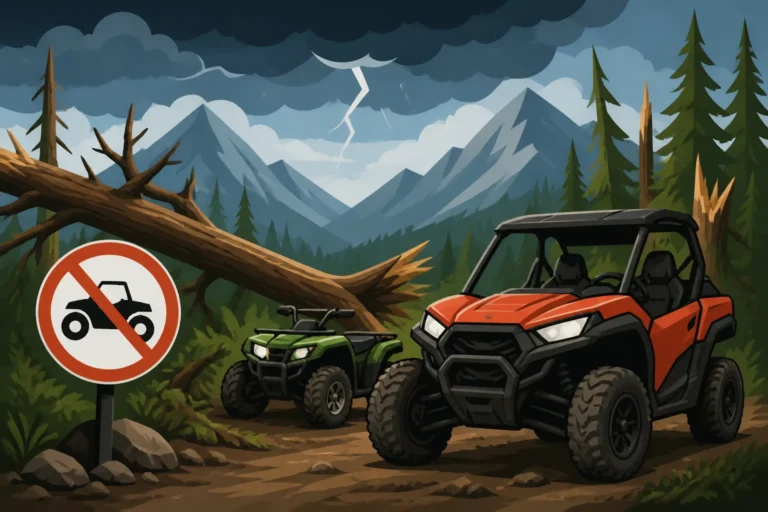
Foothills conditions can shift from dry and dusty to wet and slippery, and a route that looked straightforward on a map can become demanding after rain. Check conditions and closures before setting out, and avoid pushing through a trail that is beyond the group’s ability. Alberta Riding After Heavy Rain can help you think through how wet ground affects both trail conditions and responsible riding.
Stay on designated routes and avoid cutting around muddy or damaged sections. A new track through vegetation can cause damage and may lead into unsafe or restricted terrain. Staying on the Trail Tread is a helpful reminder that choosing to turn back is often better than widening a trail or creating a risky detour.
Weather preparation matters for wildlife readiness too. Cold rain, heat, and changing layers can make it tempting to stash gear wherever it fits. Keep the bear spray in its planned location when you change clothing or reorganize your pack. If the canister is exposed to conditions outside its storage guidance, check the label and condition rather than assuming it is unaffected.
Use mapping as support, not as the whole plan
A map can help you understand where the group is heading, but it cannot tell you everything you need to know about a trail on the day you ride. Check official or local information for restrictions and closures, and carry a navigation option that does not depend on cell service. If you use onX Offroad, prepare your offline map before you leave coverage and make sure every rider knows how to use the group’s chosen navigation method.
It is also worth carrying a backup plan that is not tied to one person’s phone. A second rider can have a map available, or the group can agree on a route and key junctions in advance. If the lead rider’s device fails, the whole group should not be left guessing where to go.
Before leaving the staging area, take a moment to verify the basics: everyone has the right protective gear, the route is understood, the spray is accessible, and the group has a way to regroup. That small pause can make a long foothills ride feel more organized—and leave everyone better prepared to respond thoughtfully if wildlife appears.
Disclaimer
This article is for general informational purposes only and does not constitute professional advice. Laws, prices and regulations vary by location and change over time. Consult a qualified professional for guidance on your specific situation.