Snorkels for McLean Creek Crossings
A creek crossing at McLean Creek can look manageable from the trail, then turn out deeper, softer, or faster-moving than expected. A snorkel may help protect an ATV or UTV’s engine intake from water, but it does not make the whole machine waterproof or make every crossing safe or permitted. This guide explains what snorkels do, how to prepare, and when to turn around.
What a snorkel can and cannot do
How an ATV or UTV snorkel works
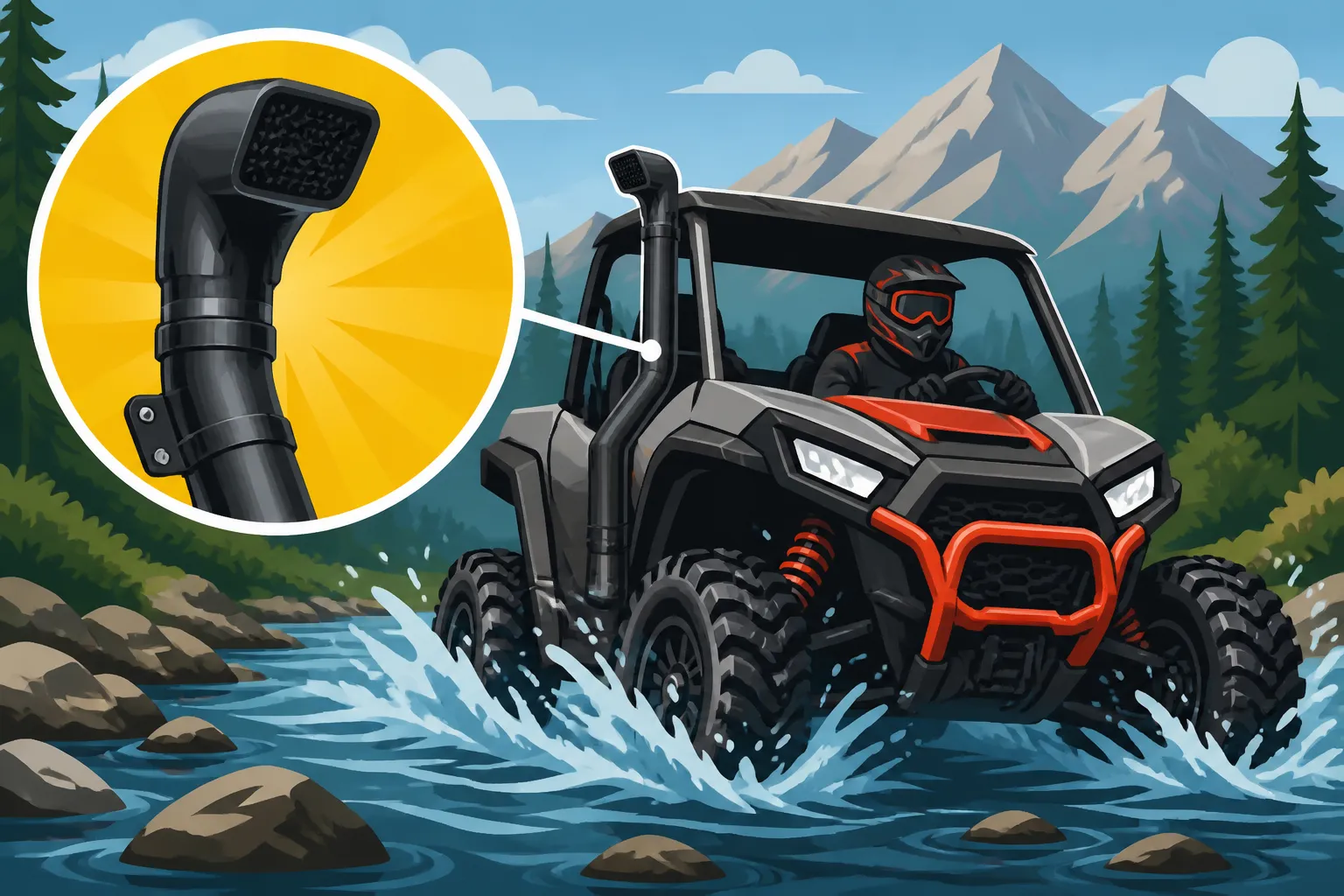
A snorkel relocates an air intake opening to a higher point on the machine. If the original intake is low on the body, lifting the opening can reduce the chance of water being drawn into the engine during a shallow crossing. That matters because water entering a running engine can cause serious damage.
Many riders also raise or reroute other vulnerable openings, such as the transmission or differential breathers. These are separate systems from the engine intake, so an engine snorkel alone may not protect them. A well-planned setup should account for the particular machine and its factory layout rather than relying on a generic assumption that every hose or opening has been raised.
A snorkel is best understood as one part of a water-risk plan. It does not stop water entering through electrical connectors, seals, vents, or poorly secured joints. It also cannot compensate for a crossing that is too deep, a current that is too strong, or a hidden hole in the creek bed.
Why snorkels are not a license to ride deeper
It is tempting to treat a tall snorkel as permission to push farther into water. That is where riders can get into trouble. Water may reach the belt housing, electrical components, or other openings before it reaches the raised engine intake. A machine may also lose traction, get swept sideways, or become stuck on a submerged obstacle.
A crossing can change between rides. Rain, snowmelt, upstream conditions, and shifting gravel can alter its depth and flow. Even if a spot was shallow the last time you visited, do not assume it is unchanged. McLean Creek is a popular riding area, but conditions on individual trails and crossings can vary; start with the current land-use information for the area, including McLean Creek: Alberta’s Best Known OHV Area.
Before installing a snorkel or attempting a crossing, check the owner’s manual and ask a qualified powersports mechanic about your specific machine. Modifications can affect performance and may require careful routing, sealing, or other changes. If you are unsure whether your machine can handle the conditions, the safer choice is to avoid the water rather than test its limits.
Preparing for crossings at McLean Creek
Check the route and conditions before you unload
Plan the day around the route you can safely ride, not around the crossing you hope to conquer. Review current trail information and closures before leaving, and confirm that the route is open to your type of machine. A trail map can help with orientation, but a map does not guarantee that a route or water crossing is open or passable on the day you arrive.
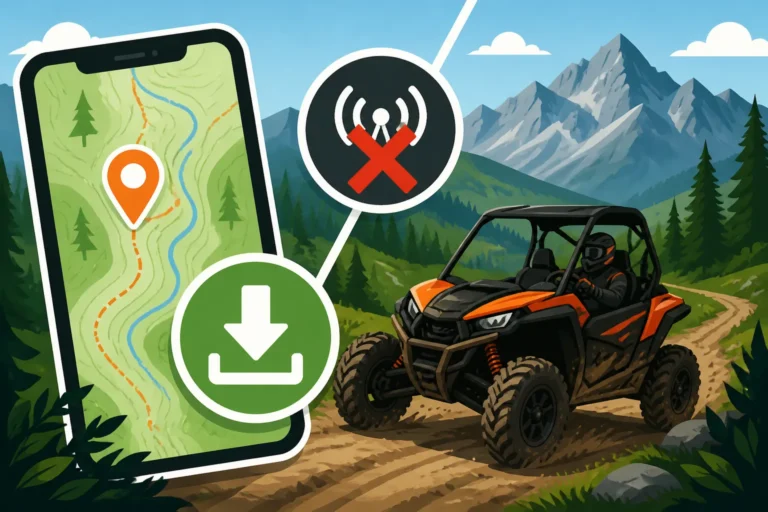
Offline maps are useful in areas where mobile service may be unreliable. Riders may use a mapping tool such as onX Offroad to review routes and save map information before heading out, but should compare that planning information with current official notices and signs on the ground. Downloading a map in advance is especially helpful if you lose signal after leaving the staging area; see Alberta Trail Maps Worth Downloading and Downloading a Georeferenced Trail Map Before You Lose Signal.
McLean Creek has a substantial trail network, so it is worth choosing a route that fits your group’s experience, machine capability, and time available. A long route can become stressful if one difficult obstacle slows everyone down or if a machine needs attention. For a broader sense of the riding network, review McLean Creek’s 100 Kilometres of Alberta Trail, then make a practical plan with a turnaround point and enough time to get back before conditions or daylight become a concern.
Inspect the machine and carry basic recovery gear
Before riding, inspect the snorkel installation for loose connections, cracks, pinched hoses, or openings that could let water or debris in. Check that intake openings are not blocked by gear or mud. If the machine has raised breathers, confirm that their hoses are secure and routed as intended. A quick visual check is no substitute for professional installation, but it can catch obvious problems before they become trail-side problems.
Also inspect tires, brakes, throttle response, steering, lights, and the machine’s general condition. Carry a tool kit suited to your machine, a tow strap or recovery equipment appropriate for the group, and a first-aid kit. Let someone know where you are going and when you expect to return. For a group ride, agree in advance on a simple rule: no one attempts a crossing until the group has assessed it, and anyone can call for a turnaround without being pressured.
A snorkel installation does not eliminate the need for normal equipment checks. Public-land riding requirements may include equipment and safety expectations beyond what a snorkel addresses. Review Alberta Equipment Checks by Officers before your trip, and make sure every rider understands the plan and has the right protective gear.
| Before the ride | What to check | Why it matters |
|---|---|---|
| Route | Current access information, signs, closures, and machine restrictions | A mapped trail may not be open or suitable on the day |
| Snorkel setup | Secure hoses, joints, intake opening, and any raised breathers | Loose or incomplete routing can leave openings vulnerable |
| Machine condition | Tires, brakes, steering, lights, and controls | Water and rough terrain can expose existing problems |
| Group plan | Turnaround point, communication, and recovery roles | Prevents pressure to continue when conditions are uncertain |
| Navigation | Offline map and a backup plan | Mobile coverage may be inconsistent away from the staging area |
Assessing a crossing without taking unnecessary risks
Look, listen, and choose a safe alternative
Stop well before the water and assess it from a safe location. Look for visible depth markers, a defined trail route, signs, and evidence of recent changes. Pay attention to current, floating debris, steep or undercut banks, and a bed that cannot be seen. Do not assume a familiar-looking entry leads to a safe exit on the other side.
If the water is moving, the bottom is hidden, or you cannot tell how deep it is, do not ride in simply to find out. A rider walking into water can also be at risk, especially where the bottom is slippery or the current is stronger than it appears. Use judgment conservatively and follow posted directions. If a route requires riding through a sensitive area or appears to leave the established trail, choose another route rather than making a new track.
Protecting the ground is part of responsible riding. Repeatedly driving through a soft bank can widen a trail and damage vegetation or creek edges. Keep to the established tread and avoid creating detours around a difficult spot. The guidance in Staying on the Trail Tread and Alberta Riparian Areas to Avoid is useful when deciding whether a tempting route is causing avoidable damage.
Know when the right answer is to turn around
Turn back if you cannot confidently judge depth, the bottom, the current, or the exit. Do the same if water has risen since your last visit, the bank is unstable, your machine is behaving unusually, or the group does not have suitable recovery options. A snorkel cannot make these conditions safer by itself.
A rider may feel pressure to continue because friends have already crossed or because the group has driven a long way to reach the spot. That pressure is not a good reason to take a risk. Agreeing beforehand that anyone can call a stop helps make the decision easier. If one machine is stuck or water has entered a vulnerable part of it, avoid repeated attempts to start it; seek appropriate help and consult a mechanic before operating it again.
After a heavy storm or a noticeable change in trail conditions, reconsider the whole route, not just the creek. Trail surfaces and access can be affected well beyond a crossing. Check for closures and current conditions, including Alberta Trail Closures After a Storm. A saved map from onX Offroad or another navigation tool can help you keep your bearings, but it should support—not replace—on-site signs, sound judgment, and current official information.
After a wet ride
Inspect and dry the machine
Once you are back at the staging area, look for mud or water around the snorkel openings, hose joints, and other areas that were exposed. Check the airbox according to the manufacturer’s instructions. If you suspect water has entered the engine, intake, transmission, or other components, do not keep riding to see whether the machine “seems fine.” Stop and get qualified mechanical advice; continuing to run a compromised machine can make damage worse.
Clean and inspect the machine in a way that follows local facility rules and the manufacturer’s recommendations. Pay attention to electrical connections, brakes, bearings, and moving parts after muddy or wet conditions. A snorkel that has shifted or been damaged should be repaired before the next ride. Note any symptoms, such as unusual engine behavior or a change in belt performance, and share those details with the mechanic.
Keeping a simple maintenance log helps spot patterns. Record where the machine was ridden, what conditions it encountered, and whether you found loose fittings or water in places it should not be. That information can help you decide whether the snorkel setup needs professional attention or whether a different route is a better fit next time.
Build a safer riding routine
The most dependable approach is to combine sensible route planning, a properly maintained machine, and a willingness to avoid uncertain water. Before each trip, review access information, prepare offline navigation, and confirm that everyone understands the group’s turnaround plan. A snorkel can reduce one specific risk, but it cannot replace those decisions.
If you are new to McLean Creek, consider starting with a route suited to your experience and machine rather than making a creek crossing the goal of the day. Conditions can vary, and a conservative first ride gives you a chance to learn the area without forcing a decision at an unfamiliar obstacle. Use onX Offroad or another mapping tool as one planning aid, then verify route access and follow signs on the ground.
When a crossing looks doubtful, turning around is a successful ride decision. You protect the machine, the people riding with you, and the trail environment—and you avoid turning a recreational day into a recovery problem.
Disclaimer
This article is for general informational purposes only and does not constitute professional advice. Laws, prices and regulations vary by location and change over time. Consult a qualified professional for guidance on your specific situation.