What an Officer Looks for on a Spark Arrestor
Riding your ATV or UTV in Alberta's stunning wilderness is an incredible experience, but it comes with a serious responsibility, especially concerning fire safety. One of the most critical, yet often overlooked, components on your machine is the spark arrestor. Many riders don't fully understand its purpose, how it's supposed to work, or what an enforcement officer will actually look for when they stop you on the trail. This guide is here to shed light on exactly what makes a spark arrestor compliant, why it matters so much in our beautiful province, and what you can expect when an officer performs a spot check.
Understanding Spark Arrestors and Why They Matter in Alberta
Let's be honest, when you're geared up and ready to hit the trails, the last thing on your mind might be a small metal screen inside your exhaust. But this seemingly minor component plays a gigantic role, particularly here in Alberta, where our natural landscapes are incredibly susceptible to wildfires. Ignoring it isn't just a minor infraction; it's a direct threat to our forests and communities.
The Critical Role of Spark Arrestors
A spark arrestor is essentially a screen or a series of baffles integrated into your ATV or UTV's exhaust system. Its primary job is to cool and trap hot carbon particles—sparks—that are expelled from the engine during combustion. Without a functioning spark arrestor, these tiny, incandescent embers can fly out of your muffler and land in dry grass, leaves, or other flammable debris, instantly igniting a wildfire. Think about it: you're riding through a beautiful, dry meadow in late summer, and a single spark from your exhaust could turn that into a catastrophic blaze in minutes.
In Alberta, especially during our often-dry springs, summers, and falls, the risk of wildfires is a constant concern. Our provincial laws, outlined in the Off-Highway Vehicle Regulation, specifically mandate that all off-highway vehicles operating on public land must be equipped with a spark arrestor that is in good working order. This isn't just a suggestion; it's a legal requirement designed to protect our natural resources, wildlife, and the safety of everyone who enjoys the outdoors. The devastation caused by a human-started wildfire is immense, and a properly maintained spark arrestor is one of the simplest, yet most effective, preventative measures you can take. [Alberta Requires a Spark Arrestor]
Where to Find Your Spark Arrestor
For most ATVs and UTVs, the spark arrestor is either an integral part of the muffler or a removable insert located at the end of the exhaust pipe. On many stock machines, it's often a small, perforated metal screen or a series of plates designed to create turbulence and trap those hot particles. It's usually tucked away, not immediately obvious unless you know what you're looking for.
To locate yours, start by looking at the very end of your exhaust system where the gasses exit. You might need to peer into the exhaust tip or, in some cases, remove a small cover or a couple of screws to access it. For aftermarket exhaust systems, like those from SuperATV or similar performance brands, the spark arrestor may be designed differently, but it must still be present and functional. It's crucial to understand that just because an exhaust system is "performance-oriented" doesn't mean it gets a pass on fire safety. If you've ever replaced your stock exhaust, double-check that the new system explicitly states it includes a compliant spark arrestor, or that you've installed one correctly. If you're unsure, consulting your owner's manual or asking a qualified mechanic can save you a lot of headaches – and potential fines – down the road.
What an Officer Scrutinizes on a Spark Arrestor
When a Fish and Wildlife Officer, an RCMP officer, or a park ranger stops you on public land in Alberta, they're not just looking for a registration plate or a helmet. They're also doing a quick but thorough check of your machine's safety equipment, and the spark arrestor is high on that list. They're trained to spot non-compliance, and they take it very seriously, especially during periods of high fire hazard.
Presence and Proper Installation
The first and most basic thing an officer will check for is whether a spark arrestor is present at all. It might sound obvious, but you'd be surprised how many riders inadvertently remove them for maintenance and forget to put them back, or they fall out due to vibration on older machines. Some riders might also mistakenly believe that because they only ride on private land, they don't need one – but if you're ever on public land, even just crossing a ditch, it's required. [Alberta Registration Before Riding a Ditch]
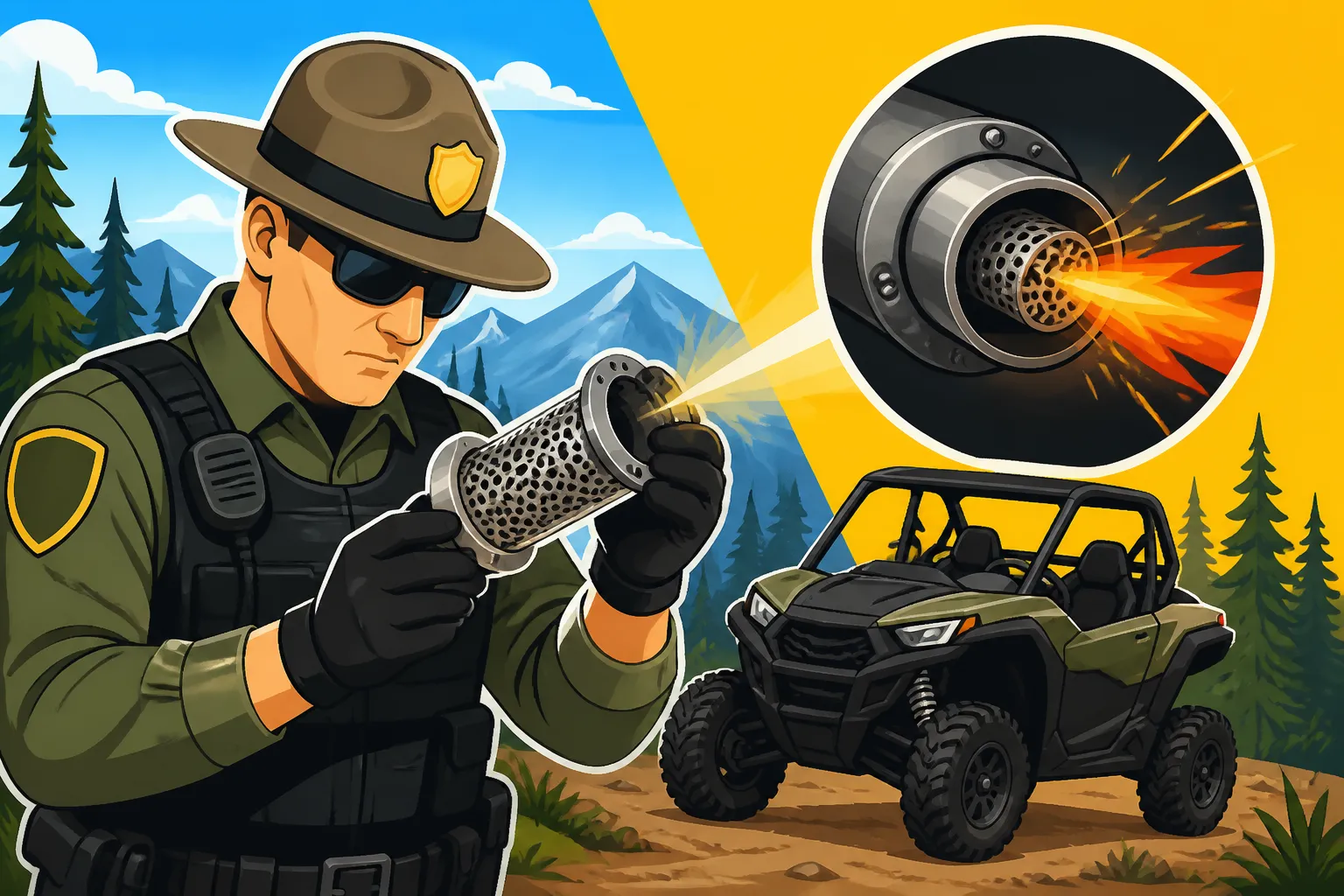
An officer might visually inspect the end of your muffler, possibly asking you to turn off your machine so they can safely get a closer look, or even feel inside the exhaust with a gloved finger or a tool to verify its presence. If it's there but obviously loose, rattling, or improperly installed in a way that allows sparks to bypass it, that's also a major red flag. For instance, if you've got a SuperATV performance exhaust, an officer will expect that the spark arrestor is properly integrated and securely fastened as per the manufacturer's design. Remember, a spark arrestor that isn't doing its job is just as bad as no spark arrestor at all. They're looking for proof that the device is actually part of the exhaust system and can effectively do its job.
Condition and Functionality
Beyond just being present, the condition of your spark arrestor is paramount. An officer will be looking for any signs of damage or wear that compromise its effectiveness. This includes:
- Holes or Tears: A screen with holes, rips, or sections missing means sparks can easily escape. Even a small tear can be enough for a hot ember to slip through.
- Heavy Carbon Buildup: Over time, carbon deposits from your engine's combustion can accumulate on the spark arrestor screen. If this buildup is excessive, it can completely block the mesh, not only hindering your engine's performance but also making the spark arrestor ineffective. An officer might shine a flashlight into your exhaust or even use a small probe to check for this. A completely clogged spark arrestor is a non-functional one.
- Rust or Corrosion: While some surface rust might be normal, severe corrosion could indicate that the spark arrestor is weak, brittle, and prone to breaking apart, again allowing sparks to escape.
If an officer determines that your spark arrestor is damaged, excessively clogged, or otherwise unable to perform its function, they can issue a ticket. It's not enough to simply have one; it needs to be in good working order.
Compliance with Regulations
While Alberta doesn't typically require a specific "stamp" or certification mark on spark arrestors like it does for CSA-approved helmets, the expectation is that the device functions as intended to prevent sparks. For most factory-installed spark arrestors, compliance is assumed as long as the unit is undamaged and clean. For aftermarket exhausts, the onus is on the owner to ensure the system is compliant.
Officers primarily look for a device that appears robust and designed for the purpose of spark arrestion. They want to see a proper screen or baffle system, not just a random piece of chicken wire shoved into the pipe. If you've installed an aftermarket exhaust, such as those offered by SuperATV, it should either come with an integrated, compliant spark arrestor or provide a clear method for installing one. Trying to rig up a DIY solution is highly discouraged, as it's unlikely to meet the functional requirements and could easily fail inspection, not to mention put you at risk of starting a fire. The underlying regulation is focused on the outcome – the effective arrestment of sparks – so any device that doesn't achieve this, regardless of its origin, will be deemed non-compliant.
Consequences of a Non-Compliant Spark Arrestor
Riding with a faulty or missing spark arrestor isn't just a minor technicality; it's a serious offence with tangible consequences for you, your wallet, and potentially the environment. Alberta's enforcement officers are keenly aware of the fire risk, and they don't take these infractions lightly.
Fines and Penalties
The immediate and most common consequence of being caught with a non-compliant spark arrestor is a significant fine. While specific amounts can change, you can expect a ticket to be a hefty hit to your wallet. These aren't minor parking tickets; they reflect the serious nature of the offence and the potential damage an uncontrolled spark can cause. [Why a Modified Muffler Can Cost You a Ticket]
In more severe situations, especially during times of high fire hazard or if an officer believes there's an immediate and significant risk, your vehicle could even be subject to seizure. This means your riding day is over, your machine is impounded, and you'll incur additional costs for towing and storage, on top of any fines. Imagine being deep in a Public Land Use Zone (PLUZ) and having your machine towed away – it's a huge inconvenience and an expensive lesson. Officers are particularly vigilant during fire bans, and penalties can be even more stringent if you're found to be non-compliant during such critical periods. [Alberta Fire Bans and Riding]
Environmental Impact and Personal Liability
Beyond the legal and financial penalties, the most profound consequence of a missing or faulty spark arrestor is the potential to start a wildfire. Alberta's forests, foothills, and prairie lands are invaluable, and a single spark can devastate hundreds, if not thousands, of acres. The environmental impact is long-lasting, destroying habitats, polluting air, and impacting water quality.
Furthermore, if your machine is found to be the cause of a wildfire due to a non-compliant spark arrestor, you could face severe personal liability. This could include substantial costs for fire suppression, property damage, and environmental restoration, potentially leading to civil lawsuits that could financially cripple you for years. It's a stark reminder that riding an OHV comes with a deep responsibility to be a steward of the land. Nobody wants to be the person responsible for starting a devastating fire that impacts communities and wildlife for decades. This is why proper maintenance and compliance are non-negotiable.
Maintaining Your Spark Arrestor
Keeping your spark arrestor in good working order is relatively simple and should be a regular part of your machine maintenance routine.
- Regular Cleaning: Carbon buildup is the most common culprit for an ineffective spark arrestor. Depending on how much you ride and the condition of your engine, you should remove and clean your spark arrestor periodically. This usually involves removing a few screws, sliding out the screen, and using a wire brush or scraper to remove the carbon deposits. Be gentle to avoid damaging the screen itself.
- Inspection for Damage: Each time you clean it, visually inspect the screen for any holes, tears, or signs of weakening. Check for loose connections or bent baffles.
- Replacement When Necessary: If your spark arrestor is damaged, corroded beyond repair, or simply can't be effectively cleaned, it's time to replace it. Replacement parts are usually available from your dealer or through aftermarket suppliers like SuperATV. Always ensure the replacement part is designed for your specific exhaust system and is robust enough to do the job.
- Check After Exhaust Work: If you've had any work done on your exhaust system, or if you've installed an aftermarket muffler, always confirm that the spark arrestor is correctly installed and functional before hitting the trails. This small check can save you from a major headache later.
By following these simple maintenance steps, you can ensure your machine is compliant, reduce your risk of fines, and most importantly, do your part to protect Alberta's beautiful natural environment from devastating wildfires.
Here’s a quick summary of what an officer looks for:
| Feature | Compliant Spark Arrestor | Non-Compliant Spark Arrestor |
|---|---|---|
| Presence | Clearly visible, securely installed within the exhaust system. | Missing, or obviously not a part of the exhaust. |
| Physical Condition | Screen or baffles are intact, free of holes, tears, or significant damage. | Damaged screen, large holes, bent/missing baffles. |
| Cleanliness/Function | Relatively clean, allows exhaust gases to pass through, no excessive carbon buildup blocking the mesh. | Heavily clogged with carbon, preventing effective spark arrestion and restricting exhaust flow. |
| Installation | Firmly attached, not loose or rattling; functions as intended to trap sparks. | Loose, improperly fitted, or installed in a way that allows sparks to bypass it. |
| Overall Appearance | Looks like a purpose-built device, often from the manufacturer or a reputable aftermarket brand like SuperATV. | Appears makeshift, improvised, or not designed for effective spark arrestion. |
Riding an off-highway vehicle in Alberta is a privilege that comes with the responsibility of protecting our shared environment. A properly functioning spark arrestor is a critical part of that responsibility. By understanding what an officer looks for and taking the simple steps to maintain your machine, you're not only avoiding potential fines but also becoming a responsible steward of Alberta's stunning landscapes. So, before your next adventure, give that little screen a quick check – it could make all the difference. [What an Officer Looks for on a Spark Arrestor] [What the Traffic Safety Act Requires of Alberta OHVs] [Alberta Equipment Required on Public Land] [Alberta Noise Complaints About Quads] [Alberta Penalties for Riding Unregistered] [Alberta Vehicle Seizure for No Insurance] [Alberta Equipment Checks by Officers] [Alberta Spark Arrestor Rules] [Producing Insurance on Demand] [What an Alberta Officer Can Ask to See]
Disclaimer
This article is for general informational purposes only and does not constitute professional advice. Laws, prices and regulations vary by location and change over time. Consult a qualified professional for guidance on your specific situation.