Riding Two Up on One Seat
It's an age-old temptation for any off-highway vehicle (OHV) enthusiast: you're heading out for an epic ride through Alberta's incredible landscapes, and a friend or family member wants to come along. You look at your trusty quad, see a bit of space behind you on the seat, and the thought crosses your mind: "Can't we just squeeze on?" While the idea of sharing the adventure is lovely, the reality of riding two-up on a single-seat ATV is fraught with legal pitfalls and serious safety risks. This guide will cut through the guesswork, explaining why it's generally a bad idea, what Alberta's rules actually say, and the proper ways to bring a passenger along for the ride.
The Harsh Reality: Alberta's Rules on Carrying Passengers
Let's be blunt: attempting to carry a passenger on an ATV that was designed for a single rider isn't just uncomfortable; it's a serious violation of Alberta's Off-Highway Vehicle Regulation and, more importantly, a significant safety hazard. The province's laws are built with rider safety and vehicle design in mind, and they don't look kindly on improvising when it comes to passenger capacity.
What the Law Says About Single-Seat ATVs
In Alberta, the rules regarding passengers on off-highway vehicles are quite clear. If your ATV was manufactured and sold as a single-rider machine, that's exactly what it is – a vehicle for one person. The seating capacity of an ATV is determined by its manufacturer's design, and this information is usually found in your owner's manual or on a label directly on the machine. Trying to fit a second person onto a seat meant for one, even if they're small, instantly puts you in contravention of the regulations. Law enforcement officers, whether it's the RCMP or Fish and Wildlife, are well-versed in these distinctions and will often check for proper seating and passenger arrangements during trail patrols or at staging areas. They understand that manufacturer specifications are there for a reason, primarily safety. Ignoring these basic requirements can quickly turn a fun day out into a costly and potentially dangerous encounter. For a deeper dive into the overall regulations, you might want to read [What the Traffic Safety Act Requires of Alberta OHVs].
Designated Two-Up Machines and Their Purpose
Thankfully, the industry recognized the desire for riders to share their passion, and purpose-built two-up ATVs, often called "2-Up" or "Touring" models, came into existence. These machines are fundamentally different from their single-seat counterparts. They feature a significantly longer seat, providing ample space and comfort for both a driver and a passenger. Beyond just the seat, these ATVs are engineered with passenger safety in mind: they include dedicated handholds for the passenger to grip securely and separate footrests, ensuring the passenger isn't interfering with the driver's feet or balance. More critically, the chassis, suspension, and braking systems on a two-up ATV are all beefed up to handle the additional weight and altered center of gravity that comes with carrying two people.
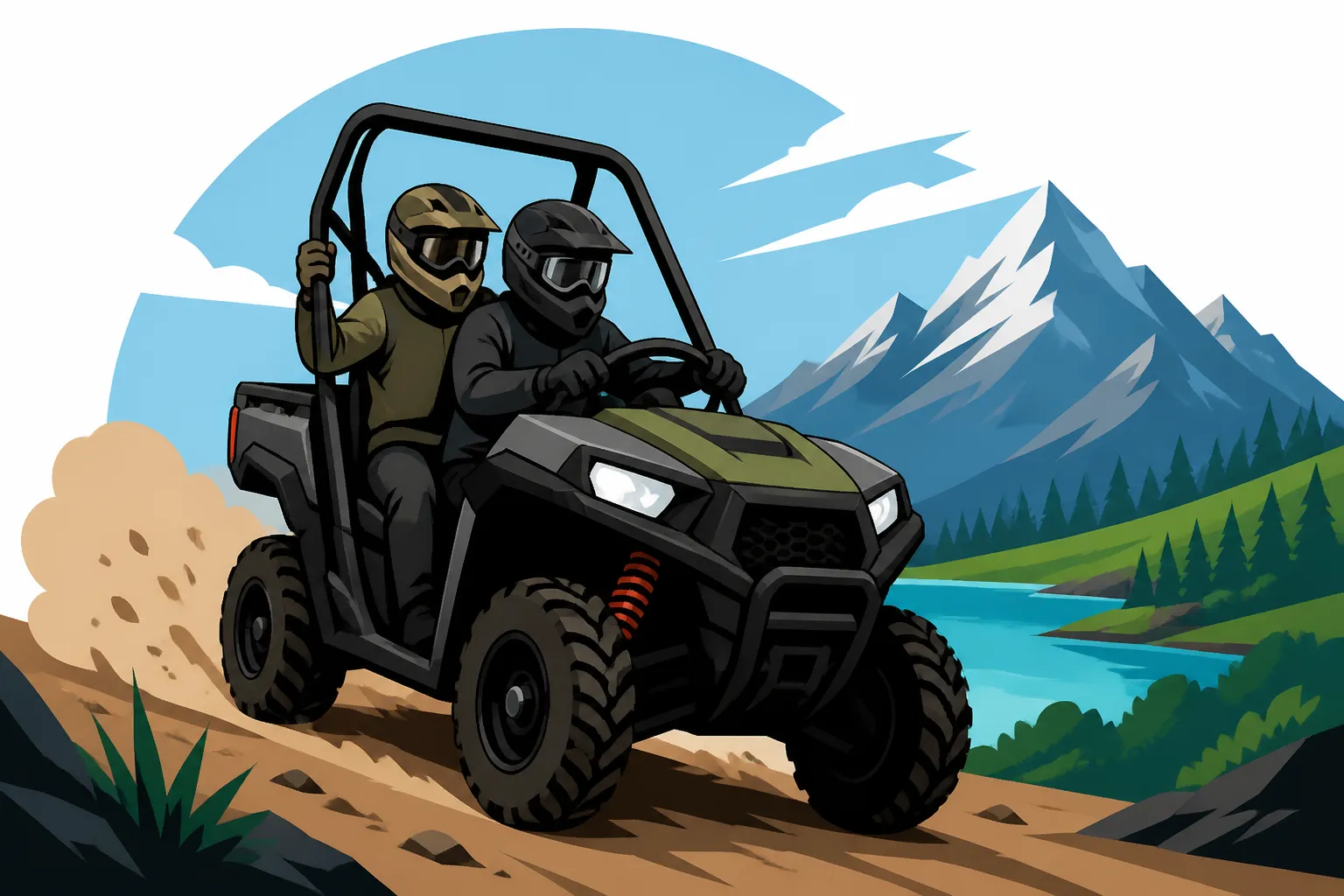
Then, of course, there are side-by-sides (SxS or UTVs), which are explicitly designed for multiple passengers, ranging from two-seaters to four-seaters and even more. These vehicles come equipped with roll cages, seatbelts, and often much more robust suspension systems, providing a very different, and much safer, passenger experience. When it comes to taking people along, these are the machines that are legally and safely designed for the task. You can find more specific rules around this in [Alberta Passenger Limits by Manufacturer].
Why Cramming a Passenger is a Bad Idea: Safety First
The legal ramifications of riding two-up on a single seat are one thing, but the safety implications are arguably even more critical. These machines are finely tuned instruments, and adding an unauthorized passenger fundamentally alters their dynamics in ways that can quickly lead to disaster.
Stability and Control Compromises
Picture this: you're riding your single-seat ATV, designed for your weight, your movements, and your center of gravity. Now, imagine adding another person directly behind you on that same small seat. The entire balance of the machine changes instantly. Your center of gravity shifts significantly higher and further back. This makes the ATV incredibly unstable, particularly when navigating turns, climbing hills, or traversing uneven terrain. The front wheels, which are crucial for steering and maintaining traction, can become light, making the machine difficult to control. Even a slight lean from your passenger can throw the ATV off balance, increasing the risk of a rollover exponentially. Your ability to react quickly and shift your weight – a fundamental technique in ATV riding – is severely hampered by a passenger, turning what should be an intuitive response into a struggle for control.
Suspension and Braking Overload
Every ATV has a Gross Vehicle Weight Rating (GVWR), which specifies the maximum allowable weight the vehicle can safely carry, including the rider, any cargo, and fuel. A single-seat ATV's suspension and braking systems are designed with this single-rider GVWR in mind. When you add a second person, you almost certainly exceed this rating. Overloading the suspension means it bottoms out more easily, leading to harsh impacts, reduced ground clearance, and a bumpy, uncomfortable, and unsafe ride. The tires, too, are rated for a certain load; exceeding this can lead to premature wear or even blowouts.
Even more critically, the braking system isn't designed to stop the extra momentum generated by two people. Your braking distance will increase dramatically, and the brakes themselves can overheat and fade, leaving you with little stopping power when you need it most. This is not a situation you ever want to find yourself in, especially when navigating tricky trails or steep descents. Knowing the proper equipment rules, including those for stopping, is vital; check out [Alberta Equipment Required on Public Land] for more information.
Ergonomics and Rider Interference
Riding an ATV isn't like driving a car; it's a dynamic, full-body activity. You constantly shift your weight, lean into turns, and use your legs to absorb impacts. A passenger crammed onto the same seat severely restricts your ability to do any of this. They occupy the space you need to move, hindering your body language with the machine. Their presence can even prevent you from properly gripping the tank or seat with your knees, which is crucial for control.
Furthermore, a passenger who isn't experienced in riding might lean the wrong way in a turn, stand up at an inopportune moment, or simply be a dead weight that fights your natural instincts. This interference creates a dangerous push-and-pull dynamic, making it incredibly difficult for the driver to maintain control and anticipate the machine's movements. Not to mention, it's incredibly uncomfortable for both parties, leading to faster fatigue, which further compromises safety and decision-making on the trail.
Responsible Riding: Bringing a Passenger Along Legally and Safely
So, if riding two-up on a single-seat ATV is out, what are your options for sharing the adventure? The good news is there are several responsible and legal ways to bring a passenger along, ensuring everyone has a safe and enjoyable time on Alberta's trails.
Investing in a Purpose-Built Two-Up ATV or Side-by-Side
Without a doubt, the best and safest solution for riding with a passenger is to invest in a machine specifically designed for it. A purpose-built two-up ATV (often referred to as a "max" or "touring" model) will have a longer, more comfortable seat, dedicated passenger handholds, and separate footrests. Its chassis, suspension, and engine will be engineered to handle the additional weight and different balance characteristics of two riders. These machines offer a significantly more stable and controlled ride, ensuring that both the driver and passenger are comfortable and safe, even on challenging terrain.
Even better, a side-by-side (SxS or UTV) provides an even higher level of safety and comfort for multiple passengers. With features like roll cages, automotive-style seating, seatbelts, and often power steering, SxSs are fantastic for family outings or group rides. They offer superior stability and protection, making them an excellent choice for exploring Alberta's vast trail networks with company. Whether you choose a two-up ATV or a side-by-side, always ensure it's registered and insured as required; you can learn more about this in [Alberta Requires Insurance on Public Land].
Aftermarket Solutions and Their Limitations
You might see aftermarket passenger seats advertised for single-seat ATVs. While these products, often from reputable companies, can offer a more comfortable perch for a second person, it's crucial to understand their limitations. Simply bolting a secondary seat onto a single-rider ATV does not legally transform it into a two-up machine in Alberta. The vehicle's manufacturer-defined seating capacity remains unchanged. Therefore, riding with a passenger on a single-seat ATV, even with an aftermarket seat, would still be illegal on public land and could lead to fines.
However, for those who already own a designated two-up machine or a side-by-side, enhancing the passenger experience is a whole different ballgame. Companies like SuperATV offer a fantastic array of accessories, from comfortable seat upgrades to specialized cargo boxes that keep your gear secure, making your ride even more enjoyable. They also provide practical items like grab handles for passengers, or even windshields for side-by-sides to improve comfort in various weather conditions. These additions are designed to improve existing multi-passenger machines, not to alter the fundamental legal classification of a single-rider ATV. Always ensure any modifications or additions comply with local regulations and do not compromise the vehicle's safe operation.
Passenger Preparedness and Etiquette
Once you have a suitable two-up machine, ensuring your passenger is prepared is the next step.
First and foremost, your passenger needs proper safety gear. This means a CSA-approved helmet that fits correctly, sturdy over-the-ankle boots, gloves, long pants, and a long-sleeved shirt or jacket. These are non-negotiable for protection. Alberta's helmet law applies to all riders and passengers on public land, regardless of age, and a proper helmet can be a literal lifesaver. More information can be found at [Alberta CSA Helmet Standards].
Secondly, communicate clearly with your passenger before and during the ride. Explain how to hold on securely to the designated handholds, how to keep their feet firmly on the footrests, and the importance of leaning with you in turns. A passenger who fights your lean can throw the machine off balance. Younger passengers, in particular, need clear instructions and consistent supervision. Alberta has specific age requirements for riders and passengers; for instance, the minimum age for riding an OHV on public land is 14, and there are rules about supervision for younger riders and passengers. Ensure you're familiar with these before heading out. [Alberta's Minimum Age of 14 on Public Land] and [Alberta Adult Supervision at 18] are good places to start.
Here's a quick comparison of different OHV types for carrying passengers:
| Feature | Single-Seat ATV (Not for Passengers) | Purpose-Built 2-Up ATV (e.g., Can-Am Outlander MAX, Polaris Sportsman Touring) | Side-by-Side (SxS) (e.g., Polaris RZR, Can-Am Defender, SuperATV Equipped) |
|---|---|---|---|
| Legal for Passenger on Public Land in Alberta | No | Yes | Yes |
| Manufacturer's Intent | Designed for one rider only | Designed for two riders | Designed for two or more passengers |
| Seat Length & Design | Short, single rider | Extended, stepped for two riders, often with backrest | Bench or bucket seats, automotive-style |
| Passenger Handholds/Footrests | None | Dedicated, integrated handholds and footrests | Integrated handles, full floorboards |
| Suspension & Chassis | Rated for single rider | Heavy-duty, designed for two-rider weight and balance | Robust, multi-passenger rated, often with roll cage |
| Safety Features | Basic (no seatbelts/cage) | Basic (no seatbelts/cage), but better stability than overloaded single-seat | Roll cage, seatbelts, higher stability |
| Driver Control w/ Passenger | Severely compromised | Excellent | Excellent |
| Recommended Use | Solo recreational or utility riding | Recreational riding with a single passenger | Recreational, utility, or family riding with multiple passengers |
Consequences of Non-Compliance
Ignoring the rules and safety guidelines around carrying passengers on an OHV in Alberta isn't just a slap on the wrist; it can lead to significant financial penalties, legal liabilities, and even the loss of your machine.
Fines and Penalties for Riding Illegally
If you're caught riding a single-seat ATV with a passenger on public land in Alberta, you're likely facing a ticket. The specific fine amount can vary, but it's typically a substantial deterrent. These fines are designed to emphasize the seriousness of the offence and the inherent dangers involved. An officer has the discretion to issue a ticket for riding outside of manufacturer specifications or for an unsafe operation, both of which apply when you're carrying an unauthorized passenger. Beyond the immediate fine, you might also incur court costs if you choose to dispute the ticket and lose. It's a quick way to turn a fun outing into an expensive regret. To understand more about the costs involved, check out [Alberta Ticket Costs for a Riding Violation].
Increased Risk of Accidents and Liability
The most severe consequence of riding improperly with a passenger is, of course, the increased risk of an accident. As discussed, the machine's stability, handling, and braking are all compromised. Should an accident occur, the ramifications can be devastating. Injuries to yourself or your passenger could be severe, leading to long-term health issues and significant medical expenses.
Furthermore, your liability will be significantly higher. If you were operating the OHV illegally by carrying an unauthorized passenger, your insurance provider might deny coverage for any damages or injuries. This means you could be personally responsible for medical bills, property damage, and legal fees, which could easily amount to tens or even hundreds of thousands of dollars. The financial and emotional toll of such an event far outweighs the perceived convenience of squeezing a passenger onto an unsuitable machine. This risk underscores the importance of proper insurance coverage, detailed in [Alberta Insurance Requirements on Public Land].
Vehicle Seizure
In more serious cases, especially if other infractions are present (like impaired riding, no insurance, or repeated violations), an officer has the authority to seize your off-highway vehicle. Losing access to your machine, incurring towing and impoundment fees, and dealing with the hassle of retrieving it, is a costly and frustrating experience that no rider wants. The authorities take OHV safety and compliance seriously, and vehicle seizure is a tool used to ensure the safety of all public land users. It's a harsh reality, but one that emphasizes the importance of always riding within the law and manufacturer guidelines. If you're curious about when a vehicle might be seized, you can look into [Alberta Vehicle Seizure for No Insurance].
Disclaimer
This article is for general informational purposes only and does not constitute professional advice. Laws, prices and regulations vary by location and change over time. Consult a qualified professional for guidance on your specific situation.