Alberta Rules for Riding With a Dog
Bringing your beloved dog along on your off-highway vehicle (OHV) adventures in Alberta can sound like an absolute dream – the wind in their fur, the shared experience of the great outdoors. However, many riders find themselves scratching their heads, wondering if it's even legal, let alone safe or practical, to have their furry co-pilot along for the ride. This guide is here to untangle the complexities, highlight the safety considerations, and offer practical advice for those looking to safely and responsibly enjoy Alberta's trails with their canine companions.
The Legal Landscape: Are Dogs Even Allowed on Alberta OHV Trails?
One of the biggest questions that crop up when you consider bringing your dog along for an OHV ride in Alberta is, "Is it even allowed?" It's a fair question, and the answer isn't always as black and white as you might hope. We're not talking about a simple yes or no here, but rather a dive into what the regulations actually say, and more importantly, what they don't say.
What Alberta's OHV Regulations Say (or Don't Say) About Pets
When you scour Alberta's Traffic Safety Act or the Off-Highway Vehicle Regulation 319/2002, you'll notice something striking: there's a distinct lack of specific rules prohibiting dogs from riding on OHVs. Unlike helmet laws, registration requirements, or age restrictions for riders, you won't find a direct clause saying "no dogs allowed on quads" or "all dogs must wear goggles." This absence of prohibition often leads riders to assume that if it's not forbidden, it must be permitted. And to a certain extent, that's true – there isn't a provincial blanket ban.
However, this doesn't mean it's a free-for-all. The lack of specific legislation means you need to exercise a significant amount of common sense, responsibility, and awareness of general animal welfare. While provincial OHV laws might be silent on the matter, other regulations, particularly those concerning animal control, public safety, and wildlife protection, can absolutely apply. For instance, bylaws in specific municipalities, counties, or even within designated Public Land Use Zones (PLUZs) might have their own rules regarding pets, leash requirements, or waste disposal. Ignorance of these local rules is no excuse, and a friendly chat with a local enforcement officer could quickly turn into a not-so-friendly ticket if you're not careful. Always remember that even without a specific "dog on OHV" rule, you are still responsible for your dog's actions, safety, and any impact they have on the environment or other trail users.
Public Land Use Zone (PLUZ) Specifics and Wildlife Concerns
Alberta is blessed with incredible public lands, many of which are designated as Public Land Use Zones, or PLUZs, offering fantastic OHV opportunities. But here's where the waters can get a little murkier when it comes to riding with dogs. While general OHV regulations might not mention your four-legged friend, many PLUZs have specific guidelines that indirectly or directly impact your ability to bring your dog.
The primary concern in these areas is often wildlife. Alberta is home to a rich diversity of animals, from deer and elk to bears and cougars, and their well-being is paramount. A free-roaming dog, even the most well-behaved one, can quickly become a nuisance or, worse, a danger to wildlife. Dogs can chase, harass, or even injure wild animals, disrupting their natural behaviours, especially during sensitive times like calving season. For this reason, many PLUZs will have clear signage indicating leash requirements, or even areas where dogs are not permitted at all. It's not uncommon to find rules stating that dogs must be kept under control, often defined as being on a leash or within voice command. However, "voice command" is often interpreted quite strictly by enforcement, especially if your dog is actively chasing squirrels or barking incessantly at birds.
Before heading out to a specific PLUZ, it's absolutely crucial to do your homework. Check the official Alberta Parks or Public Lands website for the specific zone you plan to visit. Look for any posted regulations regarding pets. Remember that these rules are in place to protect both the wildlife and your dog. An uncontrolled dog could get into a dangerous encounter with a bear or cougar, putting both of you at serious risk. Being aware of [Alberta Wildlife on the Trail] is a key part of responsible riding. You'll also want to be mindful of other trail users, including hikers, mountain bikers, and horseback riders, who might not appreciate an unleashed dog approaching them, regardless of how friendly your pup might be. Understanding the nuances of [Alberta Public Land Use Zones Explained] will provide a broader context for these regulations.
Prioritizing Your Dog's Safety and Comfort on the Ride
So, you've checked the local rules, and your chosen riding spot seems dog-friendly. Great! Now comes the truly important part: ensuring your dog's safety and comfort. This isn't just about avoiding tickets; it's about protecting your beloved pet from potential harm and making the experience enjoyable for everyone. An OHV ride is a thrilling, sometimes bumpy, loud, and dusty experience, and it's not suitable for every dog.
Assessing Your Dog's Suitability for OHV Adventures
Just like people, not all dogs are built for the rigors of off-roading. Before you even think about strapping them in, you need to be brutally honest about your dog's temperament, health, and age.
Temperament: Is your dog generally calm, adaptable, and not easily spooked by loud noises or sudden movements? If your dog is anxious, prone to barking excessively, or gets stressed in new environments, an OHV adventure might be too much for them. Imagine hitting a bumpy section, the engine roaring, dust flying – a high-strung dog could panic, try to jump out, or become a dangerous distraction. A dog that is easily overstimulated or prone to motion sickness will likely have a miserable time, and so will you.
Age and Health: Puppies and very old dogs typically aren't good candidates. Puppies are still developing their bones and joints, and the constant jarring of an OHV can be detrimental. They also lack the maturity and training to stay put. Older dogs might have arthritis, joint issues, or reduced hearing and eyesight, making the ride uncomfortable or even painful. Consult your vet before taking an older dog on an OHV trip. Even for healthy adult dogs, consider their breed. Brachycephalic (short-nosed) breeds like pugs or bulldogs can overheat very quickly, especially with exertion or in warm weather, making them poor choices for a dusty, sun-exposed ride. Dogs with known heart conditions or respiratory issues should also stay home.
Training and Acclimation: This isn't something you can spring on your dog. Introduce them gradually to the OHV. Start with the engine off, letting them sniff around, get in and out. Then, try short rides with the engine running, staying in a familiar, quiet area. Reward calm behaviour generously. Practice getting in and out, and staying in their designated spot. A dog that is accustomed to car rides and being confined in a crate or harness will adapt much more easily. Patience is key here; rushing the process will only lead to stress for your dog and potentially unsafe situations for everyone.
Essential Gear and Restraints for Safe Transport
Once you've determined your dog is a good candidate, proper gear and secure restraints are non-negotiable. This isn't just about keeping them from running off; it's about protecting them from impacts, dust, debris, and preventing them from interfering with your ability to safely operate the machine.
Secure Containment: This is perhaps the most critical aspect. Your dog needs to be securely contained, whether that's in a robust, well-ventilated travel crate or with a specialized dog seatbelt/harness system.
- Crates: For UTVs, a hard-sided kennel secured in the cargo bed is often the safest option. Make sure it's strapped down firmly so it won't shift or tip, even over rough terrain. Choose a size that allows your dog to stand up, turn around, and lie down comfortably, but not so large that they're thrown around inside. Consider placing a non-slip mat inside for added stability. Many SuperATV cargo boxes or bed enclosures can provide an excellent base for securely mounting a dog crate.
- Harnesses/Seatbelts: For dogs riding in the passenger seat of a side-by-side, a crash-tested vehicle harness combined with a seatbelt attachment is essential. Never use a collar with a seatbelt – a sudden stop could cause serious neck injury. The harness should allow some movement but prevent them from becoming a projectile or from distracting you by trying to jump onto your lap or out of the vehicle.
Protective Gear:
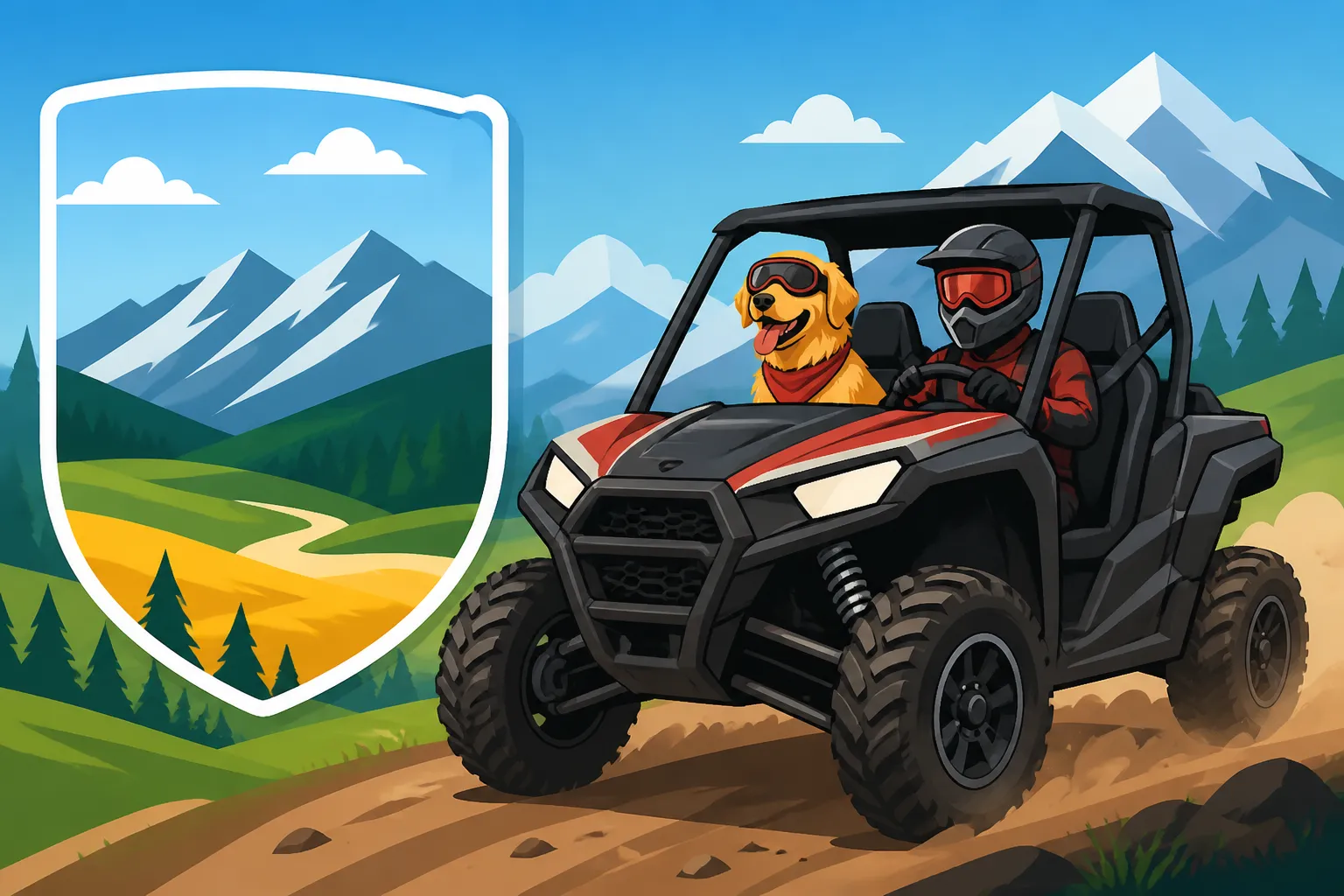
- Eye Protection (Doggles): Dust, dirt, branches, and insects can cause serious eye injuries. Investing in a pair of dog goggles ("doggles") is a smart move. Acclimate your dog to wearing them gradually at home before hitting the trails.
- Paw Protection: Depending on the terrain and duration of your ride, paw pads can get sore, cut, or burned (on hot surfaces). Dog booties can offer protection from sharp rocks, thorns, or extreme temperatures, especially if your dog will be running alongside or walking during breaks.
- First Aid Kit: Always carry a pet-specific first aid kit, including basics like antiseptic wipes, gauze, veterinary tape, tweezers (for splinters or ticks), and any personal medications your dog might need. This is in addition to your human [First Aid on a Backcountry Loop] kit.
- Hydration: Bring plenty of fresh water and a portable bowl. OHV riding can be dehydrating, and dogs pant to cool down, increasing their water needs. Never assume there will be clean water available on the trail.
Remember, a loose dog on an OHV is an accident waiting to happen, both for the dog and the rider. They could fall off, get tangled in moving parts, or suddenly jump in front of the controls, causing you to lose control of the machine. Securing your dog is an act of love and responsible pet ownership.
Responsible Riding with Your Canine Companion
You've got a trail-ready dog and the right gear. Fantastic! Now, let's talk about the human element: responsible riding practices that ensure everyone, including your dog and other trail users, has a positive experience. This is where good citizenship and trail etiquette really shine.
Trail Etiquette, Waste Management, and Leash Laws
Riding with a dog requires an even higher level of awareness and courtesy for your surroundings and fellow trail enthusiasts. Ignoring these basic principles can quickly give dog-owning riders a bad name and lead to more restrictive rules for everyone.
Leash Laws and Control: Even if a specific PLUZ doesn't have a strict "leash at all times" rule, keeping your dog leashed or under absolute voice command is critical. An unleashed dog, no matter how friendly, can cause problems. It could:
- Run into the path of another OHV, bicycle, or horse.
- Chase wildlife, which is illegal and harmful.
- Approach other people or dogs who may not appreciate the interaction, especially if they are fearful or have reactive pets.
- Wander off and get lost, or encounter unforeseen dangers.
- Dig up sensitive ecological areas.
When you encounter other trail users – be it other OHV riders, hikers, or even horseback riders – it's best practice to slow down, pull over, and leash your dog, even if they were previously off-leash. Announce your presence calmly and keep your dog close until they have passed. This simple courtesy goes a long way in ensuring positive interactions and avoiding conflicts. Remember the general principles of [Alberta Trail Etiquette Locals Expect].
Waste Management: This seems obvious, but it's often overlooked in remote areas. Whatever goes in, must come out – and that includes dog waste. Pack it out. Yes, even in the backcountry. Dog feces can introduce non-native bacteria, spread disease to wildlife, and it's simply unsightly. Carry plenty of poop bags and a plan for disposal. This is part of the "leave no trace" ethos that applies to all outdoor activities, including OHV riding. When you're out [Alberta Random Camping Rules] with your dog, this principle extends to your campsite as well.
Planning for Emergencies and Remote Riding
When you're far from paved roads and cell service, every contingency needs to be considered, especially with a dog in tow. Remote riding significantly amplifies the risks if something goes wrong.
Know Your Dog's Limits: Your dog isn't an engine; they can't run indefinitely. Pay close attention to signs of fatigue, overheating, or distress. These can include excessive panting, drooling, lagging behind, reluctance to move, seeking shade frantically, or changes in gait. If you see these signs, it's time for a break, water, and rest. Overexertion can lead to serious health issues like heatstroke, which can be fatal. In hot weather, avoid riding during the hottest parts of the day. Similarly, in cold weather, ensure your dog is adequately protected from hypothermia, especially if they are a short-haired breed.
Emergency Preparedness:
- Pet First Aid Kit: As mentioned earlier, a well-stocked pet first aid kit is crucial. Know how to use it for common injuries like cuts, sprains, or paw pad damage. Consider taking a pet first aid course.
- Identification: Ensure your dog has up-to-date tags on their collar with your contact information, and ideally, is microchipped. If they get lost, this vastly increases the chances of a reunion.
- GPS/Tracking Device: For dogs that might be off-leash in specific circumstances or are prone to wandering, a GPS collar can be a lifesaver in dense bush.
- Communication: When riding in remote areas, cell service is often non-existent. Carry a satellite messenger or a two-way radio to call for help if needed. Let someone back home know your route and estimated return time. This is standard good practice for [Alberta Random Camping Rules] and any backcountry adventure.
- Food and Water: Always pack extra food and water for your dog, more than you think you'll need. Delays happen, and you don't want your dog to go without.
Understanding [Alberta Bear Encounters While Riding] and how to react is also essential when bringing a dog. A dog's presence can sometimes provoke wildlife, or a dog might inadvertently lead you into a dangerous situation. Keeping your dog calm and close is your best defense.
Vehicle Modifications and Best Practices for Canine Co-Pilots
Taking your dog on an OHV isn't just about putting them on the machine; it's about integrating them safely into the experience. This often involves specific choices about your OHV type and minor modifications or additions to ensure their well-being and your peace of mind.
Securing Your Dog in an ATV vs. UTV
The type of off-highway vehicle you own significantly impacts how you can safely transport a dog. Each has its pros and cons, and understanding these differences is key to making the best decision for your furry friend.
ATVs (All-Terrain Vehicles – Quads):
- Challenges: ATVs are generally open-air, smaller, and offer limited secure space. There's nowhere truly inside the machine for a dog, meaning they are much more exposed to the elements, dust, and potential falls. The rider's focus needs to be entirely on operating the machine, which can be difficult if a dog is shifting weight, standing on the fenders, or trying to jump off.
- Solutions:
- Cargo Boxes/Baskets: For smaller, very calm, and well-trained dogs, a securely mounted cargo box or basket on the front or rear rack can work. This must be sturdy, offer adequate ventilation, and the dog must be secured inside with a harness that prevents them from jumping out or being ejected. This is a higher-risk option and generally only advisable for short, slow rides on very smooth terrain.
- Specialized Platforms: Some riders custom-build or purchase platforms that fit over the ATV racks, often with sides to create a contained area. Again, the dog needs to be harnessed and secured to this platform.
- Considerations: On an ATV, your dog is directly exposed to exhaust fumes, engine heat, and any debris kicked up by the tires. This option is generally less safe and comfortable for the dog compared to a UTV. Long rides or challenging terrain are usually out of the question.
UTVs (Utility Terrain Vehicles – Side-by-Sides):
- Advantages: UTVs offer a much safer and more comfortable environment for dogs due to their larger size, enclosed cabin (or roll cage), and cargo beds. They are inherently more stable, reducing the jarring motion.
- Solutions:
- Cargo Bed Crates: This is often the safest and most popular option. A hard-sided, well-ventilated kennel can be securely strapped into the UTV's cargo bed. Many UTVs have attachment points or SuperATV bed extenders and cargo management systems that make securing a crate much easier and more stable. This keeps your dog out of the passenger compartment, away from the driver's feet, and protected by the machine's roll cage.
- Passenger Seat Harnesses: For larger dogs, or those accustomed to car rides, a crash-tested harness system secured to the passenger seatbelt is viable. Ensure the dog is not obstructing controls or your view. Some UTVs even offer specific pet-friendly seats or accessories.
- Backseat Platforms: For larger multi-passenger UTVs, a custom platform or a secured, soft-sided kennel can be placed in the backseat area, offering more room than a traditional cargo bed.
A quick comparison:
| Feature/Consideration | ATV (Quad) | UTV (Side-by-Side) |
|---|---|---|
| Space for Dog | Limited, exposed, usually on a rack | Ample, in cargo bed or passenger area, more protected |
| Safety/Protection | High exposure to elements, debris, falls | Protected by roll cage, less exposure |
| Comfort for Dog | Less stable, more jarring, higher exhaust | More stable ride, often smoother |
| Driver Distraction Risk | Higher, dog can interfere with steering | Lower, dog can be isolated in cargo bed |
| Gear Integration | Requires specific racks/baskets | Easier to secure crates, seatbelt harnesses |
| Best For | Small, very calm dogs; short, gentle rides | Most dogs; all types of terrain and longer rides |
Regardless of the machine, always ensure the dog cannot interfere with your ability to steer, brake, or shift gears. Their safety is directly tied to your ability to control the OHV.
Protecting Your Machine and Your Pup
It's not just about getting from point A to point B; it's about minimizing wear and tear on your machine and ensuring your dog doesn't get injured by the vehicle itself.
Protecting Your Machine:
- Scratch and Chew Prevention: Dogs, especially puppies or anxious ones, can scratch plastic, chew wiring, or damage seats. If your dog is in the passenger area, consider seat covers, floor mats, or even temporary barriers. For crates, ensure there are no exposed wires or components nearby they could reach.
- Mud and Dirt: Dogs bring in mud, fur, and dirt. Investing in all-weather floor mats for your UTV, or a durable liner for your cargo bed, can save you a lot of cleaning time.
- Cleanliness: Regularly clean your OHV after riding with your dog to remove fur, dirt, and any lingering smells.
Protecting Your Pup:
- Heat Management: OHVs, especially ATVs, generate a lot of heat from the engine and exhaust. Ensure your dog's containment area isn't directly over or adjacent to a hot component. In UTVs, ensure good airflow in the cargo bed to prevent overheating. Never leave a dog unattended in a closed UTV, even with windows down, as temperatures can soar quickly.
- Moving Parts: Keep dogs well clear of tires, chains, belts, and other moving components. This is particularly crucial when loading or unloading.
- Vibration and Noise: The constant vibration and noise of an OHV can be fatiguing. Ensure your dog gets breaks from the machine, and consider noise-reducing options if they seem distressed by the sound.
- Getting In and Out: Train your dog to load and unload safely and patiently. For UTVs, a small ramp can be beneficial for older or smaller dogs to prevent injuries from jumping. Never let them jump off a moving or idling machine.
Ultimately, riding with your dog on an OHV in Alberta is less about specific laws and more about responsible, informed decision-making. By prioritizing safety, understanding your dog's needs, and respecting the environment and other trail users, you can create lasting memories with your four-legged adventure buddy. Always double-check local bylaws, listen to your gut when it comes to your dog's comfort, and be prepared for anything the Alberta wilderness throws your way. Remember that [Alberta Requires Working Head and Tail Lights] and other safety gear for your machine, and the same level of care should extend to your dog's presence on the trail.
Disclaimer
This article is for general informational purposes only and does not constitute professional advice. Laws, prices and regulations vary by location and change over time. Consult a qualified professional for guidance on your specific situation.