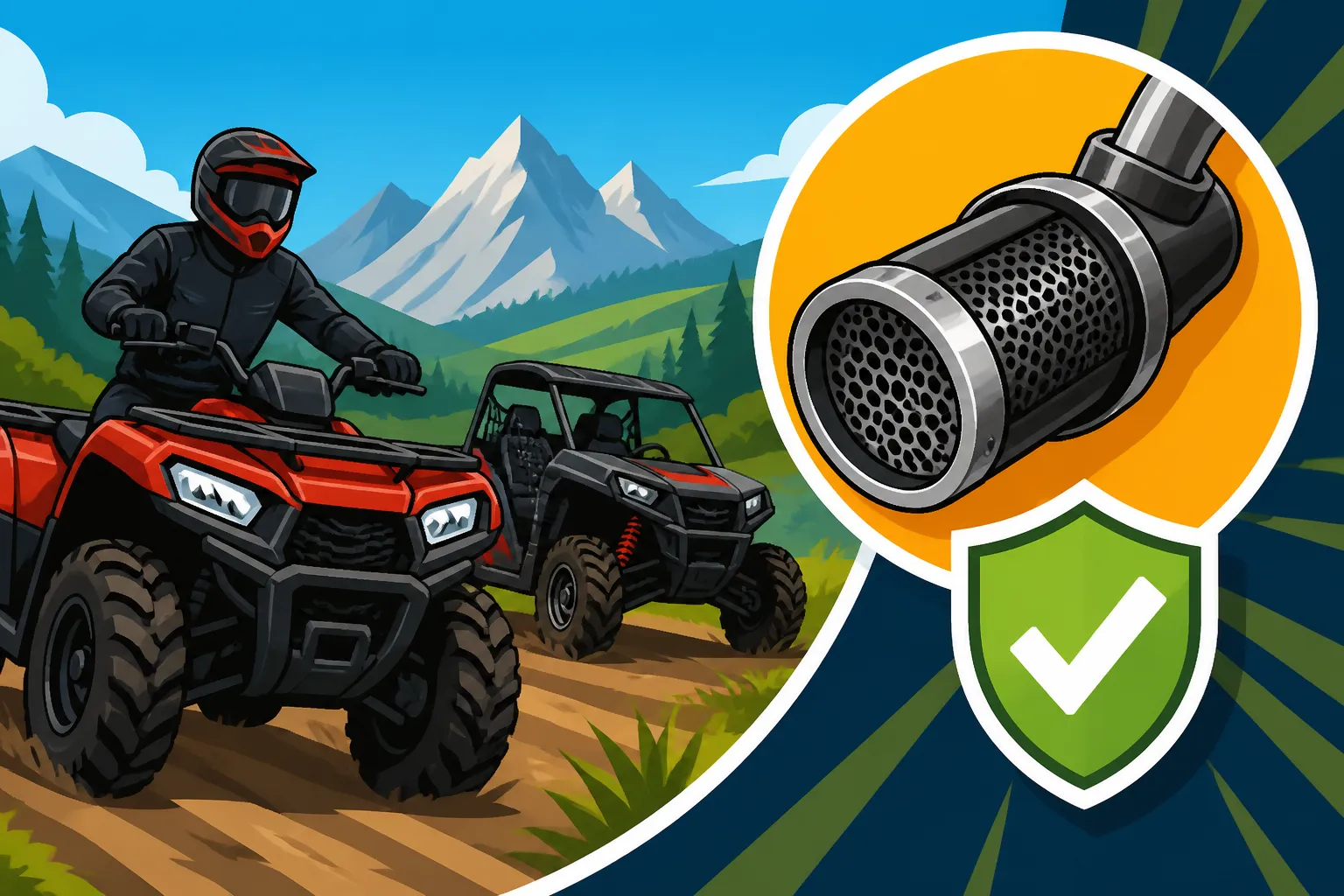
Alberta Spark Arrestor Rules
It's easy to overlook a small detail like a spark arrestor on your ATV or UTV, especially when you're itching to hit Alberta's incredible trails. But failing to understand and comply with the province's spark arrestor rules can lead to serious headaches, from hefty fines to contributing to devastating wildfires. This guide will walk you through everything you need to know about spark arrestors in Alberta, why they're so crucial, and how to make sure your machine is always compliant.
Why Spark Arrestors Are a Big Deal in Alberta
Many riders don't give a second thought to their muffler, as long as it isn't too loud. But in Alberta, the little screen or baffle inside your exhaust system, known as a spark arrestor, is a critical piece of safety equipment. It's not just a suggestion; it's a legal requirement designed to protect our precious landscapes.
The Real Risk of Wildfires
Alberta is blessed with vast forests, sprawling grasslands, and diverse natural environments that are a paradise for off-highway vehicle (OHV) enthusiasts. However, these same landscapes, especially during dry seasons, are incredibly vulnerable to wildfires. A single spark, no matter how small, can ignite dry grass, leaves, or pine needles, leading to a catastrophic blaze that threatens communities, wildlife, and the very trails we love to ride.
Think about a hot summer day in the foothills, or even a dry autumn. Your machine's engine is generating intense heat, and sometimes, tiny incandescent carbon particles can escape the exhaust. Without a spark arrestor, these hot embers fly out into the environment, perfectly capable of starting a fire. We've all seen the news reports and felt the impact of wildfires in this province. It’s a stark reminder that every rider has a role to play in prevention. It's a heavy responsibility, but also one that directly benefits all of us who enjoy the outdoors.
Legal Requirements and What Officers Look For
Alberta's Off-Highway Vehicle Regulation 319/2002 is quite clear on this matter. It explicitly states that when operating an OHV on public land, your machine must be equipped with a spark arrestor that is "in good working order." This isn't some obscure bylaw; it's part of the broader legal framework governing how we operate our machines on Crown land, in Public Land Use Zones (PLUZ), and even along ditches that fall under the legal definition of a highway.
When a Fish and Wildlife officer, RCMP, or other authorized official conducts an inspection, they aren't just checking for your registration or [Alberta Requires Insurance on Public Land]. They will often specifically look for the presence and condition of your spark arrestor. They'll typically check for a visible screen or baffle within the muffler and often look for a stamp or label indicating that it meets the US Forest Service (USFS) standard. This standard is widely recognized and adopted because it ensures the arrestor is effective at trapping those dangerous carbon particles. A missing, damaged, or heavily carbon-clogged spark arrestor is a definite red flag and can easily lead to a ticket. It's not about being a killjoy; it's about enforcing a critical safety measure. You can find more details about what they look for in [What an Officer Looks for on a Spark Arrestor].
Protecting the Environment and Our Riding Areas
Beyond the immediate legal and safety concerns, compliant spark arrestors contribute directly to the long-term sustainability of our riding opportunities. Every time a wildfire starts, it not only devastates natural habitats but also often leads to temporary or even permanent closures of riding areas. Land managers are under immense pressure to prevent fires, and if OHV use is consistently linked to fire incidents, it puts our entire sport at risk.
By ensuring your machine is properly equipped, you're doing your part to keep trails open, protect wildlife, and preserve the pristine beauty of Alberta for future generations. It’s a collective responsibility. Our access to fantastic places like McLean Creek and the Ghost PLUZ depends on all of us being responsible stewards of the land. When an area gets shut down due to fire risk, it affects everyone, and the process of reopening can be long and complicated. Let's not give anyone a reason to restrict our access.
What Makes a Spark Arrestor Compliant in Alberta
Navigating the specifics of what makes a spark arrestor compliant can feel a bit technical, but it’s straightforward once you know what to look for. It's not enough to just have something in your exhaust; it needs to meet certain performance standards to be effective and legal.
Understanding the Standards
The gold standard for spark arrestors, and the one implicitly recognized by Alberta's regulations through common enforcement practices, is the US Forest Service (USFS) standard. This means the spark arrestor has been tested and certified to trap carbon particles larger than 0.023 inches (approximately 0.58 mm) in diameter. When you purchase an aftermarket exhaust system or a replacement spark arrestor, you should look for a "USFS Approved" stamp or label directly on the component. This label is your assurance that the device meets the necessary fire prevention criteria.
Many original equipment manufacturer (OEM) mufflers that come on new ATVs and UTVs are already USFS-approved from the factory. However, if you've ever modified your exhaust, replaced a muffler, or bought a used machine, it's crucial to double-check. Don't just assume. Look for that stamp. It might be small, etched into the metal, or on a small plate. If you can't find it, or if you're unsure, it's best to consult your owner's manual or a reputable powersports dealer. Ignorance of the standard isn't an excuse in the eyes of the law.
OEM vs. Aftermarket Solutions
When it comes to spark arrestors, you'll typically encounter two main categories:
- OEM (Original Equipment Manufacturer): Most new ATVs and UTVs come with a factory-installed exhaust system that includes a USFS-compliant spark arrestor. These are designed to meet all legal requirements right off the showroom floor. If you stick with the original muffler, you're generally good to go, provided it's in good condition.
- Aftermarket Solutions: Many riders choose to upgrade their exhaust systems for performance, sound, or aesthetics. When you're looking at aftermarket options, perhaps from a brand like SuperATV, it's absolutely vital to confirm that any new muffler or exhaust tip you install also includes a USFS-approved spark arrestor. Some aftermarket systems might be sold as "race only" or without a spark arrestor for maximum flow. These are NOT suitable for public land use in Alberta.
The key takeaway here is to always verify. Just because an aftermarket exhaust looks cool and sounds great doesn't mean it's legal for public land in Alberta. Always check the product description for USFS compliance. Even if you're installing a performance exhaust system from a reputable brand like SuperATV, always verify the spark arrestor is USFS approved for Alberta trails. If you're replacing a damaged spark arrestor, you might find specific replacement screens or inserts available for your muffler model. It's often much cheaper than replacing the entire exhaust.
Visual Inspection and Maintenance
Once you know your machine should have a compliant spark arrestor, the next step is to ensure it's in good working order. This means regular visual inspection and maintenance.
Here’s a quick checklist for your pre-ride routine:
- Presence: Is the spark arrestor actually there? Sometimes, they can fall out or be removed by a previous owner.
- Condition: Is the screen or baffle intact? Look for holes, tears, or heavy corrosion that could compromise its ability to trap sparks.
- Cleanliness: Carbon buildup is a common issue. Over time, soot and carbon can accumulate on the spark arrestor screen, reducing exhaust flow and potentially rendering it less effective. A heavily clogged screen is essentially a broken screen in the eyes of an officer and can lead to performance issues for your machine as well.
Cleaning a spark arrestor usually involves removing it (if possible) and using a wire brush to remove carbon deposits. Some manufacturers recommend specific cleaning methods, so check your owner's manual. If your existing spark arrestor is damaged or missing, you'll need to source a replacement, whether it's an OEM part or an aftermarket solution you find from a supplier such as SuperATV. Don't delay this repair, as riding without a functional spark arrestor is a direct violation of the law and a danger to the environment.
Consequences of Non-Compliance on Alberta Trails
Riding without a compliant spark arrestor in Alberta isn't just about risking a minor slap on the wrist. The potential consequences range from immediate financial penalties to serious environmental liability and even the loss of your machine. It’s a regulation taken very seriously, for very good reasons.
Tickets, Fines, and Vehicle Seizure
Let's talk brass tacks: if an enforcement officer, whether it's Fish and Wildlife, the RCMP, or a local peace officer, catches you riding on public land with a non-compliant or missing spark arrestor, you're likely going to get a ticket. The specific fine amount can vary, but it's generally not cheap. It's a penalty that reflects the seriousness of the potential hazard you're creating.
Beyond the ticket, officers have the authority to take further action. In cases of repeated offenses, or if your machine poses an immediate and substantial fire risk, they could order you off the trail or even seize your OHV. Imagine having your machine impounded miles from your truck, leaving you stranded and facing significant costs to retrieve it – storage fees, towing, and then the original fine itself. This isn't just a hypothetical; it happens. The intention is to deter dangerous behaviour and protect the public good. It's certainly not how anyone wants their day of riding to end.
Here’s a quick look at potential scenarios:
| Offense Type | Common Scenario | Potential Consequence |
|---|---|---|
| Missing Spark Arrestor | Removed for "performance" or fell out/was never present | Ticket, potential order to cease operation, machine seizure if deemed a high fire risk |
| Damaged Spark Arrestor | Screen torn, heavily corroded, or ineffective | Ticket, order to repair before riding public land again |
| Clogged Spark Arrestor | Heavily carbon-fouled, restricting flow and ineffective | Ticket, requirement to clean/repair |
| Non-Compliant Aftermarket | Aftermarket muffler without USFS approval stamp | Ticket, requirement to replace with compliant system (e.g., from SuperATV or OEM) before further public use |
Environmental Damage and Liability
The most severe, albeit less common, consequence of not having a spark arrestor is directly causing a wildfire. If your machine is identified as the source of a wildfire, the legal ramifications can be staggering. You could be held liable for the costs of fighting the fire, which can quickly run into the millions of dollars. This isn't just about a small fine; it's about the financial burden of deploying firefighters, aircraft, and equipment, not to mention the irreparable damage to the ecosystem.
Beyond the monetary cost, there's the moral and community impact. Being responsible for devastating a forest, destroying wildlife habitat, or threatening nearby homes is a burden no one wants to carry. The environmental laws are in place precisely to prevent these kinds of disasters, and ignoring something as simple as a spark arrestor means disregarding those protections. It's a huge risk that simply isn't worth taking for the sake of a few extra decibels or perceived performance gains.
Impact on Riding Privileges and Access
When fires occur, regardless of the cause, they often lead to stricter regulations and closures of beloved riding areas. If OHV use is consistently associated with fire incidents, public land managers and local municipalities are forced to consider limiting or even banning access to certain zones. We've already seen this in various forms, such as [Alberta Fire Bans and Riding] that prohibit OHV use during extreme fire risk periods.
Every time a rider is caught breaking safety rules, it chips away at the collective trust and goodwill that allows us to enjoy these amazing spaces. OHV advocacy groups, such as AOHVA, work tirelessly to maintain and expand access to trails. But their efforts are undermined when individual riders don't comply with basic, common-sense regulations like having a spark arrestor. By ensuring your machine is compliant, you're not just avoiding a personal penalty; you're actively contributing to the preservation of our sport and ensuring that Alberta's stunning landscapes remain open for everyone to explore responsibly. Let's do our part to keep our riding access open and robust.
Disclaimer
This article is for general informational purposes only and does not constitute professional advice. Laws, prices and regulations vary by location and change over time. Consult a qualified professional for guidance on your specific situation.