Alberta Rules for Riding a Cutline
Riding a cutline in Alberta can seem like a wild, untamed adventure, offering direct access into vast wilderness areas or connecting forgotten corners of the landscape. But the truth is, many riders get caught out by confusing rules and unspoken expectations when it comes to these unique pathways. This guide is here to shed light on what a cutline actually is, the legalities of riding them in Alberta, and how to enjoy these routes responsibly without running afoul of the law or landowners.
Understanding What a Cutline Is in Alberta
Before we delve into the rules, it's crucial to understand what we're talking about when we say "cutline." These aren't your typical groomed trails, and their history and purpose are deeply tied to Alberta's resource industries. For many OHV enthusiasts, they represent a tempting, often challenging, shortcut or an adventurous path less traveled.
What Defines an Alberta Cutline?
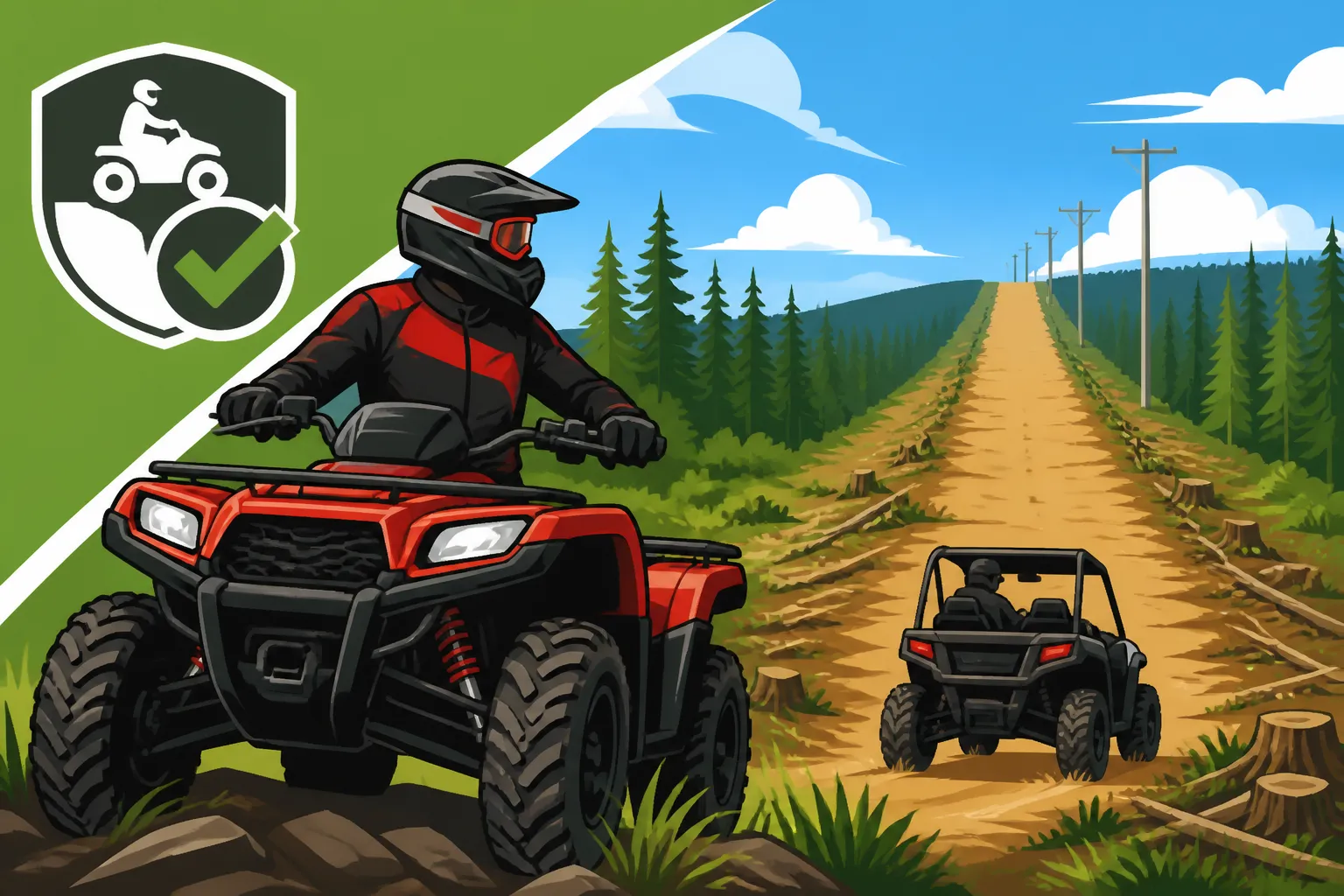
At its most basic, an Alberta cutline is a straight, narrow strip of land that has been cleared of trees and vegetation. These linear clearings were originally made for various industrial purposes, primarily in the oil and gas sector for seismic exploration, pipeline installation, or access to well sites. You'll also find them associated with forestry operations, surveying property boundaries, or even as utility corridors for power lines. They are designed for function, not recreation, which is why they often cut a straight path through otherwise dense forests or across undulating terrain.
Physically, a cutline can vary dramatically. Some are well-maintained gravel tracks, while others are barely discernible two-track paths, heavily overgrown with willows, saplings, or thick brush. They can be muddy bogs, rocky climbs, or sandy stretches, reflecting the diverse landscapes of Alberta's backcountry. What makes them so appealing to OHV riders is their directness, the sense of remote access they provide, and often, the challenge they present. However, this very appeal can lead to issues if riders don't understand their legal status.
Who Owns and Manages These Access Ways?
This is where the waters get murky for many riders. While a cutline might look like an abandoned track open for public use, its ownership and management are key. Many cutlines exist on what's known as Crown Land, which is land owned by the provincial government. On Crown Land, public access for recreational purposes is generally permitted, provided it aligns with specific regulations, such as those found in Public Land Use Zones (PLUZs). However, even on Crown Land, a cutline might be part of an active industrial lease, meaning a company has specific rights to that land for their operations.
Alternatively, many cutlines traverse private property. This could be ranch land, agricultural fields, or privately held timber leases. In these instances, the cutline is unequivocally private property, even if it appears to be an open track. Understanding who owns and manages the land beneath the cutline is the absolute first step in determining whether you can legally ride it. Without this knowledge, you're essentially guessing, and that can lead to serious legal consequences or unwelcome confrontations with landowners and industry personnel.
The Legal Landscape of Riding Alberta Cutlines
The rules around riding cutlines aren't always clear-cut, which contributes to a lot of rider confusion. It's not as simple as "if it looks like a trail, it's a trail." Alberta's laws on land use, trespass, and OHV operation play a significant role here, and they vary wildly depending on whether you're on public or private ground.
Public vs. Private Cutlines: Know the Difference
The most critical distinction you need to make before ever putting a tire on a cutline is whether it lies on public (Crown) land or private land. This single factor dictates everything.
If a cutline is on Crown Land, your ability to ride it depends on the specific public land designation. In many Public Land Use Zones (PLUZs), such as McLean Creek or the Ghost PLUZ, recreational OHV use is often permitted, but only on designated trails or within specific areas. A cutline might occasionally intersect with or even form part of an official trail system within a PLUZ, but this isn't a given. It's crucial to consult official maps for the PLUZ you're in, often available through Alberta Environment and Parks, to determine if a particular cutline is part of the approved network. Just because it’s Crown Land doesn’t mean it’s an open free-for-all. Many cutlines are for industry access only and are not meant for recreational use, especially if they lead to active well sites, seismic operations, or forestry blocks. Riding these can be dangerous and disruptive.
For cutlines on private land, the rule is straightforward and absolute: you must have explicit permission from the landowner to ride it. This applies whether the land is owned by a farmer, a rancher, a timber company, or any private individual or corporation. An open gate or the absence of "No Trespassing" signs does not constitute implied permission in Alberta. You need to seek out the landowner, introduce yourself, and get clear, preferably written, permission. Riding on private land without permission is trespassing, a serious offense that can lead to fines, vehicle seizure, and even criminal charges in some circumstances. Many landowners are struggling with damage and disturbance from unauthorized riders, and showing respect by asking first goes a long way. This is particularly relevant when considering [Alberta Private Land Permission].
Navigating Access and Trespass Laws
Alberta's Trespass Act is the primary legislation governing unauthorized entry onto land. It’s important to understand that this act protects both private property and certain types of public land. Even on Crown Land, if an area is leased for industrial purposes, unauthorized entry can be considered trespass against the leaseholder, even if the Crown is the ultimate owner. This is something many riders overlook.
Trespass doesn't just apply to fenced-off fields. It applies to any land where you do not have permission to be. Signs explicitly stating "No Trespassing," "Private Property," or "No OHV Access" are common indicators, but their absence does not grant permission. Gates, even if unlocked, are a strong hint that you are entering private or restricted industrial land. Leaving a gate open that you found closed, or vice versa, can create significant problems for landowners, especially those with livestock. Always leave gates as you found them, or better yet, avoid gated areas unless you have express permission.
It’s your responsibility as a rider to know whose land you're on. Relying on an old GPS track from a friend or simply following tracks left by others is a risky gamble. Those tracks might have been made by someone with permission, or by someone who was trespassing themselves. Ignorance of land ownership is not a valid defense if you're caught. This is also why having your machine properly registered and insured is so vital, even when you believe you're on legal trails. You don't want to compound a trespass charge with other violations. Learn more about [Alberta Trespass Law for Riders].
Navigating Cutlines Responsibly and Respectfully
Given the complex nature of cutlines, riding them requires a proactive approach to research, responsible behaviour, and a deep respect for the land and its multiple users. It’s about being a good ambassador for the OHV community.
Essential Checks Before You Ride a Cutline
Before you even load your ATV or side-by-side onto the trailer, a little homework can save you a lot of trouble. The first step is to research land ownership. This can be challenging, but resources exist. Provincial public land use maps, available from Alberta Environment and Parks, are invaluable for identifying Crown Land boundaries and designated OHV areas like PLUZs. For private land, county or municipal offices can sometimes provide information, though it might require some digging. Local OHV clubs are also fantastic resources, as they often have up-to-date knowledge of legal riding areas and access points. Don't be shy about asking locals, but always verify information with official sources.
Next, always check for fire bans or restrictions in the area you plan to ride. Alberta's dry summers can lead to significant fire risk, and OHV use is often restricted or banned entirely during these times. A hot exhaust or a careless spark can devastate vast areas. Information on fire bans is usually available on the Alberta government website. You might be surprised how often a particular area is under an OHV restriction, so checking [Alberta Fire Ban Lookups] is a non-negotiable step.
Finally, ensure your machine and your gear are in compliance with all Alberta regulations. This means having a valid [Alberta Registration Before Your First Ride] and carrying [Alberta Requires Insurance on Public Land], even if you think you're on private land or a remote cutline. You also need the proper safety equipment. For example, [Alberta Equipment Required on Public Land] includes things like working headlights and tail lights, and a spark arrestor. Having a reliable machine, perhaps even upgraded with durable SuperATV skid plates and bumpers to protect against rough terrain, is also a smart move for safety and minimizing impact.
Best Practices for Sustainable Cutline Riding
Once you've done your homework and confirmed you're in a legitimate riding area (or have explicit permission for private land), responsible riding becomes paramount. The goal is to leave no trace and ensure these areas remain accessible for future generations and for their primary industrial purposes.
Always stay on existing tracks. Cutlines are already cleared paths; venturing off-trail creates new scars on the landscape, damages vegetation, and can disrupt sensitive ecosystems. This is especially true near water bodies, wetlands, or riparian areas. If the cutline becomes too overgrown or impassable, turn around rather than forging a new path.
Minimize environmental impact. Avoid excessive mudding or spinning tires unnecessarily, as this churns up soil, increases erosion, and damages the integrity of the track. If you encounter a particularly wet or sensitive section, consider whether you can cross it without causing significant damage. Protecting the environment is a shared responsibility, and tools like durable SuperATV tires can help maintain traction without tearing up the trail.
Respect industrial operations and wildlife. Remember that many cutlines are active work sites. You might encounter heavy machinery, vehicles, or personnel. Always give them ample space, yield the right-of-way, and never interfere with their work. Wildlife often uses cutlines as corridors, so be alert for animals. Slow down, give them space, and never harass or pursue them. Understanding [Alberta Wildlife on the Trail] is a crucial part of responsible backcountry recreation.
Finally, leave gates as you found them. This seemingly small act is a huge indicator of respect. If a gate is closed, close it behind you. If it’s open, leave it open. This is vital for containing livestock, preventing unauthorized access to sensitive areas, and maintaining good relationships with landowners and leaseholders. Responsible riders are the ones who help keep access open for everyone.
Consequences of Misunderstanding Cutline Rules
The allure of an open cutline can be strong, but the consequences of not understanding or respecting the rules can be severe, ranging from hefty fines to the loss of your machine and even criminal charges. It’s not just about getting caught; it’s about the broader impact on the OHV community’s reputation and access.
Penalties for Illegal Riding
Riding on a cutline without permission, whether it’s private land or a restricted industrial area on Crown Land, is considered trespassing. Under Alberta’s Trespass Act, fines can be substantial. Beyond that, you could face specific OHV-related fines if your machine isn't registered, insured, or equipped properly. For instance, [Alberta Penalties for Riding Unregistered] or [Alberta Ticket Costs for a Riding Violation] can quickly add up. Law enforcement, including RCMP, Fish and Wildlife officers, and local bylaw officers, have the authority to issue these tickets.
In more serious cases, particularly involving repeated offenses, significant environmental damage, or interference with industrial operations, your ATV or side-by-side could be impounded or even seized. [Alberta Vehicle Seizure for Riders] is a real consequence for serious violations, often related to operating an uninsured or unregistered machine, or for egregious trespass. This can be a financially devastating outcome for a rider. It’s a good reminder that even accessories from companies like SuperATV and others, while enhancing your ride, don't protect you from the legal ramifications of illegal riding.
Protecting Access for Future Generations
Every instance of irresponsible or illegal riding on cutlines has a ripple effect. When landowners experience damage to their property, disruption to their operations, or disregard for their privacy, they are more likely to post "No Trespassing" signs, lock gates, or lobby for stricter OHV regulations and permanent closures. This directly impacts the entire OHV community, making it harder for responsible riders to find legal places to ride.
Preserving access means adhering to the rules, understanding the nuances of land ownership, and practicing exemplary trail etiquette. It means actively seeking out permission for private land and sticking to designated trails on public land. It also means educating fellow riders and setting a good example. The future of OHV riding in Alberta, including access to cutlines that are legally open, depends heavily on the collective responsibility of all riders. By being informed, respectful, and prepared, we can help ensure that Alberta's stunning landscapes remain open for responsible enjoyment for years to come.
Cutline Riding: Public vs. Private Rules
Here's a quick overview of the key distinctions when considering riding on cutlines in Alberta:
| Feature | Cutlines on Public (Crown) Land | Cutlines on Private Land |
|---|---|---|
| Ownership | Provincial government (Crown). May have industrial leases. | Individual, company, or corporation. |
| Access | Generally permitted for recreation only on designated trails within Public Land Use Zones (PLUZs) or specific approved areas. | Strictly requires explicit permission from the landowner. No implied permission. |
| Trespass Risk | Low, if on designated trails. High, if on active industrial leases or non-designated areas. | Very High, if no permission. Always considered trespass without consent. |
| Signage | May have signs indicating designated trails, industrial operations, or restrictions. Absence of signs doesn't imply open access. | Often marked with "No Trespassing," "Private Property," or "No OHV" signs. Absence of signs does not grant permission. |
| Gates | May be present for industrial access. Always leave as found. | Very common. Always leave as found, or avoid if you don't have permission. |
| Regulations | Governed by Public Lands Act, OHV Regulation, PLUZ specific rules. Must have registered and insured OHV. | Governed by Trespass Act, OHV Regulation (for public road crossings, etc.). Must have registered and insured OHV (if used on public land). |
| Consequences | Fines for off-trail riding, unregistered/uninsured OHV, environmental damage, vehicle seizure. | Fines for trespass, property damage, unregistered/uninsured OHV, vehicle seizure, potential criminal charges. |
| Best Practice | Consult official PLUZ maps. Stay on designated trails. Respect industrial operations. | Always seek and obtain explicit permission before entering. Respect property boundaries. |
Disclaimer
This article is for general informational purposes only and does not constitute professional advice. Laws, prices and regulations vary by location and change over time. Consult a qualified professional for guidance on your specific situation.