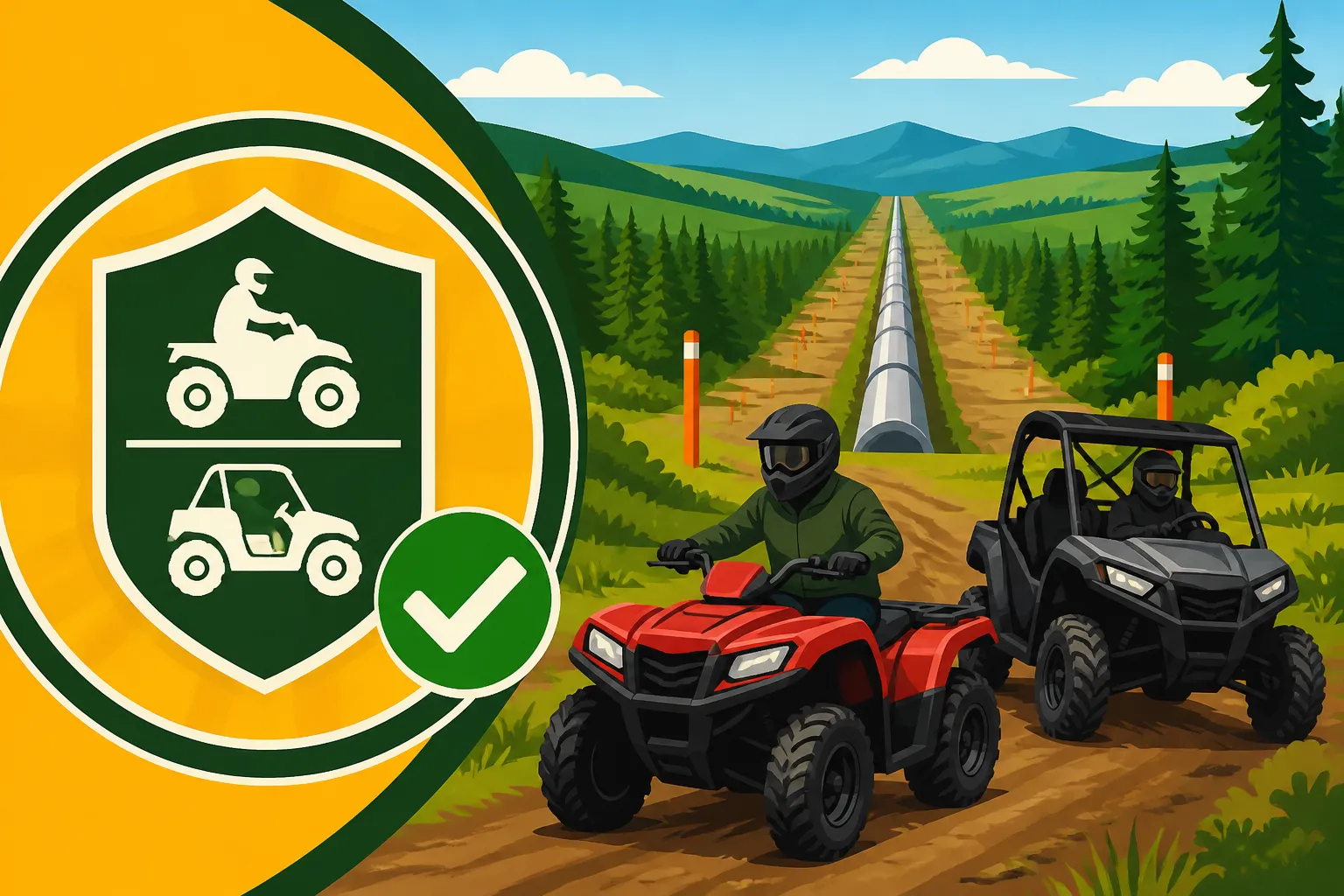
Alberta Rules for Riding a Pipeline Right-of-Way
There’s nothing quite like the open expanse of a pipeline right-of-way in Alberta, is there? For many of us who love exploring on our ATVs and UTVs, these long, clear corridors can look incredibly inviting. They seem to stretch endlessly, offering what appears to be a perfect, unimpeded path through fields, forests, and sometimes even over challenging terrain. But before you gear up and point your machine down one of these enticing pathways, it’s absolutely critical to understand that riding a pipeline right-of-way in Alberta is far more complex than it might first appear. This guide will help you navigate the often-confusing rules and unspoken expectations, ensuring you stay legal, safe, and respectful of the land and its infrastructure.
Understanding Pipeline Rights-of-Way in Alberta
Let's start by demystifying what a pipeline right-of-way (ROW) actually is, because knowing the basics is the first step toward understanding why simply riding onto one without thought can land you in hot water. These aren't just random clearings; they are specifically designated corridors for vital infrastructure.
What Exactly is a Pipeline Right-of-Way?
Imagine a long, narrow strip of land, often cleared of trees and obstacles, that cuts across the Alberta landscape. This strip isn't necessarily a road or a public trail, even if it looks like one. It's an easement, a legal agreement that grants a pipeline company the right to construct, operate, and maintain a pipeline across private or public land. The pipeline itself is buried underground, but the surface above it needs to be accessible for monitoring, maintenance, and emergency response. This means that while the pipeline company has rights to the land, they usually don't own the land itself. The actual landowner retains ownership, but their use of that specific strip is restricted by the easement agreement.
This distinction is super important for us riders. It means that the pipeline company has a specific legal interest in that land, but so does the original landowner – be it a farmer, a rancher, or the Crown. You can't just assume it's an open invitation for recreational use, even if there's no fence or "No Trespassing" sign immediately visible. It’s a bit like seeing a neighbour's cleared driveway; you know it leads somewhere, but it's not yours to drive on without permission.
Who Owns the Land Under a Pipeline?
This is where it gets a little intricate. The land beneath a pipeline right-of-way can be privately owned or publicly owned (Crown land).
If it's private land, like a farmer's field or a ranch, the landowner still holds the title to that property. The pipeline company simply has an agreement, often registered on the title, that allows them to use that specific strip for their pipeline operations. This means any recreational use of that ROW on private land would require not one, but two layers of permission: from the actual landowner and potentially from the pipeline company, depending on their specific easement agreement and what activities they permit. Ignoring the landowner's rights on their private property, even if it's crossed by a pipeline, can quickly lead to charges under [Alberta Trespass Law for Riders].
If the ROW crosses Crown land, the land is owned by the provincial government, managed for the public good. Even here, however, it's not a free-for-all. The pipeline company still has its operational rights, and Alberta Environment and Parks, which manages public land, has specific rules about how OHVs can be used. Just because it's Crown land doesn't automatically make every cleared path a public trail. Often, even on Crown land, specific Public Land Use Zones (PLUZs) or other designations will dictate whether OHV use is permitted and where. It's a common misconception that all Crown land is open to unlimited recreational access. It simply isn't the case, and pipeline corridors are definitely not an exception.
The Legal Landscape: Why Riding a Pipeline Right-of-Way Isn't Simple
Now that we know what these corridors are, let's dive into the legalities. This is often where riders get into trouble, because the rules aren't always explicitly posted on every single right-of-way you encounter.
Trespass and Unauthorized Access
The biggest legal hurdle is trespass. As we discussed, a pipeline right-of-way is not public land in the same way a designated OHV trail might be. If the ROW crosses private land, riding on it without the landowner's express permission is trespassing. It's that simple. And even if you think, "Oh, no one will know," the consequences can be significant. Landowners are often protective of their property, and pipeline companies are highly sensitive about unauthorized activity near their infrastructure, given the safety and environmental risks involved.
The same principle applies, in a sense, to Crown land. While Crown land is public, specific areas or types of access might be restricted. If the ROW is on Crown land and isn't part of a designated OHV trail system or in an area explicitly open to OHV travel, riding it could still be considered unauthorized use or even a violation of specific land-use regulations. It’s crucial to remember that what looks like a convenient shortcut might actually be a restricted area, and ignorance of the rules isn’t a valid excuse. This is a bit different from riding on a lease road, where permission is often clearer, but the principle of needing access remains. You can find more information on general rules in [Alberta Rules for Riding Crown Land].
Safety and Environmental Concerns
Beyond the legal aspect, there are significant safety and environmental considerations that pipeline companies take very seriously, and so should you.
Pipelines carry oil, natural gas, and other substances under high pressure. Damage to a pipeline, even seemingly minor damage from a heavy ATV or UTV, could have catastrophic consequences: explosions, fires, and massive environmental spills. Pipeline companies monitor these ROWs closely, often with aerial patrols, and they are quick to respond to any activity that might threaten the integrity of their lines. Your machine's weight, the vibrations it causes, or even digging into the ground with a stuck tire could compromise the pipeline's cover or cause issues. This is why they are so protective.
From an environmental standpoint, rights-of-way often cross sensitive ecosystems, wetlands, or areas critical for wildlife. Off-roading, especially in wet conditions, can cause significant erosion, damage delicate vegetation, and disturb wildlife. Many of these areas are rehabilitated with specific native grasses or plants that are easily damaged by vehicle traffic. The pipeline companies are usually obligated to maintain the ecological integrity of these corridors, and unauthorized riding can undo years of reclamation work. Remember, we all want to enjoy Alberta's stunning nature, and that means protecting it for everyone. This also ties into broader concerns like [Alberta Fire Bans and Riding], as a spark from an OHV could be devastating in dry conditions.
The Role of Regulatory Bodies
In Alberta, pipeline operations are heavily regulated by bodies like the Alberta Energy Regulator (AER) and sometimes federal entities if the pipeline crosses provincial borders. These regulators set strict rules for pipeline integrity, safety, and environmental protection. Part of their mandate is to ensure the pipeline companies maintain the ROWs in a way that minimizes risk.
This means that pipeline companies themselves are under immense pressure to prevent unauthorized access and activity on their rights-of-way. If they aren't seen to be managing their ROWs effectively, they could face significant fines or penalties from the regulators. This pressure filters down, making them very proactive in dealing with anyone who uses their ROWs without permission. They aren't just being difficult; they're complying with stringent regulations designed to protect everyone. Knowing what constitutes [What the Traffic Safety Act Requires of Alberta OHVs] is a good baseline, but specific industrial lands often have additional layers of regulation.
Seeking Permission and Best Practices for Pipeline Riding
So, if riding a pipeline right-of-way isn't as simple as just going for it, what's the right way to approach it? It all boils down to permission and responsible riding.
Getting Official Permission to Ride
This is the golden rule: always get permission. This isn't just a suggestion; it's a necessity. If the pipeline crosses private land, you absolutely must get permission from the landowner. A friendly conversation, explaining what you want to do, and assuring them you’ll be respectful can go a long way. Many landowners are reasonable if approached properly. For more on this, check out [Permission From an Alberta Landowner].
If you know the land is Crown land, or you're unsure, you might also need to contact the pipeline company directly. They might have specific policies about recreational use on their ROWs. Some companies are more open to granting permission for certain activities than others, especially if you can demonstrate you understand the risks and will ride responsibly. Keep in mind that securing permission from a large corporation can be a slow process, involving legal departments and liability waivers. It's not usually a quick phone call.
Here's a quick table outlining who to contact based on land type:
| Land Type | Primary Permission Needed From | Secondary Permission (Potentially) | Key Concern |
|---|---|---|---|
| Private Land | Landowner (farmer, rancher) | Pipeline Company | Trespass, Crop Damage, Livestock |
| Crown Land | Alberta Environment & Parks | Pipeline Company | Unauthorized Use, Environmental Impact |
| Designated OHV Trail (crossing ROW) | None (if officially designated) | None (already permitted) | Staying on Trail |
Even if you get permission, it's a good idea to have it in writing, or at least have a clear understanding of the terms. This protects both you and the landowner/company. You might be surprised how many good experiences start with a simple, respectful request.
Responsible Riding Practices on Rights-of-Way
Assuming you do get permission, your responsibility doesn't end there. You need to be an exemplary rider.
- Stay on the existing track: Rights-of-way are generally maintained with a clear track. Stick to it. Don't create new paths, especially not through sensitive vegetation or wetlands.
- Ride at appropriate speeds: These aren't race tracks. Ride at a speed that allows you to react to unexpected obstacles, wildlife, or changes in terrain. Remember, these are operational corridors, not always designed for high-speed recreation.
- Be aware of equipment: Pipeline companies frequently have equipment, vehicles, or personnel working on these ROWs. Always be vigilant for their presence and yield to them. Their work takes precedence.
- Minimize environmental impact: Avoid riding in excessively wet or muddy conditions, which can lead to ruts and erosion. Pack out everything you pack in. Your SuperATV winch is for getting you out of trouble, not for tearing up the landscape!
- Respect signs and markers: Even with permission, there might be specific signs posted by the pipeline company or the landowner. Pay attention to them. They're there for a reason, usually safety or to protect specific areas.
These practices aren't just about being a good citizen; they're about ensuring that if permission is granted, it continues to be granted for other riders in the future. One irresponsible rider can ruin access for everyone.
Consequences of Unauthorized Riding and Staying Safe
Let's be realistic: sometimes, the temptation to ride a perfectly cleared path is strong. But the downsides of unauthorized riding on a pipeline right-of-way can range from an uncomfortable conversation to serious legal and financial trouble.
Potential Legal Penalties
If you're caught riding on a pipeline right-of-way without permission, especially on private land, you could face:
- Trespass charges: This can result in significant fines. Landowners are legally entitled to protect their property, and enforcing trespass laws is one way they do it.
- Fines for unauthorized OHV use: Depending on the specific regulations governing the land (Crown or private), there might be fines related to operating an OHV in a restricted area. For general OHV regulations, it's worth reviewing [Alberta Penalties for Riding Unregistered] and knowing that additional fines can stack up for other violations.
- Civil lawsuits: If your riding causes any damage to the land, vegetation, or the pipeline infrastructure itself, you could be liable for the costs of repair and restoration. This could be astronomical, given the sensitivity of pipelines.
- Vehicle seizure: In serious cases, especially if combined with other infractions like impaired riding or egregious damage, your ATV or UTV could be seized. This is a very real possibility in Alberta.
It’s important to understand that pipeline companies and landowners take these matters seriously. They have legal teams and security protocols in place to protect their assets. It’s far better to spend a bit of time getting permission than to face these kinds of repercussions. This is also why carrying your proper [Carrying Papers on a Long Alberta Ride] is always a good idea, as an officer may ask for them.
Best Practices for Safety Around Pipelines
Even with permission, riding near industrial infrastructure like pipelines requires an extra layer of caution.
- Identify pipeline markers: Look for yellow signs with pipeline information. These markers indicate the pipeline’s general location and the company’s contact information. However, they don't necessarily mark the exact path of the pipe or its depth, so always assume the pipe is present throughout the ROW.
- Be aware of cathodic protection stations: These are small, often fenced enclosures or posts with wires, part of the pipeline's corrosion prevention system. Avoid interfering with them.
- Never dig or excavate: This should be obvious, but absolutely never dig or attempt to excavate anywhere on a right-of-way. Even a small shovel could strike a buried line.
- Report unusual activity: If you have permission to be on a ROW and notice anything unusual – exposed pipe, leaks, strange odours, or damage to markers – report it immediately to the pipeline company or the authorities. You could be preventing a major incident.
- Ride with a buddy and carry communication: Cell service can be spotty in many of Alberta's backcountry areas. If you're riding a remote ROW, go with a friend and carry a satellite messenger or two-way radio. Your SuperATV GPS is great, but it won't call for help if you're out of range.
- Dress appropriately and carry safety gear: This goes for any off-road riding, but it's especially true when you're potentially far from help. Wear proper riding gear, including a helmet, and carry a first-aid kit, tools, and emergency supplies. Knowing what [Alberta Equipment Required on Public Land] is a good start.
Ultimately, pipeline rights-of-way can be tempting shortcuts or interesting routes for an OHV adventure, but they come with significant responsibilities. Respecting property rights, understanding the legal implications, prioritizing safety, and being an environmentally conscious rider are paramount. Always seek permission, ride with care, and remember that our access to Alberta's amazing landscapes depends on all of us being responsible stewards.
Disclaimer
This article is for general informational purposes only and does not constitute professional advice. Laws, prices and regulations vary by location and change over time. Consult a qualified professional for guidance on your specific situation.